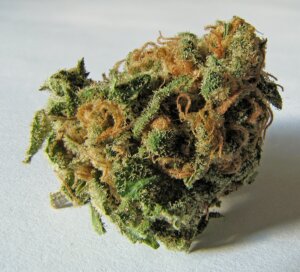
Cannabis grew in ancient China as early as 6000 BCE, making it one of the region’s oldest cultivated crops. Early Chinese farmers used the whole plant: stalks yielded fiber for rope, cloth, and paper; seeds provided food and oil; leaves served as medicine, later recorded in the Shennong Ben Cao Jing, the Divine Farmer’s Classic of Materia Medica; and the plant’s psychoactive resin was set aside for ritual use. No other early culture documented cannabis as continuously, and China’s cultivation shaped how the plant spread across Asia.
China did not discover cannabis by accident. The plant was already woven into the fabric of early Chinese civilization before recorded history began, used to feed families, clothe bodies, heal the sick, and reach the spirit world. No other culture kept as consistent a record of cannabis across so many centuries, and no other culture’s relationship with the plant shaped global diffusion as directly. What follows is that record.
Hemp as China’s First Cultivated Crop
The archaeological case for cannabis cultivation in China starts at the Hemudu site in Zhejiang province, where hemp cord impressions on pottery date to roughly 5000 BCE. Push further back and the evidence thins but does not disappear: plant fiber remnants and seed deposits associated with early Yangshao culture settlements along the Yellow River suggest cultivation activity reaching to at least 6000 BCE, and some botanists place the domestication window as early as 8000 to 10000 BCE based on the genetic divergence of cultivated hemp from its wild relatives.
The scholar Hui-Lin Li, writing in Economic Botany in 1974, made the most systematic case for China as the origin point of cannabis cultivation. Li argued that the plant was likely indigenous to central Asia and moved into China’s agrarian north early enough to be treated as a native crop rather than an import. By the time the Zhou Dynasty consolidated power around 1046 BCE, hemp was listed among the five sacred grains alongside millet, rice, wheat, and soybeans, a ranking that tells you everything about how essential the plant was to survival.
What made hemp uniquely valuable was that almost nothing was wasted. Stalks yielded fiber. Seeds provided food and oil. Leaves served medicine. Roots were occasionally used in burial preparations. Archaeobotanical surveys published in Euphytica confirm that ancient Chinese cultivators selected for both fiber-producing and seed-producing hemp strains separately, indicating sophisticated breeding knowledge centuries before it was documented in writing.
Rope, Textiles, and Paper: Hemp’s Industrial Legacy
The industrial story of hemp in China predates the medical story by thousands of years, and it is arguably more consequential for world history. Hemp fiber is long, strong, and rot-resistant. Chinese artisans recognized these properties early and built an entire material economy around them.
Hemp textiles appear in Chinese tomb excavations from the Western Zhou period (circa 1046 to 771 BCE), where woven hemp cloth was found alongside silk, indicating that hemp was not a poverty fabric but a widely used standard material. Military applications included bowstrings and armor padding. Rope made from twisted hemp fiber was the engineering material of early Chinese construction projects, used in suspension bridges, pulley systems, and the rigging of river boats.
The most globally significant contribution came during the Han Dynasty. Ts’ai Lun, a court official, is credited with refining paper production around 105 CE, but hemp-fiber paper predates his process by at least two centuries. Archaeologists discovered hemp paper fragments at the Fangmatan tomb site in Gansu province dating to roughly 179 to 141 BCE, making it among the oldest paper ever found. The fibers were pulped, spread, dried, and written on with brush and ink. Before this technology spread westward, the world was writing on clay, papyrus, and animal skin. Hemp paper changed what it was possible to record and to transmit.
That technological shift moved along trade routes. By the time hemp paper reached the Arab world in the 8th century CE, it had already been China’s standard writing surface for nearly a millennium.
The Shennong Ben Cao Jing and Cannabis as Medicine
The earliest pharmacological text in Chinese history names cannabis as one of its essential medicines. The Shennong Ben Cao Jing, the Divine Farmer’s Classic of Materia Medica, is attributed to the legendary Emperor Shennong and is believed to have been compiled somewhere between 100 BCE and 200 CE based on oral and written traditions reaching back much further. The text catalogs 365 medicinal substances; cannabis, listed under the name ma, earns a lengthy entry.
The Shennong Ben Cao Jing recommends cannabis for a specific set of conditions: rheumatic pain, menstrual disorders, constipation, and what the text calls “absentmindedness,” which later scholars interpret as neurological or cognitive symptoms. Ethan Russo’s 2007 review of cannabis in ancient pharmacopeias, published in Chemistry and Biodiversity, notes that the text’s descriptions of cannabis’s analgesic and sedative effects align precisely with modern understanding of cannabinoid action, even though the mechanism was entirely unknown to the compilers.
The medical applications were specific rather than vague. For joint pain, hemp seeds were pressed into oil and applied topically. For menstrual cramping, the seeds were boiled and the liquid consumed. The text also describes the psychoactive properties of the female plant’s flowering tops, calling them ma fen (hemp fruits), and notes that consuming too much “makes one see demons” while moderate consumption “lightens the body.” This is not incidental observation: it suggests clinical experimentation over generations.
A later Han Dynasty surgeon, Hua Tuo, reportedly mixed cannabis resin into wine to create an anesthetic he called mafeisan, used during surgical procedures. Historical records of Hua Tuo’s procedures are documented in the Hou Han Shu, the official history of the Later Han Dynasty, and represent the first documented use of cannabis as a surgical anesthetic anywhere in the world.
Psychoactive Use and Ritual: Taoist and Shamanic Contexts
The spiritual use of cannabis in ancient China is documented but contested. What is certain: psychoactive cannabis was known, its effects were understood, and some practitioners used it deliberately in ritual contexts.
The clearest evidence comes from the Yanghai tombs in Xinjiang, excavated beginning in 2003. Archaeologists found a wooden bowl containing approximately 789 grams of well-preserved cannabis, placed near the head and feet of a male burial estimated to be around 2,700 years old. The analysis, published in PLOS ONE in 2011 by Russo and colleagues, confirmed the presence of THC-related compounds and argued the cache was almost certainly psychoactive material set aside for ritual use, not fiber or food. The burial context, alongside other artifacts suggesting the deceased was a shaman or healer, points directly to cannabis as a tool of spiritual practice.
Taoist texts provide additional context. Some texts describe necromancers and spirit-workers burning hemp seeds over fires to produce smoke during ceremonies, a practice described by Merlin (1972) in Economic Botany as consistent with shamanistic inhalation rituals across Inner Asia. The fifth-century Taoist text Wu Zang Jing includes hemp seeds among the substances that, when burned and inhaled during meditation, helped practitioners achieve states of heightened perception. Whether these were mystical experiences or documented pharmacological effects was not a distinction the practitioners drew.
The key point is that ancient China never treated the psychoactive and practical properties of cannabis as contradictory. The same plant that made rope and healed joints could open the mind to other dimensions of experience. The culture held all of these uses simultaneously without the prohibitionist logic that would come much later.
Hemp vs. Psychoactive Cannabis: How the Chinese Understood the Distinction
Ancient Chinese texts draw a consistent linguistic and practical distinction between hemp cultivated for fiber and cannabis cultivated for its psychoactive or medicinal properties. The word ma referred broadly to the hemp plant, while dama (great hemp) or ma fen described the more potent female plant or its resinous flowering tops.
This is not a modern projection backward. Li (1974) documents how classical Chinese agricultural texts categorize ma explicitly by sex: the male plant, called xi ma (male hemp), was cultivated for fiber because the stalks were taller and more uniform. The female plant, called fu ma or zi ma (female hemp or seed hemp), was cultivated for seeds and medicine because it produced the resinous compounds and seed oil of medicinal value.
This distinction matters because it shows that ancient Chinese farmers were not accidentally growing psychoactive cannabis alongside fiber hemp. They were deliberately maintaining separate cultivars for separate purposes, a level of agronomic sophistication that implies centuries of selective breeding. The Shennong Ben Cao Jing’s specific recommendation to use ma fen (the female flowers and their surrounding material) for certain conditions, while using only seeds for others, reflects exactly this cultivar-level knowledge.
Modern cannabis science has rediscovered what ancient Chinese agriculture already knew: the female plant produces substantially higher concentrations of pharmacologically active compounds, and different parts of the plant have different biochemical profiles suited to different applications. The ancient Chinese did not have the language of cannabinoids, but they had the empirical knowledge.
How China’s Cannabis Culture Spread Along the Silk Road
Cannabis did not stay in China. The Silk Road carried it westward over centuries, and the diffusion pattern follows the trade routes precisely.
The movement began early. By 1000 BCE, cannabis was established in the Scythian culture of Central Asia, as documented by Herodotus in the 5th century BCE, who described Scythian funeral rites involving the inhalation of hemp smoke from heated stones. Genetic studies published in Molecular Phylogenetics and Evolution suggest that the cannabis varieties that spread into Central Asia and eventually Europe carried genetic markers consistent with East Asian origin populations, supporting the hypothesis that Chinese cultivation practices seeded the westward diffusion.
Hemp paper technology provides a second, better-documented transmission route. Chinese paper-making moved westward through Central Asia to the Arab world after the Battle of Talas in 751 CE, when Arab forces captured Chinese paper-makers. From Samarkand, paper production spread to Baghdad, Damascus, Morocco, and eventually Spain by the 12th century. The hemp fiber that had built China’s information infrastructure became the same fiber that enabled the Arab translation movement and, eventually, the European printing revolution.
Medicinal cannabis knowledge followed a similar path. Arabic physicians from the 9th century onward referenced Chinese and Indian cannabis preparations in their pharmacological texts. Russo (2007) traces specific preparation methods through Arabic medical literature that show direct inheritance from earlier Chinese and Indian sources, including the use of cannabis resin as an analgesic and the recognition of dosage-dependent effects.
What Ancient China Tells Us About Cannabis Today
The Chinese record is useful to the present not as nostalgia but as data. Several things that contemporary cannabis research has established clinically were observed and recorded in China two thousand or more years ago: the analgesic effects of cannabinoids, the distinction between the pharmacological profiles of different plant parts, the dose-dependence of psychoactive effects, and the value of the female plant’s resinous material for medicinal applications.
The Shennong Ben Cao Jing’s inclusion of cannabis as one of its 365 core medicines was not superstition. It was the outcome of systematic observation across many generations of practitioners who had enough time and enough patients to notice what worked. Modern cannabinoid research is partly a process of validating, at the molecular level, what ancient Chinese physicians already knew empirically.
China’s current position as the world’s largest legal hemp producer, accounting for roughly 50 percent of global hemp fiber output according to USDA Foreign Agricultural Service data, is a direct continuation of a relationship that began at least eight thousand years ago. The plant never left. The prohibition that interrupted it was, in historical terms, a brief detour.