A zip of weed is one ounce. That is 28 grams of dried cannabis flower, the same weight whether the budtender hands it over in a glass jar, a heat-sealed bag, or a deli-style stash pouch. In US adult-use markets in 2026, a zip retails for roughly $150 to $300 depending on the state, the dispensary tier, and whether the flower is premium top-shelf, mid-tier, or smalls. The slang almost certainly comes from the ziplock baggie an ounce used to fit into before legal dispensaries existed, and it stuck because cannabis culture loves shorthand. This guide breaks down the weight, the price, the slang origin, and what 28 grams of weed actually looks like when you put it on a scale.
Quick Answer: A Zip Is an Ounce, 28 Grams, and Costs $150 to $300
A zip equals one ounce of cannabis, which is 28 grams. The math is the same on every dispensary menu in every legal state. Pricing is where the variation shows up. In mature, high-supply markets like Oregon, Michigan, and Colorado, a zip of mid-tier flower runs $120 to $180. In tighter or higher-tax markets like New Jersey, Illinois, or Massachusetts, the same ounce climbs to $260 to $320 once excise and sales tax stack onto the menu price. Premium top-shelf flower, indoor exotics, or branded craft drops can push a zip past $400 in any market. If you want the visual side-by-side breakdown of every common cannabis weight from a gram up to a zip, our visual guide to cannabis quantities shows what each amount actually looks like next to a US nickel and a king-size paper.
What Is a Zip of Weed?
A zip is consumer slang for one ounce of cannabis flower. The number does not move: 28 grams, full stop. What moves is who uses the word and where you hear it. Walk into a dispensary in Denver or Portland and the budtender behind the counter will write “ounce” on your receipt, but the regular at the register might still ask for a zip. The term carries weight on the consumer side, especially among long-time smokers who learned the vocabulary before legalization. Younger budtenders, growers, and dispensary marketers tend to default to “ounce” or “oz” because that is what menu software, packaging compliance labels, and state seed-to-sale tracking systems print.
Regional usage varies. The word “zip” is heavier in West Coast and Northeast slang, lighter in the South and the Mountain West, and almost absent in newer adult-use markets like Missouri and Maryland where the dispensary lexicon was built post-legalization on the words “ounce,” “eighth,” and “quarter.” On growing and cultivation forums, “zip” rarely shows up at all. Cultivators talk in pounds, QPs (quarter-pounds), and elbows (one pound). Zip is a retail-floor word, not a supply-chain word.
Most cannabis culture references use zip and ounce interchangeably. The two are functionally identical. The only difference is tone. “Ounce” reads like a unit of measure. “Zip” reads like the language of the people buying it.
Why a Zip Equals an Ounce (28 Grams)
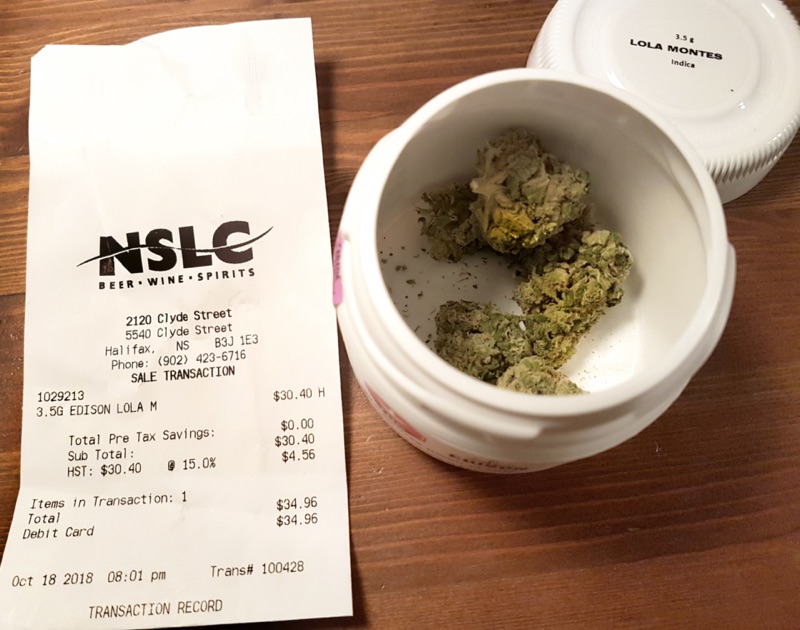
Cannabis is sold by weight in every legal market, and that weight is denominated in grams even when the customer-facing slang is in fractions of an ounce. The standard ladder runs gram, our eighth (3.5g), quarter (7g), half-ounce (14g), and ounce (28g). A zip sits at the top of that retail ladder. Past the ounce, the language shifts to bulk wholesale terms like the QP (quarter-pound, 113g) and the elbow (LB, 453g) which most consumers will never legally encounter at a dispensary because state possession caps almost universally stop at one or two ounces per transaction.
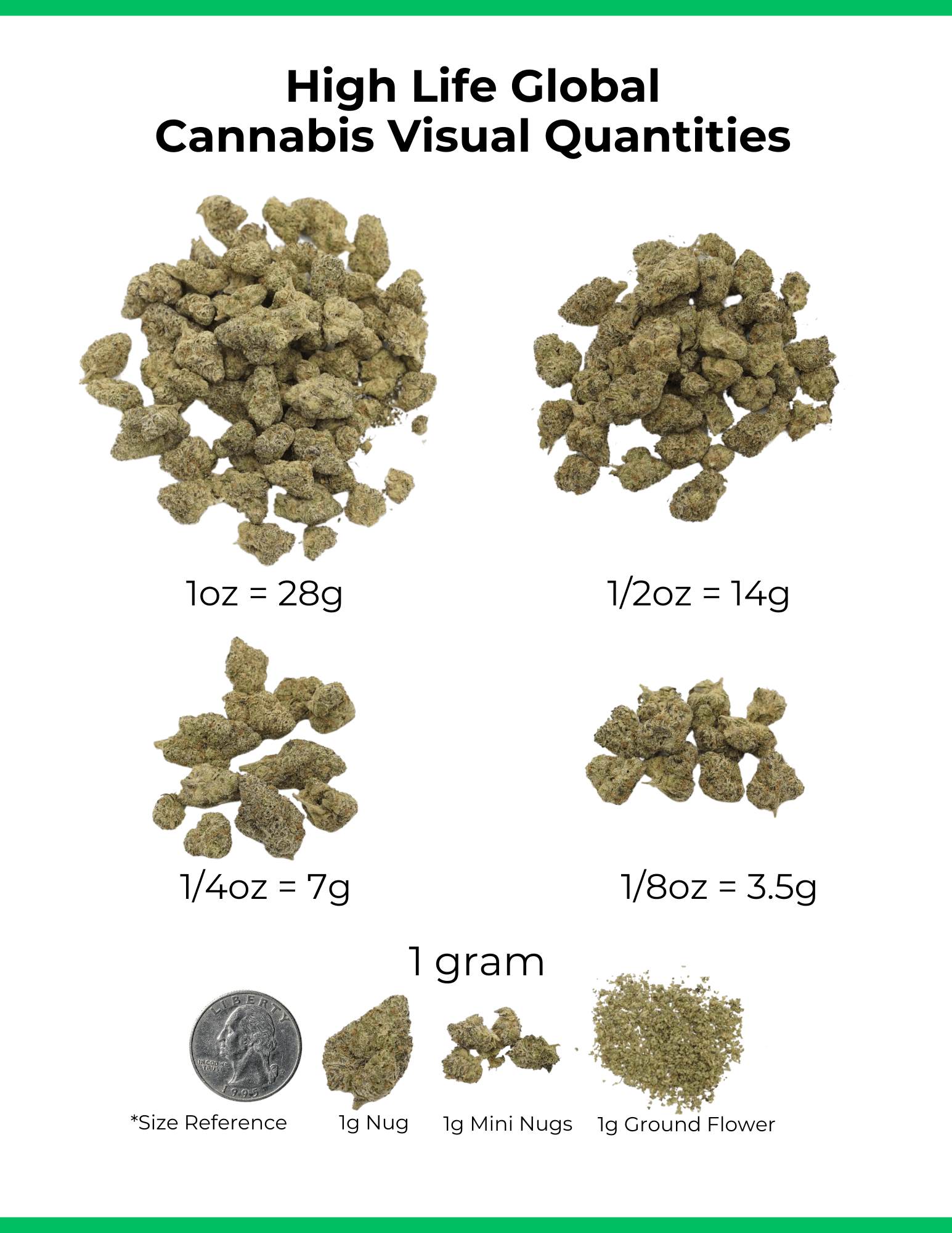
The 28-gram convention is technically a rounding. A pure ounce avoirdupois is 28.3495 grams. Cannabis retail rounds down to 28.0g for menu pricing, packaging compliance, and state-tracking simplicity. Some premium operators will pack 28.3g or 28.5g into a jar as a goodwill gesture, but the legal definition of an ounce in cannabis sales is 28 grams flat. For the full visual breakdown of how each weight stacks up against the others, see our cannabis weights visual guide with photos of each tier next to a US nickel.
How Much Does a Zip of Weed Cost in 2026?
Zip pricing in 2026 swings from roughly $120 in the cheapest mature markets to north of $320 in the youngest, highest-tax states. Three forces drive the spread: wholesale flower price (set by local supply), retail tier (smalls vs mid vs top-shelf vs craft indoor), and the tax stack (state excise, local cannabis tax, and standard sales tax layered on top of the menu price). Long-running data trackers like Headset and BDSA publish monthly state pricing reports, and MJBizDaily covers the wholesale-to-retail spread as legacy markets like Oregon, California, and Michigan continue to compress.
The state-by-state ranges below reflect retail menu prices for one ounce of flower across mid-tier and top-shelf product, before any daily-deal discounts. Tax-stack figures combine state cannabis excise and local taxes; standard sales tax is on top in most cases.
| State | Avg Zip Price (2026) | Tax Stack | Dispensary Tier Spread |
|---|---|---|---|
| Oregon | $120 to $180 | 17% state + 0 to 3% local | Budget heavy; mid-tier dominant |
| Michigan | $130 to $190 | 10% excise + 6% sales | Mid-tier and budget; premium climbing |
| Colorado | $150 to $220 | 15% excise + 2.9% state + local | Full range; mid-tier deepest |
| California | $160 to $260 | 15% excise + 7.25% state + local | Premium and craft strongest |
| Maine | $160 to $240 | 10% sales on cannabis | Mid-tier and craft balanced |
| Washington | $140 to $220 | 37% excise + 6.5% state | Mid-tier dominant; tax-heavy |
| Nevada | $180 to $280 | 10% retail excise + 8.375% sales | Premium-leaning, Strip pricing |
| Massachusetts | $200 to $300 | 10.75% excise + 6.25% state + 3% local | Mid-tier and top-shelf |
| Illinois | $240 to $320 | 10 to 25% potency excise + 6.25% state + local | Premium-priced even at mid-tier |
| New Jersey | $260 to $320 | ~$1.10/oz social equity + 6.625% sales + local | Mid-tier and top-shelf only |
A few patterns repeat. Oregon and Michigan run cheapest because both states are oversupplied: Oregon has been in chronic flower oversupply since 2018, and Michigan caught up fast after adult-use launched in 2019. New Jersey and Illinois run most expensive because their tax structure is layered and their licensing model is constrained. Nevada sits in the middle on the menu but feels expensive because Las Vegas Strip dispensaries lean premium and tourist-priced. Massachusetts straddles a heavy excise stack with a maturing market, so prices stay sticky in the mid-$200s for a quality zip.
The cheapest legitimate zips you will see at a licensed dispensary are popcorn or smalls promotions, often $89 to $119 in Oregon or Michigan when a brand is clearing inventory. The most expensive are exotic indoor strains from craft cultivators in California or Massachusetts, which can crest $400 for an ounce of single-source top-shelf flower. The number that matters for most consumers shopping mid-tier is $150 to $220, which is where the bulk of the legal market lives in 2026.
What You Get for a Zip: Bud Quality, Quantity, and Format
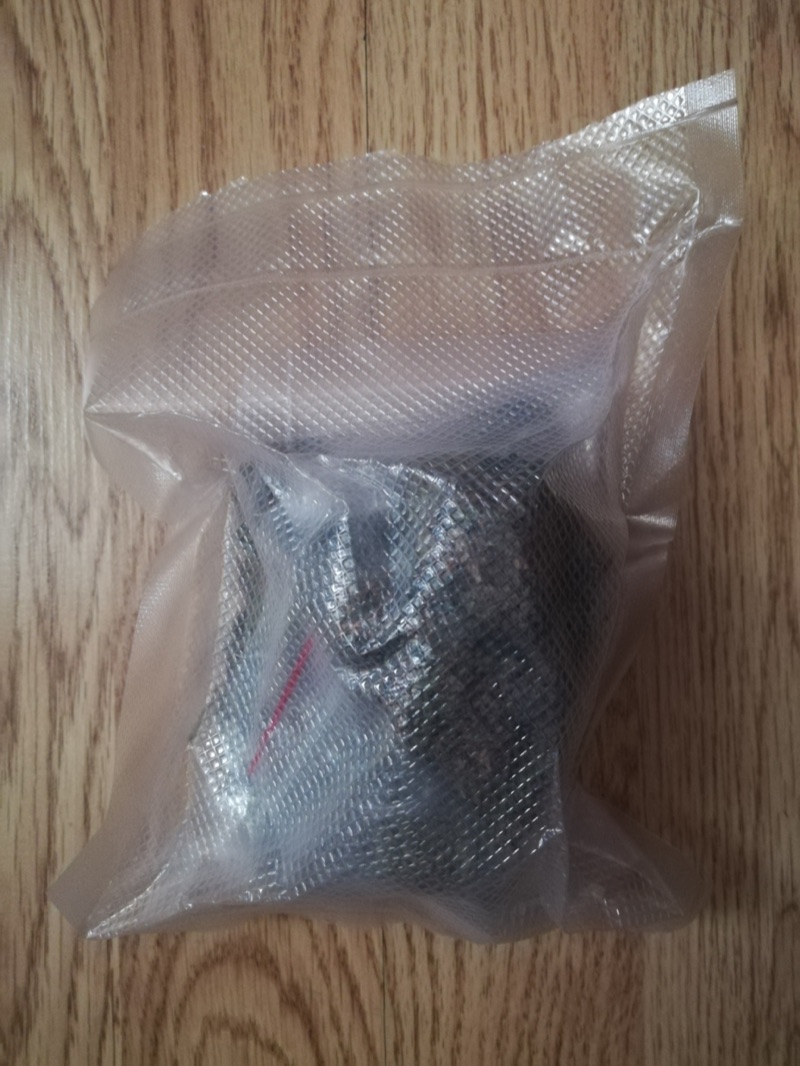
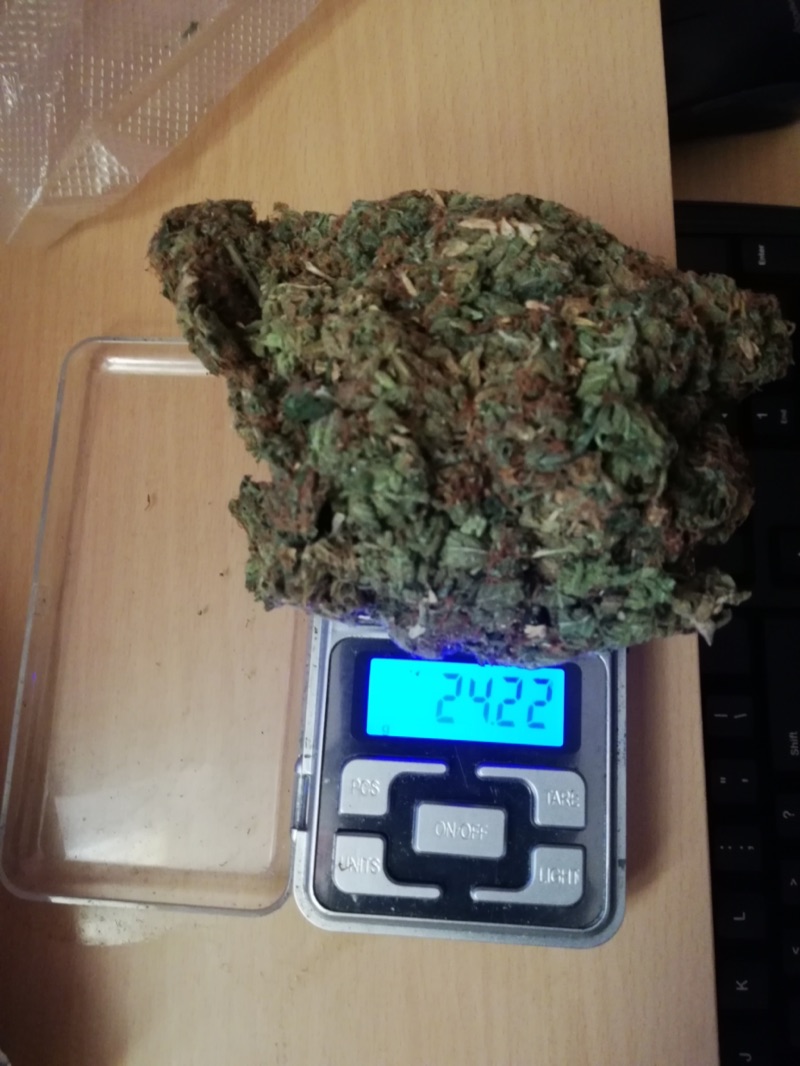
An ounce of cannabis flower is a substantial amount of weed by retail standards. Visually, 28 grams of dried, properly cured flower fills a wide-mouth one-quart mason jar to about three-quarters of the volume, depending on bud density. Loose, fluffy sativa flower takes up more jar space than dense, hashy indica nugs, but the weight on the scale is the same. A zip of premium top-shelf flower is usually packed in a 60ml or 90ml UV-tinted glass jar with a Boveda humidity pack tucked under the lid. A zip of mid-tier or budget flower more often comes in a sealed mylar bag with a one-way valve.
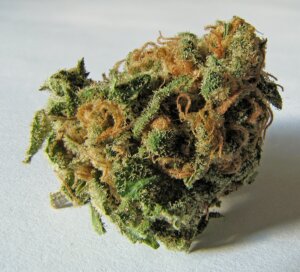
Bud quality at the zip price point matters more than at any other tier. An eighth from a craft brand at $50 is forgiving because the spend is small. A $260 zip is a real commitment, and you want to know whether you are buying top-shelf indoor, mid-tier greenhouse, or popcorn smalls before the budtender bags it up. Premium flower at a zip will look frosty with visible trichome coverage, smell loud through the jar, and break apart with a little resistance rather than crumbling to dust. Smalls and popcorn at a zip are smaller, denser nugs, often with the same genetics and potency as the top-shelf jar at the same brand, just less photogenic. Format is a price lever the budtender can use if you ask.
Freshness is the other consideration. A zip is enough flower to last most consumers two to six weeks. Stored well in a cool, dark space at 58 to 62 percent relative humidity per Boveda’s published storage guidance, an ounce holds its terpene profile and moisture for a full month or more. Stored badly (open jar, sunny shelf, no humidity control) the same flower can dry out in ten days and lose half its smell. The reason most zip jars ship with a Boveda or Integra pack is exactly this: a $260 ounce that turns brittle in two weeks is a much worse deal than a $260 ounce that smokes well across six weeks.
Zip vs Other Cannabis Quantities at a Glance
The zip sits at the top of the standard retail weights and at the bottom of the wholesale weights. For consumers, the most useful comparison is downward: how a zip stacks against the eighth, quarter, and half-ounce that make up most dispensary baskets, and how many joints or sessions each weight actually delivers. The table below assumes half-gram joints, which is the standard pre-roll size in most legal markets.
| Quantity | Slang | Grams | Avg Half-Gram Joints | Days of Use (Heavy / Moderate / Light) |
|---|---|---|---|---|
| 1 gram | Dub, gram | 1g | 2 | 1 / 2 / 4 |
| Eighth | Eighth, slice, eify | 3.5g | 7 | 3 / 7 / 14 |
| Quarter | Quarter, quad | 7g | 14 | 5 / 14 / 28 |
| Half-ounce | Half, half-O, half-zip | 14g | 28 | 10 / 28 / 56 |
| Ounce | Zip, oz, O | 28g | 56 | 14 / 30 / 60+ |
| Quarter-pound | QP | 113g | 226 | Bulk / wholesale |
| Pound | Elbow, LB, pound | 453g | 906 | Wholesale only |
The half-zip (also called a half-O) is exactly what it sounds like: 14 grams, half an ounce, a sweet-spot purchase for consumers who want a few weeks of supply without the higher upfront cost of a full zip. The QP and elbow are bulk weights that almost no consumer will ever buy at a licensed dispensary because state possession caps in adult-use markets stop at one or two ounces per transaction. Anyone talking about a QP at a retail counter is using cultivation or wholesale vocabulary, not consumer vocabulary.
For a side-by-side look at how a zip stacks against an eighth, a quarter, and a half ounce in real volume rather than just grams, see the complete weight chart with photos of each tier.
Where Does the Word “Zip” Come From?
The most widely accepted etymology for “zip” is the ziplock plastic baggie. Before legalization, a quarter-pound of weed packed neatly into a one-gallon ziplock bag, an ounce fit comfortably in a sandwich-size ziplock, and the bag itself became shorthand for the weight it carried. Zip and ounce became interchangeable in street vocabulary the same way “eighth” replaced “an eighth of an ounce” because nobody had time for the long version. The word was already in heavy circulation by the late 1990s and was a fixture in hip-hop lyrics and West Coast cannabis slang by the early 2000s.
A second, less popular theory ties “zip” to the letter Z, which is one of the most common shorthand letters used to mean “ounce” in cannabis text-messaging and forum slang. Z stood for ounce on cell-phone screens long before dispensaries existed, and “zip” might be a phonetic stretch of Z plus the closing-of-a-bag sound. Both origin stories track back to the same root: an ounce of weed in a plastic bag, named for the bag and the letter at the same time.
Today, “zip” is a generational and regional marker. It signals that the speaker grew up around legacy-market vocabulary, learned cannabis culture before the post-2014 legalization wave, or works the consumer-facing side of dispensary retail rather than the cultivation side. Younger consumers in newer adult-use states sometimes ask “what’s a zip?” the same way an older consumer might ask “what’s an eify?” The vocabulary keeps moving.
Should You Buy a Zip? Pros, Cons, and Who It’s For
A zip is the right purchase for a specific kind of consumer and the wrong purchase for everyone else. The bulk-discount math is the strongest argument for buying one. Most dispensary menus drop the per-gram cost meaningfully as the weight tier climbs. A gram at top-shelf prices might run $14 to $18, an eighth at the same brand drops to $35 to $50 (a per-gram price of $10 to $14), and a zip at the same brand lands at $200 to $260 (a per-gram price of $7 to $9). Buying a zip up front saves the regular smoker $100 to $200 over the equivalent in eighths.
The arguments against a zip are freshness, storage, and risk. A heavy daily smoker burns through a zip in two weeks. A moderate consumer takes a month. A light, weekend-only smoker takes two to three months, and at that pace the freshness of the bottom of the jar is the real concern. Cannabis dries out, terpenes off-gas, and a zip stored at ambient room humidity without a Boveda or Integra pack loses noticeable smell and flavor inside three weeks. The fix is straightforward: 62% RH humidity packs from Boveda, a UV-tinted glass jar, a cool dark cabinet, and the lid stays closed except when you are pulling flower out.
The other consideration is legal possession. Most US adult-use states cap personal possession of flower at one ounce, which means a single zip is the legal ceiling for what an adult-use consumer can carry at one time. NORML’s state-by-state legalization tracker documents the variations: California, Colorado, Nevada, Oregon, Washington, Massachusetts, Maine, Illinois, Michigan, and New Jersey all set adult-use possession at exactly one ounce of flower. New York and Connecticut allow up to three ounces in private. Maine permits up to two and a half ounces. Carrying more than the state cap, even within state borders, can move possession from a non-issue into a misdemeanor. A single zip stays inside the line in every adult-use state in 2026.
Buy a zip if you smoke daily or near-daily, you have a strain you already know you like, you have a real glass jar with a Boveda pack waiting at home, and the math saves you meaningful money over your usual eighth-by-eighth pace. Skip the zip if you are exploring new strains, you smoke once a week, or you do not have a way to store a full ounce properly for a month.
How to Save Money When Buying a Zip
The first lever is timing. Most dispensaries run a daily rotation: discount Mondays, Industry Tuesdays, Wax Wednesdays, Top-Shelf Thursdays, Flower Fridays. The ounce tier almost always shows up on at least one of those days at 15 to 25 percent off, sometimes deeper if a brand is clearing inventory. A $260 zip on a Tuesday becomes a $195 zip on a Friday at the same dispensary, same shelf. Walk past the menu price and look at the daily-deal flyer first.
The second lever is the loyalty program. Most adult-use dispensary chains run point-based loyalty that pays out 5 to 10 percent of total spend back as in-store credit. Stacking loyalty redemption against a daily zip deal can land you a top-shelf ounce for the price of a mid-tier ounce. Sign up at the door, give them an email or phone number, and watch the per-gram cost fall on every visit after the first.
The third lever is asking the budtender directly. Budtenders almost always know which brand has a quiet promo running, which jar has been sitting on the shelf longest, and which strains are about to hit a clearance discount. Walk in and say “I’m looking for the best zip in the shop today, top-shelf or solid mid-tier, what’s the move.” A good budtender will pull two or three options off the menu in 30 seconds. A great budtender will remember your name on the next visit and steer you toward the same kind of deal.
The fourth lever is format. Smalls, popcorn, and trim-grade flower from the same brand at the same potency can run 30 to 50 percent below the top-shelf jar. The buds are smaller and less photogenic, but if you are grinding everything you smoke anyway, the visual difference does not change the experience. Many regular smokers buy popcorn ounces specifically because the math is unbeatable.
The fifth lever is online order versus walk-in. Many dispensaries run online-exclusive promos that are not posted in-store. Browsing the menu the night before a visit, placing an online pickup order, and walking in with a confirmation number locks in pricing that the in-store budtender cannot always match.
Frequently Asked Questions
Is a zip the same as an ounce?
Yes. A zip and an ounce are the same weight: 28 grams of cannabis flower. The two terms are interchangeable across every legal market in the US. Dispensary receipts, menu software, and packaging compliance labels print “ounce” or “1 oz.” Consumers and budtenders use “zip” as casual slang for the same weight.
Is a zip of weed legal to possess?
In most US adult-use states, possessing one ounce of cannabis flower is fully legal for adults 21 and over. Per NORML’s state law tracker, California, Colorado, Nevada, Oregon, Washington, Massachusetts, Maine, Illinois, Michigan, and New Jersey set adult-use possession at exactly one ounce. New York allows up to three ounces in private and one ounce in public. Connecticut allows up to one and a half ounces. A single zip is the legal ceiling in most states and inside the limit in every adult-use state in 2026.
How long does a zip of weed last?
A zip lasts roughly two weeks for a heavy daily smoker, four to six weeks for a moderate consumer, and two to three months for a light or weekend-only smoker. Storage is the biggest variable. In a UV-tinted glass jar with a 62% RH Boveda pack in a cool, dark cabinet, a zip holds its terpenes and moisture for a full month or more. In a half-open bag on a sunny shelf, the same flower can dry out and lose noticeable smell inside ten to fourteen days.
What’s the difference between a zip and a half-zip?
A half-zip is half of a zip. That is 14 grams of cannabis flower, also called a half-ounce or half-O. A full zip is 28 grams. Per-gram pricing on a half-zip is usually slightly higher than on a full zip because bulk discounts scale with the weight tier, but a half-zip is a sensible middle-ground purchase for consumers who want a few weeks of supply without the upfront cost of a full ounce.
Why is it called a zip?
The most widely accepted origin is the ziplock plastic baggie. Before legalization, an ounce of cannabis fit comfortably in a sandwich-size ziplock bag, and the bag became shorthand for the weight it carried. A second theory ties “zip” to the letter Z, a long-standing text-message shorthand for ounce. Both origin stories trace back to the same era of pre-legal cannabis culture, and both involve an ounce of weed in a plastic bag.
How many joints can you roll from a zip?
At the standard half-gram joint size, a zip rolls 56 joints. At a full-gram joint, a zip rolls 28. Most dispensary pre-rolls are half-gram or 0.7g, so a real-world zip yields roughly 40 to 56 joints depending on how heavy a hand you have at the rolling tray. Bowls or one-hitter packs usually run 0.2 to 0.3g per session, which puts a zip at 90 to 140 sessions before it runs out.
Can I buy a zip in one visit?
In every US adult-use market, yes. The standard adult-use single-transaction limit is one ounce of flower, which is exactly one zip. A few states allow larger transactions for medical cardholders (often two and a half ounces in Maine, three ounces in some medical-only states). Recreational consumers cap at one zip per visit per dispensary in nearly every adult-use market in 2026.
Are there discounts for buying a zip vs an eighth?
Yes. The per-gram price drops as the weight tier climbs. A top-shelf eighth at $50 is roughly $14 per gram. The same brand’s zip at $220 is roughly $7.85 per gram, which is a 44 percent discount on the per-gram cost. Daily deals, loyalty redemption, and clearance promos can push the per-gram cost lower still. The bulk discount on the zip tier is one of the strongest reasons regular smokers buy ounces instead of stacking eighths.