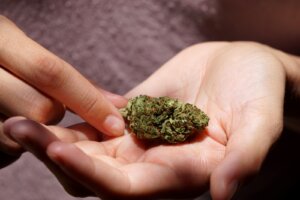
Cannabis is illegal in Armenia. Possession, sale, cultivation, and trafficking are all offences under the Criminal Code of the Republic of Armenia (in force from 2022) and the Code of Administrative Offences. Industrial hemp is licensed separately under government decree, and that distinction does not extend to consumer cannabis or CBD products.
Armenia has no public medical cannabis programme, no decriminalization framework for adult use, and no licensed dispensary network. Foreign prescriptions are not honoured at customs. The country has shown official interest in industrial hemp and licensed cannabidiol production for export, but those steps have not loosened personal-use law.
What the Law Actually Says
Cannabis is listed as a controlled substance in Armenia’s national drug schedule, maintained by the Ministry of Health under Government Decision N 1597-N. The Criminal Code that took effect in 2022 governs serious cannabis offences. The Code of Administrative Offences governs small-quantity possession that falls below the criminal threshold. The two codes operate together, with the boundary set by quantity bands defined in the Government Decision.
The relevant criminal articles are:
- Article 268: illegal acquisition, storage, or transport of narcotic substances without intent to sell
- Article 269: illegal acquisition, storage, or transport with intent to sell
- Article 270: illegal cultivation of narcotic-containing plants
- Article 271: organisation or maintenance of premises for narcotics use
Industrial hemp activity sits outside this framework only when it operates under a licence issued in accordance with Government Decree N 466-N on the cultivation of cannabis for industrial purposes. The Decree limits licences to corporate entities meeting strict security, fencing, and reporting requirements, and the licensed THC ceiling for plant material is below 0.2%. None of this creates personal-use rights.
Possession Penalties in Practice
Armenia uses quantity thresholds to separate administrative from criminal liability. Government Decision N 1597-N defines “small,” “large,” and “particularly large” quantities for each substance. For cannabis flower, the small-quantity threshold sits in the low double-digit grams, with the exact figure subject to periodic revision.
- Below the small-quantity threshold: administrative liability under the Code of Administrative Offences, typically a fine and possible mandatory drug treatment
- Small to large quantity, no intent to sell (Article 268): fines or imprisonment up to 4 years
- Large to particularly large quantity, no intent to sell: imprisonment 4 to 8 years
- Particularly large quantity (Article 268, aggravated): imprisonment up to 10 years
Foreign nationals are subject to identical thresholds. Tourist status carries no exemption, and Armenian police make arrests of foreigners on cannabis charges with regularity. The UNODC World Drug Report 2024 classifies Armenia as a transit country for cannabis trafficking through the South Caucasus, which contributes to active enforcement at airports and the Iranian and Georgian land borders.
Trafficking, Cultivation, and Aggravated Offences
Trafficking offences under Article 269 of the Criminal Code escalate quickly:
- Sale of small to large quantities: imprisonment 4 to 8 years
- Sale of large to particularly large quantities: imprisonment 6 to 12 years, with confiscation of property
- Sale of particularly large quantities, organised group, or to a minor: imprisonment 8 to 15 years
- Aggravated trafficking (state border, organised criminal group, weapons): imprisonment up to 15 years
Armenia abolished the death penalty in 2003 with the ratification of Protocol 6 of the European Convention on Human Rights. The maximum cannabis-related sentence is 15 years. Cultivation for personal use is prosecuted under Article 270, with sentences ranging from fines for a few plants to 4 to 8 years for large-scale grows. Cultivation of industrial hemp without a Decree N 466-N licence is treated as illegal cannabis cultivation, regardless of the THC content of the strain.
Importing cannabis across an Armenian border is prosecuted under Article 273 (smuggling of narcotic substances), with penalties that mirror or exceed the trafficking tiers depending on quantity and circumstances.
CBD and Medical Cannabis
Armenia does not recognise consumer CBD as a separate legal product category. CBD products derived from cannabis fall inside the Government Decision N 1597-N narcotics schedule, the same category as the cannabis plant. Customs officers do not test for THC concentration, which means a tincture or capsule labelled as “hemp-derived CBD” is treated as cannabis at the border. Travellers who order CBD oils online to a Yerevan address risk seizure, fines, and potential criminal exposure.
There is no public medical cannabis programme in Armenia. The Ministry of Health does not licence cannabis-based medicines for general patient access, and there is no patient registry, no dispensary network, and no flower-form pathway. Foreign prescriptions for medical cannabis are not honoured at customs. Armenia has authorised limited research and licensed CBD production for export under Decree N 466-N, but that activity is industrial, not clinical, and creates no domestic patient pathway.
What Actually Happens to Travelers
Foreign nationals face the same Criminal Code as Armenian citizens. The US State Department warns that “penalties for possession, use, or trafficking of illegal drugs in Armenia are severe, and convicted offenders can expect long jail sentences and heavy fines.” The UK Foreign Office similarly highlights that Armenia enforces its narcotics laws strictly and that Armenian prisons hold foreign nationals on drug charges.
Enforcement is most active at Zvartnots International Airport (Yerevan), at the Bagratashen and Bavra crossings on the Georgian border, and at the Meghri crossing on the Iranian border. Armenian police can stop and search foreigners on reasonable suspicion, and pretrial detention is common in narcotics cases. Bribery of officials is itself a criminal offence under Article 446 of the Criminal Code, with penalties that can match or exceed the underlying drug offence.
Consular assistance is limited to lists of local lawyers and visits to detainees. Embassies cannot intervene in Armenian criminal proceedings or expedite release. A criminal record from an Armenian drug offence can affect future Schengen-area travel and US visa applications.
For regional context, see our guides to cannabis laws in Georgia, Iran, Turkey, and cannabis laws across Europe.
No. Cannabis is illegal in Armenia for both recreational and consumer medical use. Possession, sale, cultivation, and trafficking are offences under Articles 268 to 273 of the Criminal Code. Industrial hemp is licensed separately under Government Decree N 466-N, and that licence does not extend to personal use.
Below the small-quantity threshold, possession is administrative: a fine and possible drug treatment. Above the threshold under Article 268, penalties range from fines or up to 4 years imprisonment for small to large quantities, 4 to 8 years for large to particularly large quantities, and up to 10 years for aggravated offences.
Up to 15 years imprisonment with confiscation of property, applied to particularly large-quantity trafficking, organised group activity, sale to minors, or smuggling across the state border under Articles 269 and 273 of the Criminal Code. Armenia abolished the death penalty in 2003.
No. CBD is not a recognised consumer legal product category in Armenia. CBD products derived from cannabis fall under the same narcotics schedule as the cannabis plant under Government Decision N 1597-N. Customs officers do not test for THC concentration, so CBD oils and capsules are treated as cannabis at the border.
No. Armenia has no public medical cannabis programme. The Ministry of Health does not licence cannabis-based medicines for general patient access. Foreign prescriptions are not honoured at customs. Armenia licenses industrial hemp and CBD production for export under Decree N 466-N, but that activity creates no domestic patient pathway.