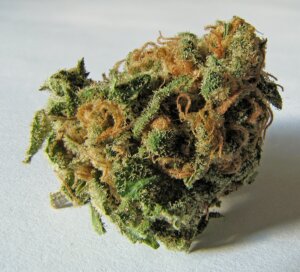
The PAX Mini oven is 0.35 grams. That number sounds insignificant until you’re packing a session’s worth of flower and realizing the math actually works out: two draws at 360°F to taste what you’re working with, then four denser pulls at 380°F to get through the bowl cleanly. I’ve put the Mini through a dozen sessions across three different strains: a terpene-forward Mimosa cross, a resinous GMO Cookies, and a dry-cured Blue Dream. The oven has been exactly right every time.
The temperature presets are where most PAX Mini reviews miss the point. The Mini has four settings: 360°F (green), 380°F (yellow), 400°F (orange), and 420°F (red). These aren’t incremental nudges. Each one produces a meaningfully different session. At 360°F, vapor is thin and barely visible on exhale but the terpene expression is clean. You taste the citrus in a good Mimosa or the diesel note in a GMO before the heat burns them off. At 380°F, vapor goes from thin to genuinely productive. The oven extracts efficiently without sacrificing first-session flavor. I spent most of my testing time at this setting.
At 400°F, draw resistance increases and vapor becomes dense enough to see in dim light. The flavor starts going sharp: still functional, but past the terpene-preservation window. This is where I finish a bowl once it’s already halfway through. At 420°F, extraction is aggressive. Dense hits, reduced flavor, noticeable harshness compared to the lower settings. I use the max setting almost exclusively to clear a bowl rather than open one.
Battery life tracked closely with PAX’s 90-minute spec. Across three full 0.35g sessions at alternating 380°F and 400°F, the single vibration warning fired partway into the third bowl. USB-C charging took 52 minutes from roughly 20% back to full using a standard 5-watt phone charger. The cable is included; the charging brick is not.
PAX Mini Specs: What $150 Actually Gets You

The PAX Mini retails at $150 and periodically drops to $129 during promotional windows. Here’s what comes with the device:
| Spec | Detail |
|---|---|
| Price | $150 MSRP ($129 to $135 on sale) |
| Temperature settings | 4 presets: 360°F / 380°F / 400°F / 420°F |
| Oven capacity | 0.35g ground dry herb |
| Battery life | ~90 minutes active use per charge |
| Charging | USB-C, ~50 to 55 min to full (brick not included) |
| Warranty | 10 years |
| Dimensions | 3.6 x 0.9 x 0.9 in |
| Colors | Onyx, Sage, Elderberry, Periwinkle |
| In-box accessories | USB-C cable, 2 oven screens, multi-tool, cleaning wipes |
The 10-year warranty is the spec that matters most over time. PAX honors it on the device itself, not just the battery. If the oven lip warps, the draw path clogs from a manufacturing defect, or the button stops registering, PAX replaces or repairs it within that window. For a $150 device, that coverage is rare. For context on how vape hardware sits next to other category options, see our overview of types of vape cartridges.
Four Temperature Settings: What Each One Does in Practice
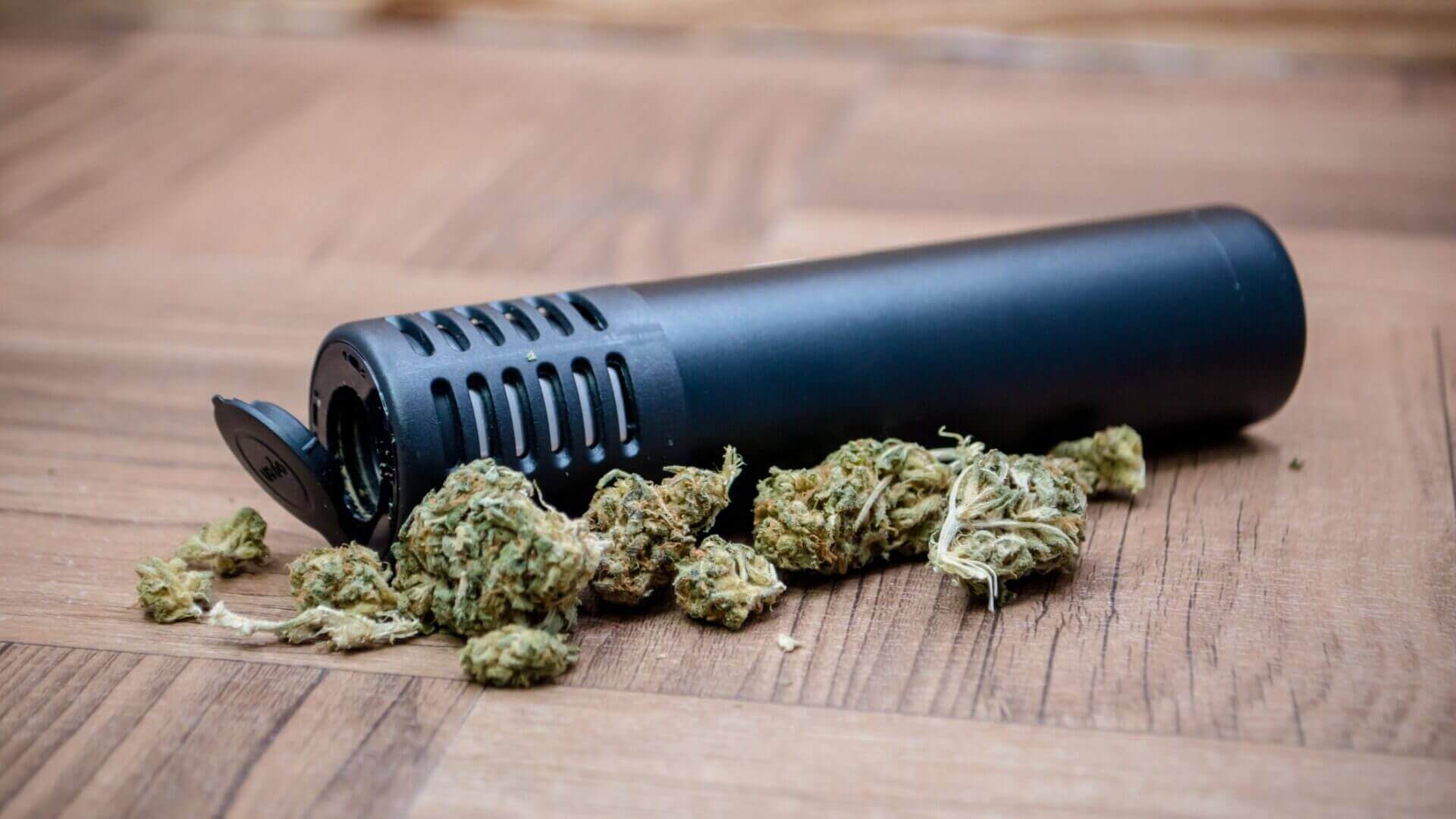
360°F (Green): The lowest setting runs cooler than most vapes default to. Vapor is thin, sometimes barely there, but the terpene expression is accurate. This is the setting for your first two draws when you want to taste a new strain before committing to full extraction. Mimosa strains, any citrus-forward cultivar, and anything cured specifically for flavor perform best here.
380°F (Yellow): The production setting. Vapor becomes fully visible and draw resistance drops into a comfortable range. Most dry herb extracts evenly here across the full 0.35g oven. Blue Dream and similarly open-structure cultivars reach their peak at 380°F: full extraction without the harshness that comes at higher temps. If you only ever use one setting, use this one.
400°F (Orange): The mid-session setting. By the time you’ve pulled four draws at 380°F, the bowl has warmed through and 400°F closes out the remaining compounds efficiently. Vapor is dense at this point. Draw resistance increases slightly. The flavor is more toasted than terpene-forward, but extraction is thorough. Dense resinous cultivars like GMO Cookies perform better at 400°F than at 380°F.
420°F (Red): Reserve this for finishing. The draw at this setting is noticeably harsher, vapor is thick, and any remaining flavor character is mostly gone. You’re not extracting for quality at 420°F. You’re clearing the oven. Two or three draws at max at the end of a session extracts whatever 380°F left behind. Then you clean and reload. A clean grind helps here, which is why a quality grinder matters as much as the device; our roundup of the best cannabis grinders covers the trade-offs.
Battery Life: One Session or Three?
PAX advertises approximately 90 minutes of active session time per charge, which translates to roughly three to four full 0.35g bowls depending on temperature and draw length. In my testing: three sessions at alternating 380°F and 400°F, each bowl fully exhausted before reload. The single vibration warning fired midway through the third session. The second vibration (low battery) came about 10 minutes after that.
The battery indicator communicates through lip vibrations: one vibration for green (above 50%), two for yellow (25 to 50%), three for red (below 25%). It’s subtle and easy to miss the first few sessions if you’re not paying attention. Once you’re calibrated to it, the system is reliable. Pair the Mini with a personal filter like the one we cover in our Smoke Buddy review when discretion matters, since dry-herb vapor still carries a noticeable smell at 400°F and up.
Charging is straightforward. USB-C from near-empty took 52 minutes to full using a standard 5W brick. The Mini does not support pass-through charging: it cannot be used while plugged in. For heavy daily use, charging overnight handles it. For on-the-go situations, keep the USB-C cable in the same bag as the device.
PAX Mini vs. PAX 3: Side-by-Side Comparison
The PAX 3 costs $249, which is $99 more than the Mini. Here’s what that premium buys. The full breakdown lives in our PAX 3 review:
| Feature | PAX Mini ($150) | PAX 3 ($249) |
|---|---|---|
| Temperature control | 4 presets (360/380/400/420°F) | Precise app-controlled increments |
| Oven capacity | 0.35g | 0.35g full, 0.15g with half-pack lid |
| Concentrate use | No | Yes (insert included) |
| Mobile app | No | Yes (Bluetooth, iOS + Android) |
| Battery life | ~90 min active | ~90 min active |
| Charging | USB-C | USB-C |
| Warranty | 10 years | 10 years |
| Colors | 4 options | 6 options |
The PAX 3 advantages are real: precise temperature via app, a concentrate insert, and the half-pack lid for microdosing sessions. If you use concentrates even occasionally, or want to dial in temperature at 373°F rather than jumping between presets, the $99 premium is justified.
If you use dry herb exclusively and have no interest in managing a Bluetooth app during a session, the Mini is the better purchase. Oven quality is identical, battery life is identical, warranty is identical, and the four presets cover every meaningful extraction scenario. You’re not getting inferior vapor from the Mini. You’re getting the same vapor with fewer options.
Packing the 0.35g Oven: One Adjustment That Changes the Session
The rated oven capacity is 0.35g. A tight full pack at that capacity consistently produces more draw resistance than a loose pack at 0.25 to 0.30g. This is not unique to the PAX Mini: most conduction vapes perform better with slightly under-packed ovens. But the Mini is sensitive enough that the difference is noticeable from the first draw.
Grind coarseness also matters. A medium grind: finer than you’d roll, coarser than a fine powder. Too fine and the screen clogs after 8 to 10 sessions. Too coarse and the draw at 380°F underperforms because the surface area contacting the oven floor is too small for even conduction.
The multi-tool included with the Mini has a pick end specifically sized for mid-session stirring. After four or five draws at 380°F, a quick stir redistributes unextracted material toward the oven screen and produces a noticeably more productive second half. It takes five seconds. Use it every session.
Best For / Skip If
Best for: dry-herb-only users who want a reliable pocket vaporizer without Bluetooth overhead; anyone moving off combustion who wants consistent temperature control without a learning curve; sessions that need to be fast and clean: pack, draw, done in ten minutes.
Skip if: you use concentrates at all (the Mini has no insert and no compatibility with wax or oil); you want sub-degree temperature precision (the 20°F gaps between presets are meaningful for very terpene-forward cultivars); you already own a PAX 3 (nothing is gained by adding a Mini).
At $150, the PAX Mini is the most defensible entry into the PAX lineup for anyone whose use case is straightforward: ground flower, pocket carry, four-setting simplicity, 10-year warranty. The PAX 3 exists for users whose needs have outgrown those constraints. Most dry-herb-only users haven’t. For other accessory and device verdicts in this category, see more product reviews.
PAX Mini FAQs
Does the PAX Mini have temperature control?
The PAX Mini has four preset temperature settings: 360°F, 380°F, 400°F, and 420°F. There is no mobile app and no continuous dial. Each preset produces a meaningfully different vapor density and flavor profile, making the four-step range practical for most dry-herb users.
How long does the PAX Mini battery last?
PAX rates the Mini at approximately 90 minutes of active session time per charge. In real-world testing across three full 0.35g sessions at 380 to 400°F, the battery warning vibration fired partway through the third bowl. USB-C charging from near-empty takes approximately 50 to 55 minutes.
What is the PAX Mini oven size?
The PAX Mini oven holds 0.35 grams of ground dry herb. Packing it loosely at 0.25 to 0.30 grams typically produces better airflow and more even extraction than packing to the rated maximum.
PAX Mini vs. PAX 3: which should I buy?
The PAX Mini costs $150; the PAX 3 costs $249. If you only use dry herb and do not want to manage a Bluetooth app, the Mini is the better value. The PAX 3 adds app-controlled precise temperatures, a concentrate insert, and a half-pack lid. Those features only matter if you use concentrates or need sub-degree temperature precision. The full comparison sits in our PAX 3 review.
Does the PAX Mini work with concentrates?
No. The PAX Mini is dry herb only and does not have a concentrate insert. The oven is not compatible with wax or oil. For dual-use herb and concentrate sessions, the PAX 3 ($249) includes a concentrate insert in the box.