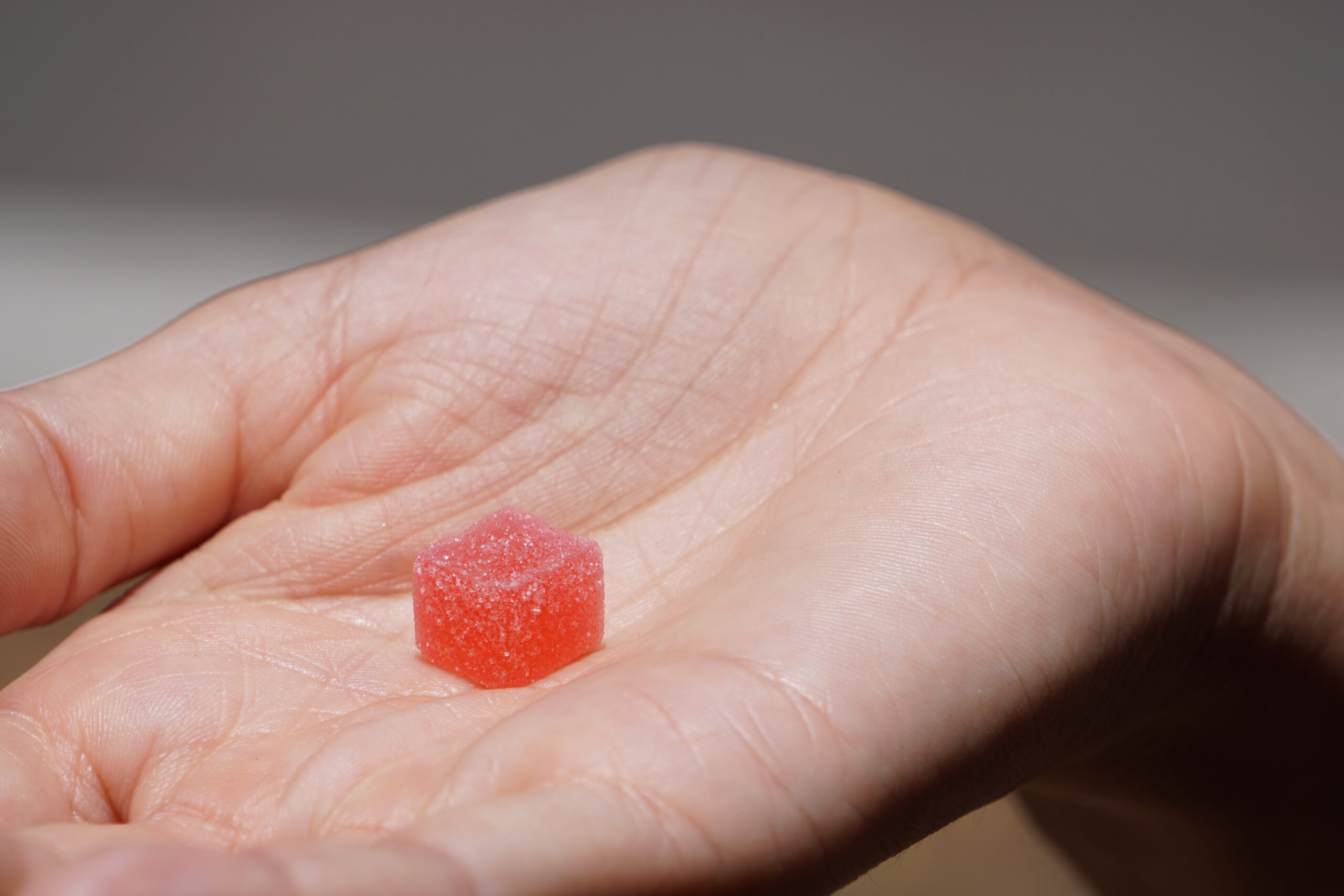
Homemade cannabis gummies have one technical advantage over a brownie or a cookie: every gummy in the batch is the same size. If the dose is even across the molds, every piece carries the same milligrams of THC. The trick is getting the dose even in the first place, and keeping it even while the mixture cools and sets. This guide walks through the equipment, the dosing math, two recipes (gelatin and pectin), and the chemistry behind why home batches separate, weep, or come out weak.
If brownies are more your speed, our companion hash brownies recipe with dosing math uses the same cannabutter approach in a baked format. Cannabutter prep is detailed in how to make cannabutter. The principles transfer: decarb first, infuse the fat, do the math, dose evenly.
What You Need to Make Cannabis Gummies
Equipment matters more for gummies than for most edibles, because the dose hinges on the mold being uniform and the pour being clean. Stock the kitchen before starting:
- Silicone gummy mold, 20 to 50 cavities. Silicone releases cleanly without sticking; rigid plastic does not
- Plastic dropper or small ladle with a spout for pouring molten mix into cavities without dribble
- Double boiler, or a heavy-bottom saucepan over a heat diffuser
- Digital thermometer (instant-read or candy clip-on); the recipe lives or dies on a 160 to 180°F window
- Kitchen scale that reads to 0.1 g; volume measures are too imprecise for cannabis dosing
- Silicone whisk and silicone spatula
- Small fine-mesh strainer, in case the gelatin clumps
Ingredients fall into two groups: the gummy base (the texture system) and the cannabis (the active). Each base ingredient does a specific job:
- Unflavored powdered gelatin, 4 packets (about 28 g) for a 20-gummy batch. Gelatin is hydrolyzed collagen; it forms the protein network that holds the gummy structure together as it cools
- Fruit juice, 1 cup, 100% juice with no calcium added (calcium interferes with pectin and complicates flavor). Juice carries flavor, color, and the acid that lets the gel set firm
- Granulated sugar, 3/4 cup, plus more for the citric acid coating step
- Citric acid, 1 tsp inside the mix and 2 tbsp for the sour coating. Citric acid brightens the flavor, lowers pH so the gel firms up, and acts as a mild antimicrobial that extends shelf life. The FDA recognizes citric acid as generally recognized as safe (GRAS) under 21 CFR 184.1033
- Sunflower lecithin, 1/2 tsp. Lecithin is a phospholipid emulsifier; it lets oil and water-based ingredients hold together instead of separating. Sunflower lecithin is allergen-friendly compared to soy. Lecithin works because each molecule has a hydrophilic head and a hydrophobic tail, bridging fat and water
- Cannabis infusion (choose one): cannabis tincture, infused coconut oil, or distillate. Tincture is alcohol-based and mixes most easily with water-based gummy bases. Infused oil and distillate need lecithin to incorporate. See dosing math below
How to Dose Cannabis Gummies Accurately
The math is simple. The execution is where most home batches go wrong.
The formula: total mg of THC in the infusion divided by the number of finished gummies = mg per gummy.
Worked example: 1 mL of distillate at 100 mg THC, divided across 20 gummies, lands at 5 mg of THC per gummy. If the same 100 mg distillate is split across 50 mini-gummies, each piece carries 2 mg.
If the starting material is decarbed flower-based tincture or infused oil, you have to back-solve from the flower’s THC percentage and assume a 40 to 60% extraction efficiency, the same way our visual guide to cannabis quantities walks through gram-to-dose conversions. With distillate the math is cleaner because the cannabinoid content is already concentrated and lab-tested.
Suggested dose ranges:
- Beginner or low tolerance: 2 to 5 mg per gummy
- Intermediate: 5 to 10 mg
- Experienced or high tolerance: 10 to 25 mg
- Above 25 mg per piece is medical-tier; cut large gummies in half before eating one
Dose tolerance varies wildly by body weight, recent eating, prior cannabis exposure, and individual liver enzyme activity. Leafly’s edibles primer and PotGuide’s dosing breakdown both place the standard recreational starting dose at 5 mg per piece, which is also the per-serving cap in most regulated US markets.
Step-by-Step Recipe (Gelatin Method)
Yield: 20 gummies at roughly 1 tsp each. Active time: 15 minutes. Total time: 2 hours including set time. The hard rule is the temperature ceiling: never let the mix climb past 200°F. Heat above that threshold accelerates THC degradation, the same constraint Leafly’s decarboxylation guide describes for the activation step.
- Pour 1 cup of fruit juice into the saucepan. Sprinkle 4 packets (about 28 g) of unflavored gelatin across the surface. Let it sit 5 minutes to “bloom” while the granules absorb water and swell
- Add 3/4 cup granulated sugar and 1 tsp citric acid. Place the pan over low heat and warm slowly to 165°F, whisking gently. Do not boil. Boiling shears the gelatin protein and weakens the gel
- When the mixture is clear and homogeneous (about 5 to 7 minutes), reduce heat to lowest setting. Stir in 1/2 tsp sunflower lecithin until fully dissolved
- Pull the pan off heat. Let it cool to about 150°F before adding the cannabis. Add the tincture, infused oil, or distillate (the dose calculated above). Whisk for a full 60 seconds. The lecithin will pull the cannabis into the mix instead of letting it float on top
- Pour into the silicone mold using the dropper. Fill each cavity to the rim. Stir the bowl every 4 to 5 cavities; cannabis is denser than the base mix and will settle if you walk away from it. Stirring between pours is the single most important step for even dosing
- Let the gummies sit at room temperature for 15 minutes. Move the tray to the fridge for 60 to 90 minutes
- Pop the gummies out of the mold. Toss them in 2 tbsp granulated sugar mixed with 1 tbsp citric acid for a sour-coated finish, or in plain sugar for sweet
- Lay the coated gummies on a parchment-lined tray for 12 hours at room temperature. This air-dry step toughens the outside and gives the gummies a shelf life worth bothering with
Step-by-Step Recipe (Vegan Pectin Method)
Pectin is the plant-based alternative to gelatin. It is extracted from citrus peels and apple pomace and gels through a different mechanism: pectin requires acid plus sugar to set, where gelatin sets just from cooling. The substitution is not one-to-one, and the texture is firmer and slightly chewier than gelatin gummies. Pectin chemistry varies by type (high-methoxyl pectin needs more sugar and acid; low-methoxyl pectin needs calcium ions), so use a recipe-grade pectin labeled for jams or jellies.
Substitution swaps for the recipe above:
- Replace the 4 packets of gelatin with 2 tbsp powdered fruit pectin
- Increase the sugar from 3/4 cup to 1 cup. Pectin needs the higher sugar concentration to set
- Increase the citric acid in the mix from 1 tsp to 1 1/2 tsp. Pectin gels best at a pH of about 3.0 to 3.5, lower than gelatin requires
- Cook the mix to 220°F briefly to activate the pectin, then drop the heat fast and pull the pan to 150°F before adding cannabis. The 220°F window is short, under 2 minutes, and only the pectin needs that heat. The cannabis goes in only after the mix has cooled
Pectin gummies set faster than gelatin, sometimes in 30 to 45 minutes in the fridge. They also dissolve more slowly in the mouth, which can change perceived onset for sublingual chewing. Hold them in the mouth and break them up against the palate; do not swallow whole.
How to Make Gummies with Cannabutter, Coconut Oil, or Tincture
The infusion choice changes texture, flavor, and dosing precision. A quick comparison:
- Alcohol tincture (highest-proof grain alcohol or Everclear-based). Cleanest mix with water-based gummies. Alcohol carries cannabinoids in solution and integrates fastest into the juice base. Some of the alcohol cooks off during the heating step. Flavor stays mild. Dose is precise if the tincture is lab-tested or volumetrically measured
- Cannabis-infused coconut oil. Saturated fat with a low melting point. Works in gummies only with lecithin. Without it, the oil rises during the cooling phase and you end up with greasy spots on top of every gummy. Coconut oil-based gummies have a faint coconut note in the flavor
- Cannabutter. Same fat-based behavior as coconut oil, but with butterfat. Slight savory note in the final gummy. Use only if you have cannabutter on hand and a recipe that masks the dairy taste. Lecithin is mandatory for incorporation
- Distillate (THC concentrate). The most precise dose because it ships with a lab COA showing exact mg per mL. Mixes well with lecithin. Heat carefully; never above 200°F. Distillate is what most commercial gummy makers use for that reason
For dosing precision, distillate or alcohol tincture beats infused oil and cannabutter. For flavor and traditional approach, the oil and butter routes feel closer to the home-cooking style. Pick by which gives a cleaner final gummy for the recipe you are making.
The Lecithin Question (and Why Your Gummies Separate)
Cannabis is fat-soluble. Gummy bases are mostly water (juice plus dissolved sugar plus the protein scaffold from gelatin or pectin). Oil and water do not mix on their own; they form two layers, with the oil floating on top because it is less dense. If you skip lecithin, an oil-based infusion floats to the top of the molten mix, sits on the surface of every cavity as it pours, and once the mix sets, the oil layer is concentrated in the upper millimeter of every gummy. The bottom of each gummy ends up under-dosed and the top ends up over-dosed.
Lecithin solves the problem because each molecule is amphiphilic: a polar head that bonds with water and a non-polar tail that bonds with fat. Stir lecithin into a hot, water-based mix with an oil-based infusion, and the lecithin molecules array themselves at the interface, pulling the oil into stable suspension. The fat-soluble cannabinoids hitch along.
Sunflower vs. soy lecithin: chemically similar emulsifiers, with one practical difference. Soy lecithin is a common allergen and carries a soy flavor note in larger doses. Sunflower lecithin is allergen-friendly and flavor-neutral. For 20 gummies, 1/2 tsp is enough to lock the emulsion. More is not better; over 1 tsp can give a slick mouthfeel.
Tincture-based gummies (alcohol carrier) usually do not need lecithin because the alcohol acts as its own bridge between the cannabis and the water-base. Distillate and cannabutter and coconut oil all need lecithin every time.
Troubleshooting: Sticky, Grainy, or Weak Gummies
Five failure modes account for almost every botched batch. Each has one fix.
- Sticky gummies that fuse together in storage. Cause: not enough gelatin or no acid coat. Fix: bump the gelatin to 5 packets next batch, and dust the finished gummies in citric acid plus sugar. The acid coat creates a sour skin that absorbs ambient moisture before it reaches the gummy itself
- Grainy texture inside the gummy. Cause: sugar did not fully dissolve. Fix: hold the mix at 165°F a minute longer, whisking, until the mixture is glassy and smooth before adding cannabis
- Weak potency, gummies barely hit. Cause: infusion overheated, was under-decarbed, or the dose math missed extraction efficiency. Fix: never let the saucepan go above 200°F, confirm the starting flower or oil has actually been decarbed, and assume 40 to 60% extraction efficiency for home-made tinctures and infused oils when calculating mg per gummy
- Uneven potency, some gummies hit hard and others barely. Cause: no lecithin or no stirring between pours. Fix: add 1/2 tsp sunflower lecithin to the mix and re-whisk the bowl every 4 to 5 cavities while pouring
- Gummies weep liquid in the fridge. Cause: too much liquid relative to gelatin, or pectin pH too high. Fix: reduce juice by 2 tbsp, or add 1/2 tsp more citric acid to drop pH closer to 3.0
How to Store Cannabis Gummies
Storage windows depend on the coating and the container:
- Counter (airtight container, room temperature): 3 to 5 days max. Beyond that, gummies start to weep, fuse, and grow surface mold
- Fridge (airtight, single layer with parchment between layers): 2 to 3 weeks. The cold slows microbial growth and stiffens the gel
- Freezer (vacuum-sealed or wrapped in parchment then bagged): 6 months. Thaw 30 minutes at room temperature before eating
The citric acid coating extends the counter window and the fridge window. Citric acid lowers the surface pH below the threshold where most spoilage bacteria thrive, which is why FDA’s GRAS designation under 21 CFR 184.1033 covers citric acid as both a flavoring and a preservative. Pair the acid coat with airtight storage and the gummies hold up.
Label the container clearly. Dose per gummy, date made, and the words “infused” or “THC” on the outside. Edibles look like candy; that is the entire safety problem. Store them away from anyone (kids, pets, roommates) who might mistake them for the regular kind.
How Long Do Cannabis Gummies Take to Kick In?
Onset depends entirely on whether the gummy gets swallowed or held in the mouth. Two pathways:
- Sublingual (held in the mouth, dissolved slowly): 15 to 45 minutes to first effects. Cannabinoids absorb across the mucous membrane in the mouth and enter the bloodstream directly, bypassing the digestive tract
- Swallowed (chewed and swallowed quickly): 60 to 90 minutes to first effects, with the peak around 2 to 3 hours. THC has to pass through the stomach, the small intestine, and then the liver before it reaches the brain
The reason the swallowed pathway hits harder than smoking is the liver. The liver converts delta-9-THC into 11-hydroxy-THC, a metabolite that crosses the blood-brain barrier more readily than the parent compound. Per the Huestis review of cannabinoid pharmacokinetics in PubMed, edible THC produces substantially more 11-hydroxy-THC than smoked THC because of first-pass hepatic metabolism, and 11-hydroxy-THC is widely considered more psychoactive on a per-milligram basis than delta-9 itself. That is why a 5 mg edible can feel stronger than 5 mg of inhaled THC.
Practical timing rule: cut a test gummy in half, eat one half, and wait a full 90 minutes before deciding to eat more. Almost every “I had a bad time on edibles” story ends with “I ate another one because the first wasn’t working.” If that happens, our piece on what to do when edibles do not kick in covers the patience tactics, and how long edibles take to kick in walks through the metabolic pathway in more detail. NIDA’s overview of cannabis pharmacology covers the science behind delayed onset.
Frequently Asked Questions
Can you make cannabis gummies without lecithin?
Yes, if the cannabis is in alcohol-tincture form. Alcohol acts as its own bridge between fat-soluble cannabinoids and a water-based gummy mix. With distillate, cannabutter, or infused coconut oil, lecithin is required to keep the dose even across every gummy in the batch. Without it, the oil floats to the top of each cavity and the dose stratifies.
Can you use store-bought THC tincture?
Yes, and it is often the cleanest route. Store-bought tincture comes with a lab-tested COA showing mg of THC per mL, which removes the extraction-efficiency guesswork that shadows home-infused oils. Substitute the tincture for the cannabis dose called for in the recipe and proceed. Alcohol-based tinctures cook off most of the alcohol during the heating step, so the final gummy is non-alcoholic in any practical sense.
How strong should homemade gummies be?
For a beginner, 2 to 5 mg of THC per gummy. For someone with regular tolerance, 5 to 10 mg per gummy. Above 10 mg, label the batch clearly and treat it the way a pharmacy treats a higher-dose tablet: handle one piece at a time, never eat two before the first kicks in, and store away from anyone who might confuse them for non-infused candy.
How do you make sour cannabis gummies?
Toss the finished gummies in a 2:1 mixture of granulated sugar and citric acid (about 2 tbsp sugar to 1 tbsp citric acid for a 20-gummy batch). The citric acid coat creates a sour bite on the outside while the sweet center remains the same. The acid layer also extends shelf life by lowering the surface pH below the range where spoilage bacteria thrive.
Can you make CBD-only gummies the same way?
Yes. Substitute CBD tincture, CBD oil, or CBD distillate for the THC infusion at whatever dose suits the goal (10 to 25 mg per gummy is a common range). The recipe technique is identical, and the same lecithin and decarbing rules apply. CBD does not produce intoxication, so the dosing latitude is much wider, but the food-science part of the recipe (gel ratios, acid balance, lecithin emulsification) is unchanged.
More cannabis recipes you’ll love
- Cannabis Hash Brownies (the cocoa-and-cannabutter dessert anchor of the cluster)
- How to Make Cannabutter (the slow-cooker fat that powers the brownie recipe)
- Cannabis-Infused Olive Oil (the savory pivot, drizzle-not-fry method, for pasta and salads)