No. Smoking weed that has mold on it is not safe, and you cannot fix it. You cannot burn the mold off with a lighter, you cannot bake it out in the oven, you cannot kill it in the microwave, and a slow cure will not save it. The toxins and spores survive long after the flame is gone. If a bud is moldy, the move is to throw it out, not to light it.
That is the verdict. The rest of this answers everything people actually ask after they find a fuzzy nug in the bottom of the jar: what mold on weed looks like, how to tell it apart from trichomes and kief, what happens to your lungs if you smoke it, who gets seriously hurt, and how to keep it from happening again.

Quick answer: Moldy cannabis is unsafe to smoke, vape, or eat. Heating it does not destroy the mold or its toxins, and the spores can cause serious lung infections, especially in anyone with asthma, a weak immune system, or existing lung disease. There is no salvage method. Discard the affected flower and clean the container.
What Happens If You Smoke It. Nothing Good.
Burning moldy weed does not sterilize it. Combustion happens at the tip of the joint or bowl, but you are still pulling unburned smoke, particulate, and fungal material down your airway with every draw. Some of the spores and the toxic byproducts mold produces are heat stable, which means a lighter, a torch, or a vaporizer does not reliably destroy them. You inhale them.
In the short term, smoking contaminated flower can trigger coughing, wheezing, chest tightness, a sore throat, sinus irritation, headache, and nausea. People with allergies or asthma can have a sharper reaction, because mold is a known respiratory irritant and allergen. The CDC notes that mold exposure can cause stuffy nose, wheezing, and red or itchy eyes or skin, and that people with asthma or mold allergies can have stronger reactions. The EPA documents that inhaling or touching mold can cause allergic and respiratory symptoms even in otherwise healthy people.
The bigger problem is not the cough. It is what certain molds do once they reach lung tissue.
Is Moldy Weed Dangerous. The Aspergillus Problem.
Yes. The mold most often found on cannabis includes species of Aspergillus, a common environmental fungus that is mostly harmless to breathe in tiny amounts but can cause a serious illness called aspergillosis when it takes hold in the lungs. The CDC describes aspergillosis as an infection caused by Aspergillus that most often affects the lungs and tends to strike people with weakened immune systems or lung disease. Smoking moldy flower delivers a concentrated dose of spores straight to the place the infection likes to start.
Aspergillosis is not one disease. It runs from an allergic reaction in the airways, to fungal balls that grow inside old lung cavities, to invasive infection that spreads from the lungs into the bloodstream and other organs. The American Lung Association explains that invasive aspergillosis is the most severe form and can be life threatening, particularly in people with compromised immune systems. NIH MedlinePlus lists fever, chest pain, cough, coughing up blood, and shortness of breath among the symptoms of an invasive infection.
There are documented cases in medical literature of aspergillosis in cannabis users, several of them in patients who were immunosuppressed and used cannabis medically. Healthline summarizes the clinical concern: contaminated cannabis can carry Aspergillus and other molds, and inhaling them poses a real infection risk for vulnerable people. National Capital Poison Control flags contamination as one of the practical hazards of cannabis use in its overview of cannabis risks and effects.
One bad bowl will not give a healthy person an invasive lung infection in most cases. But the risk is not zero, the worst outcomes are severe, and you have no way to know from looking at it how heavy the spore load is or which species you are dealing with. That uncertainty is the whole argument. You are gambling your lungs to save a few grams.
Who Gets Hurt Worst. The High-Risk Groups.
Everyone can react to mold. A specific set of people can be seriously harmed by it. If you are in one of these groups, treat any suspicion of mold as a hard stop.
- Immunocompromised people. Chemotherapy patients, organ and stem cell transplant recipients, people with HIV, and anyone on long term steroids or immune suppressing drugs. The CDC identifies a weakened immune system as the primary risk factor for invasive aspergillosis. This is the group with the highest reported fatality risk.
- People with asthma or COPD. Existing airway disease makes both allergic reactions and fungal colonization more likely and more severe.
- People with prior lung damage. Old tuberculosis scars, cavities, sarcoidosis, or cystic fibrosis give fungal balls a place to grow.
- Medical cannabis patients. Many use cannabis precisely because they are sick, which often means they are also immunocompromised. This is the worst possible overlap, and it is exactly the population case reports describe.
- People with mold allergies. A known mold allergy means a sharper, faster allergic and respiratory reaction to inhaled spores.
If that list includes you, there is no acceptable amount of visible mold on flower you put in your lungs.
What Mold On Weed Looks Like. Spot It Before You Light It.
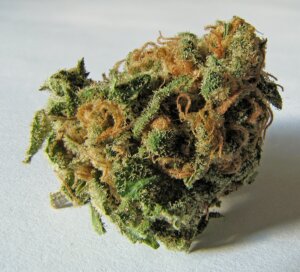
Healthy cannabis has texture, but it does not have fuzz. Mold shows up as a dull, dusty, or web like growth that sits on top of the bud rather than being part of it. It is usually one of these:
- White or gray fuzz. A soft cottony or powdery layer, often in the dense interior of a bud where airflow is poor. This is the most common and the most often confused with trichomes.
- Cobweb or spiderweb growth. Fine gray stringy filaments stretching between the flower, like a thin spiderweb. Filaments are mold, not trichomes.
- Powdery mildew. A flat white or off white dusting that looks like someone shook flour or talc over the leaf and bud. It wipes and smears rather than sparkling.
- Dark or colored spots. Black, blue green, brown, or yellow patches, sometimes slimy. Late stage rot.
Use your other senses too. Moldy weed often smells off, musty, like a damp basement, hay, sweat, or urine instead of the bright gas, citrus, pine, or candy funk of healthy flower. The texture can feel damp or spongy instead of sticky then dry. A magnifying loupe or a phone macro lens makes the call far easier than the naked eye. When in doubt, do not light it.
Mold vs Trichomes. The Difference That Matters Most.
This is the question that trips up almost everyone, because frosty premium flower and early mold can look similar at arm’s length. They are not similar up close, and a loupe settles it instantly.
|
|
The single fastest test: put it under magnification. Trichomes resolve into thousands of individual stalked crystal heads, sharp and glittering. Mold resolves into a tangled or powdery mat with no repeating structure. Crystalline and sparkly is good. Fuzzy, webby, or flat and dusty is mold. If a 30x loupe or a phone macro shot still leaves you unsure, treat it as mold and discard it. The downside of throwing out clean weed is a few dollars. The downside of smoking mold is your lungs.
Can You Save Moldy Weed. No Method Works.
This is where people look for a loophole, so here is every supposed fix and why each one fails.
- A lighter or torch will not fix it. Combustion is at the cherry, not throughout the bud. You still inhale unburned spores and heat stable toxins from the rest of the joint or bowl.
- The microwave will not kill it. Microwaving does not reliably sterilize fungal material or break down mycotoxins, it dries and degrades the flower, and a mold problem does not become a non problem because it is now warm. There is no microwave time that makes moldy weed safe.
- The oven will not bake it out. Same logic. Decarboxylation temperatures do not reliably destroy mold toxins, and you are still inhaling or eating contaminated material afterward.
- A vaporizer will not make it safe. Lower temperature, same contaminated input, spores and toxins still go into your airway.
- Curing or drying it longer will not reverse it. Curing is a controlled process for fresh, clean flower. Once mold has colonized a bud, drying it out leaves the fungal material and toxins in place. You cannot un mold weed.
- Cutting off the bad part does not work either. Mold filaments and spores spread invisibly through and around the visible patch. You cannot trust the clean looking section of a moldy bud.
- Making edibles or extract does not solve it. Concentrating contaminated input concentrates the problem. Heat in cooking does not reliably neutralize mycotoxins.
There is no salvage protocol because the contamination is not on the flower, it is in it. Throw out the affected weed. If multiple buds in a stash are moldy, assume the whole batch is compromised and discard it, then clean and dry the container before it holds anything again.
How To Keep Weed From Molding. The Part You Control.
Mold needs moisture, poor airflow, and time. Storage is the entire game, and it is the only part of this you actually control.
- Hold relative humidity around 55 to 62 percent. Too damp and mold grows. Too dry and the flower turns to dust and loses potency. A two way humidity pack sized to your jar is the simplest reliable tool, and a small hygrometer takes the guesswork out.
- Store in an airtight glass jar. Glass with a sealing lid beats plastic bags. Plastic holds static, traps moisture unevenly, and crushes trichomes.
- Keep it cool and dark. A cabinet or drawer away from heat, windows, and appliances. Heat and light degrade cannabinoids and warm humid air feeds mold. Do not store it in the freezer for everyday use, freezing makes brittle trichomes shatter off.
- Make sure it was properly dried before storage. The most common cause of jar mold is sealing up flower that was still too wet. If you grow or buy fresh, it has to be cured down to the right moisture before it goes airtight.
- Do not over pack the jar and burp new flower. Airflow matters. A jar crammed full of dense fresh buds with no exchange traps moisture in the center, which is exactly where interior mold starts.
- Buy from regulated, lab tested sources where possible. Licensed markets test for microbial contamination including Aspergillus, which is one concrete advantage of the regulated supply over untested product.
Buy what you will use in a reasonable window, store it right, and check it before every session. That routine prevents almost every moldy weed situation people ask about.
Moldy Weed Questions, Answered
Can you smoke weed that has a little bit of mold on it?
No. There is no safe threshold of visible mold on flower you intend to inhale. A small visible patch usually means more fungal material has already spread invisibly through the surrounding bud. Discard it rather than trying to use the clean looking part.
What happens if you accidentally smoked moldy weed once?
Most healthy people who unknowingly smoke a small amount once will get away with irritation: coughing, a sore throat, maybe a headache or nausea. Watch for worsening symptoms over the following days, especially fever, chest pain, persistent cough, coughing up blood, or shortness of breath, and see a doctor if any of those appear. People who are immunocompromised or have lung disease should contact a healthcare provider promptly even after a single exposure.
Does heat kill the mold on weed?
No. A lighter, torch, vaporizer, oven, or microwave does not reliably destroy mold spores or the heat stable toxins some molds produce. Combustion happens only at the burning tip, so you still inhale contaminated material from the rest. Heating moldy weed does not make it safe.
Does the microwave kill mold on weed?
No. Microwaving does not sterilize fungal material or break down mycotoxins. It dries out and degrades the flower while leaving the contamination in place. There is no microwave setting or time that makes moldy weed safe to use.
How can I tell if it is mold or just trichomes or kief?
Use magnification. Trichomes and kief look like sparkling, crystalline, stalked crystal heads that catch the light and coat surfaces evenly. Mold looks dull, fuzzy, webby, or like flat powder with no repeating structure, clustered in the dense interior of a bud. Crystalline and frosty is fine. Fuzzy, stringy, or matte and dusty is mold.
What does white fuzz on weed mean?
White fuzz that is soft, cottony, and concentrated in the dense center of a bud is almost always mold, not trichomes. Trichomes are hard, glittering, and evenly distributed. If a 30x loupe or a phone macro photo shows soft fuzz instead of distinct crystal heads, treat it as mold and throw it out.
Is powdery mildew on weed dangerous to smoke?
Powdery mildew is a fungal contaminant, and inhaling it carries the same respiratory irritation and infection concerns as other molds, with extra risk for people who have asthma, allergies, or weakened immune systems. It is not safe to smoke. Discard affected flower.
Can moldy weed make you sick?
Yes. It can cause short term respiratory irritation in anyone, and in people with weakened immune systems, asthma, or lung disease it can lead to aspergillosis, a fungal lung infection that in its invasive form can be life threatening. The severity scales with your health status and the spore load, neither of which you can judge by looking.
Can you save moldy weed by drying or curing it?
No. Drying or curing is a process for fresh, clean flower. Once mold has colonized a bud, removing moisture leaves the fungal material and toxins behind. There is no drying, curing, washing, or aging method that makes moldy weed safe again.
Is it safe to make edibles or extract from moldy weed?
No. Concentrating contaminated flower into oil, butter, or extract concentrates the mold and its toxins. Cooking heat does not reliably neutralize mycotoxins. Moldy input makes contaminated edibles and extract. Heat-salvage attempts on contaminated flower do not work either, and our explainer on can you microwave weed walks through why a microwave makes the chemistry worse, not safer.
The honest answer has not changed since the first line. Moldy weed is not a problem you can burn, bake, or microwave your way out of, and the only safe move is the unglamorous one: toss it, clean the jar, store the next batch right, and check before you light.