The Big Lebowski is the most pairing-able movie in the stoner canon. Eight scenes, eight strains, one bowling alley. Here is the map.
The Coen brothers did not write a stoner movie. They wrote a Zen Buddhist parable about acceptance, abiding, and the quiet violence of having a rug stolen from your living room, and they dressed it in a bathrobe and a White Russian. That is the trick of the film. Twenty-eight years on, people still rewatch it every year, quote it in line at the post office, and gather in bowling alleys for Lebowski Fest. Letterboxd users have logged it more than a million times, and the A.V. Club called it “a perfect movie” precisely because it works on whatever wavelength a viewer brings to it.
I have watched the movie maybe forty times. I have watched it sober, baked, in a bowling alley, in a bathtub, on a couch with friends quoting it back at the screen, and on a phone in a hotel room in Albuquerque at three in the morning. The pairings below are field notes from those runs. Eight scenes, eight strains, the line you should already have queued, and what you should roll before you press play.
For the rest of the watch party, see our companion guides to the best stoner movies ranked, the cannabis tourism hub, and the Pineapple Express movie night menu. Bake a batch of cannabis chocolate chip cookies the afternoon of, and the whole evening locks in.
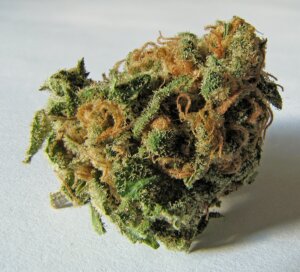
The Rug. OG Kush.
 |
|
Two strangers walk into the Dude’s bungalow and urinate on his rug.
The rug, he insists, really tied the room together. It is the inciting incident of the entire movie and also, somehow, the entire movie’s thesis statement. A man is the sum of the small comforts that hold his life in a coherent shape, and when those comforts are violated, even the most checked-out citizen of Los Angeles will be moved to action.
The pairing has to do the same job the rug does. It has to tie the high together.
There is only one strain that earns that brief. OG Kush. The strain that built modern cannabis. The genetic backbone of half the menu at any West Coast dispensary, the one Leafly catalogues as a hybrid born in Florida and perfected in the SoCal canyons.
OG Kush leans heavy on myrcene and limonene. The nose is loud lemon over damp pine, the kind of jar that honks the room out the second the lid comes off. The high is a slow euphoric pull that rounds off the edges without putting the body down. It is the cannabis equivalent of an area rug. It defines the room without demanding attention.
Spark it as the Stranger finishes his voiceover and the Dude is shuffling toward the dairy aisle in his bathrobe. The whole opening sequence settles into a pocket. The line to have queued: “That rug really tied the room together, did it not?” Walter, of course, asks first. The Dude answers. Exhale. The movie has begun.
The Bowling Alley. Sour Diesel.
 |
|
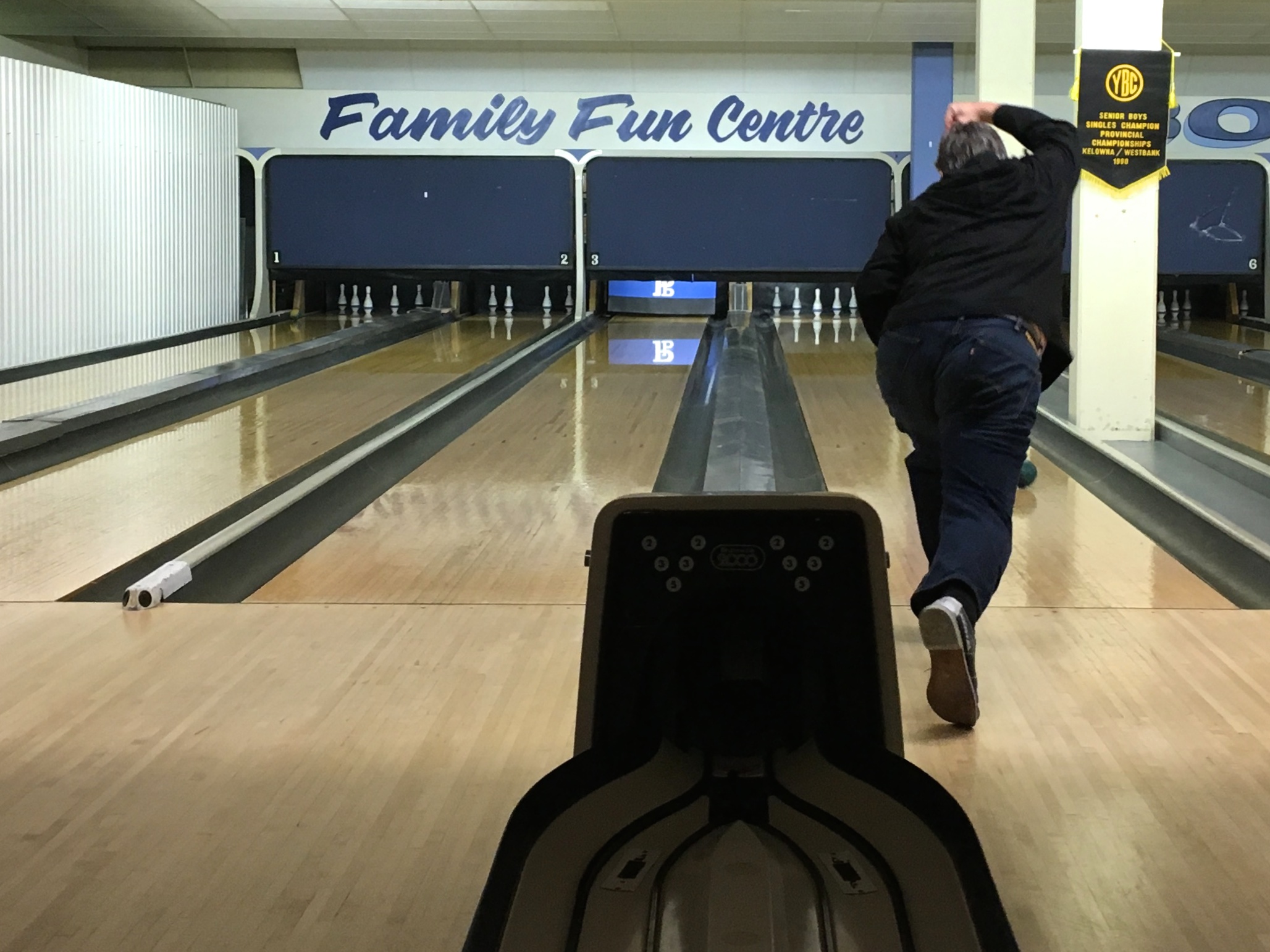
The bowling alley is the spine of the movie.
Every plot pivot, every Walter outburst, every Donny interjection, every Jesus tongue-flick happens under those fluorescent lights and that perpetual hum of pinsetters. It is where the Dude is most himself and most under siege at once. He is among friends, sure. He is also one Walter monologue away from public humiliation, one Quintana intervention away from being challenged to a fight, one phone call from Maude away from another job he did not want. The bowling alley operates the way the laugh-track sitcom living room does in the canon of the best stoner sitcoms and TV shows: every week the same room, every week new chaos.
This scene needs a strain that handles social load.
The answer is Sour Diesel. Loud, dieselly, sharp on the nose and sharper on the head, the East Coast sativa Leafly describes as fast-acting and energizing and High Times has called the most influential sativa of the modern era.
The terpene profile runs heavy caryophyllene with a backbone of limonene and myrcene. That is what produces the gas-and-grapefruit smell, the kind a viewer cannot mistake from a parking lot. The high lifts clean and cerebral with just enough body warmth to keep social anxiety from spiking. The room stays funny. The laugh hits at the right beats. The upholstery does not pull anyone down when Walter starts waving a firearm over a foot fault. Sour Diesel lets a viewer witness Walter without becoming Walter.
Light it before the league night sequence. Ride it through the entire Smokey-foot-fault confrontation. The line: “This is not ‘Nam. This is bowling. There are rules.” Quote it. Pass the joint. Score the spare.
The Bathtub. Granddaddy Purple.
 |
|
The bathtub scene is the most peaceful three minutes in the movie.
The Dude is submerged. There is a lit joint balanced on the lip of the tub. Creedence Clearwater Revival is playing on a cassette deck because the Dude does not believe in the Eagles and does not believe in CDs either. A whale call drifts in over the music. For thirty seconds the entire film stops moving. Then the nihilists kick in the door with a ferret.
The ferret arrives later. The pairing is for the calm.
And the calm calls for Granddaddy Purple. Indica, dense, purple-shouldered, the Ken Estes-bred cross of Purple Urkle and Big Bud that has anchored the California indica shelf since 2003. A grower on GrowDiaries reviewed his last harvest of the strain this way: standard “purple stuff” tastes on inhale and exhale, effects super heavy and sedative. That is the brief.
The terpene signature is myrcene-dominant with a generous splash of pinene and caryophyllene. The nose is candy grape and damp earth. The body load arrives in fifteen minutes and stays. Shoulders drop. The water feels right. Creedence sounds like the only band that ever mattered.
Run a real bath. Not a shower with the door closed. A bath. Light the joint as John Fogerty starts singing about looking out the back door, and let Granddaddy Purp do what it was bred to do. The line, for when the nihilists eventually arrive: “Nice marmot.” It is not a marmot. It is a ferret. Nobody in the room is in any position to correct anyone.
The Gran Torino. Blue Dream.
 |
|
The driving scenes are their own subgenre.
The Dude pilots his beat-up 1973 Ford Gran Torino through Los Angeles with the windows down and the radio playing whatever was already in the cassette deck or whatever the public airwaves are willing to give him. The most famous of these moments is the Kenny Rogers and the First Edition jam, “Just Dropped In (To See What Condition My Condition Was In),” which scores the dream sequence and tells you exactly what condition the movie itself is in.
Driving requires a hybrid.
Not a sativa that pushes the pulse. Not an indica that makes the lane lines drift. A cruising hybrid. Blue Dream. The strain Leafly clocks as one of the most-searched strains in the country year after year, the cross of Blueberry and Haze that became the default house sativa-leaning hybrid across Northern California dispensaries in the 2010s.
Blue Dream runs myrcene-dominant with strong pinene and a hit of alpha-pinene. The nose is fresh blueberry over Christmas tree, sweet and clean, no chemical edge. The high is a balanced cerebral lift with a calm body, which is exactly the chemistry needed behind the wheel of a Gran Torino with no clear destination and Kenny Rogers asking philosophical questions over a fuzz-bass riff.
The pairing is for the scene as a viewing experience, not as driving instructions. The Dude himself drives stoned through most of the film and crashes the Torino into a dumpster by the third act. Watch the dream sequence at home. Light a Blue Dream joint as Kenny Rogers fades in. Float through the choreography with Maude and the bowling pins and the giant scissors. The line: “I am the Dude, so that is what you call me. That or, uh, His Dudeness, or uh, Duder, or El Duderino, if you are not into the whole brevity thing.”
Walter Sobchak. White Widow.
 |
|
Walter Sobchak is the engine of every escalation in the film.
John Goodman lands somewhere on the same continuum as the names on our list of the best stoner comedians: not a stand-up, but a comic actor whose timing makes the smoke session funnier. He brings a firearm to a bowling alley over a foot fault. He destroys a stranger’s Corvette under the mistaken belief that it belongs to a teenage thief. He scatters Donny’s ashes directly into the Dude’s face and sunglasses. Walter is the friend who turns every situation into a Vietnam reference and every Vietnam reference into a reason to shout. He is not wrong about everything. He is not right about most things. He is exhausting in a way that requires chemical management.
The Walter scenes need a balanced strain.
Something that absorbs the spike of Walter’s energy without amplifying it. White Widow. The classic Dutch hybrid, a roughly 50/50 cross with a frosted trichome layer dense enough to give it the name, which has been a coffeeshop menu staple in Amsterdam since the mid-1990s.
White Widow runs a balanced terpene profile with caryophyllene leading and myrcene and pinene close behind. Caryophyllene is the terpene research has linked to CB2 receptor activity and anti-inflammatory, anxiety-modulating effects, which is exactly the chemistry needed during a Walter Sobchak monologue. The nose is peppery, slightly piney, with a sweet edge. The high is even, lucid, with body warmth that keeps the jaw from clenching when Walter starts waving the gun.
Light it before the diner scene where Walter explains that the entire weekend has been a parable about Vietnam. Stay with it through the Corvette destruction. Ride it into the Donny ashes scattering. White Widow keeps a viewer in the seat while the chaos resolves itself, which it always does, and which the Dude always survives. The line: “You are entering a world of pain.” Walter is talking about the foot fault. He is also, in a real sense, talking about the rest of the movie.
Donny’s Ashes. Northern Lights.
 |
|
Donny dies of a heart attack outside the bowling alley after a confrontation with the nihilists.
He is the gentlest character in the movie, the one Walter shouts at in every scene for no real reason, the one who never quite figures out what is happening but loves bowling and loves his friends and is always one beat behind the conversation. His death is the only moment in the film that is not played for laughs. The Coens earn it. Then they take the Dude and Walter to a cliff above the Pacific to scatter Donny’s ashes from a Folger’s coffee can, and the wind picks up, and the ashes blow back into the Dude’s face, and Walter delivers a eulogy that quotes the Vietnam dead.
This scene needs a somber indica.
Something that lets the room sit with grief without making the grief heavier. Northern Lights. The classic Dutch indica, Leafly traces it back to the Pacific Northwest in the 1970s before it was perfected in the Netherlands, the strain that built half the modern indica genome and has been, for forty years, the reference indica for end-of-day rest.
The terpene profile is myrcene-heavy with a strong pinene base and just enough humulene to round out the aroma. The smell is sweet pine and damp earth, the kind of jar growers describe as honking the room out the second the bag opens. The effect is a slow, dense full-body settle that pulls the shoulders down and lets the chest soften. It is the strain a viewer smokes when there is nothing else to do today and nothing else needs doing.
That is the right chemistry for the Pacific cliff scene. Northern Lights does not numb anyone. It widens the moment. It lets Walter’s eulogy land as the absurd, sincere, broken thing it is, and it lets the Dude’s quiet “Walter, I love you, but sooner or later you are going to have to face the fact that you are a goddamn moron” feel like the truest line in the film. The line to quote, though, is the one Walter ends on: “Goodnight, sweet prince.” The wind takes the ashes. The waves keep moving. Stay where you are.
Jesus Quintana. Pineapple Express.
 |
|
Jesus Quintana enters the film for approximately ninety seconds.
He licks a bowling ball. He performs a slow grind to the Gipsy Kings cover of “Hotel California.” He threatens, in detail, to enact violence on Walter. Then he is gone. He returns for one more scene at the end. He is a side character who behaves at all times like the protagonist of a different, much hornier film, and he is one of the most quoted minor characters in modern cinema. John Turturro built an entire spinoff film around him in 2020. That is what Jesus Quintana energy does to the audience.
Jesus does not get a calm strain.
The pairing has to give every gesture a touch of theatrical heat. Pineapple Express. Yes, named after the 2008 Seth Rogen film that put it on the mainstream map, but a real strain in its own right, the cross of Trainwreck and Hawaiian that runs sativa-dominant with a bright tropical nose.
The terpene profile is limonene-forward with significant caryophyllene and pinene. The bag honks tropical, pineapple over mango with a sharp pine snap on the back end. The high is uptempo. It is the strain that turns ordering coffee into a small piece of theater. It is what gets smoked when a viewer wants to feel like the most interesting person in the bowling alley, and that is exactly the energy Jesus Quintana brings to every frame he occupies.
For the celebrity-rolled version of the same energy, our breakdown of Snoop Dogg cannabis brands covers a few drops with a similar tropical lean. Light a Pineapple Express joint as the Gipsy Kings start their cover. Watch Jesus do his entire pre-bowl ritual at half-speed. Feel the sativa lift line up with the choreography. By the time he is delivering the “nobody messes with the Jesus” monologue, the room is in his pocket. The line, obviously: “Nobody messes with the Jesus.” Then add, because the moment requires it, “You said it, man. Nobody messes with the Jesus.” Pair with a White Russian if anyone is committed to the bit. There is a separate cannabis-and-faith piece on the Church of Cannabis for anyone who wants to take the Jesus reference further.
The Stranger. Hindu Kush.
 |
|
The film closes the way it opened.
The Stranger leans on the bar at the bowling alley, addresses the camera, and tells you that the Dude abides. The Dude is somewhere, doing whatever he does, and the world keeps turning, and there is a little Lebowski on the way. It is the most quietly satisfying ending the Coens ever wrote. Nothing is resolved in the conventional sense. The Big Lebowski is still a fraud. Bunny is back. The rug is gone. The Dude is fine. The Stranger tips his hat. The credits roll over Townes Van Zandt covering “Dead Flowers.”
The closing pairing has to honor the abide.
It has to be a classic indica, something old and trustworthy, the kind of strain that has been in the cannabis genome for so long it does not need to prove anything. Hindu Kush. Pure indica, landrace, named for the mountain range straddling Afghanistan and Pakistan where it has grown wild for centuries, the genetic ancestor of half the modern indica catalogue. If OG Kush ties the room together at the start of the film, Hindu Kush is what gets smoked at the end to let the room stay quiet.
The terpene signature is heavy myrcene with a base of pinene and humulene. The nose is earthy sandalwood and pine forest, the kind growers call dialed in. The high is a slow, generous body settle, the kind of sedation that does not knock anyone out but makes the idea of moving feel optional. It is the strain that lets a room sit through a closing voiceover without reaching for a phone.
Spark it as the Stranger orders his second sarsaparilla. Hold the smoke as he delivers the line about the Dude abiding. Exhale on Townes Van Zandt’s first verse. The credits will roll. Nobody will move for a while. That is the correct response to the movie.
Eight scenes. Eight strains. One bowling alley. The rug is gone, the room is fine, the high is fine, and so is everything else. The Dude abides. The map ends here.