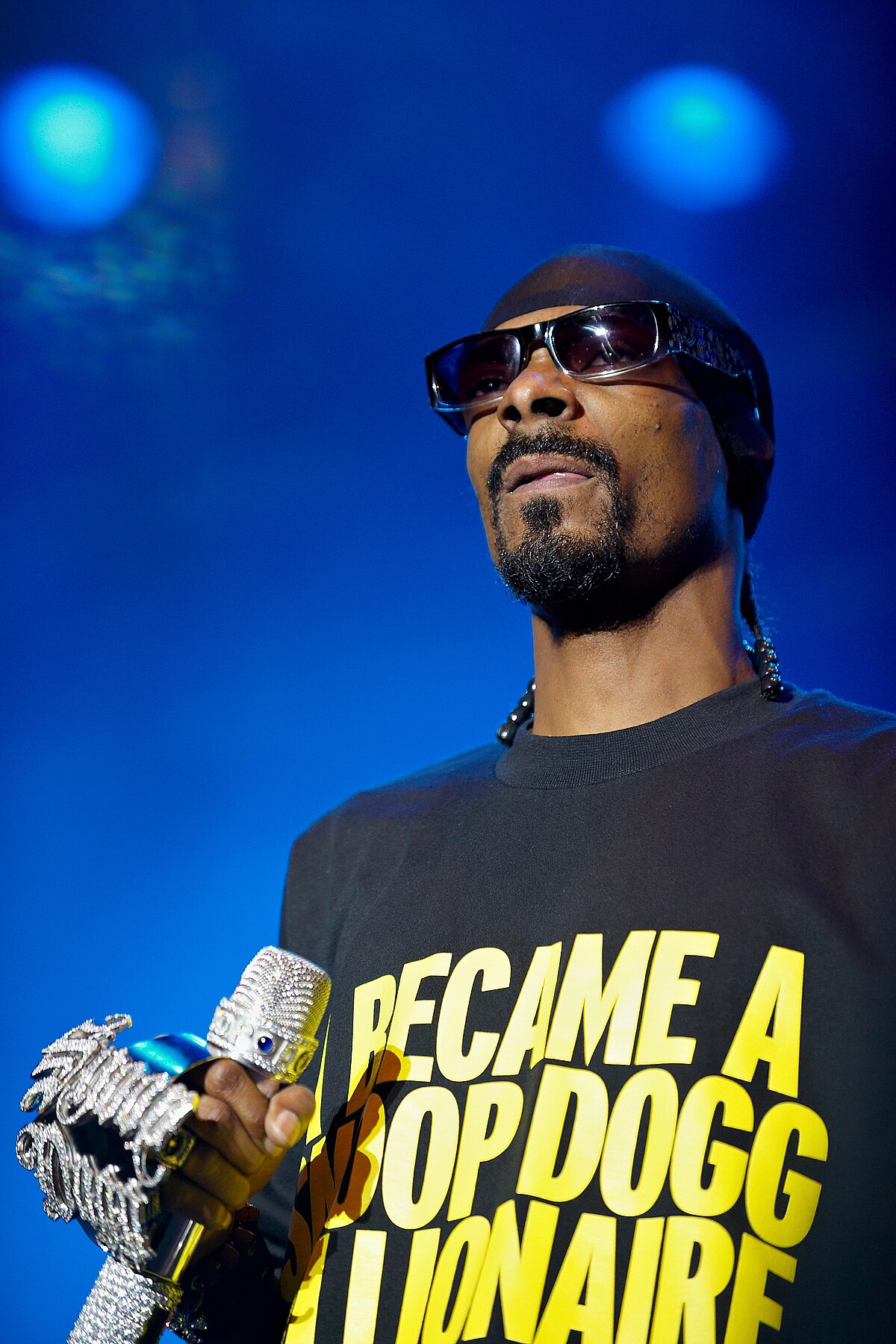
Snoop Dogg has built the largest celebrity cannabis portfolio in the United States. Eight active ventures, a venture fund managing roughly $250 million, a media property, and a breakfast cereal that quietly out-earns the weed. The myth and the P&L do not always agree.
The first cultivation deal collapsed when the retail partner sold out. The Death Row buyback was framed as a cannabis play and was really a music play with a cannabis side door. The cereal made more money in eight weeks than two of the weed brands made in a year. What follows is the actual ledger. Nine ventures. Real ownership structures. Which ones printed money.
“Leafs By Snoop is truly the first mainstream cannabis brand in the world and proud to be a pioneer,” Snoop said at the November 2015 launch in Denver. Ten years later, the receipts say something more interesting than the press release ever did.
- Flagship cultivation: Death Row Cannabis
- Original 2015 launch: Leafs by Snoop
- Premium tier: Dr. Bombay
- Cannabis venture capital: Casa Verde Capital
- Media property: Merry Jane
- Lifestyle and hemp: Houseplant with Seth Rogen
- Mainstream pivot: Snoop Cereal via Broadus Foods
- Wine and spirits: 19 Crimes Cali Red and INDOGGO Gin
Leafs by Snoop. The Blueprint That Should Have Worked.
 |
|
Leafs by Snoop proved that a rapper could put his name on regulated, lab-tested, state-legal cannabis and not have it collapse on contact with the compliance binder. Every other celebrity-cannabis attempt in the market that month was a t-shirt deal or a paraphernalia line. The Washington Post covered the Denver launch as a cultural inflection point because there was no precedent. Snoop did not license his face to a wholesaler. He built a multi-format product line, packaged it in chalkboard-style boxes designed by Pentagram, and shipped it under his own name in eight separate flower SKUs.
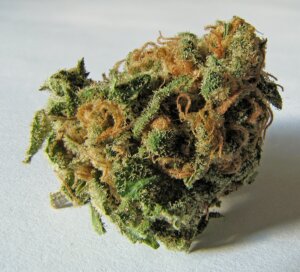
The flower lineup ran the spectrum. Northern Lights. A Cali Kush hybrid called Tangerine Man. A sativa-dominant phenotype labeled Bananas. A heavier indica called Trainwreck. The edible side was simpler and ultimately more durable: chocolate bars in dark and milk variants, fruit chews in cherry and watermelon, gummies under the LBS imprint. The Cannabist’s launch coverage noted that the flower retailed in eighth-ounce boxes for around fifty dollars. High end of the Denver shelf in 2015. Well below Cookies prices in 2026 dollars.
The packaging was the real differentiator.
The founding deal sat between Snoop, his manager Ted Chung, and LivWell’s CEO John Lord. Chung had spent the prior two years assembling what would become Casa Verde Capital, and the LBS launch was the consumer-facing proof of concept for that thesis. The structure was a brand-licensing arrangement with revenue share, not a Snoop-owned cultivation operation. That is why LBS expanded across multiple states and why it eventually wound down without legal drama.
By 2017, Leafs by Snoop products were on shelves in Colorado, California, Washington, and selected Nevada and Oregon storefronts. MJBizDaily covered the California expansion in 2017 when Caliva, later folded into The Parent Company, became the West Coast license holder. That handoff foreshadowed the next phase. By the time California’s adult-use market opened in January 2018, Snoop’s team was already moving the gravity of the portfolio out of a single-brand consumer line and toward a holding-company structure that could survive a state-by-state license patchwork.
LBS never won a Cannabis Cup. It did stay compliant in three states simultaneously for four years without a regulatory action, which gave the organization the operational reps that made every later brand possible. By the time the Death Row buyback closed in 2022, the LBS team knew exactly how to run a launch.
The brand is not on shelves under that name today. The back office that ran it is the back office that runs Death Row Cannabis, Dr. Bombay, and the Casa Verde portfolio. Anyone evaluating the current Snoop stack who skips LBS misses the foundation.
Death Row Cannabis. The Music-Meets-Weed Bet.
 |
|
Death Row Cannabis turned a music-catalog acquisition into a flower line. When Snoop bought Death Row Records from MNRK Music Group in February 2022, the music press treated it as a sentimental homecoming. The man who made his name on Doggystyle was now the owner of the label that released it. What did not get covered as widely is that the deal explicitly included rights to relaunch Death Row as a consumer brand portfolio, and the cannabis arm was the first major commercial application. Forbes covered the launch on 4/20/2023 as a deliberate calendar play.
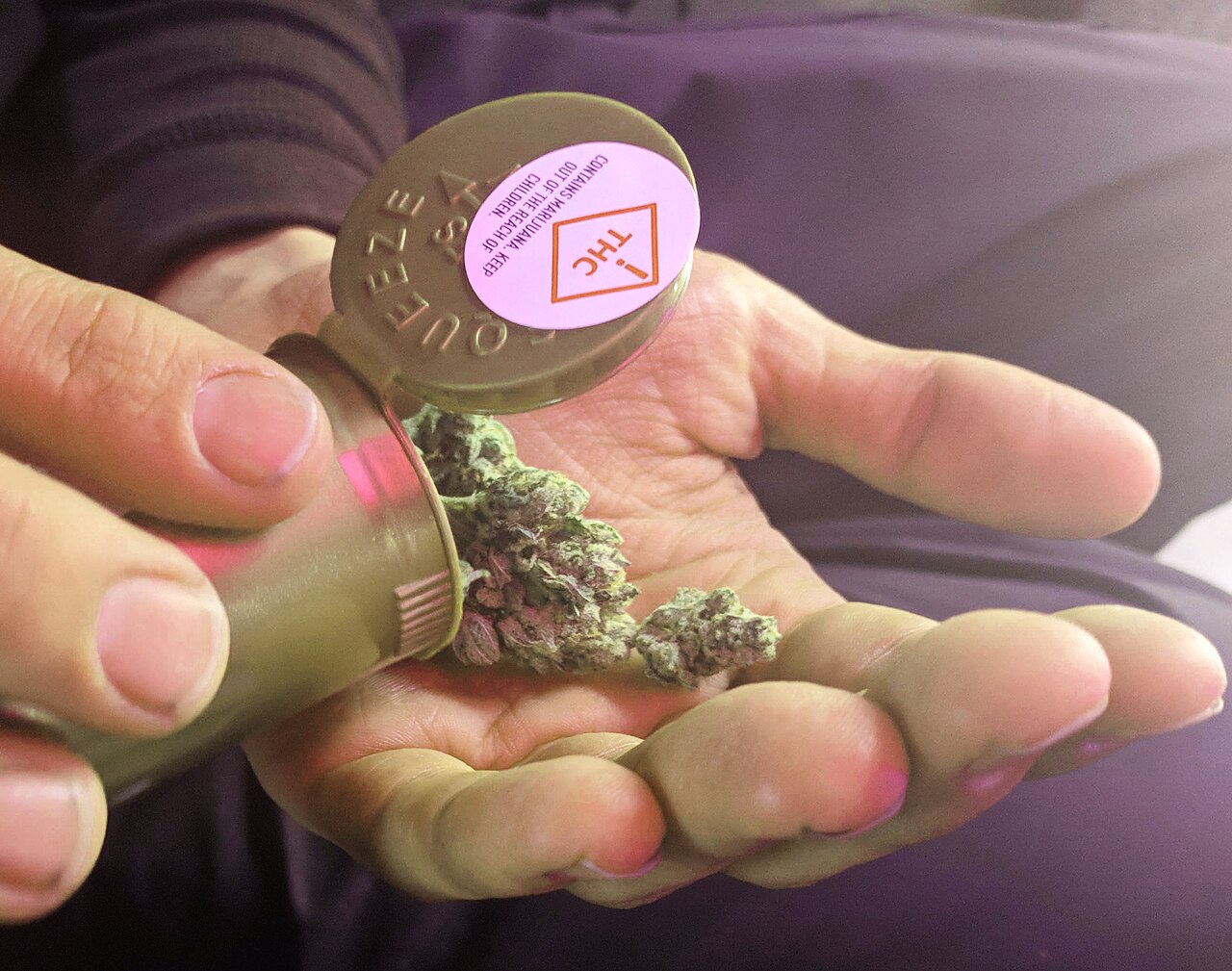
The signature SKU at launch was LBS3, an indoor-grown indica-dominant hybrid named after Leafs by Snoop and presented as the spiritual successor to that line. The genetics were sourced through Sherbinski’s network and finished by a California cultivation partner whose facility had been previously running for the Cookies enterprise. The second launch SKU was Tropicanna Cherry, a citrus-forward hybrid that Leafly’s product team profiled as a deliberate bid for the connoisseur shelf rather than the celebrity-novelty shelf. Both were eighth-ounce glass jars at the sixty-to-seventy dollar tier, positioned to compete with Jeeter, Cookies, and Connected.
The founding team is the part that matters. Snoop is the principal and the marketing engine. The operational lift came from Mario Guzman, known industry-wide as Sherbinski, the cultivator behind the Sunset Sherbet phenotype and the Sherbinskis brand that originally introduced Gelato genetics to the broader market. Guzman brought the genetic library and the cultivation rolodex. Wyatt Harms, who came up through the Berner ecosystem, brought retail relationships. Snoop brought the brand and the meeting-takes-itself reach. That three-legged structure is why Death Row Cannabis launched with shelf placement at Stiiizy’s California retail footprint on day one. No other 2023-launched flower brand managed it.
As of late 2025, Death Row Cannabis flower is on shelves across the Stiiizy chain in California, at Catalyst Long Beach and Bellflower locations, at most Embarc storefronts, and at independents from Eureka to El Centro. The brand expanded into Arizona via a licensing deal with a Phoenix-area cultivator in mid-2024 and crossed into the New York adult-use market in early 2025 once the OCM finished its initial wave of cultivator approvals.
The proof points are getting more interesting. Green Market Report tracked Tropicanna Cherry as a Leafly user-rating top performer through 2024, and the brand placed in multiple state-level cup competitions in 2024-2025 without the founder personally lobbying for the votes. That is the test that separates real cultivation brands from celebrity vanity. Los Angeles Magazine profiled the one-year mark in 2024 and noted that the brand had cleared eight-figure California revenue without the price collapse that hit Cookies and Jungle Boys in the same window.
This is the keystone of the portfolio. If a budtender mentions one Snoop-owned cannabis product in 2026, it is this one. Anyone shopping the brand should ask for LBS3 first if they want indoor indica weight or Tropicanna Cherry if they want a daytime hybrid. Both deliver on the price point. Both are widely stocked. Both have had two full crop cycles to stabilize.
Dr. Bombay. The Connoisseur Tier Above Death Row.
 |
|
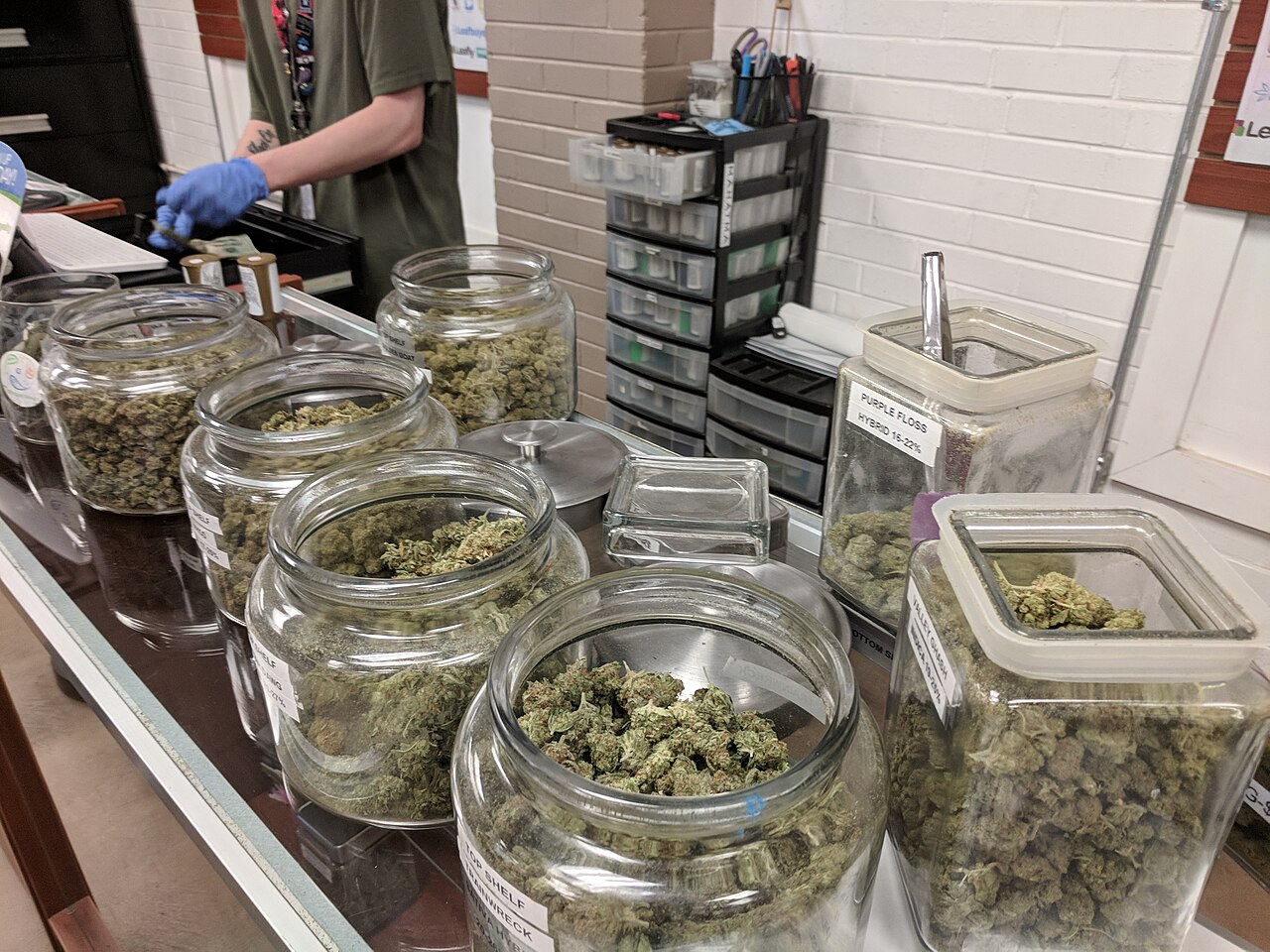
Dr. Bombay is what happens when Snoop and a major California cultivation operator decide to build a price ceiling, not a price floor. Where Death Row Cannabis competes in the sixty-to-seventy dollar tier, Dr. Bombay sits above it. Eighths retail at eighty to ninety dollars at most California storefronts. The line is positioned for the buyer who reads test results and asks the budtender about the cure. High Times covered the November 2022 launch as a deliberate move into the connoisseur shelf, and the launch SKU lineup confirmed the positioning.
The signature flower is Bay Breeze, an indoor-grown indica-dominant hybrid built around a Sherbinski-network phenotype. The pre-roll line includes a half-gram infused option that pairs Dr. Bombay flower with a kief and rosin coating, packaged in five-packs that retail in the seventy-dollar range. Doc’s OG is the heavier indica anchor, marketed for nighttime. Frosted Cake is the dessert hybrid in the lineup. Sleepwalker rounds out the indica side. Leafly’s brand page tracks the SKUs and the available retailers across California, currently in the high double digits.
The founding rationale was tier separation. By 2022, Snoop’s team had run Leafs by Snoop for seven years and Dr. Bombay needed to do something LBS could not, which was capture the top of the shelf. The cultivation partnership runs through the same operational infrastructure that supports Death Row Cannabis. The strain selection and the cure protocol are distinct. Green Entrepreneur reported at launch that the brand was conceived as the answer to Cookies’ top tier and Wyld’s premium edible push, with both Snoop and his cultivation partners holding equity rather than running a pure licensing structure.
Retail distribution is narrower than Death Row Cannabis by design. Dr. Bombay is on shelves at The Farmacy Santa Barbara, at the higher-tier Stiiizy locations, at Off the Charts Goleta, at most Cookies retail storefronts in the LA basin, and at independent connoisseur shops in San Francisco and Oakland. The brand has been deliberately slow to expand into Arizona and Nevada because the premium tier in those markets does not yet support the price point. Green Market Report’s BDSA shelf data as of mid-2025 placed Dr. Bombay in the top fifteen percent of California flower brands by velocity at premium price.
The brand has not chased the cup circuit, and that is intentional.
Cup wins drive the value tier and the mid-shelf, not the premium tier. The proof points for Dr. Bombay are budtender mentions and shelf placement at the storefronts where staff recommend the SKU by name. Los Angeles Magazine’s portfolio profile noted that Dr. Bombay’s ninety-day repeat-purchase rate was running ahead of Death Row Cannabis in late 2024 even at the higher price.
This is the brand for the buyer who already knows what they like, who has tried the Cookies top tier and the Connected indoor and is open to a Snoop-anchored alternative at the same price. Bay Breeze and Doc’s OG are the two SKUs to start with. Both are widely available on the Stiiizy and Off the Charts shelves. Both have stabilized after two years of production runs.
Casa Verde Capital. The $250M Picks-and-Shovels Bet.
 |
|
Casa Verde Capital is the most consequential thing in the Snoop portfolio that nobody outside the cannabis industry talks about. While Death Row Cannabis is what gets the magazine covers, Casa Verde is the entity that quietly owns equity in dozens of the companies the industry runs on. TechCrunch covered the firm’s $100 million Fund II close in October 2019. Forbes covered the $150 million Fund III in March 2022. Cumulative AUM is in the quarter-billion range. That is not a celebrity-vanity vehicle. That is institutional cannabis venture.
The portfolio reads like a who’s-who of cannabis infrastructure. Eaze, the California cannabis delivery platform that processed billions in lifetime gross merchandise value before its 2024 restructuring, was a Casa Verde investment. Dutchie, the dispensary point-of-sale and e-commerce platform now used by a majority of US legal retailers, took Casa Verde capital in its early rounds. Metrc, the seed-to-sale tracking software that nearly every state-licensed cannabis operator is required to use, has Casa Verde in its cap table. Headset, Greenbits, and LeafLink are all on the public investment list.
The 2015 founding deal was Snoop, his manager Ted Chung, and an investor named Karan Wadhera who had spent the prior decade at Goldman Sachs. Wadhera now serves as the firm’s managing partner and is the operational center of gravity. Bloomberg’s coverage of Fund II noted that the firm had deliberately avoided plant-touching investments because federal scheduling makes those companies hard to exit. The thesis is that the picks-and-shovels of the cannabis industry will outlast the rescheduling debate. The seven-year track record supports it.
The exits and markdowns matter. Green Market Report tracked Fund I performance through 2023 and reported that several portfolio companies had exited at multiples that put the fund firmly in the top quartile of cannabis-adjacent venture, despite the broader sector contraction. Dutchie, in particular, raised at a $3.75 billion valuation in 2021 and has remained a core holding even after subsequent down-rounds. Metrc has been growth-stage profitable for years and pays distributions. The fund has had losers (CB1 Capital portfolio cross-overs, several public-cannabis SPAC plays) but the structural ownership of cannabis software has performed.
The proof point is that institutional LPs took Casa Verde III. Bloomberg’s coverage of the Fund III close noted that the LP base included family offices, university endowments, and at least one corporate strategic, all of whom underwrote a celebrity-fronted cannabis fund on the basis of the Wadhera operating record. Most celebrity-anchored venture vehicles never raise a Fund II, much less a Fund III at $150 million.
This is the part of the portfolio that turns Snoop from a cannabis brand into a cannabis owner. Anyone reading only Death Row and Dr. Bombay is reading the marketing layer. The infrastructure layer is the fund, and the fund has been quietly consolidating ownership of the systems that run the industry for over a decade.
Merry Jane. The Publishing Arm Nobody Else Built.
 |
|
Merry Jane is the Snoop-owned cannabis media property that exists to give the rest of the portfolio editorial oxygen. “Merry Jane is cannabis 2.0,” Snoop said in a promotional video for the launch. “A crossroads of pot culture, business, politics, health.” When Snoop, Ted Chung, and Nick Adler launched the site in September 2015, the cannabis media landscape was High Times, Leafly, and a long tail of regional blogs. The Verge covered the launch as a culture-and-cannabis play that intentionally positioned itself between Vice and High Times in tone.
The signature franchise was the GGN news show, an anchored video segment with Snoop hosting interviews from a satin-curtained set built to look like a 1970s talk show. Guests ranged from Larry King to Matthew McConaughey to Seth Rogen. The format ran in long-form video on Merry Jane’s owned channels and in clip form across YouTube and social. Variety covered the GGN expansion in 2016 as the format that would carry Merry Jane’s video advertising business. The show drove tens of millions of views per season and gave the property a cultural foothold that pure-text cannabis media could not match.
Chung ran the business side. Adler had come from the music industry and ran content operations. Snoop was both the brand and the marquee on-camera talent. The site did not start with a venture round. It launched with founder capital and grew on advertising and branded-content revenue, which was the right structural choice given how fast the digital-media venture model was already breaking by 2015. Digiday’s coverage in 2017 broke down the revenue mix as a healthy split between display, branded video, and licensing.
Distribution went deep into the channels Snoop already controlled. Merry Jane content ran natively on Snoop’s social accounts, which by 2018 totaled north of a hundred million followers across Facebook, Instagram, Twitter, and YouTube. The site cross-published with TMZ, Complex, and Vice on cannabis stories. AdWeek reported the property crossing three million monthly uniques in 2017, which placed it in the same audience tier as the cannabis verticals at the major lifestyle publishers.
The proof points slowed in the late 2010s as the broader digital-media advertising market compressed. Merry Jane went through staffing changes and a shift from heavy original video to a leaner editorial and curated-video operation. The site is still publishing, still hosts the GGN archive, and still serves as the editorial home for Snoop-portfolio brand announcements. Cannabis Business Times covered the 2024 pivot toward shorter-form video and creator-led commerce as a deliberate response to the way cannabis audiences had migrated from desktop reading to vertical video.
This is the part of the portfolio that explains why Snoop’s cannabis brand launches always land with cultural reach that other celebrity launches cannot match. He owns the publishing channel. The site is not the largest cannabis media property today, but it is the one that has been continuously operating under founder ownership for the longest, and it gives every other piece of the portfolio a built-in launch platform.
Houseplant. The Seth Rogen Lifestyle Bet.
 |
|
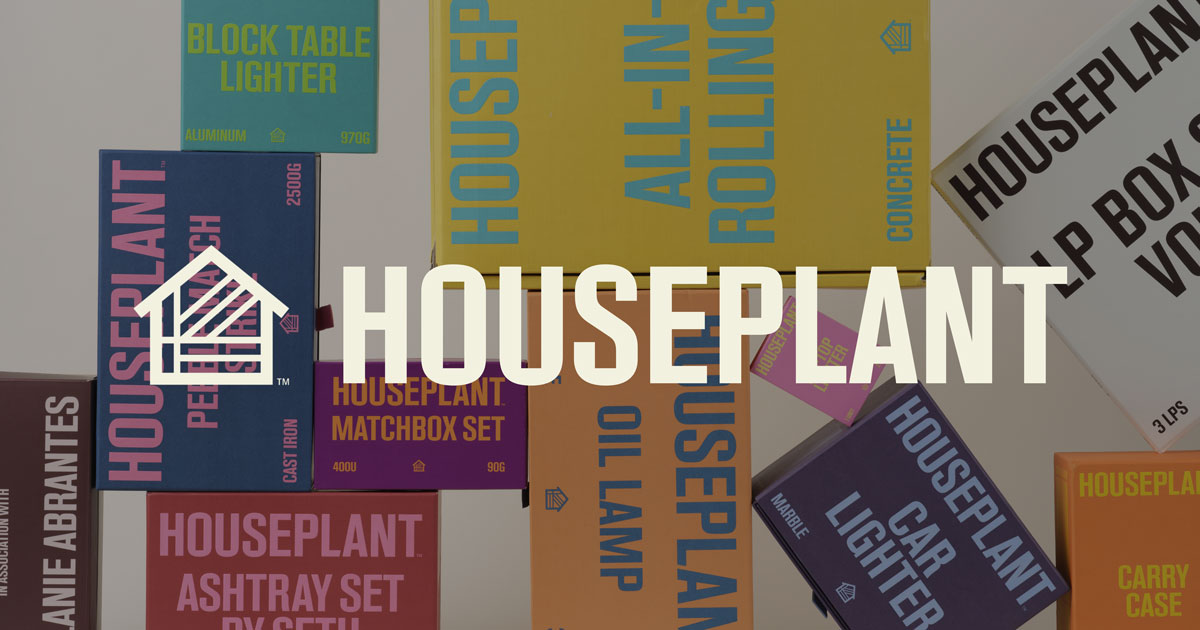
Houseplant is the brand every internet thinkpiece about celebrity cannabis attributes to Seth Rogen, and that is correct, but the Snoop relationship inside the Houseplant ecosystem, which traces back to the Pineapple Express movie-night era, is closer than the press generally acknowledges. Rogen and Evan Goldberg, the comedic team whose pop-culture footprint helped define the modern stoner sitcom and TV canon, launched Houseplant as a Canadian licensed cannabis brand in 2019 and brought it to the US in 2021 as a housewares and lifestyle line because federal scheduling made plant-touching US operations impossible. GQ profiled the launch and Snoop appeared throughout the brand’s promotional rollout, including the launch-day ashtray collaboration.
The signature Houseplant product is the ceramic ashtray, sold in colorways at the twenty-to-forty dollar price point. It became the unofficial Instagram trophy object of cannabis-adjacent design twitter in 2021. The Canadian cannabis lineup includes pre-rolled joints in three formats (sativa, indica, hybrid) and a 510 vape format under Canopy Growth’s licensing umbrella. The US lifestyle line covers ashtrays, lighters, table lighters, rolling trays, and limited-edition vinyl. Snoop has appeared in the brand’s holiday campaigns and on individual product launches, particularly around the smoking accessories.
The Snoop-Rogen creative relationship goes back to Pineapple Express in 2008, and arguably to the cultural lineage of Half Baked and the Tha Doggfather era. High Life Global’s ranked list of stoner movies places several of those titles in the canonical top-twenty. The Houseplant collaboration is the commerce expression of a creative friendship that predates the legal cannabis industry. That is the part that gives the partnership its credibility. It is two friends who have been smoking together since the Bush administration agreeing the housewares deserved good design.
Distribution is direct-to-consumer through houseplant.com plus selected design-retail partners. The line is at Urban Outfitters, in a handful of design-forward home retailers, and at boutique smokeshops in Los Angeles, Toronto, and New York. Houseplant deliberately does not chase mass-market shelf placement because the brand identity is built on craft positioning. The Canadian cannabis side runs through licensed retail in Ontario, British Columbia, and Alberta.
The proof point is cultural rather than financial. Fast Company named Houseplant to its Most Innovative Companies list in 2021 in the consumer-products category, and the brand has appeared in design-press features that would never cover a conventional cannabis brand. The brand has also been a steady cross-promotion vehicle for Snoop’s other launches, including a co-branded ashtray that shipped during the Death Row Cannabis launch week.
This is not Snoop-owned in equity terms, but it is the partnership that makes the Snoop-and-Rogen pairing one of the most durable creative-commerce relationships in the modern cannabis era.
Snoop Cereal. The Cash Flow That Funds Everything Else.
 |
|
Snoop Cereal is what happens when a celebrity weed brand owner decides the most underutilized asset in his stack is the breakfast aisle. Launched in 2022 under Broadus Foods, the family-owned holding company Snoop built with Master P, the cereal was originally called Snoop Loopz. It pivoted to a four-SKU portfolio under the Snoop Cereal umbrella when the Post Consumer Brands distribution deal closed. CNBC covered the deal extensively, including the litigation that followed it, and the receipts are public.
The signature SKU at launch was Cinnamon Toasteez, a sweetened cinnamon-grain cereal positioned as the breakfast-aisle answer to Cinnamon Toast Crunch. Frosted Drizzlerz followed, then Fruity Hoopz, then Berry Lucky Charmz. Each SKU shipped in standard family-size boxes at the three-to-four dollar retail tier and was distributed through Walmart’s national grocery footprint via the Post agreement. The line moved an estimated millions of boxes in its first six months. By any cereal-category benchmark, that is a successful launch.
The founding story is the Snoop-Master P alliance. The two artists had collaborated for decades and explicitly decided to build Broadus Foods as a Black-owned consumer-packaged-goods platform with the cereal line as the first product. The lawsuit Broadus Foods filed against Post and Walmart in January 2024 alleged that the distribution partner had deliberately suppressed shelf placement, and the public filing made the venture’s underlying revenue and unit-economics structure visible. The Washington Post covered the suit in detail, including the receipts on initial sell-through.
The cereal funds the cannabis.
Distribution and the legal aftermath dominated 2024 coverage. The Post-Snoop relationship reset, the cereal line moved into a more direct distribution arrangement, and Broadus Foods continued to ship the SKUs through national grocery and direct online ordering at snoopcerealofficial.com. As of late 2025 the cereal is back on Walmart shelves under restructured terms and is also available at Target, Kroger, and a growing list of regional grocery chains. The brand has expanded into a snack-bar format and a small line of breakfast pastries.
The proof point that matters for portfolio analysis is the revenue scale. Snoop Cereal, in its first eighteen months, almost certainly out-earned every individual cannabis brand in the Snoop portfolio. Forbes’ reporting on the first-year revenue placed Broadus Foods cereal sales in the high eight figures, which is multiples of what Death Row Cannabis cleared in the same window. That is the actual cross-subsidy story of the empire. The mainstream consumer-packaged-goods play is the cash flow that keeps the regulated-cannabis play patient.
Snoop Cereal is the punchline of the portfolio and also the financial anchor. Anyone modeling the empire who treats the cereal as a novelty misses the point. It is the brand that proves the underlying business model of the holding company, which is to use the Snoop name to launch CPG products in any category where regulation allows it, and to use the resulting cash to underwrite the slower-burn cannabis bets.
Supporting Brands. Wine, Gin, and the License Layer.
 |
|
Beyond the six core cannabis-and-cereal pillars, the Snoop portfolio includes a constellation of supporting brands and one-off product lines that collectively define the lifestyle commerce footprint. INDOGGO Gin launched in 2020 as a strawberry-forward gin distilled and marketed under Snoop’s name, with distribution through major US off-premise retailers. CNBC’s launch coverage framed it as a deliberate move into spirits, capitalizing on the broader celebrity-spirits boom that had carried George Clooney’s Casamigos and Ryan Reynolds’ Aviation Gin to nine-figure exits.
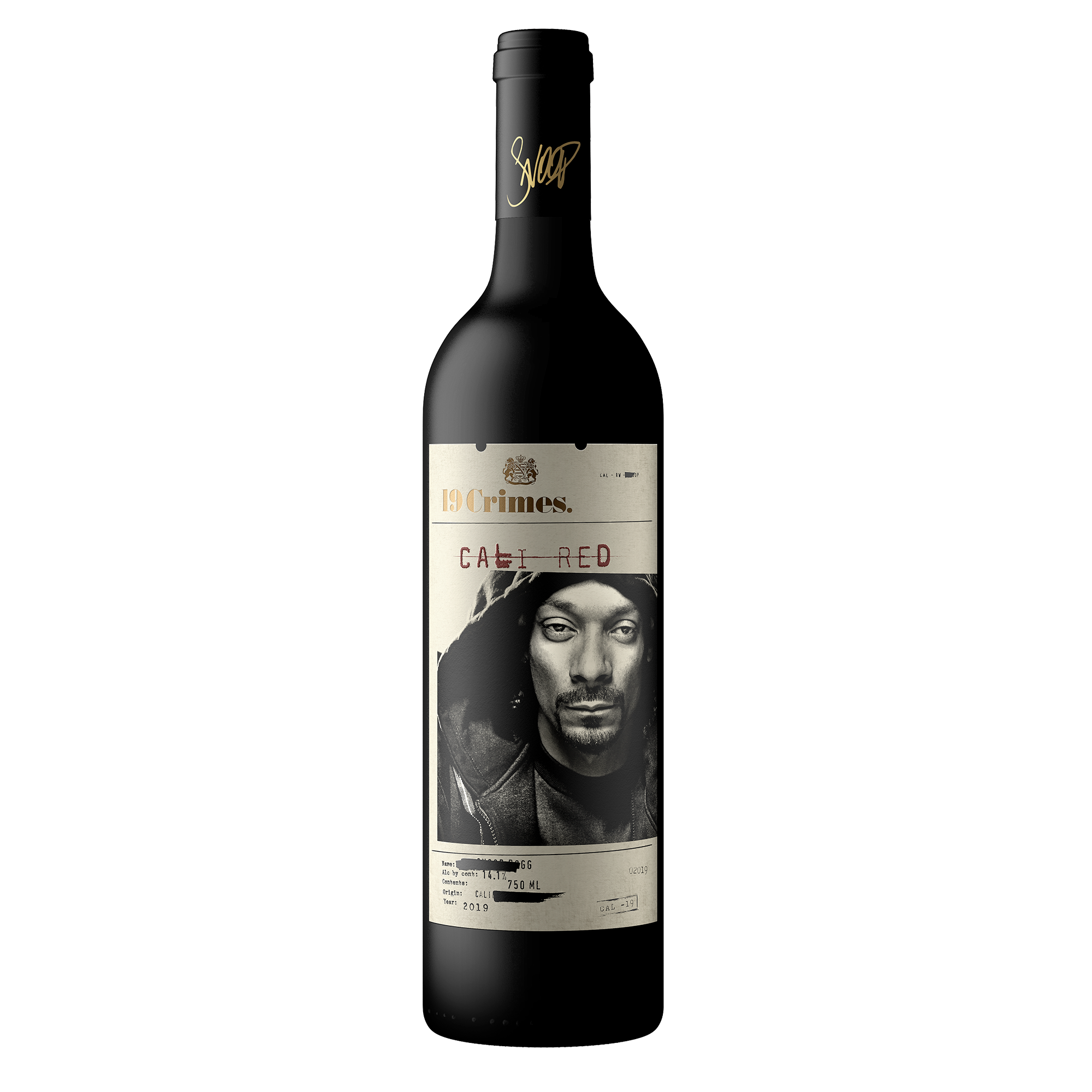
The 19 Crimes Cali Red partnership with Treasury Wine Estates is the wine slot. Launched in 2020, the wine carries the 19 Crimes label and Snoop’s portrait on the bottle, and the brand uses augmented-reality packaging that animates the portrait through a phone camera. The Drinks Business covered the launch. The SKU has been a consistent presence in supermarket wine sections across the US, UK, and Australia. It is not a Snoop-owned brand in equity terms; it is a licensing partnership, but it has been a durable revenue line for both sides.
The Solo Stove campaign in 2023 is the most-quoted marketing stunt in the portfolio. Snoop posted a public statement that he was giving up smoke. The cannabis press covered it as a possible portfolio pivot. Within weeks he announced the campaign was a Solo Stove smokeless-firepit promotion. Variety’s coverage noted the campaign drove a measurable spike in Solo Stove brand awareness. Death Row Cannabis sales did not slow during the brief gap. The campaign worked because the Snoop brand is durable enough to absorb a fake-quit storyline without portfolio damage.
The brand-licensing deals filling out the lifestyle perimeter include Snoop x Skechers (multi-year sneaker collaboration), Tanqueray Gin (a co-marketing rather than equity arrangement), Corona (long-running endorsement spots), and BIC lighters (a series of co-branded smoking-accessory packs that ran through 2022 and 2023). None of those are Snoop-owned, but each contributes to the cumulative cultural footprint that makes the cannabis brands easier to launch and the cereal easier to sell.
The proof point for this layer is cumulative reach. AdWeek’s 2023 brand-licensing roundup placed Snoop’s annual licensing revenue across all CPG categories in the eight-figure range, which sits alongside the Death Row Cannabis and Snoop Cereal revenue lines as the third leg of the holding-company economics. The licensing layer underwrites the brand layer underwrites the cannabis bet.
The supporting brands are not the headline story, but they are the part of the empire that explains why Snoop never has to chase a launch. Steady CPG income from gin, wine, sneakers, and lighters. Cereal revenue from the Walmart shelf. Cannabis revenue from California flower. Equity in the cannabis-software stack via Casa Verde. The pieces add up to a portfolio structurally insulated against any single brand’s failure.
The Verdict. A Holding Company, Not a Logo Deal.
Snoop has built the only celebrity cannabis stack that operates as an actual holding company rather than a personal brand with weed-themed products attached. Mike Tyson’s Tyson 2.0 portfolio is closer than the press credits, but it does not have the venture-fund layer or the media property. Willie Nelson’s Willie’s Reserve is older and has cultural authority that Snoop’s brands cannot claim, but it does not have the multi-state cultivation footprint or the CPG cross-subsidy. Jay-Z’s Monogram is closer in the premium tier but does not have the breadth. Snoop is operating in a category of one when measured by total category coverage. Set the whole field side by side, every major celebrity weed brand ranked in one place, and the gap is even clearer.
The strategic insight Snoop and Ted Chung executed earlier than their peers is that a celebrity cannabis play cannot survive on cannabis revenue alone. The regulated-cannabis market in the US is not yet large enough or stable enough at the consumer level to underwrite a celebrity-scale operation. The Snoop solution was to build the supporting infrastructure and CPG cash flow first, then use those to fund the cannabis bets, then use the cannabis bets to anchor the brand identity. That is the inverse of how every other celebrity-cannabis play has been structured. It is why the portfolio has compounded rather than collapsed.
The Casa Verde Capital piece is the underrated lever. The fund’s ownership stakes in Dutchie, Metrc, LeafLink, Headset, and a long list of cannabis-software companies mean Snoop is not just a cannabis brand operator, he is a cannabis-software equity holder at the infrastructure layer. When the federal scheduling debate finally resolves, the operators with software equity will be in a different financial weight class than the operators with only retail brands. The California cannabis brand landscape is going to consolidate hard in the next regulatory cycle, and Casa Verde’s positioning makes Snoop one of the small group of celebrity-anchored cannabis investors who will benefit on both the brand side and the picks-and-shovels side.
For anyone evaluating where to start with Snoop’s cannabis lineup as a consumer, the priority order is straightforward. Death Row Cannabis is the entry point, with LBS3 for indoor indica weight and Tropicanna Cherry for daytime hybrid. Both are widely stocked at the major Los Angeles dispensaries and across the Stiiizy California footprint. Dr. Bombay is the next step up for the buyer who wants the connoisseur tier and is willing to pay eighty to ninety dollars for the eighth. The cereal is at Walmart. The wine is at Trader Joe’s. The gin is at most US off-premise.
The myth was always that Snoop is a weed guy who built a brand. The actual story is that Snoop is a brand operator who built a vertically integrated cannabis holding company while everyone else was selling logo pre-rolls. The cultural footprint that lets the brand land like that has been built across thirty years of music videos, films from the stoner-movie canon, and television cameos no rival celebrity in the category can match.
The receipts say it. The myth is louder than the math.