Television’s cannabis canon is bigger than its movie canon. Broad City rewrote what the genre could look like. These ten shows are the ones that mattered, ranked by actual impact on how cannabis gets portrayed on TV.
Movies argue. Television normalizes. A sitcom can show somebody pack a bowl on a Tuesday and again on the next Tuesday and again on the Tuesday after that, and after a few seasons of those Tuesdays the audience stops registering it as a transgression. That is why television’s relationship with weed evolved faster than the multiplex’s. It is why the genuinely funny stoner sitcoms managed to do something a stoner movie almost never does, which is treat the smoking as ambient rather than as event.
The rules for inclusion are tight. A “stoner sitcom” here is a comedy in which cannabis is recurring infrastructure. The characters get high on a regular basis, the writers write to that fact, and the show would be meaningfully different without it. A bottle episode where the cast accidentally eats edibles does not qualify. Atlanta is on this list and Curb Your Enthusiasm is not, which will upset some people. The list weights toward the half-hour comedic tradition where the genre actually lives, with room for one Showtime hour-long that more or less invented the prestige cannabis show. The rankings were cross-checked against the more careful TV writers at The A.V. Club, Rolling Stone, and Variety before settling.
The genre maps to three rough eras. The pre-2005 era is fragmented, with one-off cannabis episodes scattered across Cheers and Roseanne and Murphy Brown but very few shows committing to weed as ongoing material outside That ’70s Show. The 2005-to-2014 era is the prestige cable era that Weeds opened, in which Showtime, FX, and HBO began funding half-hours that took cannabis seriously without the network compliance ceiling. The 2014-and-after era is the streaming era that Broad City kicked off, where the half-hour comedic vocabulary the show built got picked up by Netflix, HBO, FX, and Amazon and is still expanding. Eight of the ten shows below sit in those second and third eras. The two that do not are That ’70s Show, the formal grandfather of the visual grammar everyone else inherited, and Trailer Park Boys, which is its own continent.
If the film side of the broader cannabis tourism conversation brought you here, the companion best stoner movies ranked is the obvious sibling. The best stoner comedians roundup tracks the standups whose voices recur across most of these casts. The cannabis cooking shows ranked piece runs the same exercise on the food side.
Pour something. Roll something. Stay a while.
| Rank | Show | Network | Years | Why It Matters | Start With |
|---|---|---|---|---|---|
| 1 | Broad City | Comedy Central | 2014-2019 | Rewrote the female-led stoner comedy template | “Knockoffs” (S2E4) |
| 2 | Workaholics | Comedy Central | 2011-2017 | Set the bro-stoner house-show standard | “Real Time” (S3E8) |
| 3 | Disjointed | Netflix | 2017-2018 | Only multi-camera dispensary sitcom ever attempted | “Civilian Ruth” (S1E5) |
| 4 | High Maintenance | HBO | 2016-2020 | Built the Brooklyn weed-dealer anthology format | “Meth(od)” (S1E1) |
| 5 | Weeds | Showtime | 2005-2012 | Opened the prestige cable cannabis era | Season 1, episode 1 |
| 6 | That ’70s Show | Fox | 1998-2006 | Invented the basement-circle visual gag | “Reefer Madness” (S3E1) |
| 7 | Trailer Park Boys | Showcase / Netflix | 2001-present | Longest-running cannabis sitcom ever made | “I Am the Liquor” (S5E9) |
| 8 | Bored to Death | HBO | 2009-2011 | Literary stoner detective half-hour | “Stockholm Syndrome” (S2E5) |
| 9 | F Is for Family | Netflix | 2015-2021 | Most accurate seventies-suburb cannabis writing | “Pray Away” (S2E1) |
| 10 | Atlanta | FX | 2016-2022 | The artiest entry in the canon | “Value” (S1E9) |
Broad City. Rewrote Stoner Comedy For Good.
 |
|
Before Broad City, the on-screen stoner had a face, a body type, and a gender. Abbi Jacobson and Ilana Glazer knew it.
Their 2009 web series, picked up by Comedy Central for five seasons from 2014 to 2019, took every convention of the buddy stoner comedy and rebuilt it around two broke twentysomething Jewish women in New York. The weed-dealer-as-spirit-guide became a weed-dealer-as-college-friend played by Hannibal Buress. The slacker-against-the-world became a slacker-against-the-MTA. The women’s intelligence was never the bit.
The genre rewired around the result. The New Yorker framed the show as a deliberate corrective to the male-coded stoner archetype. Rolling Stone later put it on its hundred-best-sitcoms list. Jacobson, in a Wall Street Journal interview, said the show was empowering to women if you watched all of the episodes rather than any single one.
The signature episode is the season-one cold open in which the pair lose their last bag and spend the day attempting to score on the strength of a five-dollar bill. The deeper episode is “Knockoffs” in season two, where Ilana’s grandmother dies and the funeral and the shiva run on the steady gentle background of both of them being high. The smoking is not a plot. It is just there, the way coffee is there in Frasier.
The cast became an entire generational bench. Buress as Lincoln, John Gemberling as Bevers, Paul W. Downs as Trey, Arturo Castro as Jaime. Vulture’s exit interview with Glazer and Jacobson reads less like a goodbye and more like a handover.
Start with season two. Begin with “Knockoffs,” continue with “St. Mark’s,” finish the run.
Every stoner sitcom since 2014 has a Broad City quotation in it somewhere.
Workaholics. The Bro-Stoner House Show, Perfected.
 |
|
Where Broad City is the artful entry, Workaholics earned its slot by sheer brute volume.
Seven seasons on Comedy Central, eighty-six episodes from 2011 to 2017. Adam DeVine, Blake Anderson, and Anders Holm created the show, wrote most of it, and starred in it as fictionalized versions of themselves. Kyle Newacheck directed and recurred as Karl, the dealer.
The premise is the sitcom premise stripped to nothing. Three telemarketers in Rancho Cucamonga share a tract house, hate their job, get high, scheme. The cannabis is structural in a way that even That ’70s Show never quite committed to. Bongs are visible in nearly every scene set inside the house. Pre-roll lighting is a throwaway gag, the same register as a sitcom drink-pour.
The mission-statement episode is “Real Time,” the season-three single-take experiment shot largely in the living room. A bag of weed disappears, the boys try to figure out who took it, and the entire half hour plays out as a stoned shaggy-dog argument that ends roughly where it started. The A.V. Club called it the show’s most formally ambitious half hour.
What gets undercredited is the influence. The Lonely Island wrote sketches for the show. Kyle Mooney, Beck Bennett, and Nick Rutherford from Good Neighbor cycled through the writers room. Erik Griffin as Montez, the older co-worker who knows where to score, gave the show its closest thing to a wise elder. The show launched DeVine into Modern Family and the Pitch Perfect franchise.
One episode in, watch “Real Time.” One season in, season three is the strongest. The 2023 reunion film on Paramount+ is for fans only.
The bro-stoner house show after this one is just a Workaholics quotation.
Disjointed. Chuck Lorre’s Multi-Camera Dispensary Swing.
 |
|
Disjointed is the most divisive title on this list. It earns its slot anyway.
Chuck Lorre, the creator of The Big Bang Theory and Two and a Half Men and most of the multi-camera laugh-track empire of the 2000s, decided in 2017 that he wanted to make a multi-camera laugh-track sitcom set inside a Los Angeles dispensary. He hired Kathy Bates to play Ruth Whitefeather Feldman, a sixties-radical-turned-cannabis-entrepreneur. He hired Tone Bell, Aaron Moten, Elizabeth Alderfer, Dougie Baldwin, and Elizabeth Ho as the budtender ensemble. He sold the show to Netflix for two ten-episode seasons. Then the platform pulled the plug.
Critics did not like it. Variety’s pan was representative. The show landed in the low twenties on Rotten Tomatoes.
So why the slot. Two reasons. First, no other show has tried to do what Disjointed tried to do, which is fuse the format that defines mainstream American comedy with the subject matter that defines the cannabis industry. The hybrid mostly does not work. The parts that do work, particularly the surreal animated cold opens that visualize a customer’s high, are unlike anything else on TV. Second, Bates is exceptionally good in it.
The level of industry consultation Lorre’s team brought in is the under-told story of the show. The writers room used working California budtenders and dispensary owners as on-set advisors. Strain names line up with what was actually moving on dispensary shelves in 2017. The supply-chain plot in season two correctly traces the pre-MAUCRSA gray-market reality California operators were navigating. The show has a documentary spine the laugh track keeps disguising.
Start with “Civilian Ruth,” episode five. Ruth’s ex-radical past surfaces and the show briefly stops being a dispensary sitcom and becomes a character drama about a woman who used to want to overthrow the government and now sells eighths.
The miss itself is part of the genre’s history.
High Maintenance. The Brooklyn Anthology Nobody Else Tried.
 |
|
The other show that did something nobody else has done is High Maintenance.
Ben Sinclair and Katja Blichfeld’s anthology began in 2012 as a self-distributed web series on Vimeo, ran nineteen episodes there, got picked up by HBO for four seasons from 2016 to 2020, and ended on its own terms. The structural conceit is the genre’s smartest formal idea since Cheers put a camera in a bar.
There is no recurring cast except for The Guy, the bicycle-riding weed dealer played by Sinclair himself. He appears as the connective tissue between otherwise unrelated short stories about his customers across Brooklyn and Manhattan. Each episode is two or three vignettes. Each vignette is a complete short film. The Guy shows up, sells someone a bag, and the episode follows what that bag does.
The structure lets the show take cannabis as seriously as a literary anthology takes any other recurring object. A New Yorker profile of Sinclair and Blichfeld in 2018 framed the show as the closest television has come to a Carver short story collection. Orange Is the New Black showrunner Jenji Kohan, who came up alongside the project, called the episodes “little jewels.”
The HBO season-one episode “Grandpa,” told from the point of view of a dog whose owner has died, is one of the most acclaimed half hours of comedy in the platform’s history. The web series episode “Rachel” was singled out by Vulture as the moment the show announced itself. The cast across both eras is a who’s-who of New York character actors, with appearances by Yael Stone, Greta Lee, Hannibal Buress, Lee Tergesen, Max Jenkins, and dozens more.
For the web series, “Rachel” is the entry point. For the HBO run, “Meth(od)” shows the formula at full strength. “Grandpa” is the consensus standout.
On its best nights, this is the best show on the list.
Weeds. The Show That Opened Prestige Cable.
 |
|
Weeds is on this list because no honest accounting of cannabis on television can leave it out.
Strict definitionalists will note that the show is a half-hour single-camera dramedy, not a sitcom in the laugh-track sense. That is true and beside the point. Jenji Kohan created it for Showtime in 2005. It ran eight seasons until 2012, the longest-running scripted Showtime series at the time. Mary-Louise Parker plays Nancy Botwin, a recently widowed suburban mother in a fictional gated community who starts dealing weed to maintain her family’s lifestyle. Across the run, the show pinballs from quiet domestic comedy to international cartel thriller and back, often in the same season.
The case for Weeds as a foundational text is structural, not aesthetic. The show arrived three years before Breaking Bad, used a near-identical premise of suburban-parent-becomes-drug-trafficker, and proved that prestige cable would buy a half-hour about cannabis when no broadcast network would. Variety’s finale coverage in 2012 credited it with cracking that door. Kohan went directly from Weeds to creating Orange Is the New Black, which would not exist without the proof of concept.
The cast across eight seasons is enormous. Justin Kirk, Hunter Parrish, Alexander Gould, Elizabeth Perkins, Kevin Nealon as the perpetually-stoned accountant Doug, Romany Malco, and a young Hemky Madera before Better Call Saul. The cannabis itself stays in the foreground throughout, from Heylia James’s grow operation in season one to the Mexican cartel arc in seasons four and five to the Pittsburgh storefront pivot of the final two seasons.
The Nealon-led “Doug Wilson” subplots are the closest the show comes to traditional stoner-comedy beats. The Doug-centric episode “Doublewide” in season seven is a clean miniature of what the show could do in that register.
Start with season one and let it run. Seasons six and seven are uneven. The showrunner-acknowledged ending in season eight is divisive. The 2025 sequel pilot announced for Starz is in development, but the original eight-season run is the relevant text.
Without Weeds, none of this list’s second half exists.
That ’70s Show. Invented The Basement Circle Shot.
 |
|
If you ask a hundred Americans to describe a stoner scene in a sitcom, most of them describe the same shot.
Four or five teenagers around a table in a basement, the camera rotating between them, smoke that you cannot quite see drifting up out of frame. That shot did not exist before That ’70s Show.
The Fox sitcom ran eight seasons from 1998 to 2006, two hundred episodes, and most of those episodes had a circle scene. The conceit was simple. The actual smoking was implied rather than shown to keep the network happy. The dialog between the characters was framed in tight rotating closeups. The audience filled in the rest. The show invented a piece of visual grammar that every cannabis comedy made since has either used or deliberately avoided.
The cast is the late-nineties Wisconsin teenager assembly line. Topher Grace as Eric, Mila Kunis as Jackie, Ashton Kutcher as Kelso, Danny Masterson as Hyde, Wilmer Valderrama as Fez, Laura Prepon as Donna. Around them, the parents played by Kurtwood Smith and Debra Jo Rupp gave the show its laugh-track engine.
The cannabis-specific episode that sticks is “Reefer Madness” in season three, in which Eric brings Hyde’s stash to a school dance and the episode plays the panic for laughs while the parents stay carefully out of frame. The more important context is that almost any episode chosen at random has a circle in it. The A.V. Club’s retrospective argues persuasively that the circle is the most-imitated single visual gag in network sitcom history.
The show’s legacy is complicated by Masterson’s 2023 conviction on rape charges and the resulting fallout for the cast. Any honest recommendation has to acknowledge that. The 2023 Netflix sequel That ’90s Show recasts most of the original characters as parents and adds new teenagers in the basement. It is gentler and slighter than the original.
Start with season two, when the cast clicks. If you only watch one episode, “Reefer Madness.” Then watch any other episode and notice the circle.
The circle is in everything that came after.
Trailer Park Boys. The Long-Running Canadian Outlier.
 |
|
Trailer Park Boys has the most episodes by a wide margin and the lowest profile among American audiences who do not already know it.
Mike Clattenburg created the mockumentary for Showcase in Canada in 2001. Across original Showcase seasons, three feature films, and the Netflix-era continuation that began in 2014, the series has produced more than a hundred and forty episodes and counting. The Sunnyvale Trailer Park outside Halifax, Nova Scotia, is home to Ricky, Julian, and Bubbles, three small-time criminals played by Robb Wells, John Paul Tremblay, and Mike Smith. A documentary crew is following their lives through a recurring cycle of jail, parole, scheme, jail.
The cannabis is constant and structural and treated entirely as a casual fact of life. Ricky is almost never on screen without a joint. The trailer park’s dope grow-ops form the engine of half the show’s plots. The running gag of Ricky describing his strain inventory in butchered cannabis Latin became a cult-quoted bit.
Rolling Stone’s profile of the franchise around the Netflix revival argued that the show’s longevity is the result of two specific decisions. Total commitment to the documentary conceit. Total refusal to let the characters meaningfully grow or change. Ricky in season twelve is recognizably the same Ricky from season one. So is the weed.
The other thing the show does that almost no American sitcom would attempt is treat its setting as a real place with internal lore. Sunnyvale Trailer Park has a cartography. The Lahey trailer is in a specific spot relative to the boys’. Bubbles’ shed is in a known location. The dope fields, the rink, the convenience store, all sit in a mental geography that fans can draw from memory after enough episodes. CBC’s twenty-year retrospective traced how that geographic specificity is part of why the show has aged better than its closest American comparables, and why the live-tour version works at all when most TV-to-stage adaptations do not.
The cast extends to Patrick Roach as Randy, John Dunsworth as Mr. Lahey before his 2017 death, Lucy Decoutere as Lucy, and a long bench of recurring trailer park residents who feel like real people because most of them were cast out of Halifax local theater.
The episode to start with is the Lahey-defining season-three drunken-monologue episode widely considered the franchise’s high-water mark. From there, watch the original Showcase run through season seven before deciding whether you want the Netflix continuation.
The franchise also produced a touring live show that has been running on and off for two decades. The live versions of these characters smoking on stage are a low-key Canadian institution.
Bored to Death. The Literary Stoner Detective Half-Hour.
 |
|
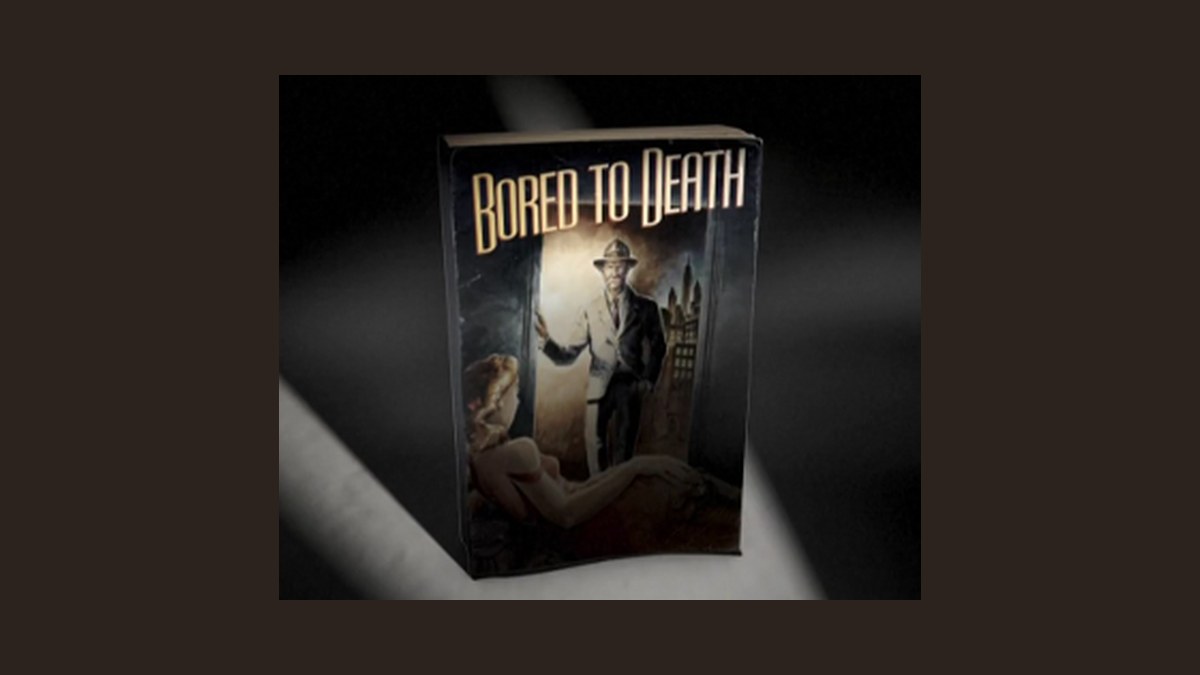
Jonathan Ames adapted his own short story into a half-hour for HBO in 2009 and produced one of the most beloved cult cannabis sitcoms of the post-Sopranos era.
The show ran three seasons until cancellation in 2011. Jason Schwartzman plays a fictionalized Jonathan Ames, a Brooklyn writer who, between novels and stoned afternoons, advertises himself on Craigslist as an unlicensed private detective and takes whatever jobs walk in. Ted Danson plays his magazine-editor mentor George Christopher, who handles the show’s actual heaviest cannabis lifting. Zach Galifianakis plays Ray Hueston, the cartoonist best friend usually somewhere between a bowl and a beer.
The show is best understood as a literary stoner sitcom in the same way Get Shorty was a literary crime sitcom. The pleasures are language, character voice, and the slow drifty pace of half-hours that wander from a Brooklyn brownstone to a Manhattan magazine office and back. Danson’s George is the show’s secret weapon. The A.V. Club’s retrospective argued that George’s casual late-life cannabis enthusiasm did more to normalize the silver-haired stoner on premium cable than any other character of the era. Danson would later run the same archetype in The Good Place, with the weed swapped for cosmic philosophy.
The Brooklyn texture is worth flagging on its own terms. Bored to Death is one of the few sitcoms shot on location in 2009-era Brooklyn that captured the borough at a specific transitional moment. The Boerum Hill bookstores, the Cobble Hill bars, the Smith Street wine shops that recur as backdrops are mostly real businesses that no longer exist or have changed hands. The show functions in retrospect as a documentary of a Brooklyn cannabis culture that was still indoor and informal and pre-legalization. Vulture argued in a 2017 retrospective that the show was canceled at the moment it had finished figuring itself out.
The cannabis episode that gets cited the most is the season-one finale, which features a Danson-Schwartzman-Galifianakis payoff scene fans still call the bowl scene. The deeper episode is “Stockholm Syndrome” in season two, in which the trio’s stoned post-screening conversation about a Bergman film becomes the entire B-plot. The same scene-pairing exercise runs through the Big Lebowski cannabis pairing piece on this site.
The cast also includes Heather Burns, John Hodgman, Olivia Thirlby, Patton Oswalt, and Kristen Wiig in recurring or guest roles. Start with season two. One episode, “Stockholm Syndrome.” Twenty-four episodes total. The whole run fits in a long weekend.
F Is for Family. Bill Burr’s Seventies Cannabis Suburb.
 |
|
Bill Burr and Michael Price created F Is for Family for Netflix in 2015 and produced one of the most quietly accurate period sitcoms about American suburban life in the seventies.
The show ran five seasons and forty-four episodes through 2021. Burr voices Frank Murphy, a baggage handler at a fictional regional airport. The show follows the Murphy family across a few years in the early-to-mid seventies, with cannabis appearing as a recurring marker of the era’s cultural shifts.
The middle son Bill, voiced by Haley Reinhart, gets his first joint in season two. The Murphys’ counterculture neighbor Vic, voiced by Sam Rockwell, is high in basically every scene he appears in. Frank himself never smokes, and the show treats that abstention as the joke it is, the patriarch refusing the thing his neighbors and his children are doing all around him.
What works in F Is for Family is that the cannabis is dated. The show treats the early seventies as the moment when American suburbia first encountered the drug as a normal middle-class fact rather than as a coastal counterculture artifact. Burr, who grew up in Massachusetts in exactly that era, writes the encounters with the documentary specificity of someone who watched it happen. Vic is the showy character. The Bill plotline across seasons two and three is the more careful piece of writing.
Vulture’s final-season review specifically called out the show’s handling of seventies cannabis culture as a quiet strength.
The voice cast is exceptional. Laura Dern as Sue Murphy, Justin Long as the older son Kevin, Debi Derryberry as Maureen, plus Mo Collins, David Koechner, Phil Hendrie, and Gary Cole as the airport boss Mr. Dunbarton. The episode to start with is the season-two premiere “Pray Away,” which features Vic at his Vic-iest and a Murphy family sequence that captures the show’s tonal blend cleanly.
The show is one of the underrated entries on the platform. Animation gets sorted into kids-TV in most viewers’ algorithms, and that buried it. It deserves a second look.
Five seasons. All on Netflix.
Atlanta. The Artiest Entry In The Canon.
 |
|
Calling Atlanta a stoner sitcom flattens what it is doing. Calling it anything else flattens it more.
The Donald Glover series ran four seasons on FX from 2016 to 2022, won the Emmy for Outstanding Comedy in its first year, and is generally considered one of the most ambitious half-hour shows of the prestige TV era. It is also a show in which weed is essentially load-bearing across all four seasons.
Glover’s character Earn manages his cousin Alfred, the rapper Paper Boi played by Brian Tyree Henry, and the show follows them through a music industry that runs on cannabis the way the music industry actually does. The same industry produced the artist-led brands documented in the Snoop Dogg cannabis brands writeup. Lakeith Stanfield’s Darius is the show’s clearest stoner character. Philosophical, ambient, the closest thing the show has to a chorus.
The case for the slot is that television has had stoner-adjacent prestige shows before, but no other prestige show in this era has put cannabis at the level Atlanta does without making it the subject. The cannabis is the air the show breathes. Darius’s monologues read like cannabis-philosophy in the lineage of the longer cannabis-as-spiritual-practice tradition. The show’s surreal sequences, including the famous “Teddy Perkins” episode in season two and the “Three Slaps” cold open in season three, are the kind of formal experiments that only happen in writers rooms where altered consciousness is part of the working vocabulary.
The cast extends beyond the central four to Zazie Beetz as Van, plus a sprawling rotation of guest stars including Katt Williams, Michael Vick as himself, Liam Neeson as himself, and many more. Rolling Stone’s exit interview with Glover at the end of the show framed it as a deliberate effort to make the most ambitious half-hour comedy a Black ensemble had ever produced.
Start with season one and let it run. The entry-point episode for a stoner audience is “Value” in season one, built around a single long stoned argument and ending on one of the most quietly perfect closing images in modern TV.
The artiest entry. Also one of the best.
Ten shows is not a complete canon. Pineapple Express on Amazon, Cooper’s Bar on AMC+, Method & Red on Fox, Living with Yourself on Netflix, the long shadow Cheech & Chong’s Next Movie casts on every basement-circle scene that came after, the cannabis-curious episodes scattered across It’s Always Sunny in Philadelphia and Eastbound & Down, the British half-hours including Ideal with Johnny Vegas and Lead Balloon with Jack Dee, all of these are part of the larger conversation. The list above is the canon as it stands. The genre is alive and the canon will keep changing. If the ten above run out, the sister stoner movies ranked piece is the next obvious move, and the stoner comedians roundup gives you the bench of standups whose voices recur across most of these casts.
Movies argue. Television normalized.