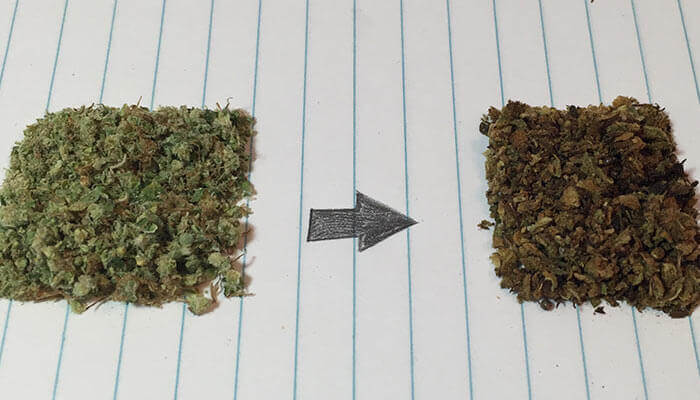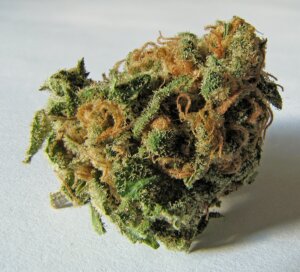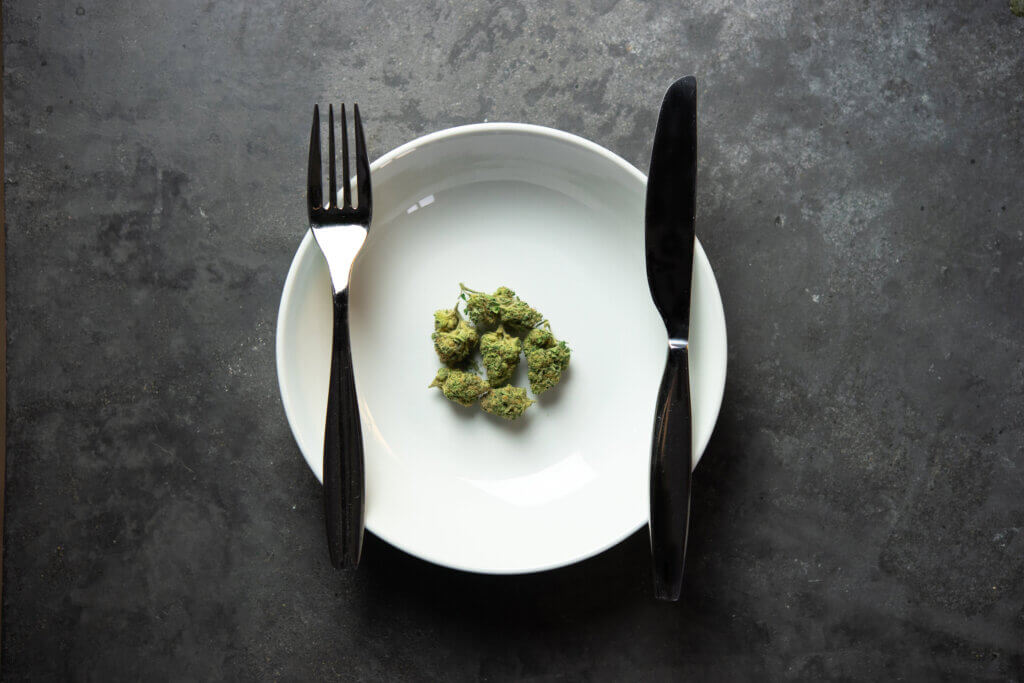
Yes, you can technically put weed in the microwave, but the result is almost always a worse smoke, weaker edibles, or a small fire risk. Microwaves heat moisture inside the bud unevenly, scorch terpenes long before THCA finishes converting to THC, and offer no temperature control. For drying, decarbing, or salvaging fresh flower, an oven set to 220°F for 30 to 40 minutes does the job Leafly’s decarboxylation guide lays out in detail. The microwave skips the chemistry that makes cannabis work.
Can You Put Weed in the Microwave? (Direct Answer + Quick Science)
The short answer is yes, but you should not. A microwave will heat cannabis flower, and that heat can convert some THCA into THC through partial decarboxylation. The problem is what else happens at the same time. Microwaves cook by exciting water molecules, which means the bud heats from the inside out and at wildly different rates across each piece. Some flecks scorch past 300°F while others barely warm. Cannabinoids like THC begin to volatilize and degrade above 315°F, and the lighter aromatic terpenes start vaporizing at temperatures as low as 100°F to 160°F, well before THCA fully activates Cannigma’s breakdown of microwaved cannabis explains. The end result is flower that is partially activated, mostly stripped of flavor, and possibly weaker than when it went in. Every credible source from Leafly to peer-reviewed research warns against the method for the same reasons. The physics of microwave heating is the wrong tool for the chemistry decarboxylation requires.
Why Microwaving Weed Doesn’t Decarb It Properly
Decarboxylation is a slow, temperature-controlled reaction. THCA, the non-psychoactive acid form found in raw cannabis, loses a carboxyl group and becomes THC when held at roughly 220°F to 245°F for 30 to 40 minutes. Lower temperatures take longer. Higher temperatures finish faster but start cooking off the THC you just made. This window matters because the conversion is gradual and the molecule is heat-sensitive. Leafly’s decarboxylation guide walks through the curve: full activation needs sustained, even heat for the better part of half an hour.
A microwave cannot deliver that. Domestic microwaves run at 600 to 1,200 watts and create standing waves that produce hot spots and cold spots inside the cooking chamber. The bud near a hot spot reaches 350°F or 400°F within seconds, vaporizing THC and burning the plant matter. The bud sitting in a cold spot may never break 200°F. Microwaving in 30 or 60 second pulses, the trick some online guides recommend, does not solve this. It just averages the failures. Research on cannabinoid decarboxylation kinetics has measured the reaction directly. A peer-reviewed kinetic study of acidic cannabinoid decarboxylation tested temperatures from 80°C to 145°C in a controlled vacuum oven and confirmed that decarb follows first-order kinetics, meaning the reaction needs sustained, predictable heat to run to completion. Industrial cannabis processors who do use microwave methods build them around tightly controlled drying systems with continuous probe feedback, not consumer kitchen ovens. Without the temperature feedback an oven thermometer or industrial probe gives you, partial decarb is the best outcome you can hope for, and partial decarb gives you weak edibles.
The Safety Risks of Microwaving Cannabis
Fire is the most immediate risk. Dry plant material in a microwave is fuel, and any metal it touches turns into a problem. Foil-lined wraps, the staple of the metal-tipped blunt or the foil grommet on a pre-roll, will arc inside a microwave within seconds. Even a small joint clip or roach with metallic ink can spark. Several cannabis fire risk guides cite microwave ignition of dried plant material as a recurring kitchen accident, and the heating-element exposure on older microwaves makes the problem worse.
Terpenes go next. The aromatic compounds responsible for everything from citrus to gas to pine vaporize at strikingly low temperatures. Limonene and pinene start evaporating around 156°F. Linalool around 198°F. By the time microwaved bud feels warm to the touch, much of its flavor profile has already left. The result is flower that smokes rough, tastes flat, and lacks the entourage effect terpenes contribute to the high. Utah Marijuana’s analysis of why microwaving medical cannabis fails makes the same point on flavor degradation.
Heat is also why long-term storage matters: our notes on storage temperature cover the cool, dark, low-humidity window that keeps terpenes intact between harvest and use.
Then there is the cannabinoid loss itself. THC degrades into CBN as it overheats. CBN is mildly sedative but far less psychoactive than the THC you started with. Hot spots inside microwaved cannabis routinely exceed the THC degradation threshold, which means part of every batch is converting forward to THC and part is converting past it into something weaker. You end up with a chemical mix you did not plan and cannot reproduce. For anyone making edibles, where dosing predictability is the entire point, that is a worse problem than just slow.
What Decarboxylation Actually Requires (Temperature, Time, Why Microwaves Fail)
The chemistry is narrow. THCA to THC conversion is a thermal decarboxylation reaction. Three variables determine the result: temperature, time, and even heat distribution. Hit all three and you get full activation with minimal cannabinoid loss. Miss any of them and you lose either potency, flavor, or both.
Working temperature and time targets:
- 220°F for 30 to 40 minutes: Standard home decarb. Highest THC retention, near-complete conversion of THCA. This is the temperature most decarb guides converge on.
- 240°F for 25 to 30 minutes: Faster window. Slightly more cannabinoid loss but acceptable for most edibles.
- 250°F for 20 minutes: Quickest oven-based option that still works. THC starts degrading meaningfully past this point.
- 300°F and above: THC vaporizes and degrades faster than it forms. Unusable for decarbing.
Microwaves cannot park inside the 220°F to 245°F band. They have no temperature setting, only power level and time. Power level controls duty cycle, not heat. Once the magnetron starts cycling, the local temperature inside the bud is whatever the standing wave pattern dictates that second. There is no thermostat, no probe feedback, no airflow to even the heat. The reaction window decarb depends on simply does not exist inside a microwave. That is not a tuning problem. It is a physics problem.
Microwave Decarb vs Oven Decarb vs Sous Vide vs Decarb Device
Four methods cover almost every home decarb attempt. Three of them work. The microwave does not, but it is worth seeing the trade-offs side by side, because the differences in temperature control, terpene retention, and cost explain why the consumer-grade options keep beating the kitchen shortcut.
| Method | Effective Temp | Time | THC Activation Quality | Terpene Retention | Cost | Best For |
|---|---|---|---|---|---|---|
| Microwave | Uncontrolled, ranges 200°F to 400°F in hot spots | 30 to 90 seconds | Partial and uneven, often net loss after CBN conversion | Poor, lighter terpenes vaporize first | Already in the kitchen | Nothing related to potency or flavor |
| Conventional Oven | 220°F to 240°F | 30 to 40 minutes | Near-complete activation when temperature is verified | Moderate, some loss to airflow | $5 oven thermometer | Most home cooks making edibles |
| Sous Vide | 203°F | 90 minutes | Very high, sealed environment holds the curve | Excellent, terpenes trapped in pouch | $60 to $200 circulator plus vacuum sealer | Anyone making edibles weekly |
| Decarb Device (Ardent FX, Levo II) | Pre-programmed 220°F to 240°F | 60 to 90 minutes including cooldown | Highest documented retention, sealed and probe-controlled | Excellent, contained system | $200 to $400 | Set-and-forget reliability |
The pattern across the four is consistent. The further the method moves from open-air, uncontrolled heat toward sealed, probe-verified temperature, the better the cannabinoid retention and the cleaner the flavor. The cannabinoid decarboxylation kinetics study establishes why: first-order reaction kinetics demand sustained, predictable heat, and only the bottom three rows can deliver it. The microwave is in the table only to show what falls out when you skip temperature control entirely.
Better Methods for Decarbing Cannabis (Oven, Sous Vide, Decarb Device)
Three methods deliver real, repeatable decarb. Each one solves the temperature control problem the microwave cannot.
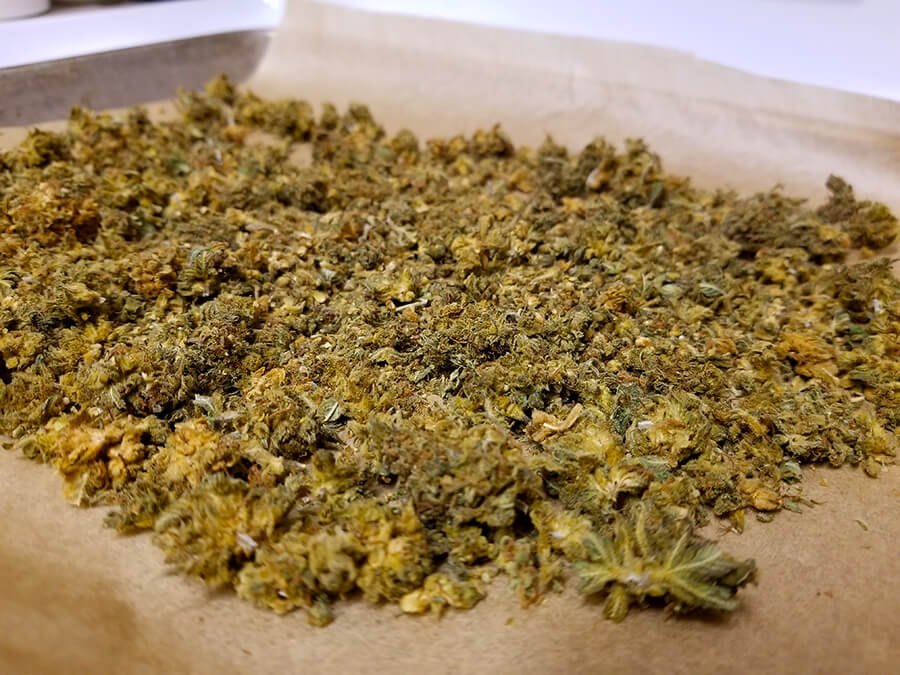
Oven decarb (the default method). Preheat the oven to 220°F. Break flower into small, even pieces and spread it in a single layer on parchment paper over a baking tray. Bake for 30 to 40 minutes. Stir gently at the 15 minute mark to expose the bottom layer to direct heat. The flower will turn from green to a light golden brown. That color shift is your visual cue that conversion is far along. An oven thermometer is worth the five dollars: home oven thermostats are routinely off by 25°F or more, and decarb sits in a band where that matters. Leafly’s decarboxylation guide covers the full procedure with photos.
For a worked recipe where the oven decarb runs inside the bake itself, our slow-bake decarb walkthrough shows the 220°F hold integrated into the cookie process so you do not lose THC to a separate hot pass.
Sous vide (the most controlled method). Vacuum seal ground cannabis in a small pouch and submerge it in a water bath set to 203°F for 90 minutes. The water bath holds temperature within a fraction of a degree, terpenes are trapped inside the sealed pouch instead of escaping, and there is no risk of scorching. The trade-off is gear and time. You need a sous vide circulator and a vacuum sealer, and the process runs longer than the oven. For anyone making edibles weekly, the consistency is worth it.
Dedicated decarb device (Ardent FX, Levo II, Magical Butter DecarBox). These countertop appliances are pre-programmed for the exact temperature curve cannabis decarb needs and run sealed, which contains terpenes and odor. They are the easiest path for someone who wants a button to push. Cost is the trade-off, usually 200 to 400 dollars, but the cannabinoid retention numbers published by these manufacturers consistently beat home oven results because the heat is more even and the loss to evaporation is lower.
Whichever method you pick, grind the flower coarse, not fine. Fine grind exposes too much surface area and accelerates terpene loss. Pea-sized pieces are the sweet spot. The same logic applies to dosing: if you are decarbing a quarter ounce, a half ounce, or a full ounce, the time stays roughly the same as long as everything sits in a single layer, because the limiting factor is heat penetration into each piece, not total mass. If you are not sure how much flower you actually have, our visual guide to cannabis quantities shows what an eighth, a quarter, and an ounce really look like spread out on a tray.
If you have moved past flower entirely and are working with hash, rosin, or wax, the temperature and activation logic shifts. Our primer on concentrate basics covers how decarb status differs across extract types so you know which ones still need a heat step and which arrive activated.
If you are weighing flower before any heating step, our complete weight chart shows each tier from a single gram up to a full ounce next to a US nickel for quick eyeball calibration.
For batch math when sizing up from a smaller portion, our breakdown of grams in an eighth gives the exact gram count and dosing yield assumptions.
When People Try to Microwave Weed (Common Use Cases and What Actually Happens)
Most people who search for this are trying to solve one of three problems. Each one has a better answer than the microwave.
Drying fresh or wet bud quickly. Cannabis that was not dried or cured properly is a real frustration. Microwaving it for 30 seconds at a time will drive moisture out, but it cooks the terpenes off in the same pass and leaves the bud crumbly and harsh. The fix is patience: spread fresh flower on a paper bag in a dark room with low humidity for two to four days, or use a controlled drying chamber if you have one. The thermal sensitivity is the same problem the cannabinoid decarboxylation kinetics work documented for THCA. Heat-driven moisture removal and heat-driven cannabinoid degradation share the same temperature window, and there is no way to do one fast without doing the other.
Speed-decarbing for edibles. People want THC activation in five minutes. The microwave cannot deliver it without burning. The honest answer is that real decarb takes at least 20 minutes of controlled heat, and there is no shortcut that produces consistent, dose-predictable results. Inconsistent decarb is one of the biggest reasons home edibles feel weak or hit wildly differently from batch to batch, which often gets blamed on the recipe when the real culprit is a mistimed activation. If your homemade edibles take much longer than expected to kick in, our guide on how long edibles take to kick in walks through the absorption side of the equation, but the decarb step is upstream of all of that.
Once the flower is properly decarbed, the next step is infusion. Our guide on cooking with cannabis oil For a worked example that includes the decarb step end to end, our infused recipe walks the entire flower-to-edible chain. covers ratios, temperatures, and dose math so the work you did at the decarb stage actually shows up in the finished edible.
Drying a damp blunt or joint. Some smokers, copying a Snoop Dogg habit that circulates online, microwave a sealed blunt for a few seconds to crisp the wrap before lighting. This works briefly but degrades the flower inside, and any glue or metallic ink in the wrap is a fire risk. A few minutes near a warm radiator does the same job without the chemistry penalty. The trick people are really chasing is dry, even-burning flower, and that comes from grind size, pack density, and proper cure, not from microwaving fixes after the fact.
Sterilizing or salvaging old flower. Some people microwave bud they suspect is stale or contaminated. Heat does not reliably solve either problem. Stale flower has already lost most of its terpenes to time, and microwaving will not bring them back. Suspected mold or microbial contamination needs disposal, not heating: the heat that would kill spores is also the heat that destroys the cannabis around them.
If you are weighing risk on a stash you suspect went sideways, our guide on moldy weed risk covers what mold actually looks like on flower and the respiratory call to make before any heat-based salvage attempt.
Common Microwave Decarb Mistakes (and What to Do Instead)
People who insist on trying anyway tend to fall into the same five traps. Each one compounds the underlying physics problem and stacks more cannabinoid and terpene loss on top of the uneven heat that microwaves already deliver.
- Over-grinding the flower into powder. Fine grind triples the surface area exposed to microwave hot spots, so terpenes vaporize even faster and the outer particles burn before the center activates. Do this instead: break flower into pea-sized pieces and leave airspace between them.
- Microwaving in plastic or sealed containers. Plastic leaches into hot oils and butters, sealed containers can pressurize, and cling film melts onto resin. Do this instead: use a ceramic or oven-safe glass dish lined with parchment, uncovered.
- No parchment cover or vapor barrier. Open-air microwave heating sends terpenes straight into the kitchen exhaust. Do this instead: skip the microwave entirely and use sous vide or a sealed decarb device, which trap the volatile aromatics inside the cooking chamber.
- Skipping the rest period after heating. The hottest particles continue to convert THC to CBN as they cool if held against still-warm bud. Do this instead: spread flower on a cool tray immediately after heating so residual heat dissipates within a minute.
- Blasting full power for short bursts. Full power maximizes the standing-wave hot spots that cause uneven heating. The 30-second high-power pulse trick is the worst case, not a fix. Do this instead: if you absolutely must use a microwave for a non-decarb reason like drying a damp pre-roll wrap, hold it at 30 percent power for short intervals and accept that any cannabis inside is collateral.
The pattern across all five is the same. Each fix points away from the microwave, not toward a better microwave technique. The chemistry rewards control, and a magnetron firing at 1,000 watts cannot offer it.
Frequently Asked Questions
Does microwaving weed make it more potent?
No, in practice. The theory is that microwave heat decarboxylates THCA into active THC. The reality is uneven heating: some of the bud overshoots 315°F and degrades the THC you just made into CBN, while other parts barely activate at all. Leafwell’s review of microwave potency claims lands in the same place. Net potency usually drops, not rises, because the partial activation gain is offset by the volatile losses and CBN conversion happening at the same time.
Can you decarb weed in an air fryer instead?
Not reliably. Air fryers run their heating element on a duty cycle and circulate hot air with a fan, so the chamber temperature swings 20 to 40 degrees around the setpoint, especially at the low 220°F to 245°F window decarb needs. The fan also strips terpenes faster than a still oven. The decarboxylation kinetics study shows the reaction is sensitive to those swings, so partial decarb is the typical outcome. A conventional oven with a verified thermometer is the better default, and a sous vide bath beats both for stability.
Can you microwave weed to dry it out?
You can drive moisture off, but the cost is high. Lighter terpenes start vaporizing around 156°F to 198°F, well below the temperature it takes to fully dry bud in a microwave. The flower comes out drier and smokeable, but flat and harsh. Slow air drying for two to four days preserves flavor and burn quality.
Can you microwave a joint or blunt?
Avoid it. The wrap can scorch in seconds, any metallic foil or ink will arc, and the cannabis inside loses terpenes faster than the wrap dries. If a blunt is too damp to light, leave it on a warm surface for ten minutes instead.
Can you microwave cannabis edibles like brownies or gummies?
Reheating an already-decarbed edible gently is fine. Microwaving raw cannabutter or cannabis-infused oil to make an edible is not. Microwaves will burn small amounts of butter or oil before the cannabinoids fully infuse, and the dosing becomes unpredictable a Westword guide on microwaved edibles covers this in detail.
Does microwaving weed kill mold?
No, not reliably. Mold spores survive temperatures most home microwaves can deliver before the cannabis itself burns. If you find mold on flower, throw the flower out. Smoking moldy cannabis is a real respiratory risk regardless of how you heat it.
Why do some people swear it works?
Anecdote and partial outcomes. Microwaving will activate some THC and dry some moisture, so a casual user comparing a damp pre-microwave bud to a dry post-microwave bud may notice a stronger hit. They are not measuring against properly cured, oven-decarbed flower. When researchers run controlled comparisons in microwave-assisted cannabinoid extraction studies, the microwave consistently underperforms slower, temperature-controlled methods for cannabinoid retention.
What temperature destroys THC?
THC begins to volatilize and degrade above 315°F, with significant loss above 350°F as it converts toward CBN or burns off entirely. The decarb window of 220°F to 245°F sits well below that line on purpose. Microwave hot spots routinely break 350°F in seconds, which is the core reason microwave decarb produces weaker flower than the oven, sous vide, or a dedicated decarb device.