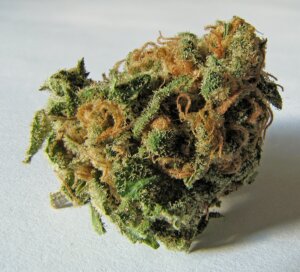
Cannabis oil is the most versatile starting point for any edible. Unlike cannabutter, which only works in baked goods and butter-forward dishes, infused oil drops into salad dressings, pasta sauces, fried eggs, stir-fries, baked desserts, and salves. The structural difference between cannabutter and cannabis oil for the home cook is range. The structural similarity is dosing math: you decarboxylate the flower or kief first to convert THCA into active THC, then you infuse the fat with the activated cannabinoids, and the dose per finished gram of oil depends on the cannabinoid content of the input flower and the infusion efficiency, which typically runs 60 to 75 percent capture. The microwave shortcut some home cooks try is not one of them: our breakdown of why microwaving weed fails shows the uneven hot spots that wreck both potency and flavor before the cannabinoid conversion finishes.
This guide walks through decarbing, infusing in three common oils (olive, coconut, MCT), straining, storing, and the dosing math that turns a batch of infused oil into a predictable home edible. It is the parent guide for every infusion recipe on the site.
Why Cannabis Oil Beats Cannabutter for Most Cooking
Cannabutter limits you to butter applications: cookies, brownies, frosting, savory dishes built on butter. Cannabis oil drops into everything that uses fat as a vehicle. Coconut oil hardens at room temperature and behaves like butter for baking. Olive oil stays liquid and runs into dressings, dips, and pasta. MCT oil stays liquid and tasteless, which makes it the structural pick for tinctures and capsules. The trade for oil’s range is that the oil base flavors travel into the finished dish, which is why olive oil works for savory and coconut works for sweet.
Step One: Decarboxylation
Raw cannabis flower contains THCA (tetrahydrocannabinolic acid), the non-psychoactive precursor to THC. Heat converts THCA into THC through decarboxylation, which is the chemical reaction that strips a carboxyl group from the THCA molecule. Without decarboxylation, the infused oil contains mostly THCA, which does not produce a meaningful psychoactive effect at typical edible doses. The decarb step is non-optional for psychoactive edibles.
Standard oven decarb method
Preheat your oven to 240 degrees Fahrenheit (115 degrees Celsius). Break the flower into roughly even pieces about the size of a pencil eraser. Spread the pieces in a single layer on a parchment-lined baking sheet. Bake for 40 minutes. Remove the sheet, let the flower cool, then transfer to a grinder for the infusion step.
The temperature target is the structural variable. At 240 to 250 degrees Fahrenheit you get reliable THCA-to-THC conversion without degrading the THC into CBN (cannabinol), the sedating cannabinoid that THC degrades into at higher temperatures and longer exposures. Research from NIH-published kinetics studies on THC degradation supports the 240 to 250 Fahrenheit window as the standard home-kitchen decarb temperature.
Step Two: Choose Your Oil
The three home-kitchen oils that work for cannabis infusion each carry their own use case.
Coconut oil is the structural pick for baking. Coconut oil melts at body temperature and is solid at room temperature, which mimics butter in cookies, brownies, and frosting. The medium-chain triglycerides (MCT) in coconut oil bind cannabinoids efficiently. Refined coconut oil carries the mildest flavor; unrefined virgin coconut oil carries a coconut flavor that some recipes want and some do not.
Olive oil is the structural pick for savory cooking. Olive oil stays liquid, drops into salad dressings, pasta sauces, and dips, and carries its own flavor that many savory dishes are built around. Use extra-virgin for finishing dishes and the more neutral light olive oil for cooking where you do not want the EVOO flavor profile to dominate.
MCT oil is the structural pick for tinctures and capsules. MCT oil stays liquid at room temperature, carries essentially no flavor, and absorbs sublingually faster than long-chain fatty acid oils. For edible recipes MCT oil sits at the same dosing math as coconut, but the use case is the precise dose format rather than the home-baked product.
Step Three: The Infusion
The standard ratio is 1 cup of oil to 1 ounce (28 grams) of decarbed cannabis flower. This is the high-dose ratio. For a lower-dose batch use 1 cup of oil to 7 to 14 grams of flower. Match the dose intensity to your tolerance and what you are cooking.
Stovetop double-boiler method
Set a heat-safe glass bowl over a saucepan of simmering water (a true double boiler or a Mason jar in a water bath both work). Combine your decarbed flower and your chosen oil in the bowl. Maintain the oil at 160 to 200 degrees Fahrenheit (70 to 95 degrees Celsius) for 2 to 3 hours. Stir occasionally. Do not boil the oil; high temperatures degrade the cannabinoids and run a fire risk. After 2 to 3 hours strain through a fine-mesh sieve lined with cheesecloth into a clean glass jar. Squeeze the plant material gently to release the trapped oil but do not press hard or you will push chlorophyll into the finished oil and add grassy bitterness.
Slow cooker method
A slow cooker on its low setting holds 175 to 190 degrees Fahrenheit, which is the structural sweet spot for cannabis infusion. Combine 1 cup of oil with 1 cup of water and 1 ounce of decarbed flower in the slow cooker. The water layer at the bottom prevents the bottom of the cooker from scorching and lets the oil float on top during infusion. Cover and cook on low for 4 to 6 hours, stirring every 60 to 90 minutes. Strain as above, then let the strained oil cool. Refrigerate for 30 minutes. The oil layer will solidify (coconut) or stay liquid (olive, MCT) on top of the water layer; lift the oil layer off and discard the water.
Step Four: The Dosing Math
This is the part most home cooks get wrong. You have to do the math before you eat.
Start with the THC content of your flower in milligrams. A flower labeled 20 percent THC contains 200 milligrams of THC per gram (20 percent of 1,000 milligrams = 200 mg). Multiply by the gram weight of your flower to get the total THC in your infusion. Example: 1 ounce of 20-percent-THC flower = 28 grams x 200 mg per gram = 5,600 mg of THC in the batch input.
Apply the infusion efficiency. Home-kitchen infusions typically capture 60 to 75 percent of the cannabinoids. Use 65 percent as the conservative working number. Total active THC in your finished oil = 5,600 mg x 0.65 = 3,640 mg of THC across the whole batch.
Divide by the volume of oil. 1 cup of oil = 16 tablespoons = 48 teaspoons. So 3,640 mg / 48 = 75.8 mg of THC per teaspoon, or 227 mg per tablespoon, or 3,640 mg per cup. From there divide into your recipe portions. If you make 24 cookies with 1 cup of infused oil, each cookie carries roughly 151 mg of THC, which is a heavy dose for any user. To bring it down to a 10 mg per cookie dose, use a fraction of the infused oil and supplement with non-infused oil for the rest of the recipe volume, or start with a lower-dose infusion.
Step Five: Storage and Shelf Life
Cannabis-infused oil keeps for roughly 2 months at room temperature in a sealed dark glass jar, 4 to 6 months refrigerated, and up to a year frozen. Coconut and olive oil oxidize slower than oils with higher polyunsaturated fat content (sunflower, grapeseed), which is part of why those two are the home-cook standards. Light, heat, and air degrade both the oil base and the cannabinoids. The NIH degradation kinetics on THC show that exposure to light and heat shifts THC toward CBN over time, which moves the infused oil from psychoactive toward sedating without reducing the total cannabinoid content. Dark glass and cold storage are the structural picks.
Common Mistakes That Ruin a Batch
Boiling the oil. Anything over 245 degrees Fahrenheit (118 Celsius) starts degrading the cannabinoids meaningfully, and a boil will scorch the plant material into bitter, vegetal oil. Hold the temperature.
Skipping decarb. Raw flower infused into oil produces an oil heavy in THCA with minimal THC. Some users want the THCA effect, but most home edibles depend on THC, so the decarb step is non-optional for psychoactive edibles.
Pressing the strain. Squeezing the cheesecloth bag hard pushes chlorophyll, water-soluble compounds, and plant residue into the oil and adds grassy bitterness. Gentle pressure only, then discard the spent flower.
Underdosing the math. Most home cooks assume a flat 100 percent infusion efficiency, which produces an edible that hits harder than expected. The 65 percent working number gives you a more accurate dose estimate.
Using the Oil in Recipes
Once the oil is in the jar the recipe possibilities open up. Sister recipes on the site that use cannabis-infused oil or cannabutter as the base include our hash brownies recipe, our cannabis infused rice krispie treats, and our cannabis gummies recipe. Each one walks through the recipe-specific dosing math built off the oil you make here.
Frequently Asked Questions
What is the best oil to use for cannabis cooking?
Coconut oil is the structural pick for baking because it mimics butter at room temperature and the MCT content binds cannabinoids efficiently. Olive oil is the structural pick for savory cooking because it stays liquid and drops into dressings, sauces, and pasta. MCT oil is the structural pick for tinctures and capsules because it stays liquid and carries no flavor.
How long does cannabis-infused oil last?
Cannabis-infused oil keeps for roughly 2 months at room temperature in a sealed dark glass jar, 4 to 6 months refrigerated, and up to a year frozen. Light, heat, and air degrade both the oil base and the active cannabinoids over time.
Do you have to decarb cannabis before infusing oil?
Yes, for psychoactive edibles. Decarboxylation converts THCA (the non-psychoactive precursor) into THC. Raw flower infused without decarbing produces an oil heavy in THCA with minimal active THC, which does not deliver the typical edible effect at standard doses.
How do you calculate the dose in cannabis-infused oil?
Multiply the flower’s THC percentage by 10 to get milligrams of THC per gram. Multiply by the gram weight of your input flower. Apply a 65 percent infusion efficiency to estimate total active THC in the batch. Divide by the volume of oil to get the dose per teaspoon or tablespoon. Example: 28 grams of 20-percent THC flower yields roughly 3,640 milligrams of active THC across one cup of oil, or about 76 milligrams per teaspoon.