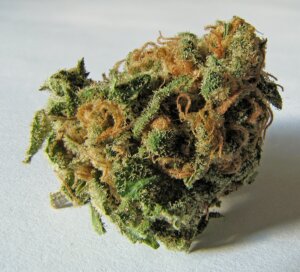
Yes, you can roll a joint. The full process takes about five minutes once you have done it twice. Grind your flower (or break it down without a grinder if you do not have one), make a crutch, load the paper, shape it between your fingers, tuck the front edge, lick the seal, pack the tip, and twist. Seven steps. Here is every one of them in detail.
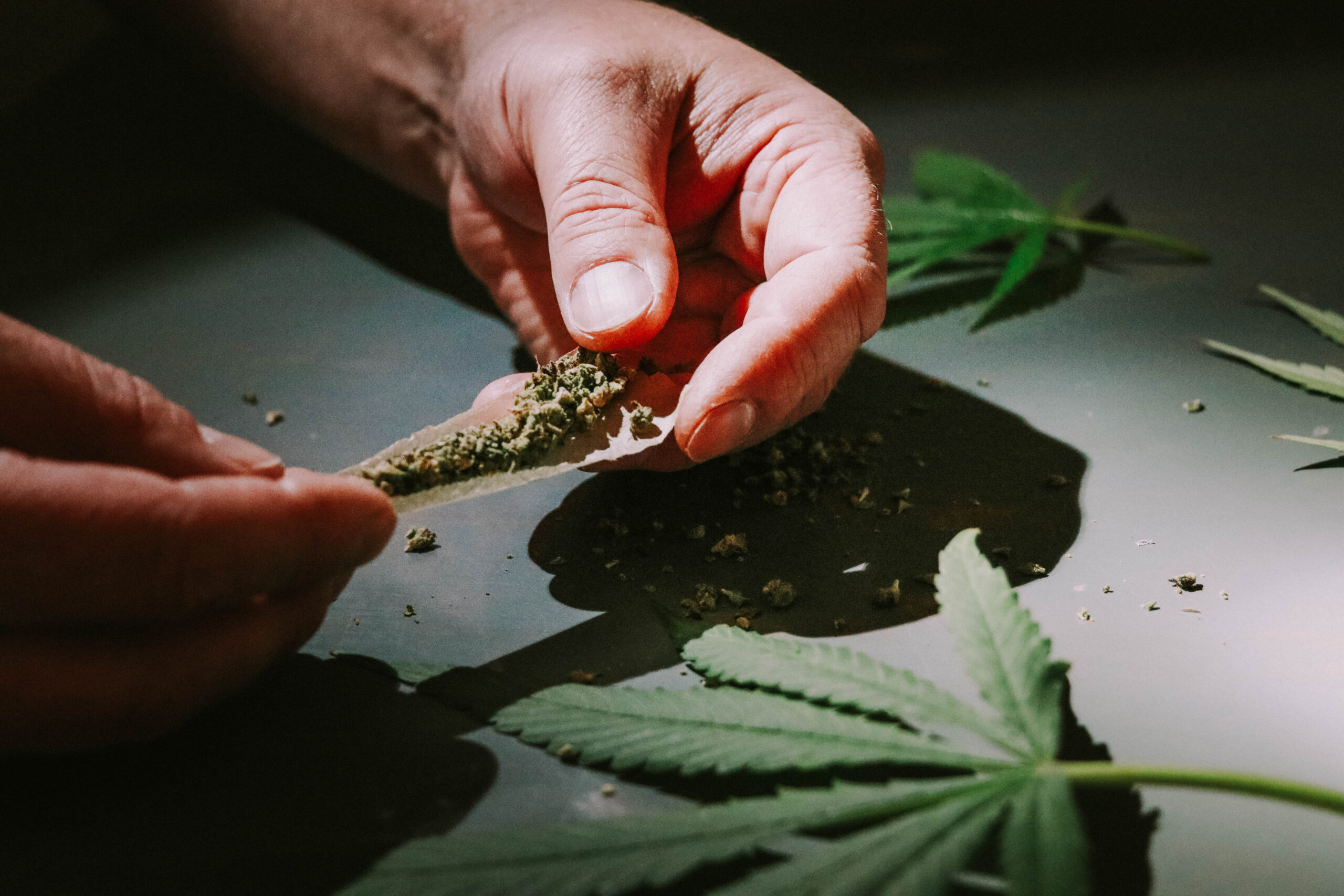
Rolling a cannabis joint. Wikimedia Commons / CC BY-SA 4.0
What You Need. Short List, No Substitutes.
You need four things to roll a proper joint: cannabis, a grinder, rolling papers, and a crutch. That is it. Everything else is optional. If you also want to keep the smell down while you smoke that joint, our smoke buddy review walks through which model actually filters the exhale.
For papers, the choice matters more than most beginners expect. RAW makes unbleached hemp papers that are thin, slow-burning, and widely available. OCB produces both hemp and rice options, with the rice papers being the thinnest and adding almost no flavor of their own. Both brands come in 1.25-inch (standard), 1.5-inch, and king-size formats. King-size papers hold more flower and give you more room to work during the roll, which helps when you are learning. For a full breakdown of which papers are worth keeping in your kit and which household substitutes to avoid, see our guide on rolling weed with regular paper.
For grinding, a two-piece or four-piece herb grinder produces the consistent, fluffy texture you need for an even burn. Fingers work but leave the flower sticky and unevenly broken down, which leads to hot spots and a joint that canoes. That means it burns faster on one side than the other.
For the crutch, the cardboard tip strip on your rolling paper booklet is designed exactly for this. If you are out, the edge of a business card or a thin piece of packaging cardboard works fine. You are looking for something stiff enough to hold a rolled cylinder shape under light pressure.
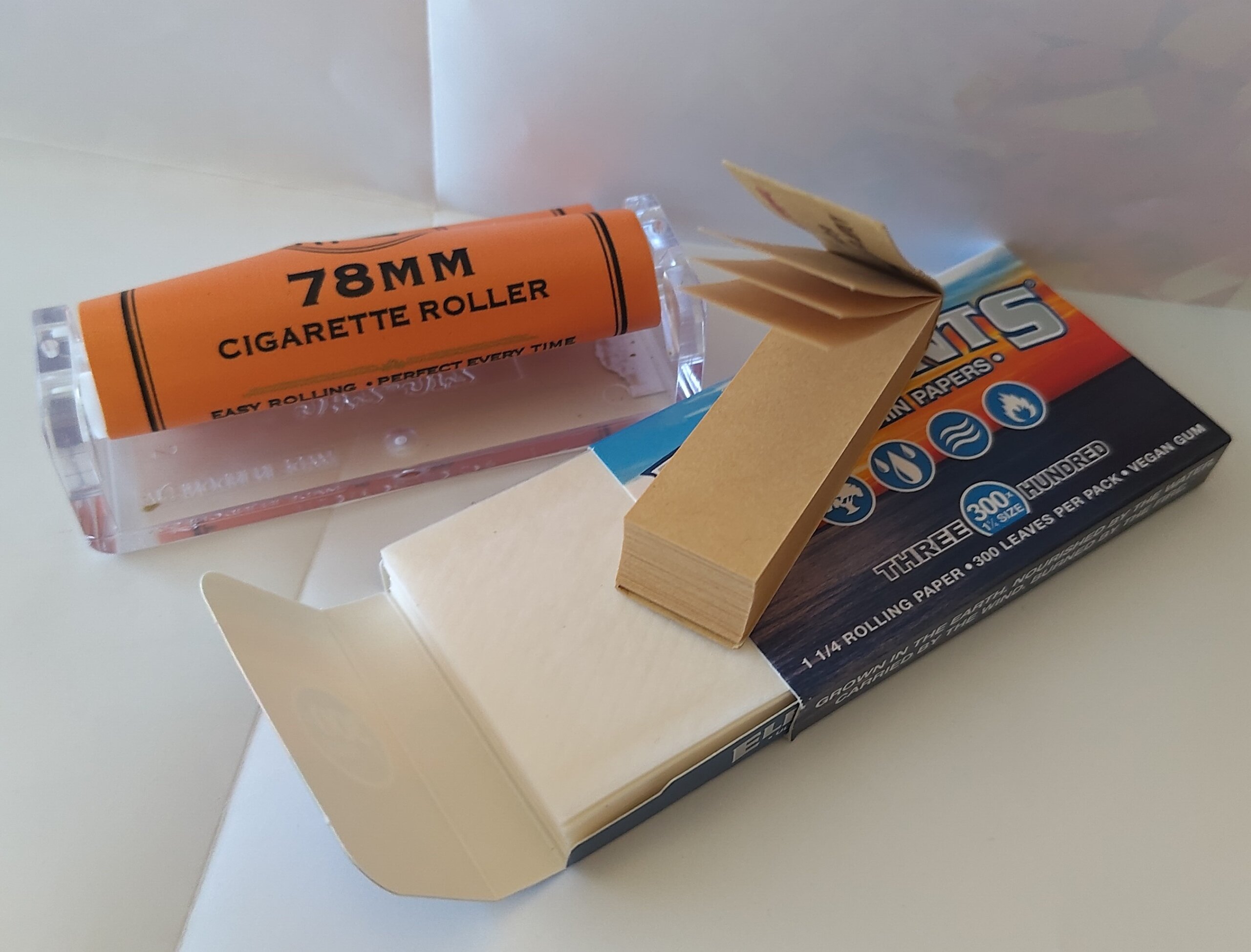
Standard joint rolling supplies. Wikimedia Commons / CC BY-SA 4.0
How to Make a Crutch. Accordion Fold, Then Roll.
Tear a strip of stiff cardboard roughly 1.5 inches long and 0.5 inches wide. The booklet tip strip on a pack of RAW or OCB papers is the right size already. Tear it free at the perforation.
At one short end, fold three to four small accordion pleats. Each fold should be about 2 to 3 millimeters wide. Those pleats form an M or W shape at the center of the crutch. They serve two purposes: they keep the mouthpiece open so airflow stays consistent, and they block any loose bits of flower from making it to your lips.
Once you have your accordion folds, roll the remaining cardboard around them in a tight cylinder, roughly the diameter of a pencil. The accordion section should sit at the center of the cylinder. Hold it together for a few seconds and it will hold its shape once you set it in the paper.
The crutch is not decorative. It gives your thumb a hard surface to tuck against when you make the initial fold, which is the single hardest part of hand-rolling. Beginners who skip the crutch are skipping their best mechanical advantage.
How to Roll a Joint Step by Step. Seven Moves from Grind to Twist.
Work on a flat, clean surface. A rolling tray or a clean hardcover book keeps the loose flower contained.
Step 1. Grind. Load your grinder with 0.5 to 1 gram of flower. For a standard 1.25-inch paper, 0.5 to 0.7 grams is the right range. Grind until the texture is even and airy, not powder and not chunks. Shake any dense pieces out and grind them again separately if needed.
Step 2. Make the crutch. Follow the accordion-fold method above. Set it to the side while you load the paper.
Step 3. Load the paper. Hold a rolling paper lengthwise, glue strip at the top and facing you, shiny side up. Lay the crutch at the left end. Distribute the ground flower along the length of the paper, slightly more in the middle than at the ends. The paper should look like a narrow tray holding a small mound of cannabis, not a stuffed burrito.
Step 4. Shape. Pinch the paper between your thumbs and forefingers on both sides. Without rolling up, roll the paper back and forth between your fingers so the flower compresses into a cylinder. This is the shaping step. Do it until the cannabis feels dense and even under the paper. This single step separates tight rolls from loose, lumpy ones.
Step 5. Tuck. Starting at the crutch end, roll the front edge of the paper down and tuck it behind the cannabis, pressing it against the crutch. Use your thumbs to press the tuck in firmly at the crutch end before working your way down toward the open tip. The crutch holds the first tuck in place so you can do the rest without it unraveling.
Step 6. Lick and seal. Once the paper is tucked all the way down, wet the glue strip with a slow, even lick and press it closed starting from the crutch. Press your thumb along the seam and hold for a few seconds. If a small section peels up, wet it again and press firmly. Do not over-wet because the glue loses hold if it is too saturated.
Step 7. Pack and twist. Stand the joint upright with the open end up. Use a pen or thin dowel to gently tamp the flower down toward the crutch. Rotate the joint slowly as you pack to eliminate air pockets on all sides. When the joint feels solid, twist the paper tip closed. Light it and go.
Beginner Mistakes and How to Fix Them.
The most common beginner mistake is overfilling. A joint with too much flower will not roll. The paper splits or the tuck will not catch. If you are struggling to get the tuck started, take some flower out. You need room for the paper to wrap around the cannabis, not just sit on top of it.
Skipping the shaping step produces lumpy, loose joints that burn unevenly and canoe. The shaping step, rolling the loaded paper back and forth between your fingers before the tuck, is not optional. It is how you pre-compress the cannabis into the cylinder shape the paper is going to hold.
Canoeing, when one side of the joint burns faster than the other, usually means the flower was not ground evenly, or a dense chunk ended up on one side. You can correct a mild canoe by moistening the fast-burning side slightly with a wet fingertip, which slows combustion on that side. A grinder reduces the chance it happens in the first place.
Joints that go out repeatedly are usually either under-packed (air pockets) or rolled from flower that has too much moisture. NORML’s cannabis storage guidance recommends keeping flower in an airtight container at 59 to 63 percent relative humidity for optimal combustion. Flower that feels spongy or damp will not burn consistently.
Finally, a weak seal. If the glue strip peels back after a few seconds, you did not press it long enough, or you over-wet it. One slow lick is enough. Hold the seam closed with your thumb for at least five seconds before you pick it up.
Joint Variations. Pinner, Cone, and the One You Are Not Ready For.
A pinner is a thin, pencil-diameter joint with less than 0.3 grams of flower. It burns clean and fast, and the even diameter keeps it lit. Pinners are useful when you want a short solo smoke without committing to a full gram.
A cone is the most common shape sold in dispensaries as a pre-roll. The paper is tapered, wide at the lit tip and narrow at the crutch. You can buy pre-rolled cone papers that eliminate the rolling step entirely: pack the flower in from the open end, tamp it down, and twist. Cones hold 1 to 2 grams comfortably and deliver a progressively smoother smoke as the joint shortens.
A cross joint is two joints intersected through the center of a larger joint, creating a shape that burns from three ends. It requires a toothpick to bore the hole and some patience sealing the seam with paper scraps. It is a party trick more than a practical method, but it works.
If you are completely out of rolling papers, our separate guide walks through the safest household substitutes and why most of them are a bad idea. The short version: plain unprinted tissue is the least-bad option, and a glass pipe sidesteps the whole problem. If you have really exhausted your options, see what happens when you use toilet paper so you know what you are actually burning. The same warning applies to notebook paper as a rolling substitute and to parchment paper as a rolling surface, both of which release fumes you do not want in your lungs.
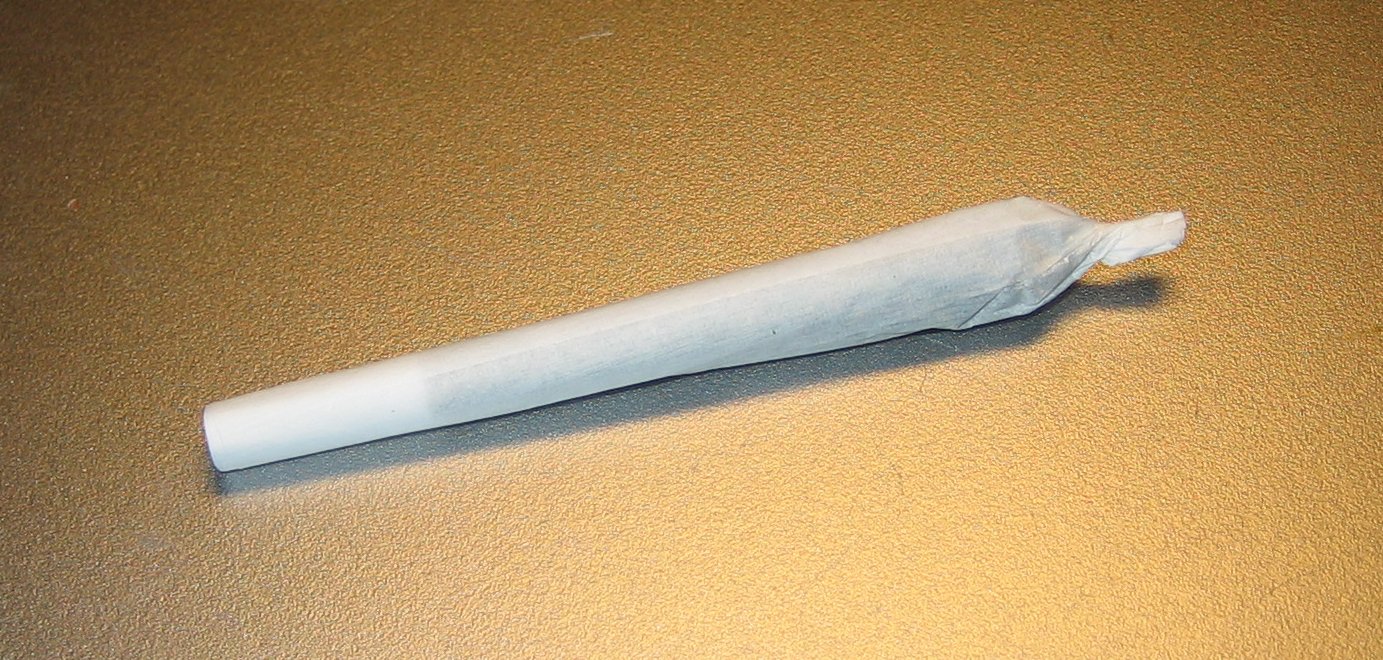
A finished joint. Wikimedia Commons / CC BY-SA 4.0
Paper Types Side by Side. Hemp, Rice, and Everything Else.
Hemp papers are the easiest to roll. The texture is slightly rougher than rice papers, which gives you more grip during the tuck. They burn a touch slower than bleached white papers and leave less residual taste. RAW Classic and OCB Hemp are the most consistent hemp options on the market.
Rice papers are the thinnest option and the slowest burning. They add almost no flavor. The tradeoff is that they are harder to work with when your fingers are even slightly damp, and the glue strip can be finicky in humid environments. RAW Organic Hemp and OCB X-Pert (a rice-based paper) are the go-to choices for rollers who want clean combustion above all else.
Bleached white papers are the most widely available but the least desirable from a combustion standpoint. The bleaching process leaves residual chlorine compounds that add a slight harshness to the smoke. The American Lung Association consistently flags additional combustion byproducts from bleached papers as an added risk factor compared to unbleached alternatives. They roll fine and are a perfectly reasonable option, but if you have a choice, hemp or rice papers are cleaner.
Frequently Asked Questions
How much weed do you need to roll a joint?
A standard joint uses between 0.5 and 1 gram of cannabis. For a 1.25-inch paper, 0.5 to 0.7 grams rolls cleanly. King-size papers can hold up to 1 gram or slightly more. Beginners should start lighter. At 0.5 grams you have more control of the paper without it bulging.
What is the easiest way to roll a joint for beginners?
The easiest method is to use a rolling machine. Load the flower and crutch, close the machine, roll it a few turns, then slide the paper in with the glue strip facing you, lick, and finish rolling. If you are doing it by hand, use a crutch every time. It anchors the tuck and makes the process repeatable.
Do you need a filter or crutch to roll a joint?
You do not need one, but a crutch makes the joint structurally easier to roll, keeps loose flower off your lips, and keeps the mouthpiece open as the joint burns down. Most experienced rollers use one every time. Beginners almost always benefit from including one.
What rolling papers burn the slowest and smoothest?
Rice papers burn the slowest and produce the least additional smoke. Hemp papers are slightly thicker but still clean-burning and add a mild earthy note that complements cannabis. Both RAW and OCB produce hemp and rice options in 1.25-inch and king-size formats. Bleached white papers burn a little faster and add a harsher edge.
Why does my joint not stay lit or keep going out?
The two most common causes are uneven packing and wet flower. If the joint is not packed consistently, air pockets cause uneven combustion and the burn dies. If the cannabis has high moisture content, the same thing happens. A grinder produces more even particle size, which improves the burn. Packing the joint firmly through the open tip before twisting it closed also helps.
What is the difference between a joint and a cone?
A joint is rolled parallel, the same diameter end to end. A cone is wide at the tip and tapers down to the crutch. Cones hold more flower at the lit end and deliver a progressively cooler smoke as you work toward the filter. Pre-rolled cone papers are sold specifically for this format and are easier for beginners to pack than to roll from scratch.
Can you roll a joint without a rolling machine?
Yes. The hand-roll method works fine once you learn the shaping step, rolling the loaded paper back and forth between your fingers before committing the tuck. Most people who say they cannot roll a joint by hand are skipping that shaping step. It takes practice but becomes reliable after a few attempts.
The Bottom Line. Learn the Shaping Step and Everything Else Falls Into Place.
Rolling a joint is a mechanical skill, not a talent. The shaping step is the one technique that makes or breaks the result, and it is the one step nobody tells beginners about. Roll the loaded paper back and forth between your fingers until the flower compresses into an even cylinder before you tuck anything. Do that and the rest of the process is just patience.
Buy a pack of RAW or OCB hemp papers, grind a half gram, make a crutch out of the booklet tip, and roll three joints in a row. The first one will be ugly. The second will be better. The third will be something you are comfortable lighting in front of other people.