If you are specifically out of everything and eyeing the bathroom roll, our dedicated guide on whether you can smoke weed with toilet paper runs through exactly what toilet paper contains, how single-ply compares to double-ply, and what to reach for instead.
You can roll weed with regular paper, but most household paper is not safe to smoke. The cannabis still works. The paper is the problem, because notebook paper, printer paper, newspaper, and receipts are all treated with chemicals that were never meant to enter your lungs. Plain unprinted tissue is the one passable emergency option, and a glass pipe beats every paper on this page.
That is the whole answer in one paragraph. The detail that matters is which papers are merely bad and which are genuinely dangerous, because the gap between them is wide. This breakdown runs paper by paper so you know exactly what you are about to burn before you light it.

The Short Answer. It Comes Down to What the Paper Was Treated With.
Rolling papers made for smoking are unbleached, additive-free plant fiber. Hemp, rice, or flax. They burn clean and slow because that is the only job they were built for. Household paper is engineered for printing, wrapping, or wiping, and the chemicals used in that process do not vanish when you hold a flame to them.
The table below ranks the papers people actually reach for, from the one passable emergency option down to the ones that belong nowhere near an airway.
| Paper | Verdict | Main hazard | Use in a pinch? |
|---|---|---|---|
| Plain unprinted tissue | Least harmful household option | Tears easily, still untested for smoking | Yes, once, if unprinted |
| Notebook paper | Emergency only, remove the lines | Bleach, sizing agents, dyed ruling lines | One-time fix only |
| Bible or dictionary pages | Emergency only, avoid the print | Ink on the printed text, thin but treated | One-time fix only |
| Printer paper | Avoid entirely | Heavy bleaching, optical brighteners, burns hot | Last resort below everything |
| Parchment (baking) paper | Do not smoke it | Silicone coating fumes | No, but useful for concentrates |
| Newspaper | No, full stop | Ink pigments, mineral oils, legacy metals | No |
| Receipt or bus-pass (thermal) paper | No, full stop | BPA or BPS endocrine disruptors | No |
| Gum-wrapper foil | No, full stop | Toxic metal fumes from the foil layer | No |
None of these match a real rolling paper. They are a stopgap, and some are not even that.
Why Regular Paper Is Risky. Three Hazards Stack Up.
Every household paper carries some mix of three problems. The per-paper verdicts below all trace back to these.
Bleaching chemicals and chlorine
Most white paper gets its color from a bleaching process that historically used chlorine or chlorine dioxide. Modern mills have cut chlorine use, but residual organochlorine compounds can survive in the finished sheet. Burned, they can form chlorinated byproducts including dioxins, a class of persistent toxic chemicals the World Health Organization flags as highly poisonous. Research on organochlorine compounds in industrial paper processes documents their byproduct behavior on combustion.
Ink and dyes
Printed paper adds a second layer. Newspaper ink historically carried heavy metals including lead and cadmium. Soy-based inks are less toxic but still throw particulate matter and volatile organic compounds when burned. Colored notebook lines, glossy magazine coatings, and thermal receipt dyes all land in the same bucket. Things built to be read, not inhaled.
Burn rate and harshness
Chemistry aside, most household paper burns faster and hotter than a rolling paper. The result is uneven, throat-scraping smoke regardless of what the sheet was treated with. Burning paper throws off fine particulate matter the US Environmental Protection Agency defines as the size fraction small enough to lodge deep in lung tissue. The American Lung Association ties that same particle size to airway inflammation.
Can You Roll Weed With Printer Paper? Avoid It Entirely.
Printer paper is the worst common choice. Thick, heavily bleached, and so fast-burning that the cherry races ahead of the cannabis before you can pull a proper draw. The smoke is dense and acrid.
Bright-white printer stock usually involves chlorine compounds plus optical brighteners, the fluorescent additives that make white look whiter under UV light. Neither belongs in your lungs. If you are genuinely out of everything, printer paper still sits below almost every other option here, and our dedicated breakdown of using printer paper to roll a joint walks through the bleach and brightener problem in full.
Can You Roll Weed In Notebook Paper? Once, And Tear Off The Lines.
Notebook paper is the most commonly improvised wrap, and it beats printer paper on one count. It is thinner, which moves it a little closer to real rolling-paper weight.
The risks are still real. Notebook paper is bleached and often carries chemical sizing agents, and the blue ruling lines are dyed. Combusting dye next to your airway is exactly what you are trying to avoid. If you use it, tear off the margins and roll only an unlined section. Pick the thinnest notebook in the house. Roll it tight, use a small amount, and treat it as a one-time fix, not a habit.
Can You Smoke Weed With Tissue Paper? The Least Bad Option.
Plain, unprinted gift-wrap tissue is structurally the closest thing to a rolling paper most people have at home. Thin, slower-burning than printer or notebook paper, fewer additives than most household stock. It is also the hardest to roll because it tears.
The key word is unprinted. Patterned, dyed, or metallic-ink tissue carries the same combustion risk as any treated paper. Plain white gift tissue with no printing is the pick in this category.
Facial tissue is a different product entirely. Kleenex, Puffs, and similar tissues are treated with moisturizers and softening agents, burn inconsistently, and should be skipped.
What About Newspaper? No, Full Stop.
Newspaper is one of the most commonly suggested improvised wraps online, and one of the genuinely worst. The ink, even modern soy formulations, carries carbon black, mineral oils, and pigment additives. Older papers may still carry heavy-metal residue from legacy presses.
Newsprint itself is also treated with chemical agents during manufacturing. The smoke comes off dark and harsh, visibly different from anything off a real paper. There is no version of this that counts as a reasonable workaround.
Do People Smoke Weed With Parchment Paper? It Has A Different Job.
Baking parchment is coated with silicone to make it non-stick. That coating does not burn off cleanly and produces fumes you do not want to inhale, which is why parchment is not a rolling wrap. It does have a real place in cannabis use. It is the standard surface for handling concentrates and keeping sticky product from gluing itself to everything. Use it for that, not for a joint. For the full breakdown, here is why parchment paper fails as a rolling wrap and what to use instead.
Other Papers People Try. Receipts, Gum Wrappers, Bible Pages.
Bus passes and receipt paper. Both are thermal paper coated with a chemical developer. The original developer was bisphenol A (BPA). Many modern receipts swap in bisphenol S (BPS). Both are endocrine disruptors, and the National Institute of Environmental Health Sciences documents BPA exposure routes. Burning thermal paper releases these compounds directly. Avoid. For the full roundup of which household papers are safe to roll with, see the household-paper guide.
Gum wrappers. Foil-backed gum wrappers release toxic metal fumes when burned. The thin plain inner wrapper in some older stick formats is lower risk but still not worth it.
Bible and dictionary pages. Among the thinnest uncoated paper in a typical house. The text is printed, so the ink rule still applies, avoid the printed sections. By weight and burn behavior, thin bible pages sit closest to notebook paper on the risk scale, and we go deeper on thin bible pages for rolling in its own guide. Emergency use only.
The Safest Rolling Paper Alternatives. Pick One Of These Instead.
If you have a few minutes and any of the following around the house, they are meaningfully safer than every household paper above.
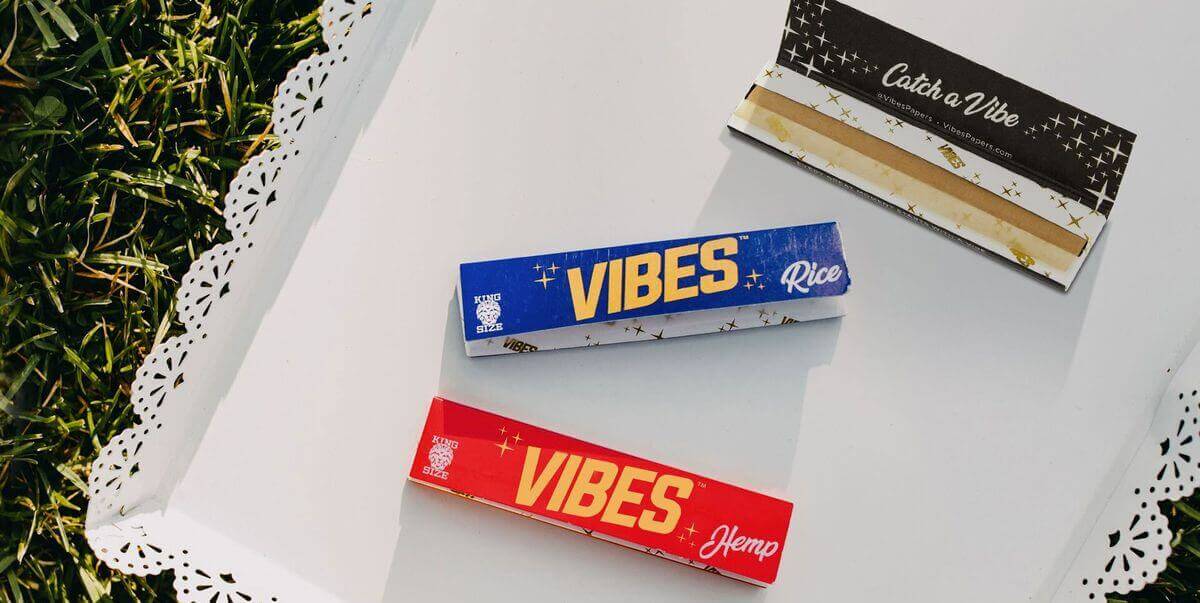 Unbleached rice and hemp rolling papers are the standard to return to.
Unbleached rolling papers
The standard to return to. Brands like RAW Organic Hemp and OCB Organic Hemp use plant fiber with no chlorine bleaching, no dyes, and no additives. They burn slow and even. A backup pack costs almost nothing and solves every problem on this page. If you want the full reasoning on why plant-fiber paper burns clean, our guide to hemp wraps versus rolling papers walks through the material differences.
Hemp wraps
Hemp wraps are thicker than rolling papers and behave like a blunt wrap. Hemp fiber, tobacco-free, slow-burning. A solid pick if you want a blunt-style smoke without tobacco. The distinction between a wrap and a paper trips a lot of people up, and our breakdown of the difference between papers and wraps sorts out which is which.
Corn husks
Dried corn husks are a traditional, genuinely natural option used across Latin America and the Caribbean. Additive-free and slow-burning, they produce clean smoke. Dry them in the oven on low for 10 to 15 minutes if they feel damp. They take practice to roll but work well once the technique clicks.
A pipe, with no paper at all
If a glass pipe, bowl, or bong is anywhere within reach, use it. A pipe needs no paper and delivers a cleaner, more efficient smoke than any wrap on this page. An apple pipe takes about two minutes to build with a pen and a piece of fruit, and combusts nothing foreign at all.
Best Rolling Paper Brands. Keep One Of These On Hand.
Once you are back at a shop, these are worth a permanent spot in the drawer.
- RAW Classic and Organic Hemp. The most widely available unbleached paper. Slow-burning, minimal ash, no added chalk. Single wide, 1.25, king slim, and pre-rolled cones.
- OCB Organic Hemp. Thin, slow-burning, certified organic. The slim king format produces a clean, tight roll.
- Elements Rice Papers. Rice with a natural sugar gum line. Burns exceptionally clean with almost no ash. A little harder for beginners because it is so light.
- Blazy Susan Pink Papers. Unbleached hemp with a light pink natural plant dye. Slow-burning and popular for the look.
Quality matters more than price here. A pack of 50 RAW papers covers weeks of use and erases every risk on this page.
Once you have a pack of papers, our step-by-step guide to rolling a joint walks through the full process: crutch, load, shape, tuck, seal, and pack.
Frequently Asked Questions
Can you roll weed with regular paper?
You can, and it burns, but most regular paper is not safe to smoke. Notebook and printer paper are bleached and treated with chemical sizing agents. In a true emergency a thin unlined sheet can work once, but the smoke is harsh and repeated use carries real health risk.
Can you roll weed in notebook paper?
Technically yes, but only as a one-time fix. Tear off the dyed ruling lines, use an unlined section, roll it tight, and use a small amount. It is bleached and treated, so it is not something to do regularly.
Can you roll weed with lined paper?
Only if you remove the lines first. The blue or red ruling is printed dye, and combusting dye next to your airway is the part you most want to avoid. Use a blank section, or pick a different paper.
Do people smoke weed with parchment paper?
Some try, but they should not. Baking parchment is coated with silicone that produces fumes when burned. It is genuinely useful for handling concentrates, just not as a rolling wrap.
Is it safe to smoke weed with regular paper?
No paper meant for printing or wrapping is truly safe to smoke. Plain unprinted tissue is the least harmful in a pinch. Printer paper, newspaper, and thermal receipts are the most harmful and should be avoided outright.
What is the safest option when you are out of rolling papers?
A glass pipe or bong is the safest no-paper option. If you have to roll something, plain unprinted thin tissue is the least harmful wrap, and corn husks are a clean natural alternative. Restock with RAW or OCB hemp papers as soon as you can.
Can you get high from smoking weed wrapped in regular paper?
Yes. The THC and other cannabinoids still transfer. The cannabis works fine. The problem is that you are inhaling whatever the paper releases alongside it.
The Bottom Line
Almost any paper will hold cannabis and burn. Whether it is safe to smoke is a separate question, and for most household paper the honest answer runs from “not ideal” to “genuinely harmful.”
Plain unprinted tissue sits at the better end. Printer paper, newspaper, and thermal receipts sit at the worse end. Notebook paper lands in the middle, usable once in a real bind, not a routine. The cannabis was never the issue. The paper always is. Keep a backup pack of real rolling papers or a glass pipe on hand and the question never comes up again. For more on the gear itself, our hemp wraps versus rolling papers guide and the breakdown of papers versus wraps cover what to actually buy.