Quick answer:
- Popcorn weed is small but fully formed cannabis flower from the lower branches of the plant. Same harvest, same drying, same strain genetics as top-shelf flower; the buds stayed smaller because the lower canopy received less light during growth.
- THC tests within 2 to 3 percent of the larger buds from the same batch.
- Dispensaries discount popcorn 20 to 40 percent against premium flower.
- Best for joints, bowls, edibles, and rosin. Avoid for display, gifts, or terpene-driven strain tasting.
- Real popcorn shows visible trichome coverage and intact bud structure. Fragmented material is not popcorn.
Popcorn weed sells for 20 to 40 percent less than premium flower at the same dispensary, and the chemistry inside the bud rarely lands more than 2 to 3 percent THC behind. The discount has nothing to do with damage or low quality. It tracks the visual grading systems dispensaries use to price flower by bag appeal.
The buds themselves are small but fully formed cannabis flowers from the lower branches of the plant. They went through the same drying, curing, and packaging as the nugs sitting next to them on the shelf. The size difference comes from light distribution during cultivation: top colas get direct overhead light and pack on mass, while lower-canopy bud sites work with a fraction of that intensity and stay smaller. For most use cases, that smaller size is the only thing that distinguishes the two.
Where Popcorn Buds Come From
Cannabis plants do not distribute light evenly. The uppermost growth sites, the main colas, get direct overhead light and build the dense flowers that fill premium jars. Lower branches and mid-canopy bud sites receive a fraction of that intensity. Research published in Frontiers in Plant Science on cannabis canopy light penetration shows that lower-canopy positions can receive less than 10 percent of the photosynthetic photon flux reaching the top of the plant in dense indoor grows. Buds growing in those zones still develop normally. They just stay smaller, lighter, and rounder.
The result is flower that formed the same way as the ones above it but ended up the size of a popped kernel. Growers call these smalls, popcorn, or B-buds. The terms get used interchangeably at most dispensaries, although they do not always mean the same thing. As Green Goods describes, smalls are “simply smaller versions of the same flower” rather than a separate product class.
Commercial growers try to cut popcorn production through a technique called lollipopping. They strip the lower third of the plant’s branches in early flowering, which forces the plant to push energy upward into the main colas. It helps. It does not eliminate undersized buds entirely, because genetics, plant density, and canopy management all influence how much popcorn a given harvest yields. On most commercial harvests, roughly 25 percent of the yield ends up in the A-grade column, another quarter becomes popcorn and pre-roll material, and the remaining half goes to extract for concentrates like crumble and shatter.
Why is it called popcorn weed?
The name comes from size and shape. Popcorn buds tend to be round, dense, and roughly the dimensions of a popped kernel. The shorthand stuck because it captures the visual difference at the counter without sounding judgmental about quality. Some budtenders also use “smalls” or “B-buds” interchangeably, although those terms can sometimes refer to a different grading category. When in doubt, ask whether the product is whole flower or fragmented material, since that is the difference that matters for what you are smoking.
What Does Popcorn Weed Look Like?
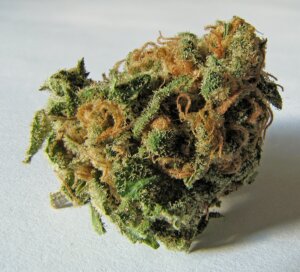
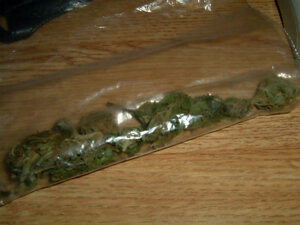
Honest popcorn buds run roughly the size of a chickpea on the small end and a green grape on the large end, with most lots clustering near the size of a hazelnut. The shape is rounder than a top-cola bud because the flower formed without the vertical stack pressure that elongates main colas. Density varies by strain. Indica-leaning popcorn tends to feel firm and weighted; sativa-leaning popcorn often runs a touch airier without crossing into shake territory. Either way, the bud should hold its shape when you pick it up. If it crumbles into pieces between your fingers, the bag is closer to fragmented material than to whole flower.
Trichome visibility is the fastest signal of quality. Real popcorn shows the same crystalline coating as premium flower, just on a smaller surface. Under store light, the calyces should sparkle. A 2025 review of cannabis glandular trichomes published in Phytomedicine notes that mature capitate-stalked trichomes on intact bud surfaces are the structures producing the bulk of cannabinoids and terpenes, regardless of where on the plant the flower formed. Color depends on cultivar. Most popcorn lots run sage green to deep forest green with orange or amber pistils threading through. Purple and dark-magenta phenotypes carry over from the parent strain at the same rate they appear in the larger buds.
What popcorn does not look like is more useful than what it does. Loose fragments at the bottom of a jar are shake. A powdery dust coating the inside of the bag is kief residue that has fallen off the buds in transit, which can be a sign of overhandling or low humidity in storage. Pale, washed-out coloring with sparse trichome coverage points to an early harvest, not a popcorn issue. None of those problems are caused by bud size. They are caused by handling, harvest timing, or storage. Honest popcorn looks like a smaller version of the premium jar one shelf up, not a different product entirely.
Does Popcorn Weed Have the Same Potency?
THC and terpenes are produced in glandular trichomes, the resin glands coating the outer surface of cannabis flowers. They are not produced by bud mass or size. A 2025 review published in Plants (Basel) by Alberti et al. found that the bracts enclosing each calyx show the most consistent trichome distribution across the plant, and that “higher trichome density alone does not guarantee greater cannabinoid potency.” Biosynthetic enzyme activity and strain genetics drive cannabinoid content independently of trichome counts. Size tells you less than buyers expect.
In practice, popcorn from a given harvest typically tests within 2 to 3 percent THC of the larger buds from the same batch. Lab data compiled by ACS Laboratory across thousands of commercial flower samples confirms that popcorn pulled from the same plant as A-grade flower delivers cannabinoid content within a narrow margin, with the variance attributable to trichome surface area rather than biosynthetic shortfall. Some users report needing 10 to 20 percent more flower to reach the same intensity. Others notice no meaningful difference, particularly when rolling joints or cooking. The gap is real. It is also narrower than the price difference suggests.
Where popcorn does fall shorter is terpene expression. Premium upper-canopy buds tend to carry more concentrated aromatics, which shapes flavor and the sensory side of the experience more than a small THC differential. If the specific flavor profile of a strain is the reason you are buying it, the larger top-cola buds give you more of that. For most daily use where effects are the goal, the terpene gap rarely changes the practical outcome.
One label confusion worth clarifying: dispensaries sometimes use “B-grade” as a synonym for popcorn, but the terms are not interchangeable. As Cannabis Tech notes, commercial grading systems classify B-buds separately from A-flower based on visual and structural criteria. B-grade can also describe flower affected by an inconsistent cure, an early harvest, or rushed packaging. None of those problems have anything to do with bud size. Popcorn from a well-managed harvest is a different product than B-grade flower from a mishandled one. If the label says “smalls” and names a specific cultivar, you are likely looking at honest popcorn. If the label says “B-grade” with no detail, ask the budtender what makes it B.
Is popcorn weed bad for beginners?
The opposite is closer to true. New cannabis users often benefit from popcorn for two reasons. The lower price reduces the cost of figuring out which strains and effects work, since trying five different cultivars at popcorn pricing costs roughly what trying three would at premium. And the slightly lower potency on the upper end gives a small margin against accidentally taking a heavier hit than intended. Beginners who buy popcorn from a reputable producer get the same education at lower cost and lower risk.
Popcorn Weed vs. Full Nugs vs. Shake vs. Trim
These four products end up in adjacent menu categories at most dispensaries. They are not interchangeable, and confusing them costs you money or potency depending on which way the mix-up goes. Strain genetics (indica, sativa, or hybrid cannabis) carry through to popcorn the same way they carry through to full nugs.
Full nugs are A-grade flower from the upper canopy. They have the largest bud structure, the most uniform appearance, and the most visible trichome coating. Most dispensaries reserve their highest prices for these. Bag appeal is the central reason the price holds.
Popcorn buds are complete flowers, smaller but structurally intact. Calyces, trichomes, and bud architecture all remain. The drying and curing process matches what the larger buds get. In effects and consistency, they sit one tier below premium and well above shake.
Shake is the loose material that accumulates at the bottom of jars and bags during trimming, packaging, and handling. It contains fragments of larger buds, sugar leaves, and broken plant material. Shake can work fine for rolling or edibles, but its composition varies bag to bag. The ratio of actual flower to leaf matter is not consistent, and you cannot always tell what you have until the jar is open.
Trim is different again. It consists of the fan leaves and larger plant material removed during post-harvest processing. Trichome coverage on fan leaves is minimal. Most processors send trim straight to extraction, where solvents or pressure isolate the cannabinoids from the chlorophyll-heavy plant matter. Smoking trim directly delivers a harsh, grassy experience with weaker effects than any grade of flower.
Ranked by consistency and potency: full nugs, then popcorn, then shake, then trim. If the choice at the counter is popcorn or shake at the same price, popcorn is the cleaner buy. RISE Cannabis puts it plainly: popcorn nugs are “complete buds” with preserved structure, while shake is fragmented material with no guaranteed ratio of flower to leaf.
How Much Does Popcorn Weed Cost?
The discount runs 20 to 40 percent below equivalent premium flower from the same producer, with some markets pushing the gap closer to 50 percent. The exact spread depends on state market maturity, producer pricing strategy, and the visible volume of B-grade material in that quarter’s harvest. Wholesale market trackers like Headset show the popcorn-to-premium price ratio holding within that 20 to 40 percent band across most mature legal markets, with state-by-state variance driven primarily by total flower oversupply.
In California, premium flower ranges from $10 to $18 per gram at licensed dispensaries according to pricing data from Cannabis Business Times, with popcorn from the same producer typically landing at $7 to $12. Eighths of popcorn come in around $20 to $30 in the same market against $40 to $60 for premium.
Other state markets break similar. The Bluntness state pricing breakdown puts ounce prices for mid-tier flower at $60 to $100 in Oregon and $60 to $85 in Michigan, where price compression has flattened the entire flower category. In those markets the absolute popcorn discount is smaller, but the percentage gap holds. East Coast and Midwest markets like Massachusetts, Illinois, and New York tend to run higher across the board, with premium ounces at $250 to $400 and popcorn ounces typically 25 to 35 percent below those numbers per dispensary menu data.
The price difference reflects visual grading standards, not chemistry. Dispensaries price flower partly on bag appeal: bud size, uniformity, and visual density. Popcorn scores low on those criteria. Once it is ground and rolled or packed into a bowl, those criteria stop applying.
The cost-per-session math sharpens the argument. A daily smoker who burns roughly a half-gram per evening goes through about an ounce a month. At a $260 premium ounce, that is $260 per month, or roughly $3,120 a year. The same monthly volume in popcorn at the same dispensary, priced at 30 percent off, runs $182 a month or $2,184 a year. The annual gap is about $935 for the same volume of flower from the same producer. For a heavy smoker burning a gram a day, the gap roughly doubles. Whether that gap is worth the marginal terpene difference depends entirely on what the buyer is actually paying for.
Why is popcorn weed cheaper than regular weed?
Three reasons. Lower light exposure during cultivation produces smaller flowers, which dispensaries grade lower on visual standards. Bag appeal drives premium pricing more than chemistry does, so attractive buds command a premium independent of their THC content. And the supply chain has plenty of popcorn coming off most commercial harvests, which means producers cannot price it at the same level as scarcer top-cola flower without sitting on it. The combination keeps popcorn priced as a discount tier even when its potency rivals premium.
One pricing scenario worth flagging at the counter: some operations sell material labeled “smalls” or “popcorn” that is actually trim-heavy shake rebadged for better margins. Real popcorn has visible calyx structure and trichome coverage even at small size. If the material in the bag looks fragmented rather than like small intact buds, it is not popcorn in any honest sense. The label is wrong and the price is too high for what is in the jar.
Where to Buy Popcorn Weed (Dispensary, Online, Direct)
Most licensed dispensaries carry popcorn under one of three labels: “smalls,” “minis,” or “popcorn nugs.” Some menus shelve it as “value flower” alongside lower-tier or older harvests, which mixes signals. Others split popcorn into its own category to make the discount visible against the premium SKUs. According to industry coverage from MJBizDaily, dispensaries with healthier margins on popcorn tend to give it a dedicated menu shelf rather than burying it in a bargain bin. If a store has popcorn but you cannot find it on the digital menu, it is worth asking at the counter. Stock often arrives weekly and rotates faster than premium tiers because volume moves faster at the lower price.
The cleanest way to ask a budtender is plain language. “Do you have any popcorn or smalls in stock?” will surface the right product faster than asking by brand. Follow up by asking which cultivars came in as popcorn that week, because the same producers who supply premium flower usually have popcorn from the same harvests under the same strain names. That is the buying signal. If the popcorn shelf carries strains that are also on the premium shelf, the math is straightforward: same source, smaller buds, lower price. If the popcorn is from cultivars you have never heard of and the producer is unfamiliar, treat it like any other unknown flower and ask about the harvest date and lab results.
Pre-roll programs are another reliable popcorn channel. Most pre-rolls in legal markets are made from popcorn buds and trim-adjacent material, often alongside lower-tier cannabis concentrates on the same shelf, because rolling small buds into joints is mechanically simpler than breaking down full nugs, and the visual difference disappears once the joint is finished. If a brand sells both whole flower and pre-rolls from the same harvest, the pre-roll line is almost certainly running on popcorn. That makes pre-roll multipacks one of the better ways to buy popcorn weed without explicitly asking for it.
Online ordering through dispensary delivery platforms works well for popcorn for one reason: the visual side of the purchase matters less than for premium flower. The bud you receive will be smaller than the photos on the menu suggest, and that is the entire product. Online ounce deals on popcorn often beat in-store walk-in pricing because delivery operations move volume on lower-tier SKUs harder. Direct-from-producer purchases through licensed brand sites are rare for popcorn but do exist in mature markets like California and Colorado, usually as “harvest overflow” or “ounce specials” sold at the cultivator’s storefront.
When Popcorn Buds Are Worth Buying
For daily use, the case for paying premium prices is weak. Rolling joints, loading a bowl, pressing rosin at home: popcorn handles all of it. The size difference disappears once a grinder is involved.
Rosin pressing is one situation where popcorn has a slight practical edge. Smaller buds tend to have a higher calyx-to-stem ratio, meaning more of the material being pressed is actual flower rather than internal stem. That can improve yield per gram compared to pressing larger, stem-heavy buds. The same principle drives the best weed strains for pressing rosin, where calyx density beats overall bud size every time. Solventless extracts like live rosin often start with popcorn-grade input for that reason.
For edibles and infusions, the math clearly favors popcorn. Decarboxylation strips the volatile differences. Once the butter or oil has steeped, a 2 to 3 percent THC differential becomes negligible against the base potency of the infusion. A batch of brownies made with popcorn and a batch made with premium flower from the same harvest are functionally indistinguishable, and the popcorn batch costs 30 percent less to produce. The same logic applies to home hash washing, where smaller buds work as well as the top strains for hash production if the trichomes are intact.
Joint rolling in volume is another clear popcorn use case. Anyone rolling a half-ounce of joints for a party or a long weekend is grinding the flower anyway. The size of the starting buds matters not at all to the finished joint. For special occasions where presentation does matter, infused options like weed sun rocks sit on the opposite end of the flower spectrum.
Where premium buds make more sense: when terpene expression is central to the experience, when you are tasting a new strain and want the fullest version of it, or when presentation matters. Specialty top-shelf product like sun rocks and moon rocks sits at the opposite end of the popcorn shelf for exactly that reason. Sharing with someone, buying for a special occasion, or reaching for a specific cultivar for its aroma are situations where the larger buds earn the price difference. Buying popcorn for someone you want to impress is a category mistake. The bag will look thin even if the smoke does not.
How do you tell if popcorn weed is good quality?
Inspect the bag before paying. Three checks tell you most of what you need to know.
- Trichome density. Real popcorn shows visible trichome coating even at small size. The buds should sparkle slightly under store light. Powdery, dull, or matte coverage points to either an early harvest or a degraded cure.
- Stem-to-flower ratio. Pick up a single bud and feel for stem mass. Honest popcorn has a small stem at the base and most of the weight in calyces. If half the weight feels like stem, the bag is closer to shake than popcorn.
- Mold inspection. Cannabis mold can hide inside dense flower clusters and is the one quality issue that can make you sick. Weedmaps describes the most common signs as cobweb-like webbing between bud parts and powdery mildew that “looks like dust compared to the sparkle of trichomes.” A musty, sweat-like smell is the second-best indicator after visual inspection. If anything in the bag smells off, return it before opening.
Storage matters more for popcorn than for full nugs because the higher surface-area-to-mass ratio means trichomes degrade faster once exposed to air. Glass containers in cool, dark space hold quality longest. Plastic bags work for anything you plan to smoke within a week, but for longer-term storage, glass with a tight seal is the only way to keep terpenes intact.
The math at the counter is simple. Same plant. Same harvest. Same drying. The chemistry tracks within a couple of percentage points. The price comes down 20 to 40 percent. That gap is not an accident of distribution or a sign of damage. It is the predictable result of grading systems built on visual appeal rather than chemistry. The quarter of every commercial harvest that becomes B-grade does not become less cannabis. It becomes less photogenic cannabis. The reader who can hold that distinction at the counter walks out paying less for the same effect, every visit.
Frequently Asked Questions
Is popcorn weed real weed?
Yes. Popcorn weed is whole cannabis flower from the same plants that produce premium top-shelf nugs. The buds went through identical drying, curing, and packaging. The only thing that separates them is bud size, which traces to where the flower formed on the plant and how much light it received during cultivation.
Is popcorn weed worth it?
For most use cases, yes. If you grind your flower for joints, bowls, edibles, or rosin, popcorn delivers the same effect at 20 to 40 percent less than premium pricing. The cases where it is not worth it are narrow: tasting a new strain for its terpene profile, gifting flower, or any situation where the bag itself is part of the experience.
Is popcorn weed lower quality than premium flower?
No, not in any meaningful sense. Popcorn from a well-managed harvest carries the same cannabinoid and terpene chemistry as the larger buds from the same plants, within a 2 to 3 percent THC margin. What gets called “lower quality” usually refers to bag appeal, which is a visual standard rather than a chemistry standard. The exception is mislabeled product where shake or trim-heavy material gets sold as popcorn. Real popcorn is whole flower at smaller scale.
Does popcorn weed get you as high?
For most users in most situations, yes. A 2 to 3 percent THC variance falls inside the range most consumers cannot reliably distinguish, especially after grinding. If you are sensitive to small potency shifts, the workaround is to use slightly more flower per session. Daily smokers who switch from premium to popcorn typically adjust within a session or two and stop noticing the difference.
Can you make rosin or edibles from popcorn weed?
Popcorn is the smartest flower input for both. Rosin pressing benefits from the higher calyx-to-stem ratio in smaller buds, which can improve yield per gram. Edibles and infusions rely on decarboxylation and fat extraction, which strip the volatile differences between popcorn and premium. A cannabutter batch made with popcorn at 30 percent off saves roughly $80 to $120 per pound of butter while delivering functionally identical edibles.
Is popcorn weed the same as shake?
No. Popcorn is whole flower at smaller scale. Shake is broken material gathered after trimming, with inconsistent flower-to-leaf ratios. Popcorn buds you can pick up individually. Shake pours. The difference shows up in everything from terpene preservation to combustion.
Why do dispensaries sell popcorn buds cheaper?
Three reasons stack on each other. Visual grading systems penalize smaller buds regardless of chemistry. Bag appeal drives premium pricing more than potency does. And every commercial harvest produces enough popcorn that producers cannot hold the price at premium levels without sitting on inventory. The combination keeps popcorn at a discount tier even when the smoke is comparable.