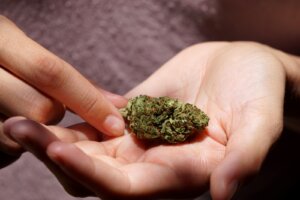
Is cannabis legal in Honduras in 2026? No. Marijuana is not legal in Honduras or Roatán, recreational cannabis remains illegal, and the country has not built a broad public medical-cannabis system.
That said, Honduras should still be described with care. Tourist areas do not create a separate cannabis rulebook, so searches about marijuana in Roatán should be read through the same national legal framework. Honduras has not made the broader Latin American transition toward adult-use, medical, hemp, and compliant CBD distinctions in any broad public way.
Is Cannabis Legal in Honduras?
Cannabis is illegal in Honduras. There is no legal recreational retail system, no licensed adult-use dispensary model, and no general right to possess marijuana. The FCDO’s Honduras safety guidance states that Honduras imposes severe penalties for drug trafficking and drug use, while the Canadian government’s Honduras travel advice warns that drug offences can result in heavy fines and lengthy prison sentences.
That remains the central legal fact. Honduras has not legalized cannabis, and it does not stand out as a country that has built a modern public framework for cannabis medicine, hemp commerce, or CBD retail. Whatever public debate exists around reform, it has not yet translated into a broad lawful market.
Medical Cannabis in Honduras
Honduras does not have a broad publicly established medical-cannabis programme. There is no clear national system that gives ordinary patients routine lawful access to cannabis-based treatment through clinics, pharmacies, or licensed dispensaries.
That matters because medicine is often where cannabis law becomes more humane and more scientifically grounded. In many countries, the first meaningful reform is not recreational legalization but patient access. Honduras has not visibly taken that path in a substantial public way, so the therapeutic value of cannabinoids remains largely outside domestic cannabis law.
Recreational Cannabis in Honduras
Recreational cannabis is illegal in Honduras. The country has not decriminalized marijuana into a lawful personal-use category, and it has not created an adult-use commercial system.
That keeps Honduras on the restrictive side of the regional map. Several Latin American countries now have at least a partial reform story to tell, whether through medical access, decriminalization, or hemp regulation. Honduras is not yet part of that broader legal shift in any large public way.
Cannabis Penalties in Honduras
Penalties in Honduras are serious. The FCDO notes severe penalties for drug trafficking, and its Honduras guidance also refers to punishment for drug use. Canada’s travel advice likewise warns that convicted offenders can face heavy fines and lengthy prison terms.
In practical terms, that means cannabis remains a genuine legal risk, not merely a technical offence on paper. The broader security environment in Honduras, including the country’s role in regional narcotics trafficking routes, also helps explain why the law remains hard-edged.
Cannabis Cultivation Laws in Honduras
Cannabis cultivation is not generally legal in Honduras. There is no broad home-grow exception for recreational users and no visible public licensing system that makes psychoactive cannabis cultivation a lawful civilian activity.
This is also one of the clearest signs that Honduras has not yet separated industrial hemp from narcotic cannabis in a strong public-facing way. In countries where reform has advanced, low-THC cultivation often becomes the first lawful cannabis industry. Honduras has not visibly built that type of system into mainstream law.
CBD Laws in Honduras
CBD is not clearly established as a freely legal consumer category in Honduras. There is no obvious broad public framework turning hemp-derived oils, wellness goods, or cannabis extracts into a normalized legal market.
That is important because many countries now use CBD and hemp regulation to draw a line between non-intoxicating products and psychoactive cannabis. Honduras does not visibly stand out as having made those distinctions clearly in a way the public can rely on.
Cannabis Enforcement and Real-World Risk
The real-world risk in Honduras is high enough that caution is the only sensible approach. Cannabis remains illegal, and that remains true in Roatán as well as on the mainland. Drug penalties are described as severe by foreign-government advisories, and the broader law-enforcement environment is shaped by organized crime and narcotics trafficking concerns.
For regional contrast, see our guide to cannabis laws in Costa Rica, where the legal conversation has moved further on hemp and medical reform than it has in Honduras.
Future of Cannabis Laws in Honduras
There is no strong public sign that Honduras is about to create a full legal cannabis market. If reform ever comes, it would most likely begin through a narrow medical or hemp framework rather than through immediate recreational legalization.
For 2026, the answer remains straightforward: cannabis is broadly illegal in Honduras, and the country has not yet built the medical, hemp, or CBD distinctions that now define cannabis policy in more reform-minded jurisdictions.
No. Cannabis and marijuana remain illegal in Honduras, including in Roatán, and the country does not have a legal recreational market.
Honduras does not have a broad publicly established medical-cannabis programme as of 2026.
CBD is not clearly established as a freely legal consumer product in Honduras, so cannabis-derived products should not be assumed lawful without explicit authorization.