The first stoner movie I ever watched was Half Baked, on a clamshell DVD my college roommate Ted slid across the dorm floor at 1 a.m. with the kind of reverence usually reserved for religious texts. We were freshmen, the dorm smelled like microwave burritos and Febreze, and Ted insisted that watching Dave Chappelle, Jim Breuer, and Harland Williams talk to a horse was a non-negotiable part of cannabis literacy. He was right.
Twenty-five years and a hundred more screenings later, the canon is settled. These twenty-five movies are the ones that built the genre. The order below is not negotiable.
The stoner movie is older than the legalization debate, older than the medical-cannabis movement, older than the dispensary on the corner of every American main street. Rolling Stone has cataloged the genre back to the 1936 propaganda film Reefer Madness, through the Cheech and Chong run that defined the 1970s, the Friday and Half Baked era that defined the 1990s, and the Pineapple Express era that pushed the form into mainstream blockbuster territory. Esquire’s working canon spans 50-plus titles, and Complex’s ranked editorial covers a similar slice of the same library. What follows is High Life Global’s count, ranked 25 to 1, with one strain pairing per pick because the right movie deserves the right smoke.
How we ranked the 25 best stoner movies of all time
Three things matter when you rank a stoner movie. The first is whether the film actually treats cannabis as part of the story, not as a one-line gag wedged into a romantic comedy. The second is whether the writing rewards the second viewing, because every great stoner movie gets watched at least twice, and the second pass is when the jokes land deeper than the first. The third is whether the film holds up across generations, because the canon is multi-decade by definition and a movie that only worked in 1998 is a movie that fell out of the canon by 2008.
Cultural staying power outweighs launch-week box office, which is why a few critically panned releases sit above some of the genre’s commercial heavyweights. Cheech and Chong count as a single entry under Up in Smoke rather than three separate releases. Romantic comedies with a single bong scene get called stoner films by lazy listicles. They are not stoner films. The list runs from a 1936 propaganda artifact at the bottom to The Big Lebowski at the top.
Pair every pick with the strain noted on its card. The pairings are suggestions, not gospel. For a movie-night setup that includes the food, browse our cannabis chocolate chip cookies recipe and the Pineapple Express movie night menu. For the comedy lineage that fed the genre, see the companion piece on the best stoner comedians and the best stoner sitcoms and TV shows.
#25Reefer Madness. The Camp Original That Started Everything.
 |
|
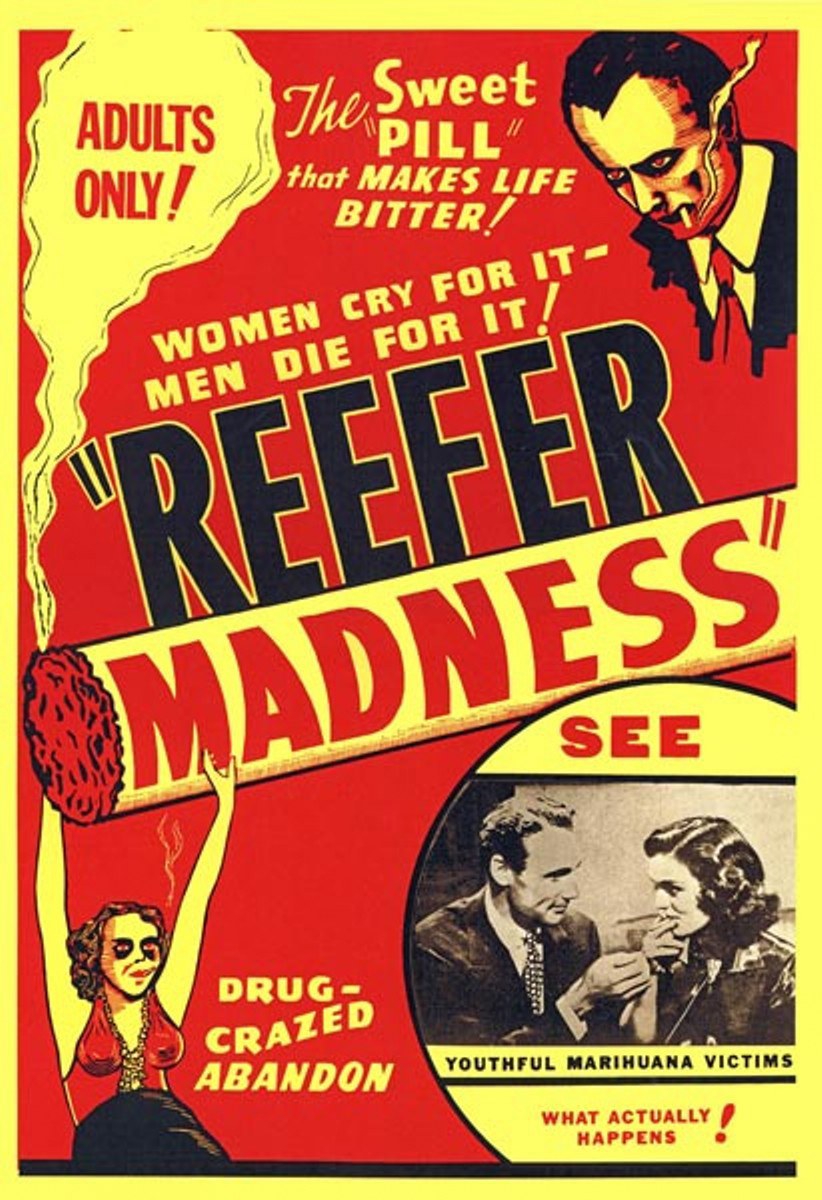
Reefer Madness is the church-funded propaganda short that accidentally became the foundational text of the stoner-movie canon. Released in 1936 under the original title Tell Your Children, the film was financed by a small church group hoping to scare American teenagers away from cannabis through a melodrama in which a single puff leads to manslaughter, suicide, sexual assault, and permanent institutionalization. The acting is wooden. The science is invented. Exploitation producer Dwain Esper recut the film in the late 1930s, slapped on the new title, and ran it on the grindhouse circuit where audiences laughed at it instead of taking the warning seriously.
It is the genre’s ground zero.
The signature scene is the piano sequence, where a previously mild-mannered young man tears into a frantic ragtime number while his eyes bug out and his date stares in horror. That scene, more than any other in the movie, taught generations of writers that the gap between what cannabis actually does and what prohibitionists claimed it did was a comedic goldmine. Rotten Tomatoes lists the film with a critic average that swings depending on whether reviewers grade it as 1936 drama or 1970s revival camp, and the audience score reflects the cult following that made the movie a midnight-screening staple at art houses through the 1970s and 80s.
The rediscovery happened in 1971, when NORML founder Keith Stroup found a print at the Library of Congress and started screening it on college campuses to raise legalization-reform funds. The movie ended up doing exactly the opposite of what its 1936 producers intended. It became a fundraising and recruiting tool for cannabis-policy reform. The 2005 musical adaptation directed by Andy Fickman, starring Kristen Bell and Christian Campbell, doubled down on the camp and turned the source material into a Broadway-style send-up. The Guardian covered the musical’s release as the moment the propaganda film completed its full transformation into pure ironic spectacle.
Watch it for the historical record, the laugh, and because every other film on this list exists in part because this one set the prohibitionist baseline that the entire genre spent the next 80 years dismantling. It is short, it is in the public domain, and it is the most efficient way to understand why a stoner-movie canon needed to exist in the first place. Treat it as the prologue.
#24Strange Brew. Beer-and-Bong Comedy, Canadian Edition.
 |
|
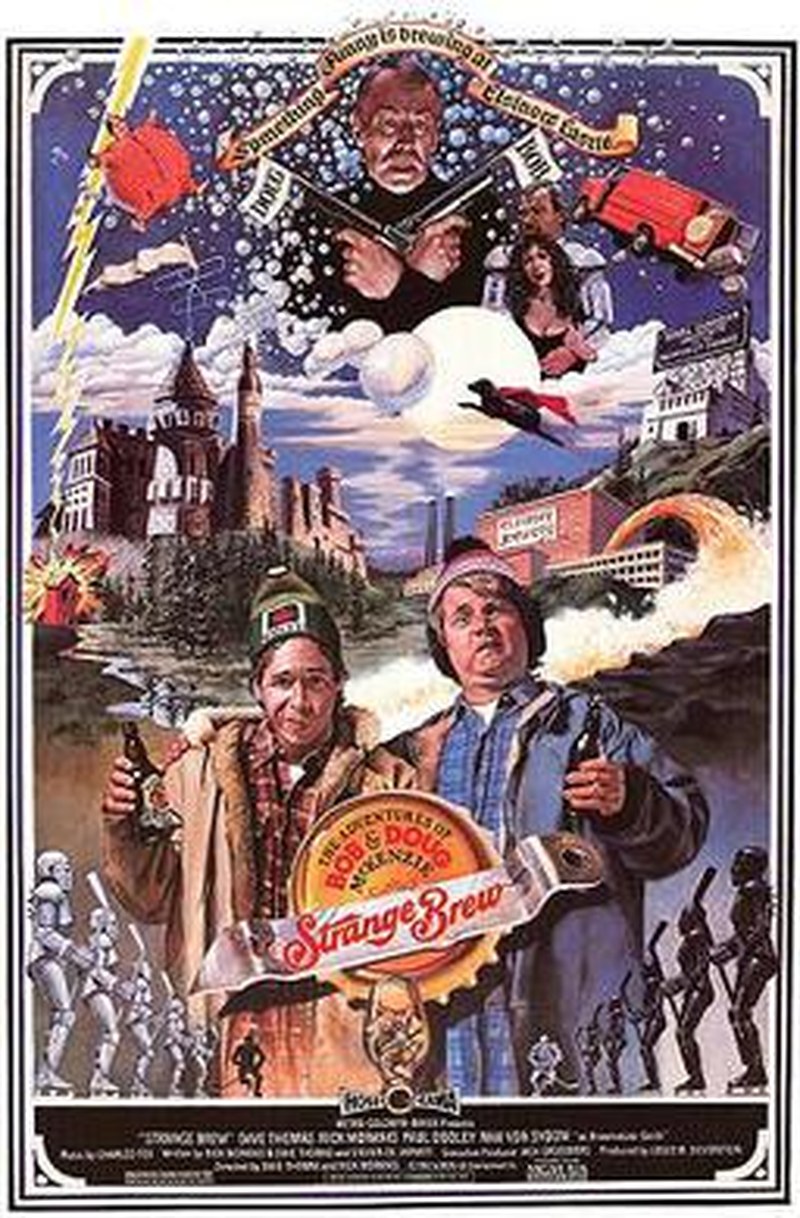
Strange Brew is the SCTV spinoff that proved a feature-length comedy could ride on two beer-loving Canadian brothers originally written as two-minute sketch fillers to satisfy a Canadian-content broadcasting requirement. Rick Moranis and Dave Thomas wrote, directed, and starred in the 1983 film, dragging Bob and Doug McKenzie out of their late-night sketch slot and into a Hamlet-tinged plot involving a corrupt brewery, mind-control beer, and Max von Sydow as the villain. Rotten Tomatoes audiences score the film at 79 percent, a number that has held steady across multiple critical reappraisals.
The dialogue carries the whole thing. The plot is window dressing.
The signature sequence is the brewery infiltration, with Bob and Doug navigating a beer-vat catwalk in the middle of being chased by a mind-controlled hockey team while delivering the kind of casual sibling banter that made the SCTV sketches a cult favorite. The Criterion Collection’s essay on the film argues that Strange Brew works because Moranis and Thomas treated their own characters as actual humans rather than pure caricature, which gave the comedy a warmth most beer-and-bong films never reach.
The cast is deeper than a 1983 Canadian comedy has any right to be. Max von Sydow, fresh off The Exorcist and a long Bergman collaboration, plays the brewery’s mad-scientist villain with a perfectly straight face that makes the absurdity around him land harder. Paul Dooley shows up in a key supporting role. Geddy Lee of Rush narrates the opening sequence. Moranis went on to Ghostbusters, Honey, I Shrunk the Kids, and Spaceballs before semi-retiring to raise his children. Thomas continued through Grace Under Fire and a long voice-acting career.
Strange Brew is the rare 1980s comedy that has aged into something close to charm rather than embarrassment. The Canadian-content origin story, the Shakespeare-tinged plot scaffolding, and the genuine affection between the brothers all combine into a film that rewards the second viewing more than the first. It is the entry point on this list for anyone whose stoner-movie diet has skewed too American.
#23Don’t Be a Menace. A Decade Spoofed in 89 Minutes.
 |
|
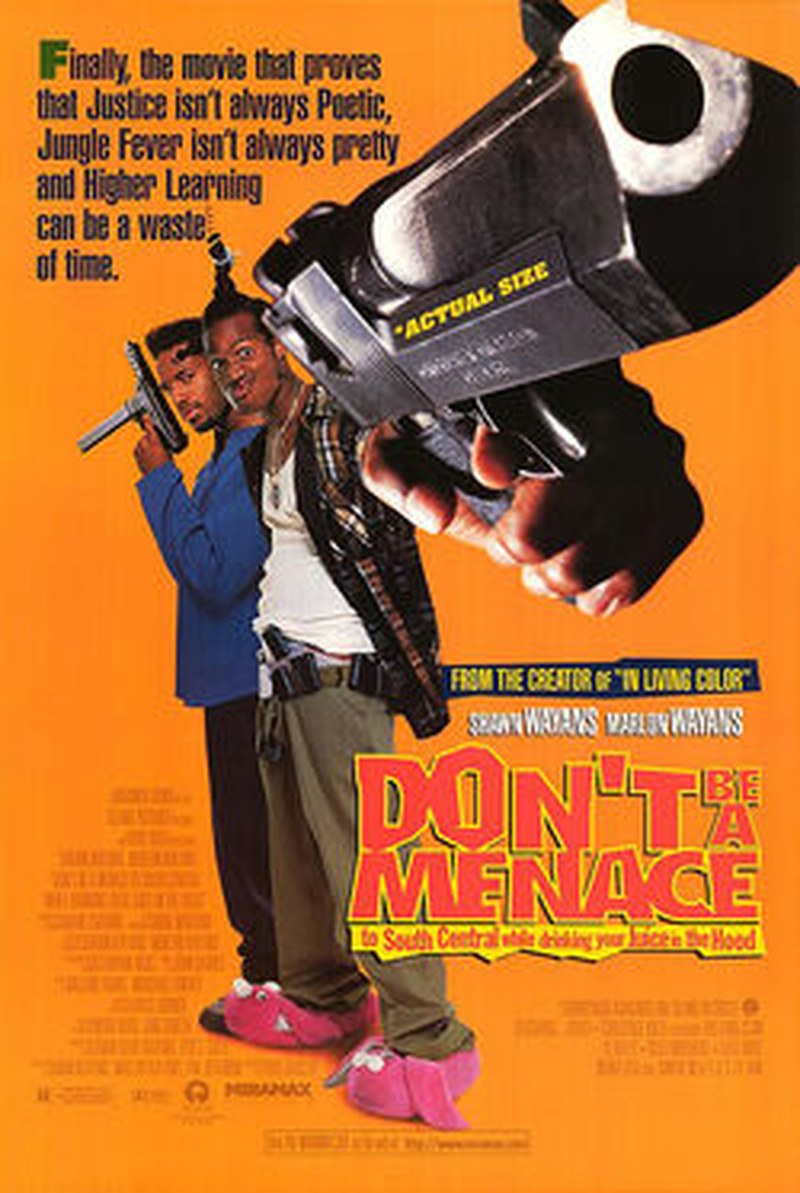
Don’t Be a Menace to South Central While Drinking Your Juice in the Hood is the 1996 Wayans-brothers spoof that compressed the entire hood-cinema decade of the early 1990s into 89 minutes of point-by-point parody. Shawn Wayans, Marlon Wayans, and director Paris Barclay pulled targets from Boyz n the Hood, Menace II Society, Juice, South Central, and Higher Learning, and built a feature out of references that landed harder for any viewer who had seen the source films first. Rotten Tomatoes audience scores sit comfortably above the critics’ aggregate, the standard pattern for a parody film that ages better than its initial reviews suggested.
The cannabis content is woven into nearly every scene.
Loc Dog, played by Marlon Wayans, is one of the most recognizable stoner characters in 1990s comedy: an absurdly armed teenager who lives in his grandmother’s house, smokes constantly, and treats every domestic interaction as a high-stakes tactical operation. The character functions as both a parody of the urban-drama archetype and a comic engine in his own right, and the bong-and-blunt scenes work because Wayans plays the volume of cannabis consumption straight rather than as a one-off joke. The A.V. Club retrospective on the film argues that the Wayans family’s parody work in this era did more for cannabis-comedy mainstreaming than the genre is usually given credit for.
The supporting cast pulls from across the comedy circuit. Tracey Cherelle Jones, Suli McCullough, Chris Spencer, and a baby-faced Keenen Ivory Wayans cameo all hit. The film grossed over 20 million dollars on a six-million-dollar budget, returning a multiple that put the Wayans brothers in pole position for the Scary Movie franchise that would dominate the 2000s parody space. The success of Don’t Be a Menace is the proof of concept that made Scary Movie possible four years later.
Watch Don’t Be a Menace after a re-watch of Boyz n the Hood and Menace II Society, because the parody hits exponentially harder when the source material is fresh. The film is a love letter as much as a send-up, and the cannabis-character work has aged into one of the most quietly influential performances in the genre. Loc Dog walked so Smokey could run.
#22Caddyshack. The Country-Club Comedy With a Stoner Heart.
 |
|
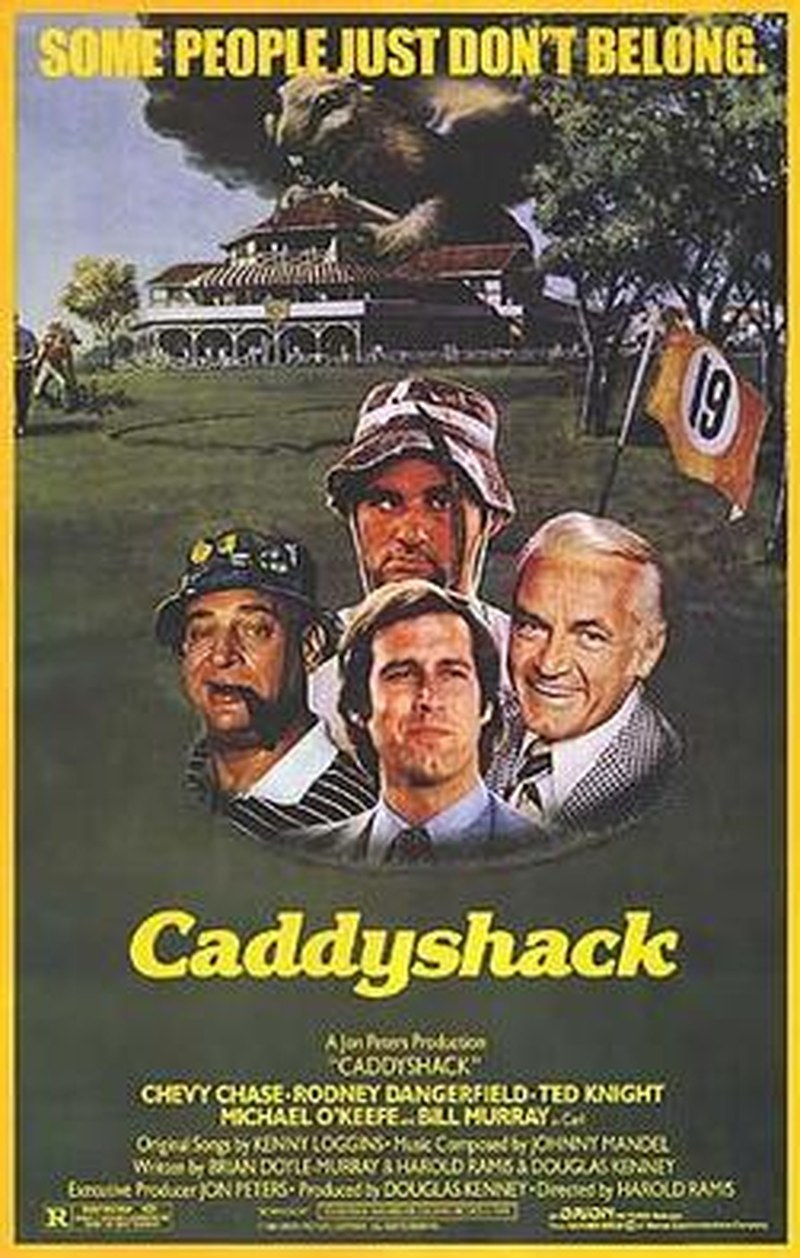
Caddyshack is the 1980 Harold Ramis directorial debut that snuck a stoner comedy into a country-club setting and got away with it because the country club was the joke. Ramis co-wrote the script with Brian Doyle-Murray and Doug Kenney, drawing on Doyle-Murray and Bill Murray’s own teenage caddying experiences at Indian Hill Club outside Chicago. The cast pulled the entire late-1970s Saturday Night Live and Second City roster into a single film. Chevy Chase. Rodney Dangerfield. Ted Knight. And Bill Murray as Carl Spackler, the most cannabis-coded supporting character in early-1980s mainstream cinema. Rotten Tomatoes audience scores have remained stable around 84 percent for over a decade.
Carl Spackler is the entire stoner-movie argument in one performance.
The Cinderella-story monologue, delivered by Murray to a flowerbed while pretending to be a sports broadcaster narrating his own Masters victory, is one of the four or five most-quoted improvised passages in American film comedy. The “license to kill gophers by the government of the United Nations” rant is structurally a stoner monologue: a low-stakes job inflated into geopolitical importance through sheer narrative commitment. Murray reportedly improvised most of his dialogue on set, and Ramis kept the camera rolling and built the editing around whatever Murray gave him.
The Criterion Collection essay on the film tracks how Caddyshack functions as a class-warfare comedy where the working-class characters carry the cannabis content and the wealthy characters carry the social anxiety. That structural choice gave the film a depth most country-club comedies never reach. The pool-scene Baby Ruth gag, the dynamite-on-the-greens climax, and the Dangerfield-versus-Knight feud all map onto the same class spine.
Watch Caddyshack because Bill Murray’s Carl Spackler invented a character archetype that the next forty years of cannabis cinema rewrote variations on. Without Carl, the Dude does not exist in the form we know him. Without Carl, neither does Saul Silver. The film is the proof of concept for the literary-stoner archetype that shows up at the top of this list.
#21Bill & Ted’s Excellent Adventure. Cosmic Stoner Cosmology.
 |
|
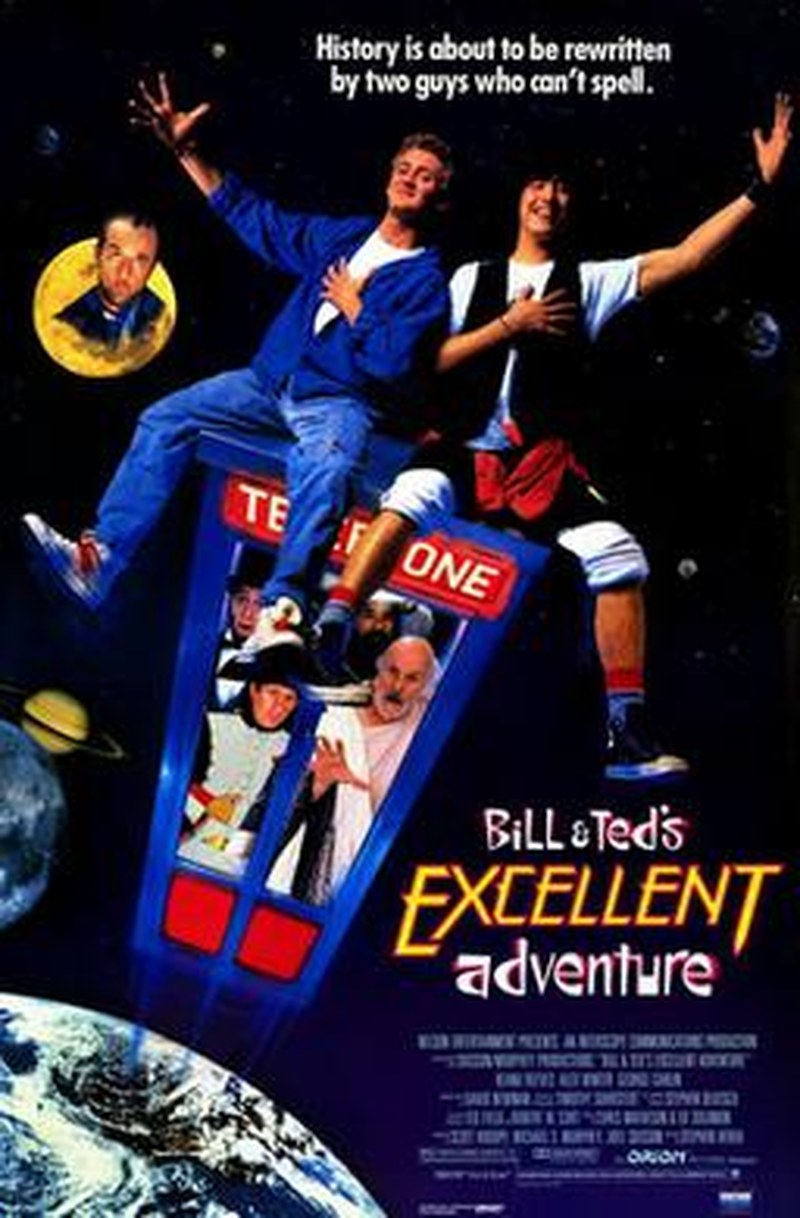
Bill & Ted’s Excellent Adventure is the 1989 Stephen Herek time-travel comedy that gave the stoner-movie canon its most cosmologically generous protagonists. Keanu Reeves and Alex Winter play two San Dimas, California high schoolers who travel through history in a phone booth to assemble a historical-figure roster for their oral report. The cannabis content is implicit rather than explicit. The MPAA-friendly PG rating kept the bongs offscreen, but every behavioral cue, every line reading, every facial expression tells you exactly what Bill and Ted are doing in the basement when they are not on a quest. Rotten Tomatoes audience scores sit at 84 percent and have moved less than two points in fifteen years.
Be excellent to each other. The line is the genre’s quietest mission statement.
The casting is the structural choice that built the franchise. Reeves and Winter had genuine onscreen chemistry from the audition stage, and the friendship between Bill and Ted is treated by the screenplay as the film’s emotional engine rather than a setup for a romantic subplot or a coming-of-age arc. George Carlin as Rufus, the time-traveling guide from a future utopia built on Wyld Stallyns music, gave the film a sage-on-the-mountain figure who took the boys’ destiny seriously without the script ever winking at the audience.
The Atlantic’s 2020 retrospective on the franchise argued that Bill and Ted are the rare cannabis-coded protagonists in late-1980s American film who treat the world with curiosity rather than cynicism. The 2020 sequel Bill & Ted Face the Music doubled down on that ethos, bringing back Reeves and Winter for a third film that closed the loop on the original’s prophecy.
Watch Excellent Adventure because the Bill-and-Ted archetype, a stoner protagonist treated by the script as fundamentally good rather than fundamentally lazy, is one of the genre’s most generous moves. The Cheech-and-Chong template was about chaos. The Bill-and-Ted template was about kindness. Both deserve a permanent slot in the canon.
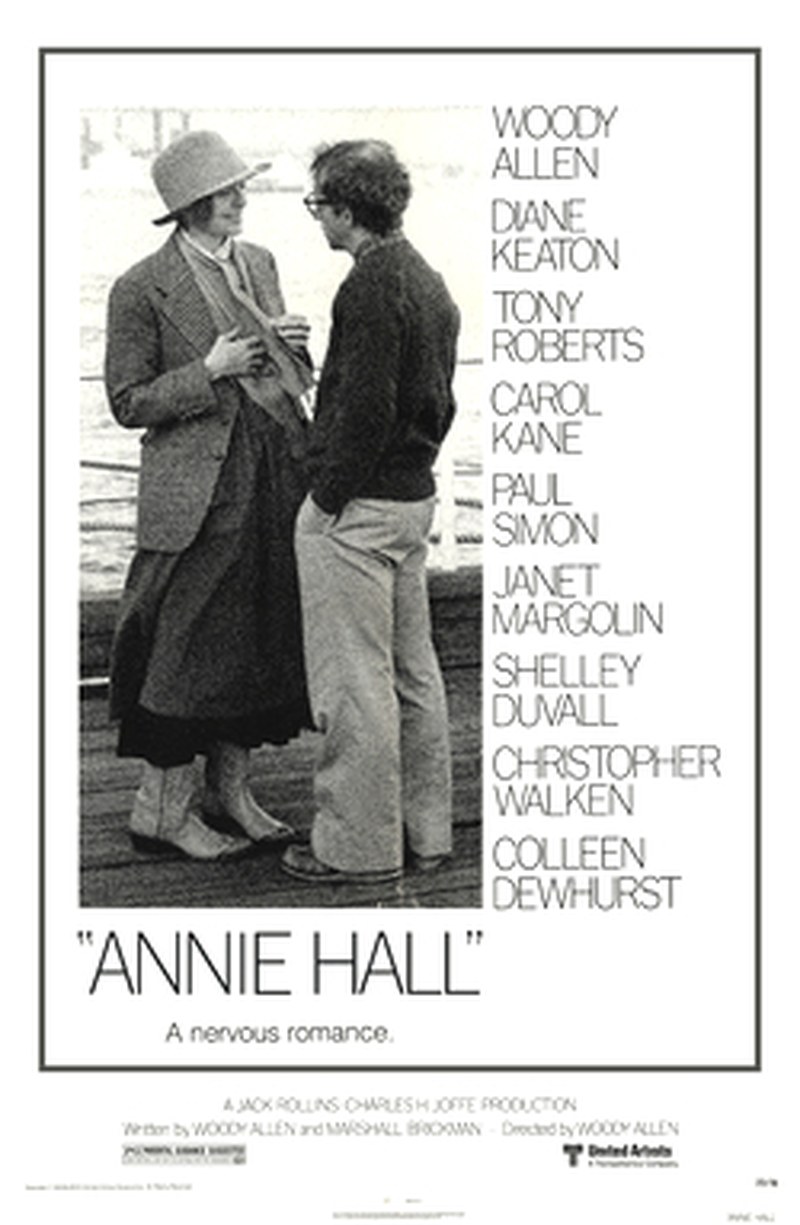
#20Annie Hall. Cannabis Wins a Best Picture Oscar.
 |
|
Annie Hall is Woody Allen’s 1977 Best Picture winner, a film that quietly carries one of the most consequential cannabis scenes in mainstream Hollywood drama. The Alvy Singer character, Allen’s neurotic stand-up alter ego, sits in a Los Angeles bedroom and watches Annie, played by Diane Keaton, light a joint before sex while explaining that she cannot enjoy intimacy without it. Alvy is repulsed. The audience is shown both perspectives without the screenplay forcing a verdict. That structural neutrality, in a 1977 American film that won Best Picture, was a meaningful cultural moment in the depiction of recreational cannabis use. Rotten Tomatoes lists the film at 96 percent on the critics’ aggregate.
The cannabis scene is the film’s hinge.
Pauline Kael’s New Yorker review of Annie Hall singled out the bedroom-joint scene as the moment that crystallized the central incompatibility between Alvy’s controlled, anxious approach to intimacy and Annie’s looser, more exploratory one. Cannabis was being used in 1977 as a shorthand for a generational divide that the rest of the screenplay was working hard to dramatize through dialogue alone. The Criterion Collection essay on the film tracks how Allen’s screenplay treats Annie’s cannabis use as part of her California-coded emotional vocabulary, distinct from Alvy’s New York-coded verbal-defense system.
The film won four Academy Awards in March 1978: Best Picture, Best Director, Best Original Screenplay, and Best Actress for Diane Keaton. The win for Best Picture was an upset over Star Wars, the box-office juggernaut that had defined the prior year of American cinema. Annie Hall took the trophy on the strength of its character work, its formal experimentation, and the warmth Keaton brought to a role that easily could have read as a quirk.
Watch Annie Hall when the canon needs a reminder that cannabis content has been operating at the literary edge of American film for almost five decades. The scene takes about ninety seconds. It changed how a generation of filmmakers wrote cannabis into adult drama. That counts.
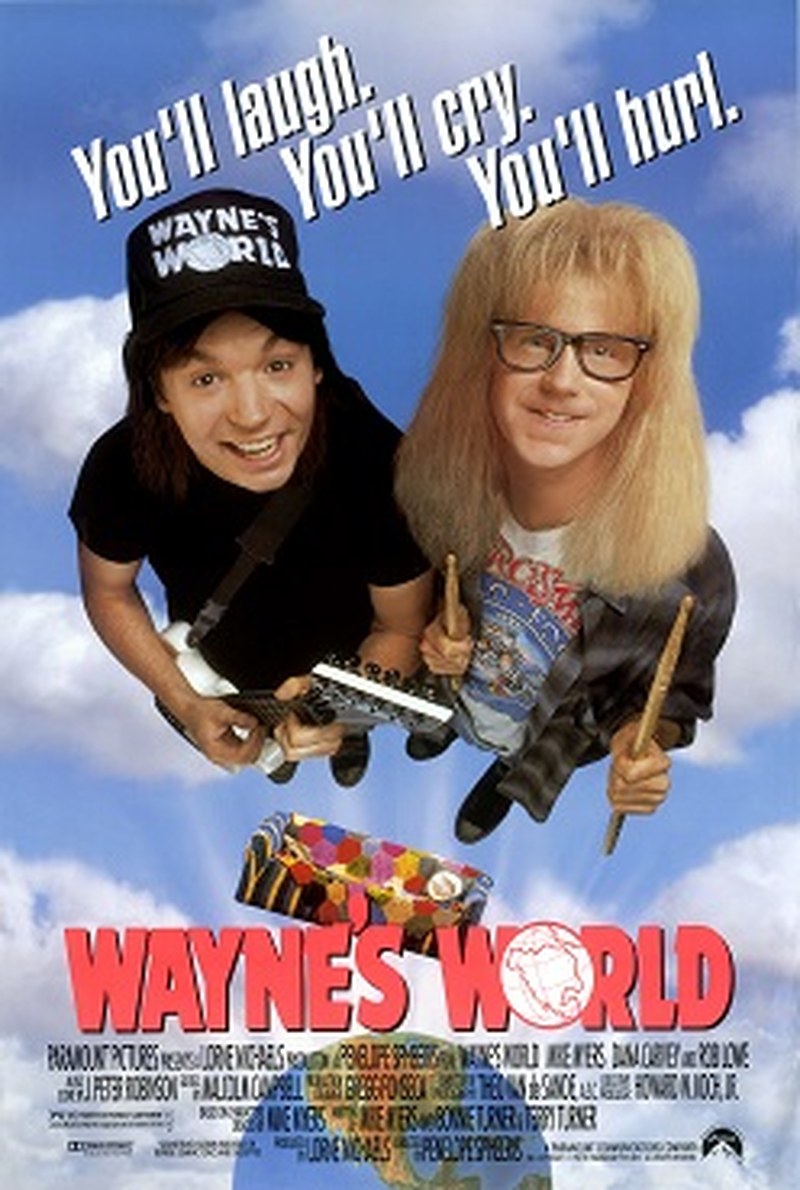
#19Wayne’s World. Basement Comedy, Box Office Phenomenon.
 |
|
Wayne’s World is the 1992 Penelope Spheeris film that turned a five-minute Saturday Night Live sketch into a 121 million dollar box-office phenomenon. Mike Myers and Dana Carvey play Wayne Campbell and Garth Algar, two basement-dwelling Aurora, Illinois cable-access hosts whose public-access show becomes the target of a sleazy network executive looking to monetize their local audience. The cannabis content sits where most early-1990s mainstream comedies put it, in the subtext rather than the frame, but the film’s ethos, pacing, and visual grammar are pure stoner comedy from frame one. Rotten Tomatoes audiences score the film at 80 percent, with the critics’ aggregate sitting just below.
The Bohemian Rhapsody scene is the proof of concept for the entire film.
That four-minute sequence, with Wayne and Garth and three friends in a Pacer headbanging through Queen’s six-minute opera, is the kind of music-and-camaraderie set piece that defines stoner-movie best practice. There is no plot in those four minutes. There is no joke setup, no joke payoff. There is only five guys in a car, a song, and the camera trusting the actors to carry the energy without any narrative cut. Variety’s 25th-anniversary feature on the film tracked how that single scene revived the Queen catalog and pushed Bohemian Rhapsody back into the Billboard Top 10 for the first time in fifteen years.
The supporting cast is deeper than the SNL-spinoff frame would suggest. Rob Lowe plays the network executive villain with the kind of slick menace that gave the film a real antagonist rather than a placeholder. Tia Carrere as Cassandra Wong gave the love story a co-lead with actual presence. Brian Doyle-Murray, Lara Flynn Boyle, and Ed O’Neill round out a cast that took the material more seriously than a sketch spinoff usually warrants. The 1993 sequel did not match the original’s chemistry, but the original holds up cleanly thirty years later.
Watch Wayne’s World because the basement-comedy template Spheeris and Myers built has been the structural model for the next thirty years of cannabis-coded buddy comedy. Schwing. Excellent. Party on.
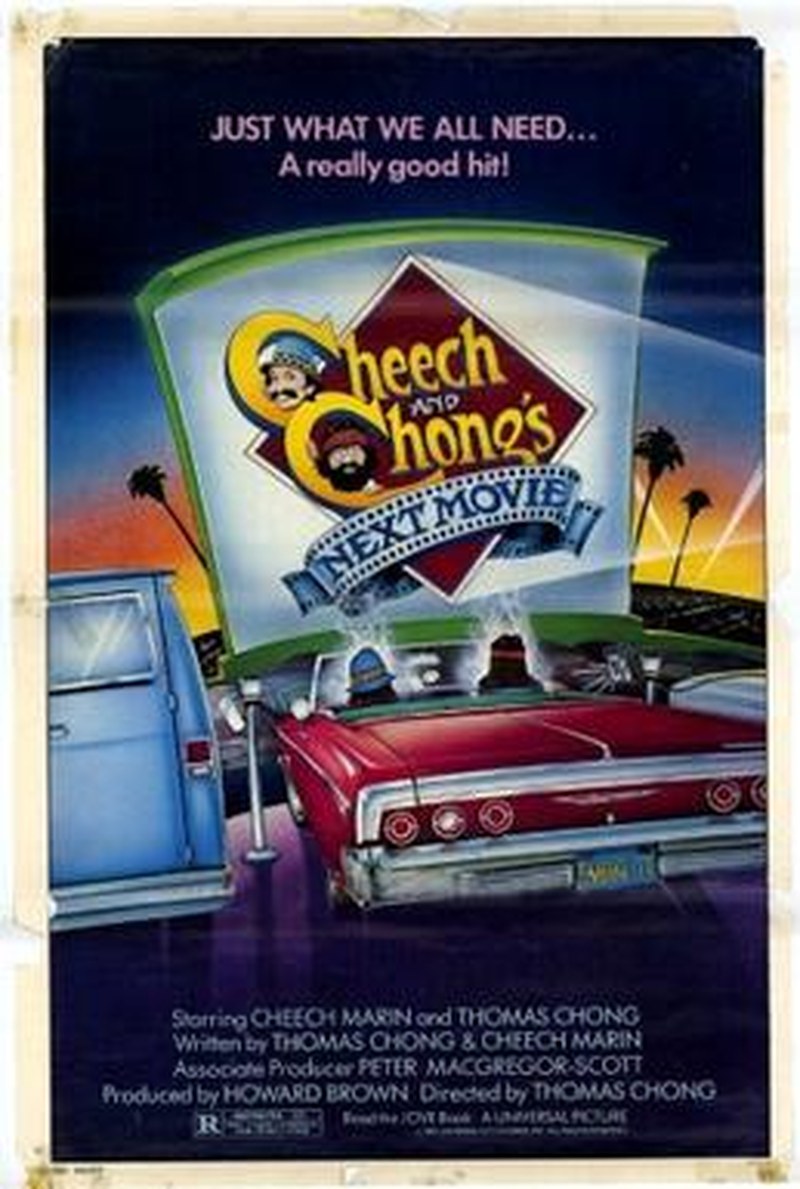
#18Cheech and Chong’s Next Movie. The Sequel That Doubled Down.
 |
|
Cheech and Chong’s Next Movie is the 1980 sequel to Up in Smoke, the second entry in a six-film run that established the duo as the original American stoner comedy brand. Tommy Chong directed this one solo, taking over from Lou Adler, and the film traded the road-trip structure of the original for a looser day-in-the-life Los Angeles narrative that gave both performers more room to riff. The plot, such as it is, follows Cheech and Chong through a series of low-stakes misadventures involving a welfare-office scam, a recording-studio escapade, and a UFO subplot in the third act. Rotten Tomatoes audience scores sit at 70 percent.
The recording-studio scene is the franchise’s funniest single sequence.
That sequence, with Cheech and Chong attempting to lay down a track in a high-end Hollywood studio while increasingly stoned, is structurally a documentary of how their actual studio sessions worked. Both performers played themselves with minimal embellishment in the early features, and the recording-studio bit reads as autobiography filtered through a thin layer of fiction. Rolling Stone’s franchise retrospective argued that Next Movie is where the duo’s chemistry crystallized.
The film also introduced Pee-wee Herman to film audiences. Paul Reubens, then a member of the Groundlings improv troupe in Los Angeles, made his feature-film debut here in a small supporting role that previewed the manic physicality he would later deploy in his own franchise. Phil Hartman, also a Groundlings member at the time, has a brief appearance. The casting reflects the deep Los Angeles improv-comedy network the film was operating inside.
Watch Next Movie for the recording-studio scene, the welfare-office scene, and the unhurried Los Angeles texture that made Cheech and Chong’s early features feel more like documentaries than sketches. The franchise would shed quality across the next four films, but Next Movie sits at the high-water mark for the second-tier slots.
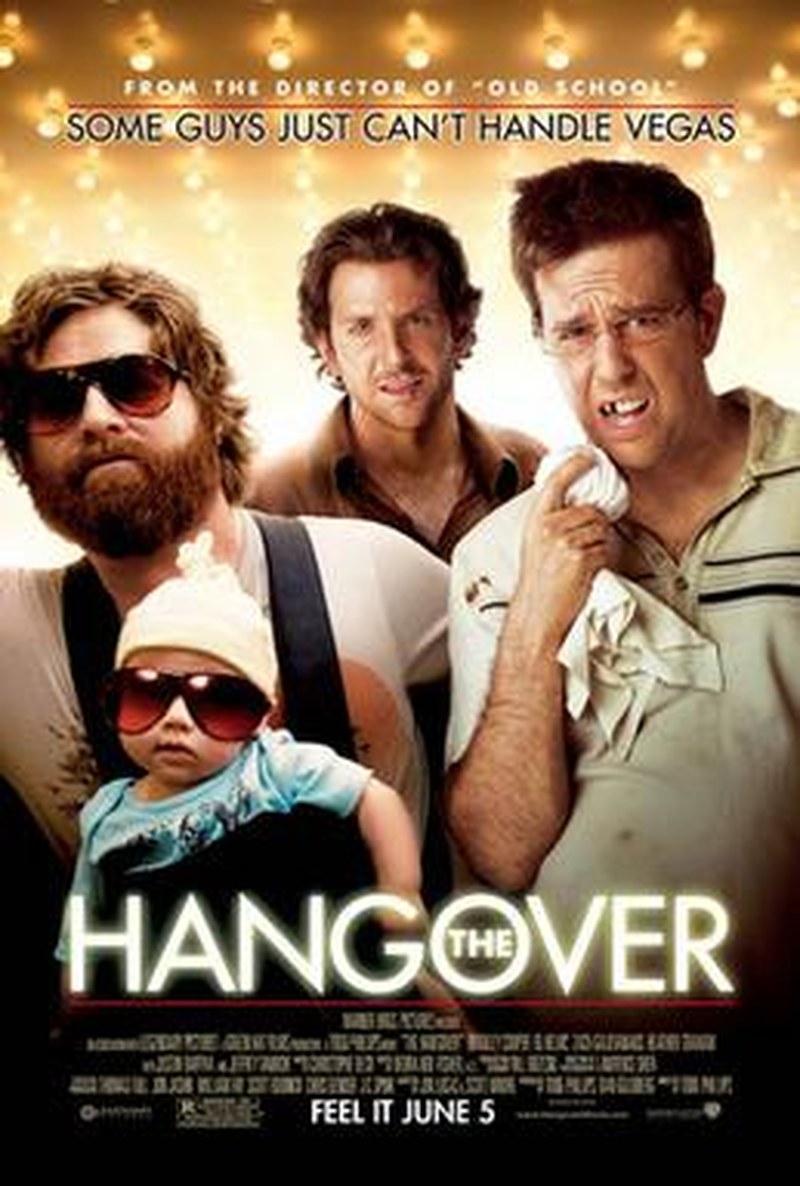
#17The Hangover. The 2000s Lost-Weekend Template.
 |
|
The Hangover is the 2009 Todd Phillips bachelor-party comedy that grossed 467 million dollars worldwide and turned Las Vegas into the default backdrop for the next decade of American R-rated comedy. The film follows three groomsmen, played by Bradley Cooper, Ed Helms, and Zach Galifianakis, who wake up in a Caesars Palace suite with a tiger, a missing groom, no memory of the prior night, and an Asian gangster Mike Tyson reference that has aged into one of the more cited examples of late-2000s comedy’s cultural-sensitivity blind spots. The cannabis content is incidental rather than central. The film’s structural debt to the stoner-comedy genre, however, is direct. Rotten Tomatoes audiences score the film at 84 percent.
The structural template is pure stoner comedy.
The Galifianakis character, Alan Garner, is the Carl Spackler descendant, a manic, cannabis-adjacent eccentric whose presence functions as the film’s chaos engine. Galifianakis was relatively unknown to mainstream audiences before The Hangover, and his performance turned the film from an ensemble buddy comedy into a star-making vehicle. GQ’s oral history of the film tracked how Galifianakis approached Alan as a serious character rather than a sketch role, which gave the supporting performance the depth that made the franchise possible.
The Las Vegas location work is its own argument for the film. Phillips and cinematographer Lawrence Sher used the actual Caesars Palace, the actual chapel rows on the Strip, and the actual desert exteriors east of the city, and the film has the specific texture of late-2000s Las Vegas before the Strip’s most recent wave of high-end refurbishment. The two sequels never matched the original’s location work or pacing, and the franchise effectively ended with the third film in 2013.
Watch The Hangover because the structural template, the morning-after reconstruction of a chaotic night, became the dominant comedy framework of the 2010s. Films from Project X to Bridesmaids to Game Night all operate inside the structural grammar Phillips established here. The cannabis-comedy debt is direct, and the film deserves the slot.
#16Grandma’s Boy. The Cult Classic the Multiplex Missed.
 |
|
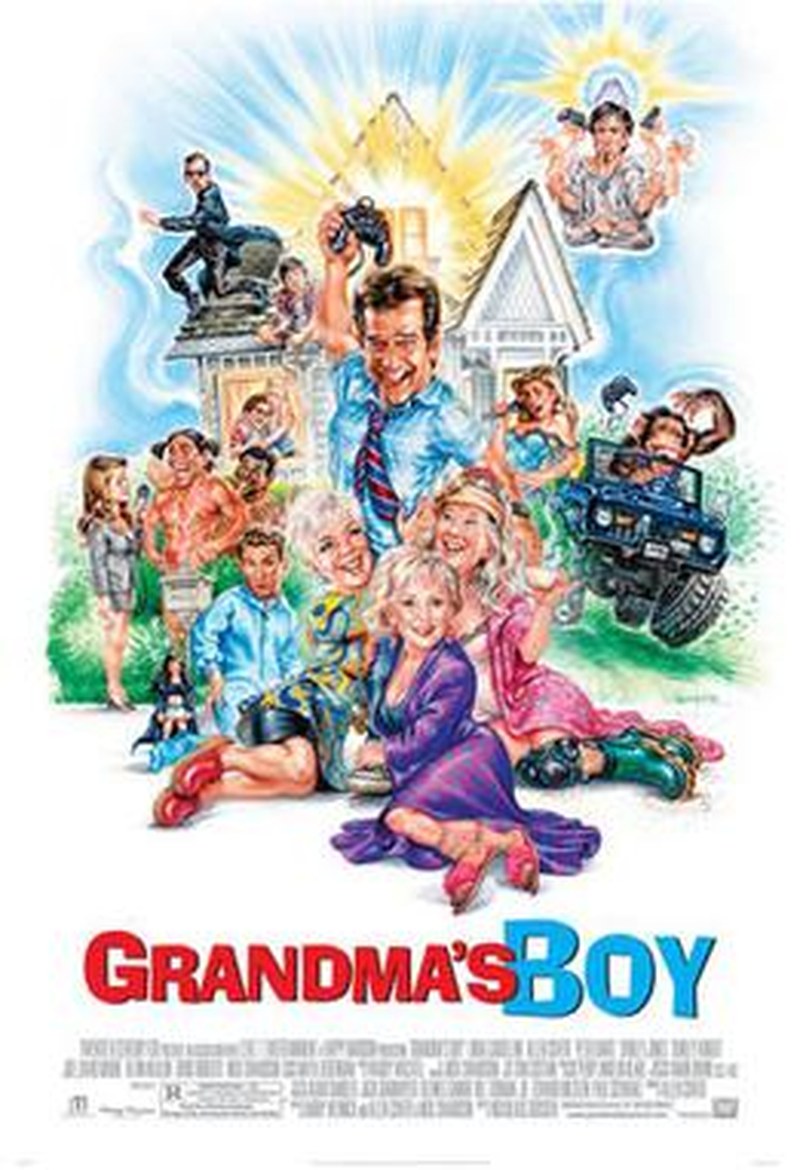
Grandma’s Boy is the 2006 Nicholaus Goossen film that the multiplex audience missed and the home-video audience adopted as one of the defining cult cannabis comedies of the 2000s. Allen Covert plays Alex, a 35-year-old video-game tester who gets evicted, moves in with his grandmother, and spends the film navigating the gap between the cannabis-and-video-games subculture he belongs to and the senior-citizen household he is now living inside. The film grossed only 6.1 million dollars on a 5.5 million dollar budget at theatrical release, then spent the next five years quietly becoming a streaming and physical-media perennial. Rotten Tomatoes audiences score the film at 87 percent, against a critics’ aggregate that sits in the teens.
The audience-versus-critic gap is one of the largest in the genre.
The film functions as a Happy Madison Productions full-cast ensemble piece. Adam Sandler executive-produced, and the cast pulls from the broader Sandler comedy circuit: Nick Swardson, Peter Dante, Jonah Hill in an early-career supporting role, Doris Roberts as the grandmother, Shirley Jones, Joel Moore. The video-game studio setting gave the film a specific subcultural texture that mainstream comedies of the period rarely captured, and the cannabis-as-default-state framing felt more authentic than most early-2000s studio comedies were willing to deliver.
The Ringer’s 2021 retrospective on the film argued that Grandma’s Boy is the most-quoted Happy Madison release of the 2000s among viewers under 40, with the karate-game scene and the chimpanzee-in-the-house subplot remaining cultural touchstones for an entire millennial demographic. The Kevin Nealon performance as the studio’s New Age boss is one of the funniest supporting turns in the entire Sandler ensemble universe.
Watch Grandma’s Boy because the gap between the critical reception and the audience reception is itself the point. The film knew its audience, served them directly, and got dismissed by reviewers who were not in the target demographic. Twenty years later it remains a streaming-charts perennial. That is the cult-comedy receipt.
#15Ted. The Most Believable Stoner Was a Bear.
 |
|
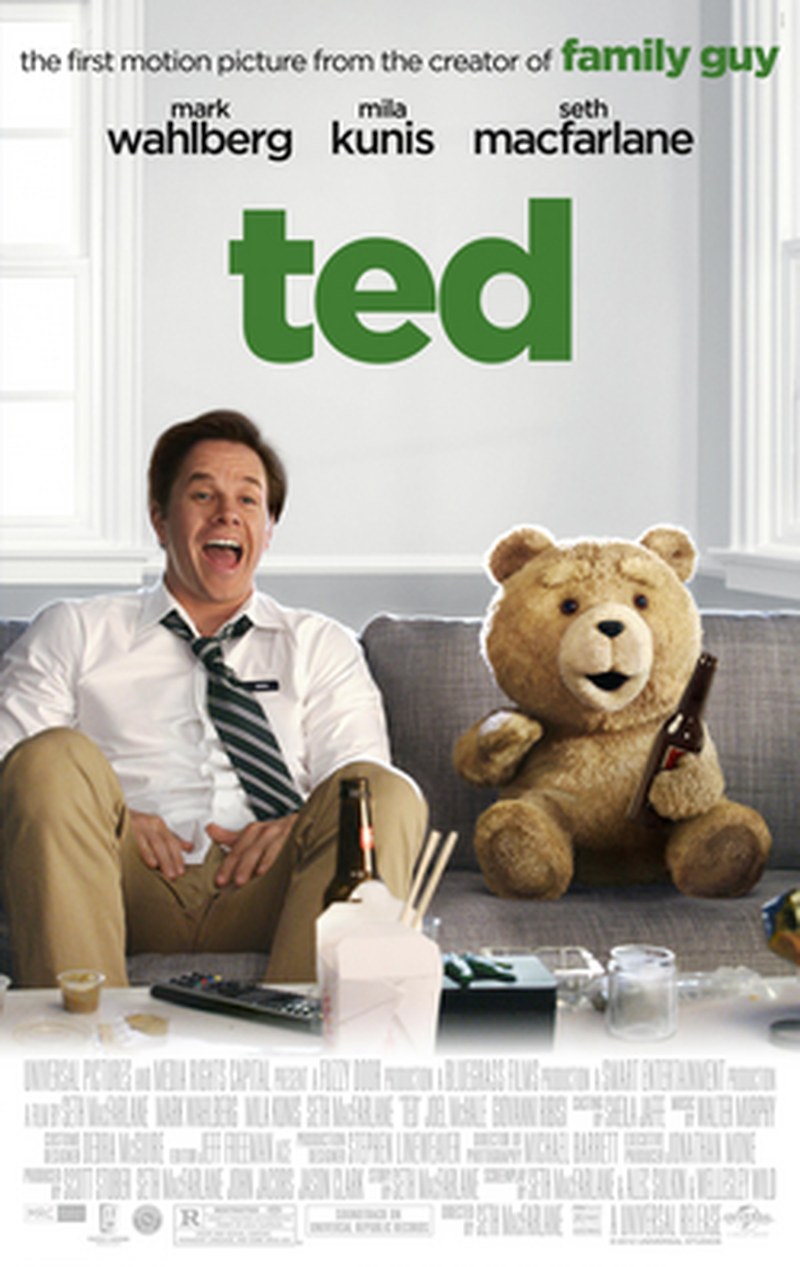
Ted is the 2012 Seth MacFarlane directorial debut that grossed 549 million dollars worldwide and made a profane, animated, sentient teddy bear the most believable on-screen stoner of the year. Mark Wahlberg plays John Bennett, a 35-year-old Boston rental-car company manager whose childhood wish to bring his teddy bear to life still holds three decades after he made it. Ted, voiced by MacFarlane, lives with John, smokes constantly, watches Flash Gordon on repeat, and represents the literal embodiment of the arrested-development cannabis archetype that the genre has been refining since Cheech and Chong. Rotten Tomatoes audience scores sit at 71 percent.
The premise should not work. The execution is the entire argument.
The technical achievement is what separates Ted from the films that tried to copy it. MacFarlane and Universal’s effects team used motion-capture combined with hand-keyed animation to give the bear genuine physical presence in scenes shared with Wahlberg, and the cinematography treated Ted as a literal third actor in every two-shot rather than as a CGI insert. Variety’s opening-weekend coverage tracked how the technical credibility of the bear was the load-bearing element that let the audience accept the cannabis subplot.
Mila Kunis carries the romantic subplot with the kind of grounded performance that gave the film a counterweight to MacFarlane’s tendency toward gross-out gags. Joel McHale, Patrick Warburton, Giovanni Ribisi, and Sam J. Jones in a self-parodying cameo round out a supporting cast that took the material seriously enough to let the absurd premise read as character-driven rather than premise-driven. The 2015 sequel doubled down on the cannabis content but lost the warmth, and the franchise effectively ended with that second film.
Watch Ted because the central technical achievement, a fully-articulated CGI bear that the audience reads as a character with internal life, is what most of the cannabis-coded animation since 2012 has been chasing. The bear had to feel real for the cannabis content to land. It does. The franchise earned the slot.
#14This Is the End. Stoner Apocalypse, Cast Plays Itself.
 |
|
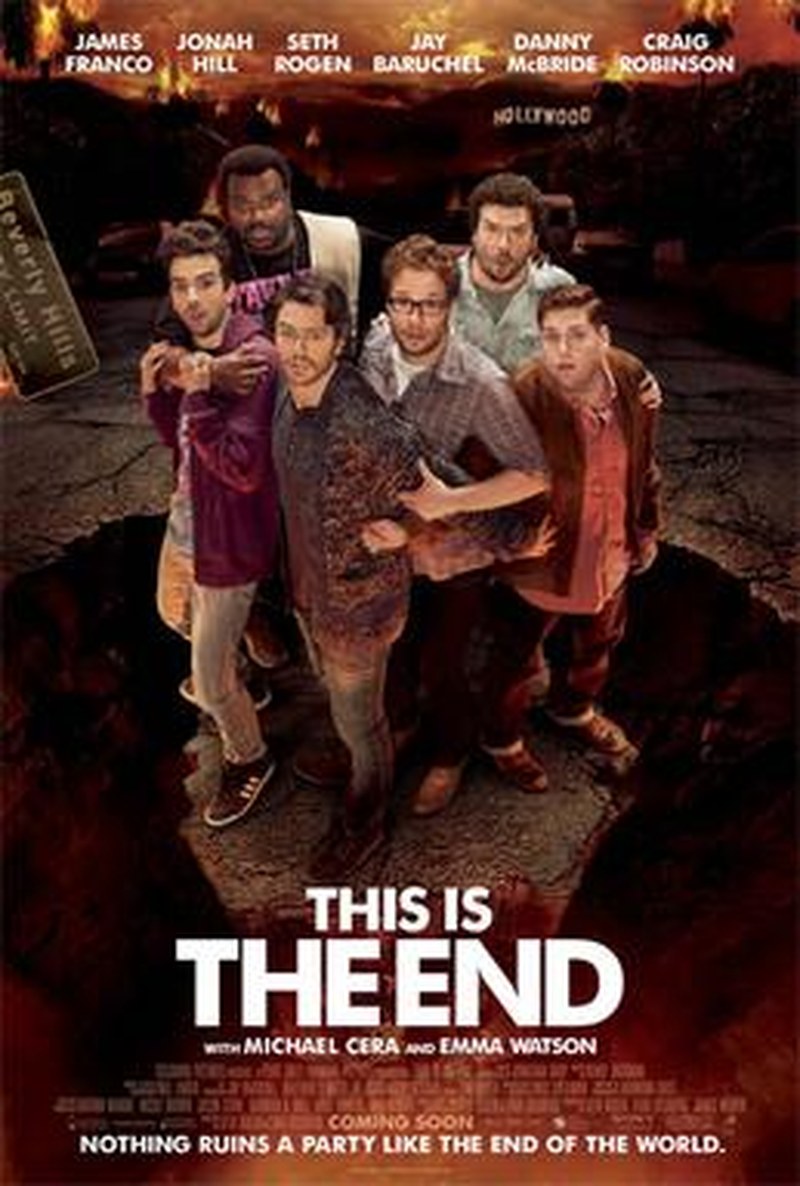
This Is the End is the 2013 Seth Rogen and Evan Goldberg directorial debut that sent half the Apatow comedy ensemble to the apocalypse and let them play themselves the entire way through. Rogen, James Franco, Jonah Hill, Jay Baruchel, Danny McBride, and Craig Robinson appear under their own names as fictionalized versions of themselves, trapped at James Franco’s Hollywood Hills house party as the Rapture begins outside the front gate. The cannabis content is constant, embedded into the premise rather than the plot, and the film treats heavy use as the baseline assumption rather than an event. Rotten Tomatoes audience scores sit at 80 percent.
The cast playing themselves is the film’s load-bearing trick.
The performers had been working together inside the Apatow comedy ecosystem for the better part of a decade by 2013, and the chemistry between them is the kind of accumulated trust that you cannot fake. Rogen and Goldberg wrote the screenplay specifically around each performer’s actual public persona, and the film operates as a kind of celebrity-roast structure dressed in apocalyptic genre clothing. Vulture’s interview with Rogen and Goldberg tracked how the pair built the script as a friendship document first and a horror-comedy second.
The cameo work is part of the film’s argument. Michael Cera plays a coke-fueled, sexually aggressive version of himself that runs counter to his entire public persona, and the joke lands because the audience came in with a fixed read of the actor that the film immediately torches. Emma Watson, Rihanna, and Aziz Ansari all appear in cameos that the screenplay treats with the same celebrity-roast structure as the main cast. The film’s third-act Backstreet Boys cameo is one of the most-quoted gags in 2010s comedy.
Watch This Is the End because the celebrity-as-character structural choice opened a path that Popstar: Never Stop Never Stopping, Don’t Worry Darling, and the entire 2010s self-aware-celebrity comedy wave have been mining ever since. Rogen and Goldberg got there first. The film deserves its slot for inventing the move.
#13Knocked Up. The Apatow Stoner House, Canonized.
 |
|
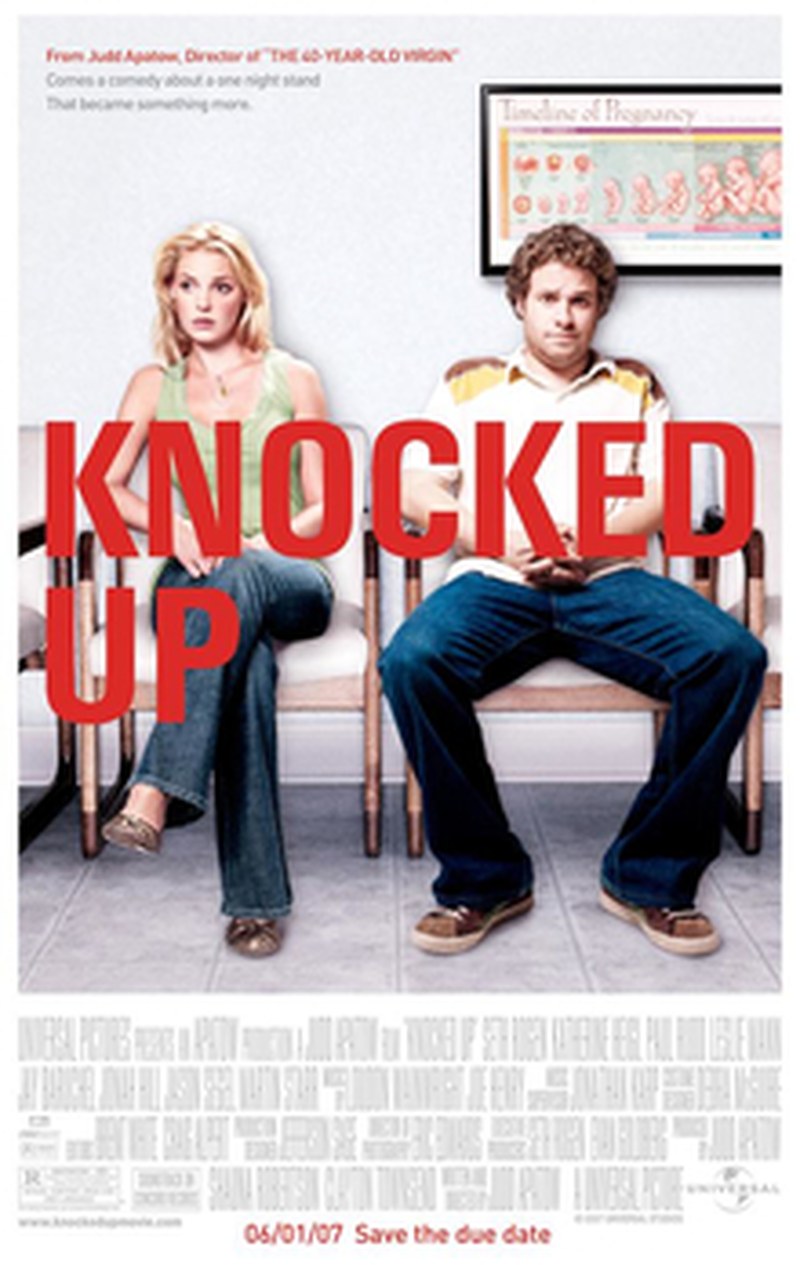
Knocked Up is the 2007 Judd Apatow comedy that wrote a stoner-roommate house into the cinematic-comedy canon and made Seth Rogen a leading man in the process. Rogen plays Ben Stone, an unemployed cannabis-and-celebrity-skin-database entrepreneur whose one-night stand with Katherine Heigl’s E! producer character results in an unplanned pregnancy. The roommate house Ben shares with four other twenty-something stoners, played by Jay Baruchel, Jason Segel, Jonah Hill, and Martin Starr, became the template for the next decade of cannabis-coded ensemble settings. Rotten Tomatoes audiences score the film at 83 percent.
The roommate scenes are the genre payoff.
Apatow’s casting work in the late 2000s was a kind of ensemble-comedy farm system, and Knocked Up is the film that introduced four of those performers to a wide audience inside the same feature. The roommate scenes function as a discrete subplot, with the five guys’ celebrity-skin-database business serving as the film’s most committed running cannabis-comedy bit. The New Yorker’s 2007 profile of Apatow tracked how the director’s casting philosophy was to surround a leading-man performance with the strongest possible supporting bench.
The film grossed 219 million dollars worldwide on a 30 million dollar budget and remains one of the most commercially successful R-rated comedies of the 2000s. The Apatow comedy machine that Knocked Up built directly produced Pineapple Express, Superbad, Forgetting Sarah Marshall, and This Is the End within the next six years, and most of those films share at least three cast members with the Knocked Up roommate ensemble. The Heigl-Rogen central romance has aged less well than the supporting work, which is the consensus critical read.
Watch Knocked Up for the roommate scenes, the Paul Rudd and Leslie Mann subplot, and the moment when Apatow proved that a 130-minute ensemble dramedy could carry an R-rated comedy to over 200 million dollars. The cannabis-coded supporting cast is the film’s most lasting contribution to the canon.
#12Inherent Vice. Pynchon Goes Stoner-Noir On Screen.
 |
|
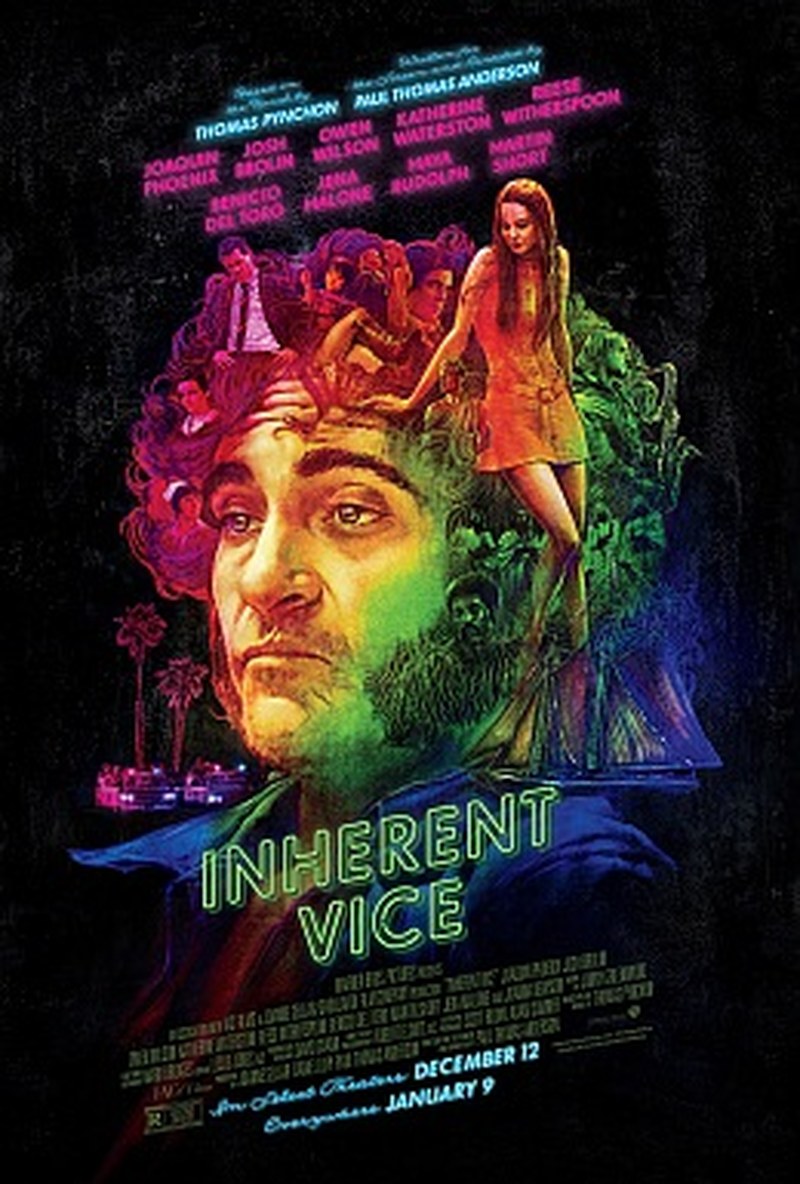
Inherent Vice is the 2014 Paul Thomas Anderson adaptation of Thomas Pynchon’s 2009 novel, the only Pynchon adaptation to ever reach the screen and a film that proved the literary-stoner subgenre could carry a 148-minute neo-noir without losing the audience. Joaquin Phoenix plays Doc Sportello, a cannabis-impaired private detective in 1970 Los Angeles whose ex-girlfriend’s disappearance pulls him into a multi-thread conspiracy involving a real-estate developer, a saxophonist, the LAPD, the FBI, a mysterious dental syndicate called the Golden Fang, and the broader collapse of the 1960s Los Angeles counterculture. Rotten Tomatoes audience scores sit at 56 percent, the lowest audience score on this list and a useful indicator of how divisive the film is.
It rewards the second viewing. It demands it.
The film’s structural difficulty is the point rather than a flaw. Anderson and Pynchon’s source material both treat the protagonist’s cannabis-impaired perspective as the film’s actual point of view, and the audience is asked to track a multi-thread conspiracy plot through a narrator who cannot reliably distinguish between observation and paranoia. The Criterion Collection essay on the film tracks how Anderson’s adaptation choices preserve the novel’s ambient confusion while building enough scene-level clarity to keep the audience engaged with each individual sequence.
The supporting cast is one of the deepest of any 2010s American film. Josh Brolin as the LAPD detective Bigfoot Bjornsen delivers the film’s funniest sustained performance. Katherine Waterston, Owen Wilson, Reese Witherspoon, Benicio del Toro, Joanna Newsom, Martin Short, and Eric Roberts all carry meaningful screen time. Jonny Greenwood’s score, his fourth Anderson collaboration, is one of the most underrated soundtracks of the decade. The film’s commercial reception was modest, but the critical reappraisal has been steady.
Watch Inherent Vice twice. The first viewing teaches you the texture and the cast. The second viewing lets you actually follow the plot. Anderson and Pynchon both built the film for that two-pass structure, and the literary-stoner-noir subgenre does not exist in mainstream American cinema without this entry.
#11Dude, Where’s My Car? The Genre’s Most Quotable Sentence.
 |
|
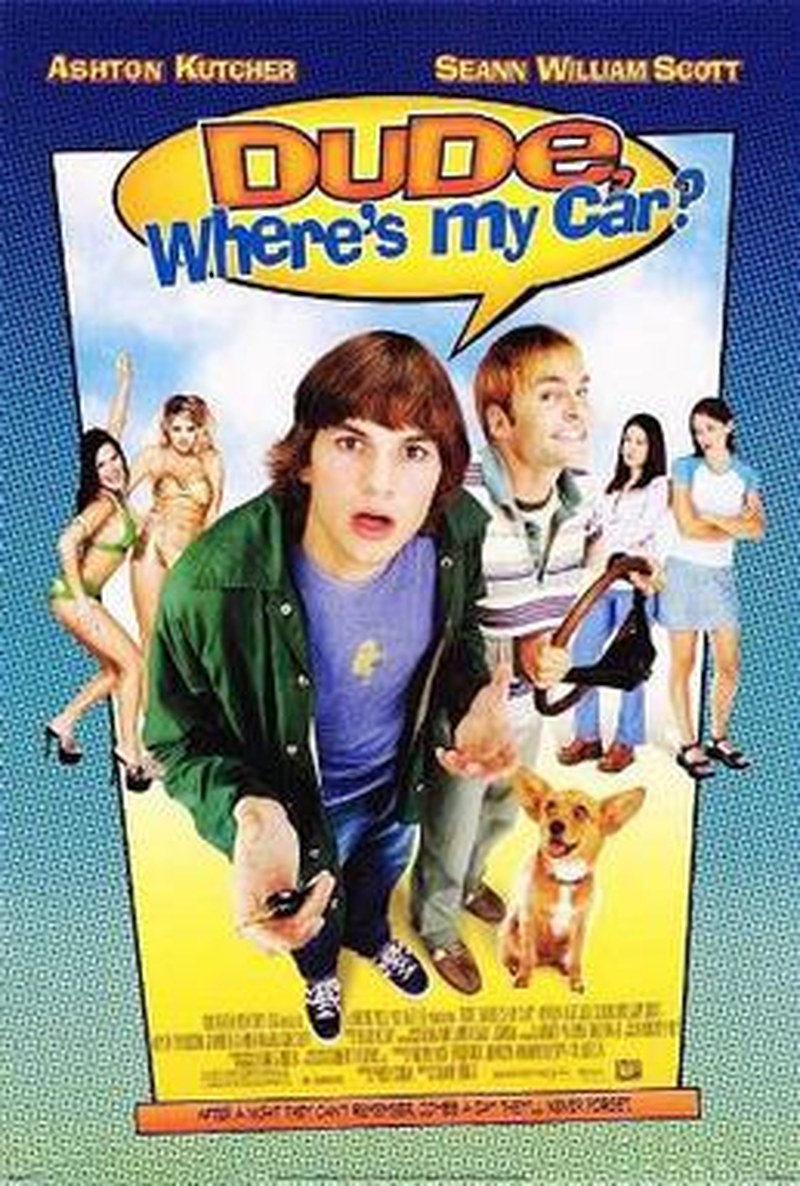
Dude, Where’s My Car? is the 2000 Danny Leiner film that gave the stoner-movie canon its single most quotable two-word sentence and pushed Ashton Kutcher and Seann William Scott into the top tier of early-2000s comedy leading men. The film follows two Los Angeles roommates, Jesse and Chester, who wake up after a night of partying with no memory, no car, and no idea why their girlfriends have stopped speaking to them. The plot eventually involves aliens, a transsexual stripper, a cult, an ostrich-fighting Norwegian, and a continuum-transfunctioner. The cannabis content is implicit but constant. Rotten Tomatoes audience scores sit at 53 percent, with the critics’ aggregate near 17 percent.
The audience-critic gap is the cult-comedy receipt.
The film’s structural debt to The Hangover, eight years before The Hangover existed, is the move historians of the genre keep returning to. The morning-after-reconstruction-of-a-blacked-out-night premise that Phillips would build a 467 million dollar franchise around in 2009 was already operating in Dude, Where’s My Car? as the load-bearing structural conceit. The A.V. Club retrospective on the film argued that the structural innovation has been chronically underrated by the genre’s critical guardians.
The drive-thru scene with the Chinese food order, in which the speaker repeats “and then” for what feels like an actual minute of screen time, is one of the four or five most-quoted sequences in early-2000s American comedy. The continuum-transfunctioner subplot, the Nordic alien sisters subplot, and the Zoltan cult subplot all operate as discrete short-film-length set pieces inside a feature-length frame. The film grossed 73 million dollars on a 13 million dollar budget.
Watch Dude, Where’s My Car? for the structural innovation, the drive-thru scene, the chemistry between Kutcher and Scott, and because the film occupies a permanent slot in the cult cannabis-comedy canon despite the critical class never having been able to admit it. The receipts are in the audience score and the rewatch streaming volume. Both have held up for over two decades.
#10Jay and Silent Bob Strike Back. The View Askewniverse Capstone.
 |
|
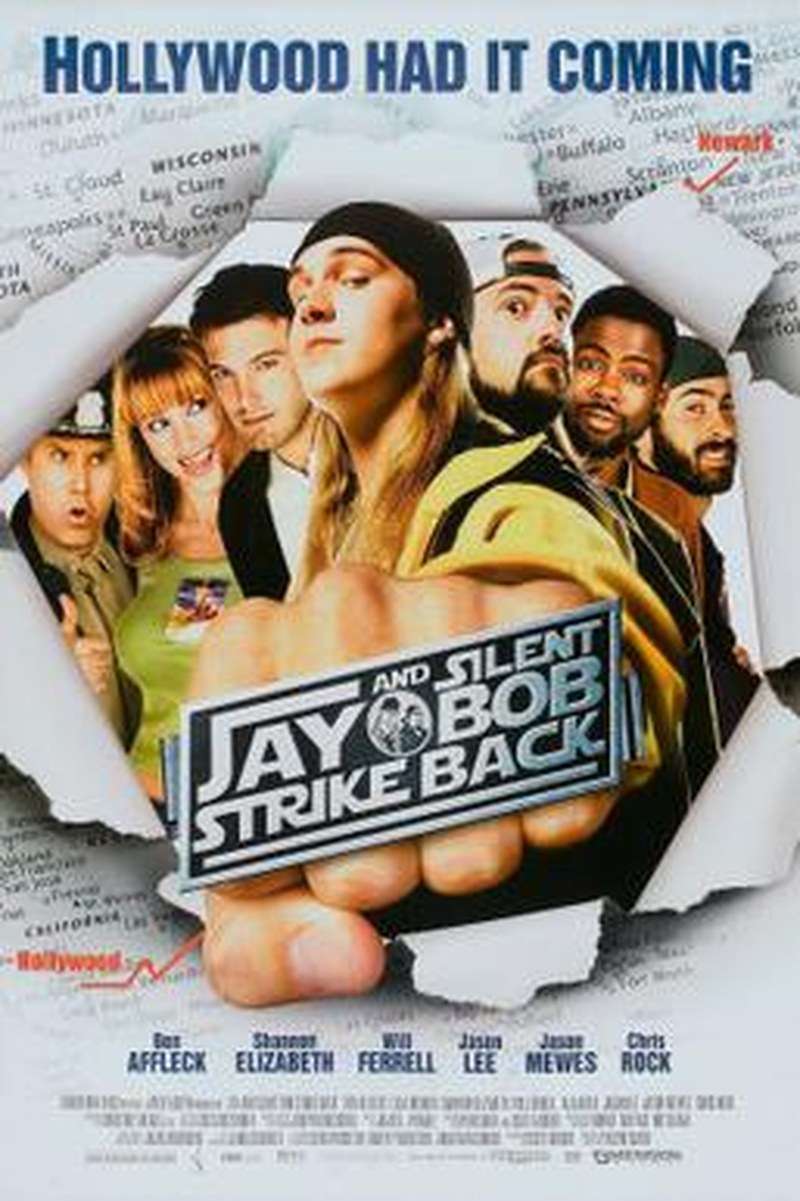
Jay and Silent Bob Strike Back is the 2001 Kevin Smith film that anchored the View Askewniverse and gave the cannabis-comedy canon its most committed pair of supporting characters elevated to leading-man status. Jason Mewes and Smith reprise their Jay and Silent Bob roles from the prior five Smith features, finally taking the leads in a film built around their cross-country quest to stop a Hollywood adaptation of a comic book based on themselves. The cast pulls from across Smith’s first decade of work and includes Ben Affleck, Matt Damon, Will Ferrell, Chris Rock, Carrie Fisher, Mark Hamill, and Jason Lee, most of them appearing as themselves or as their own previously established Smith characters. Rotten Tomatoes audiences score the film at 81 percent.
The View Askewniverse is the most committed shared universe in stoner cinema.
Smith’s structural choice to build a single fictional world across seven films, with recurring characters, recurring locations, and recurring inside jokes, gave the View Askewniverse a depth that most stoner-comedy franchises never reach. Jay and Silent Bob Strike Back is the capstone, the film that pulled together threads from Clerks, Mallrats, Chasing Amy, Dogma, and Jay and Silent Bob into a single self-aware narrative. The Wrap’s deep-dive on the View Askewniverse tracked how Smith built the meta-text deliberately rather than accidentally.
The film’s central running joke, that Jay and Silent Bob are deeply offended by an internet message board comment about themselves and decide to drive across the country to confront the commenters in person, was a remarkably forward-looking premise for 2001. The film essentially predicted the next twenty years of internet-comment-driven celebrity outrage culture, played for absurdist comedy a decade and a half before the broader culture caught up to the joke. The 2019 sequel, Jay and Silent Bob Reboot, ran a similar meta structure with similar success among the same audience.
Watch Strike Back as the View Askewniverse capstone, the cannabis-comedy meta-text experiment that worked, and the film that kept Mewes and Smith’s screen partnership at the center of cult comedy for an additional twenty years. The View Askewniverse holds together because Smith built it on purpose. The receipt is on the screen.
#9How High. Method Man and Redman, Harvard Bound.
 |
|
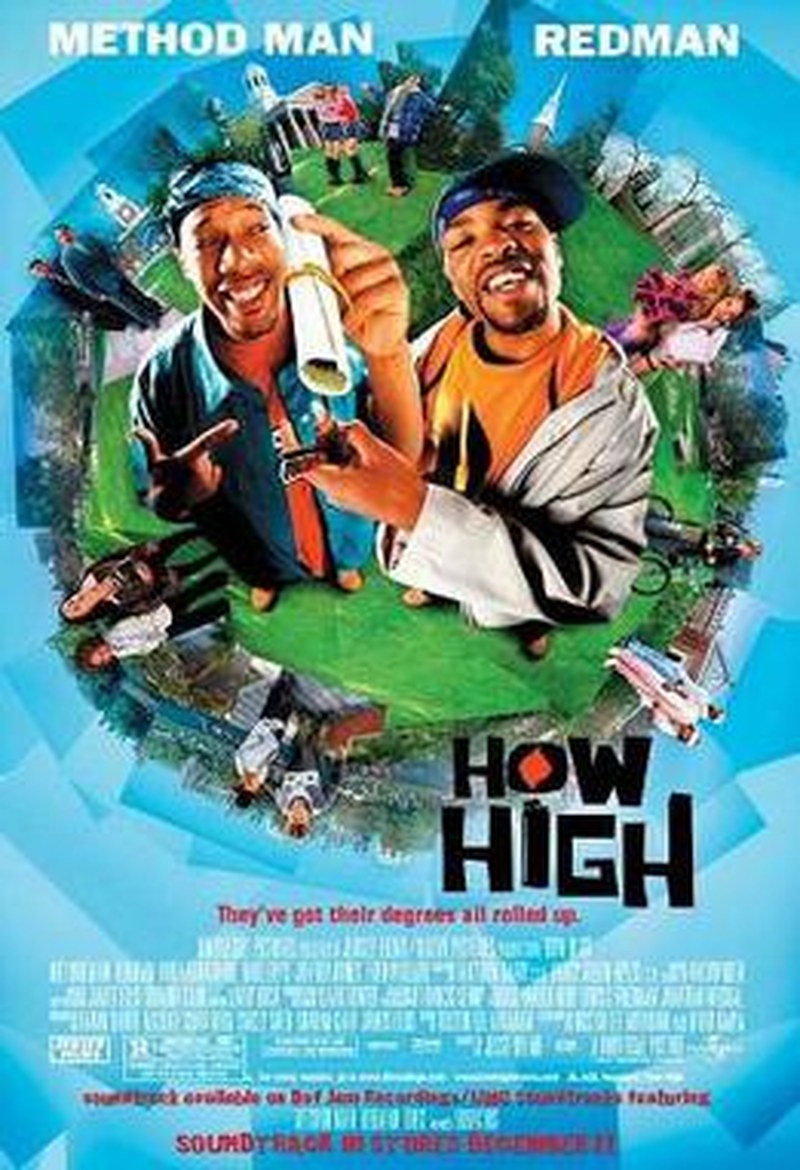
How High is the 2001 Jesse Dylan film that put Method Man and Redman in Harvard and gave the cannabis-comedy canon its most direct hip-hop crossover. The two Wu-Tang and Def Squad rappers play Silas and Jamal, two Brooklyn cannabis-and-music heads who score perfectly on the THC entrance exam after consuming a magical cannabis strain that lets them communicate with the ghosts of dead historical figures. The plot, such as it is, follows them through a year at Harvard as they navigate the Ivy League social hierarchy. Rotten Tomatoes audiences score the film at 64 percent.
It is the genre’s hip-hop crossover proof of concept.
Method Man and Redman had been performing as a duo for the better part of the prior decade by 2001, and the on-screen chemistry between them reads as the actual recording-studio chemistry that produced their Blackout! album in 1999. The film functions as a cinematic extension of that musical partnership, with the cannabis content treated as a baseline assumption rather than as an event. Complex’s 20th-anniversary feature on the film argued that How High opened a lane for hip-hop-led cannabis cinema that the industry has only intermittently used since.
The supporting cast pulls from the hip-hop adjacent comedy circuit. Obba Babatunde, Mike Epps, Anna Maria Horsford, and Hector Elizondo round out a cast that took the material with the right mix of straight-played gravitas and comedic register. The historical-figure ghost subplot, in which Silas and Jamal commune with Benjamin Franklin and other Harvard alumni, gave the film a structural premise that sustained the second-act humor longer than most premise-driven comedies of the period managed.
Watch How High as the proof of concept for hip-hop-led cannabis cinema, the Method Man and Redman screen partnership at its peak, and the rare 2000s cannabis comedy that placed Black leading men at the center of an Ivy League institutional comedy. The 2019 streaming sequel did not match the original’s energy, but the original holds the slot.
#8Harold and Kumar Go to White Castle. A Franchise Built on One Hunger.
 |
|
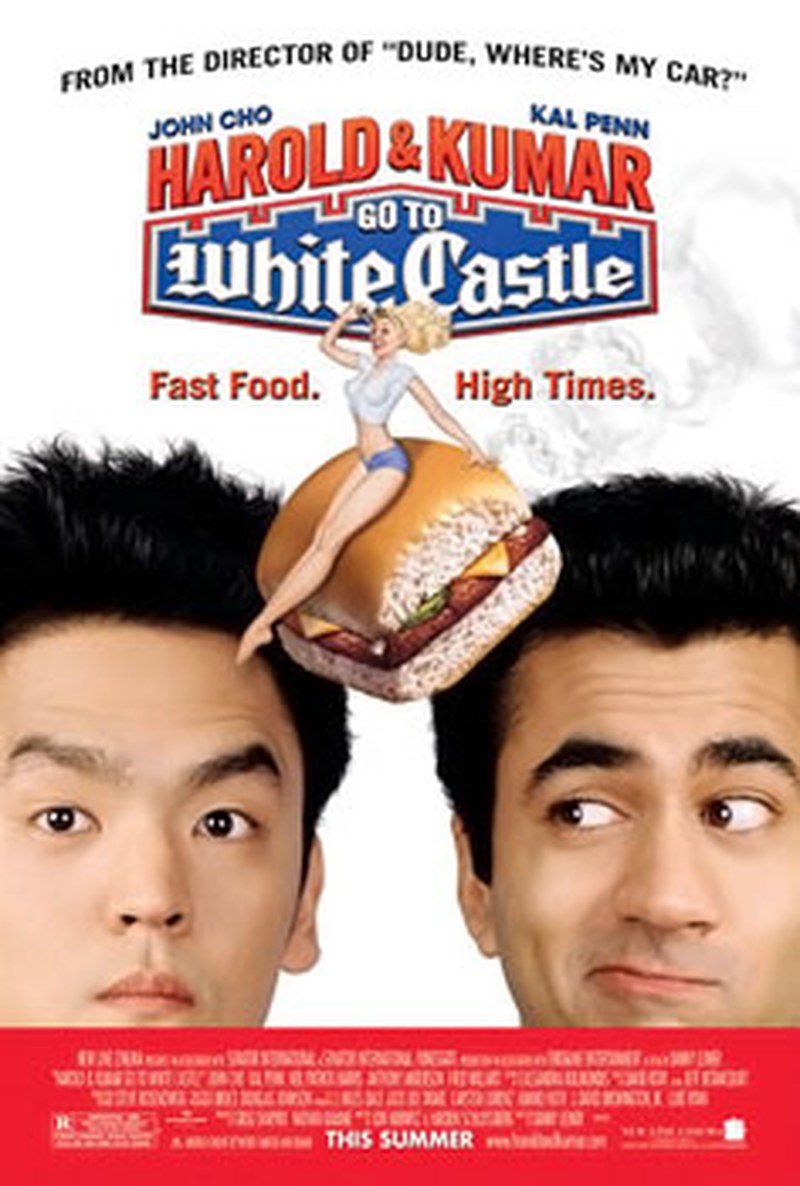
Harold and Kumar Go to White Castle is the 2004 Danny Leiner film that built a multi-decade three-film franchise on the strength of a single premise: two stoned New Jersey roommates decide to drive to a White Castle in the middle of the night to satisfy a craving, and the universe systematically conspires to prevent them from getting there. John Cho plays Harold Lee, an investment banker, and Kal Penn plays Kumar Patel, a medical-school applicant. The film’s structural debt to Cheech and Chong is direct, and the road-trip framework gives the screenplay room to drop in a series of escalating set pieces involving a Neil Patrick Harris cameo, a NJ State Police chase, and a cheetah ride. Rotten Tomatoes audiences score the film at 75 percent.
The Neil Patrick Harris cameo is the film’s structural high point.
Harris, then four years past his Doogie Howser, M.D. run and three years before his How I Met Your Mother star turn, plays a fictionalized version of himself who is high on ecstasy, hitchhiking through suburban New Jersey, and entirely committed to the bit. The cameo functions as a discrete short film inside the feature, and Harris’s willingness to torch his own family-friendly public persona is the structural choice that gave the film its most-quoted sequence. GQ’s oral history of the cameo tracks how the role helped Harris launch the public-persona reinvention that defined his next decade.
The film’s casting of Cho and Penn as Asian-American leading men in a 2004 American studio comedy was a meaningful structural choice that the industry had previously been unwilling to make. Cho and Penn carried the franchise across two sequels, both of which retained the original’s pacing and energy more cleanly than most stoner-comedy franchises manage. The 2008 Escape from Guantanamo Bay entry, in particular, took the original’s road-trip framework and built a sharper political-comedy spine onto it.
Watch Harold and Kumar Go to White Castle for the Neil Patrick Harris cameo, the cheetah ride, the casting precedent, and the genuine screen chemistry between Cho and Penn that the franchise was built on. The film deserves its slot for opening a casting lane the genre had previously been blind to.
#7Dazed and Confused. One Texas Night, Perfect Pitch.
 |
|
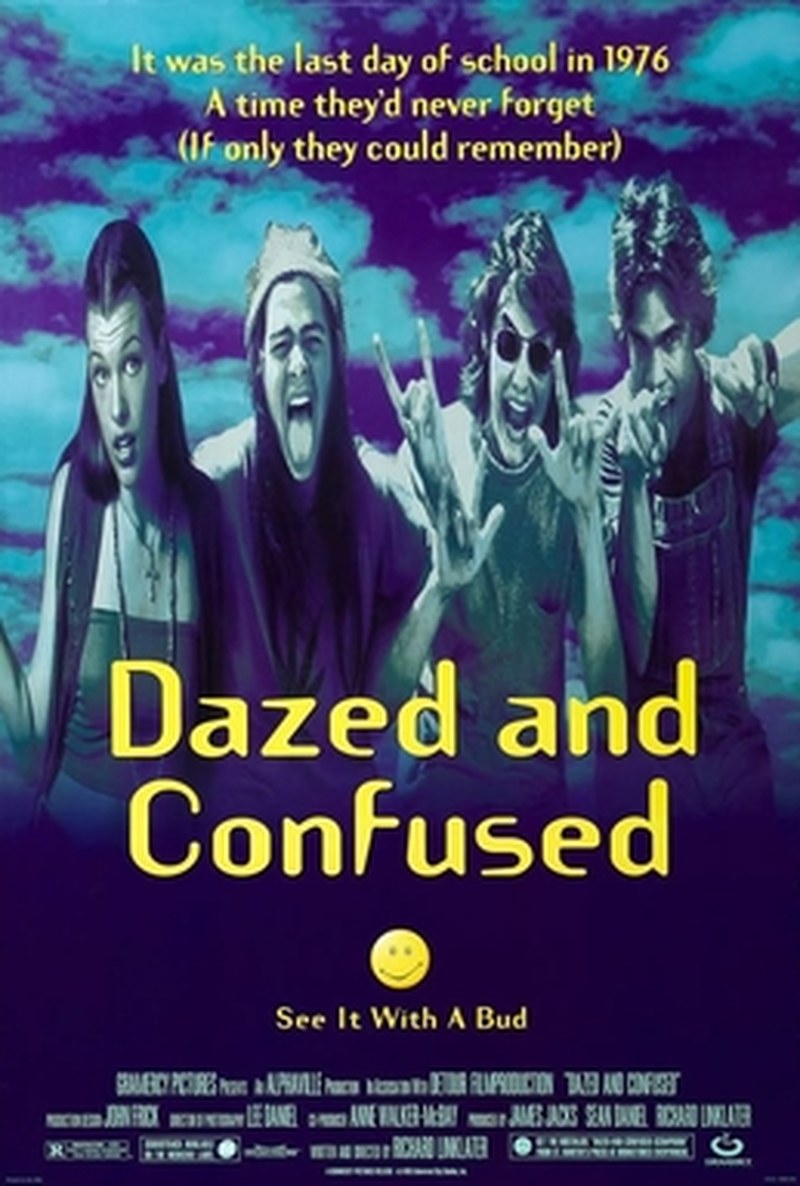
Dazed and Confused is the 1993 Richard Linklater hangout film that captured a single Texas night in May 1976 with the kind of perfect tonal pitch that made the film one of the most-quoted ensemble works in 1990s American cinema. The film tracks roughly twenty teenagers in Austin, Texas across the last day of the school year and the long evening that follows, with the cannabis content embedded into the social fabric rather than treated as plot. Linklater wrote the screenplay drawing on his own teenage years in Huntsville, Texas, and the casting pulled from across the early-1990s Los Angeles indie-comedy circuit. Rotten Tomatoes audience scores sit at 92 percent.
“It would be a lot cooler if you did,” Wooderson tells anybody who will listen. Matthew McConaughey’s first major role gave the genre its most-quoted single line.
McConaughey was 23 years old at the time of filming and had been working a substitute-teaching gig in Houston when his agent submitted him for the role. Linklater cast him after a single audition. Wooderson, a 25-year-old who still hangs out with high schoolers and works at the local auto shop, became the structural model for an entire archetype of cannabis-coded American film character. The Criterion Collection essay on the film tracks how Linklater’s casting work in 1993 launched McConaughey, Ben Affleck, Parker Posey, Milla Jovovich, Adam Goldberg, and Joey Lauren Adams into the next decade of American film.
The hangout-film structural choice is the film’s actual argument. There is no plot in the conventional sense. The screenplay tracks roughly six discrete teenage social groups across one evening, and the audience is asked to follow each subgroup’s small-stakes social drama as the night unfolds. The cannabis content is woven into the social fabric of the film: the cars are always driving, the joints are always being passed, and the screenplay treats both as background atmosphere rather than as plot points.
Watch Dazed and Confused for the McConaughey breakout, the Linklater hangout-film template, the perfect 1976 Texas-night atmosphere, and the proof that a stoner-coded ensemble film can hold up across thirty years without aging into camp. The film is the high-water mark for the structural-genre hangout-comedy template, and the canon would be incomplete without it.
#6Up in Smoke. The Genre, Invented From Scratch.
 |
|
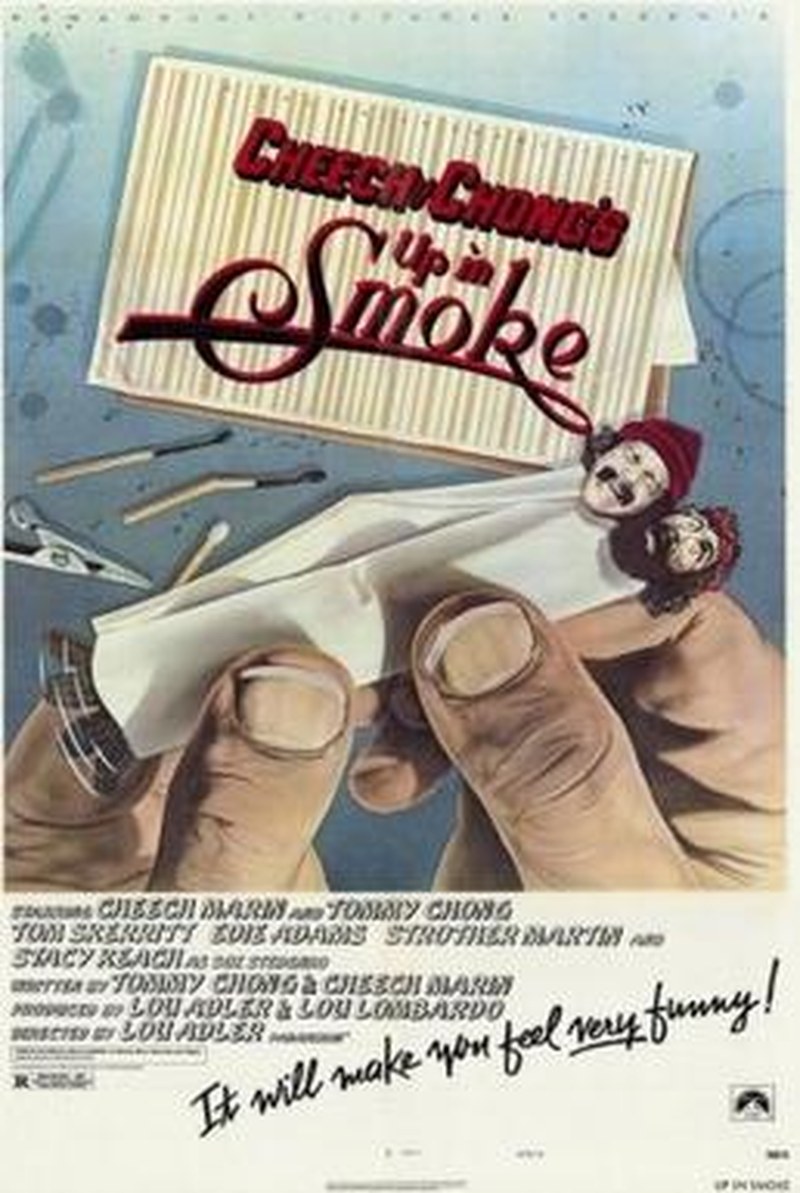
Up in Smoke is the 1978 Lou Adler film that invented the modern stoner-movie genre from scratch, established the Cheech Marin and Tommy Chong on-screen partnership as the genre’s foundational pairing, and grossed over 44 million dollars on a 2 million dollar budget at theatrical release. The film follows Pedro and Man, two Los Angeles cannabis-and-music heads who accidentally drive a van made entirely of marijuana from Tijuana to Los Angeles while being pursued by an incompetent DEA agent played by Stacy Keach. The film’s structural template, two cannabis-friendly best friends on a road trip toward a music-scene endpoint, became the dominant frame for the next forty-five years of cannabis comedy. Rotten Tomatoes audience scores sit at 81 percent.
Without it, none of the rest of this list exists.
“We just played ourselves,” Cheech Marin told Rolling Stone in a 40th-anniversary retrospective on the film. The improvised dialogue, the loose plotting, the stretches where Cheech and Chong essentially perform their stand-up act inside a feature-length frame, all of those choices became the structural DNA of the genre. The film treated cannabis use as the baseline assumption rather than as an event requiring explanation, and that single decision is the structural innovation that the rest of the genre inherited.
The cast also includes Edie Adams, Strother Martin, Tom Skerritt, and a young Stacy Keach as the antagonist DEA agent. The film’s central van-made-of-marijuana premise is one of the most absurd structural conceits in 1970s American comedy, and the screenplay commits to the bit with the kind of unhurried confidence that pulled the audience along. The Battle of the Bands climactic sequence, in which Pedro and Man inadvertently win a Los Angeles punk-rock contest while still high from the marijuana van, is the film’s structural high point and the moment that crystallized the cannabis-comedy template.
Watch Up in Smoke as the foundational text of the modern cannabis-comedy genre, the Cheech and Chong screen partnership at its earliest peak, and the proof that an unhurried, cannabis-friendly road-trip structure could carry a feature-length comedy to a 22-times-budget return. Every film above this slot owes a structural debt to this one. The genre starts here.
#5Fast Times at Ridgemont High. Spicoli Defines the Archetype.
 |
|
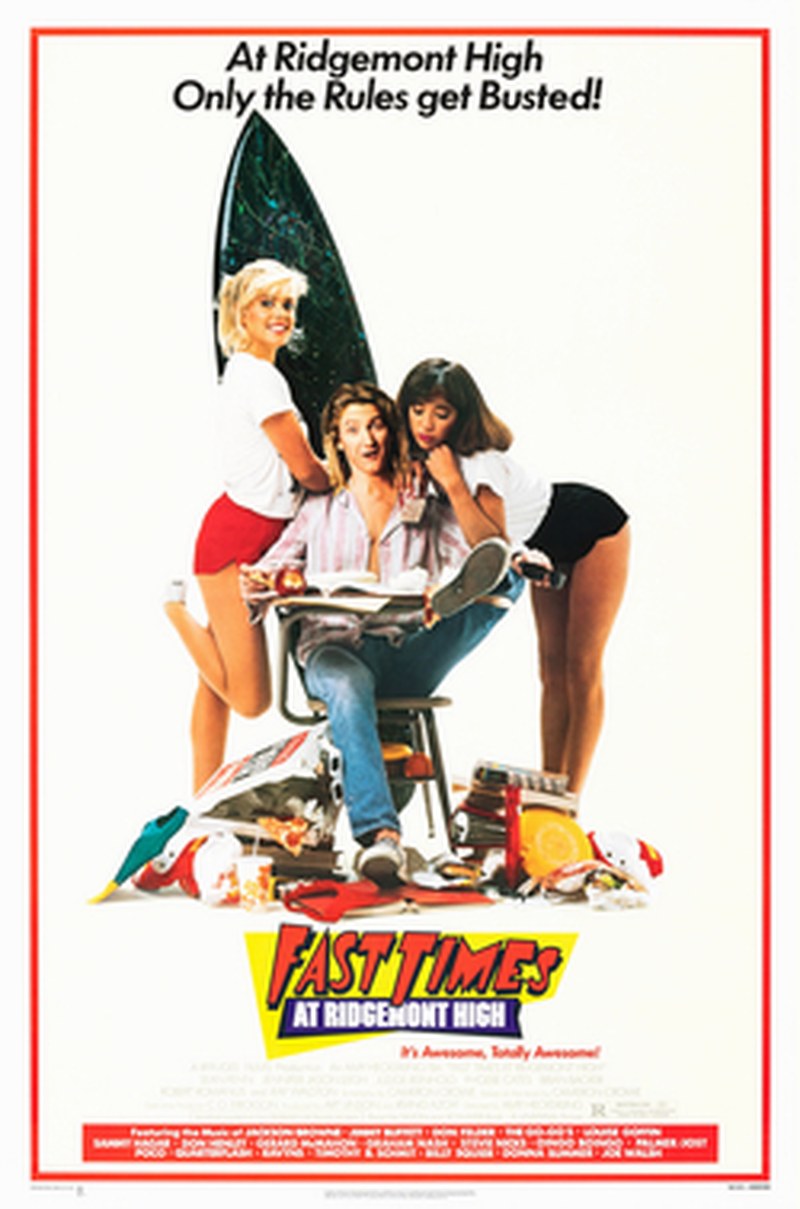
Fast Times at Ridgemont High is the 1982 Amy Heckerling film, written by Cameron Crowe based on his own undercover year as a 22-year-old reporter embedded in a San Diego high school, that gave the cannabis-comedy canon its definitive teenage stoner character in Sean Penn’s Jeff Spicoli. Penn was 21 years old at the time of filming and had been working as a stage actor in Los Angeles. The Spicoli performance, a fully-committed depiction of a perpetually-high Southern California surfer whose primary academic goal is to remain enrolled long enough to keep surfing, became the structural template for cannabis-coded teenage characters across the next four decades of American film. Rotten Tomatoes audiences score the film at 80 percent.
Spicoli is the genre’s foundational teenage character.
Penn reportedly stayed in character for the entire shoot, refused to break the Spicoli accent on set, and asked the crew to address him as Spicoli rather than as Sean. The performance was a kind of early proof of concept for the method-acting commitment that Penn would later become known for, and the structural decision to play the character as a fully-realized human rather than as a caricature is what gave Spicoli his durability. GQ’s deep-dive on the Spicoli performance tracked how Penn approached the role with the same intensity he would later bring to Mystic River and Milk.
The supporting cast pulled from the next generation of American film. Jennifer Jason Leigh, Judge Reinhold, Phoebe Cates, Forest Whitaker, Eric Stoltz, Anthony Edwards, Nicolas Cage in his uncredited screen debut, and Ray Walston as the Spicoli-tormented history teacher Mr. Hand all appear in supporting roles. Heckerling and Crowe built a deeper ensemble structure around the Penn performance than most coming-of-age films of the period managed, and the cannabis content sat alongside the broader teenage-social-drama fabric rather than dominating it.
Watch Fast Times for the Penn performance, the Crowe screenplay, the Heckerling direction, and the structural proof that a cannabis-coded teenage character could carry a film without becoming the entire film. Spicoli is the structural template. Every cannabis-coded teenager since 1982 in American film owes him a debt.
#4Half Baked. The Talking-Horse Generational Touchstone.
 |
|
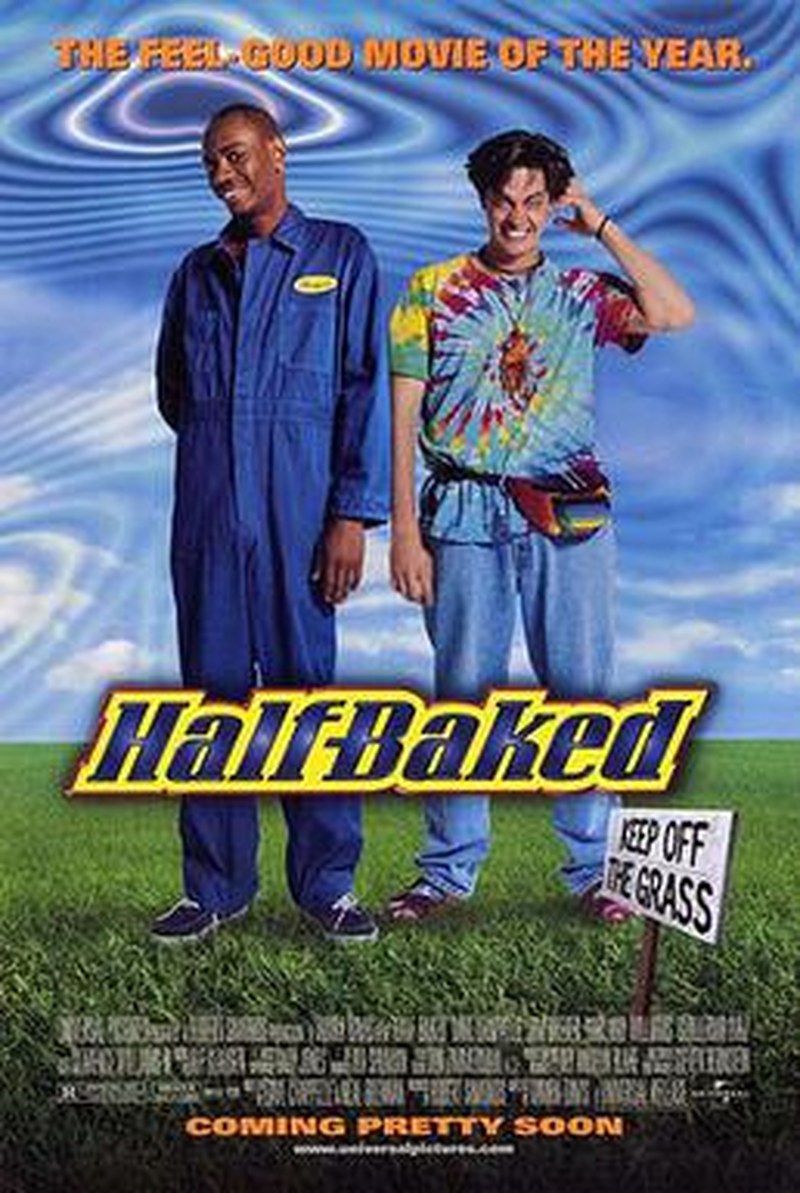
Half Baked is the 1998 Tamra Davis film, co-written by Dave Chappelle and Neal Brennan and starring Chappelle, Jim Breuer, Harland Williams, and Guillermo Diaz, that pulled the cannabis-comedy genre into the late-1990s and built a generational touchstone out of the central premise that one of the four roommates’ diabetic horse needs medical-grade marijuana. The film grossed only 17 million dollars on a 8 million dollar budget at theatrical release, then spent the next twenty-five years quietly becoming the most-rewatched cannabis-comedy of its decade. Rotten Tomatoes audience scores sit at 80 percent against a critics’ aggregate that has historically sat in the 30s.
The audience-critic gap is the cult-comedy receipt, again.
The talking-horse bit, in which Chappelle’s character has a conversation with a sentient horse named Buddy in an extended dream sequence, is one of the four or five most-quoted single sequences in 1990s American comedy. The casting also pulled from across the late-1990s comedy ecosystem with cameos from Jon Stewart, Snoop Dogg, Willie Nelson, Janeane Garofalo, Tommy Chong, Stephen Baldwin, and Steven Wright, each appearing in a single-scene “type of smoker” vignette that Chappelle wrote as a structural device to comment on the broader cannabis-user typology of the era. The Ringer’s 20th-anniversary feature on the film tracked how those single-scene cameos became the most-quoted parts of the film for a generation of viewers.
Chappelle has given mixed retrospective interviews about the film, including a frequently-repeated assertion that Universal pushed for a more commercial cut than he and Brennan wanted to deliver. The director’s-cut version of the film, released on home video in 2008, restored several scenes that had been removed for the theatrical release and gave the film a slightly different rhythm in the second act. Both cuts have their defenders. The cannabis content, the cameos, and the talking-horse bit are intact in both versions.
Watch Half Baked for the cameos, the Chappelle and Breuer chemistry, the talking-horse bit, and the proof that a critically panned 1998 release could become the most-rewatched cannabis comedy of its generation through pure word-of-mouth credibility. The film is the late-1990s structural pivot point for the genre, and the slot is locked in.
#3Friday. One South-Central Porch, One Universe.
 |
|
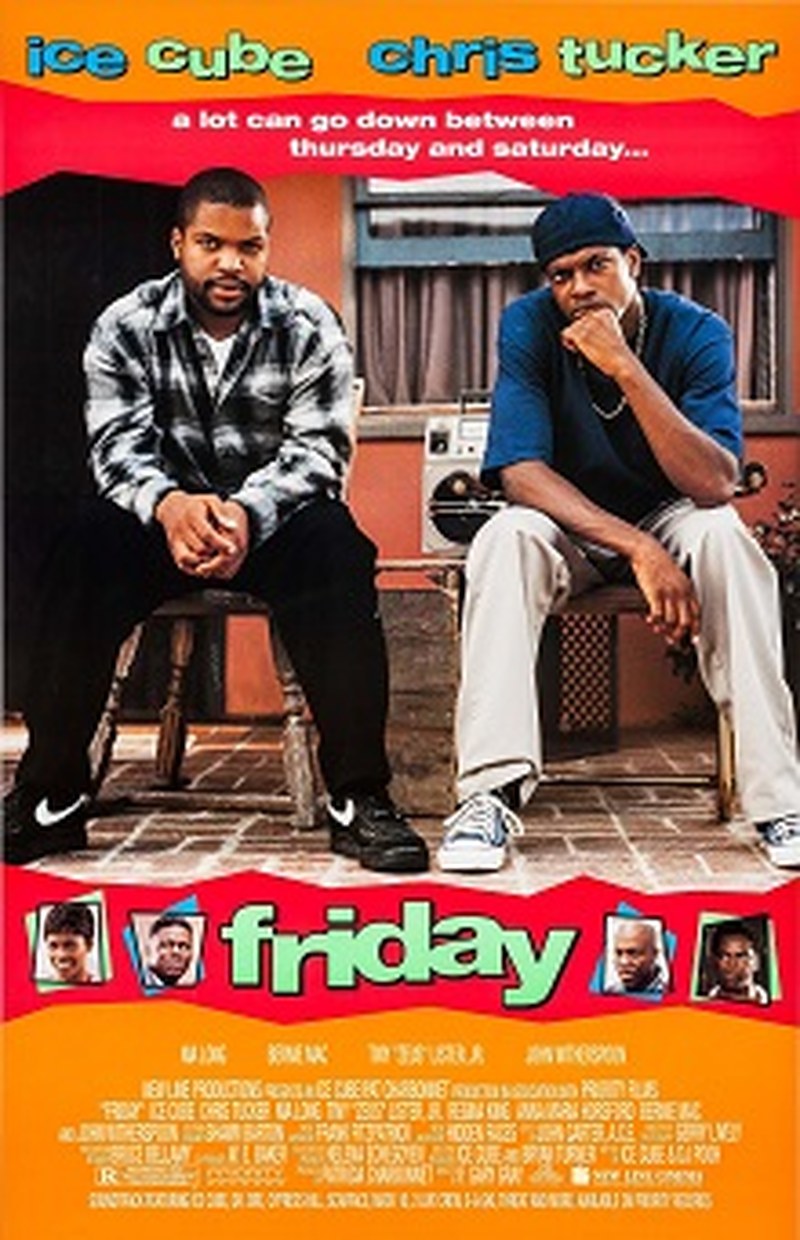
Friday is the 1995 F. Gary Gray film, co-written by Ice Cube and DJ Pooh and starring Ice Cube and Chris Tucker, that built an entire cinematic universe out of a single South Central Los Angeles porch and gave the cannabis-comedy genre its most-quoted Black-led ensemble. The film follows Craig Jones, played by Cube, across one Friday in his neighborhood, with the central plot involving a 200 dollar drug debt that Tucker’s Smokey character has incurred and the escalating consequences of that debt across the long afternoon and evening. Rotten Tomatoes audiences score the film at 89 percent.
The porch is the cinematic universe.
Tucker was 23 years old at the time of filming and had been working the Los Angeles stand-up circuit for the prior three years. The Smokey performance is the Tucker breakout, the role that launched his next decade of leading work in the Rush Hour franchise and the rest of the late-1990s comedy run. Cube, who had been writing and recording solo material since the Niggaz Wit Attitudes split in 1989, used Friday as the proof of concept for his transition from rapper to writer-actor-producer. Complex’s anniversary feature on the film argues that Friday is the most-quoted single Black-led comedy of the 1990s.
The supporting cast pulls from across the West Coast hip-hop and comedy ecosystems. Bernie Mac, John Witherspoon, Tiny Lister Jr., Nia Long, Anna Maria Horsford, and Faizon Love all appear in supporting roles that have aged into permanent cultural touchstones. The “Bye, Felicia” line, delivered by Cube to a side character in the third act, became one of the most durable catch-phrases of the next twenty-five years of internet culture. The two sequels, Next Friday in 2000 and Friday After Next in 2002, retained Cube but lost Tucker, and neither matched the original’s chemistry.
Watch Friday for the Tucker breakout, the porch-as-cinematic-universe structural choice, the Cube screenplay, the supporting cast, and the proof that an unhurried day-in-the-neighborhood frame can carry a feature comedy. The film deserves its slot for inventing a structural template that the next thirty years of urban comedy have been mining.
#2Pineapple Express. The Action-Comedy Hybrid That Worked.
 |
|
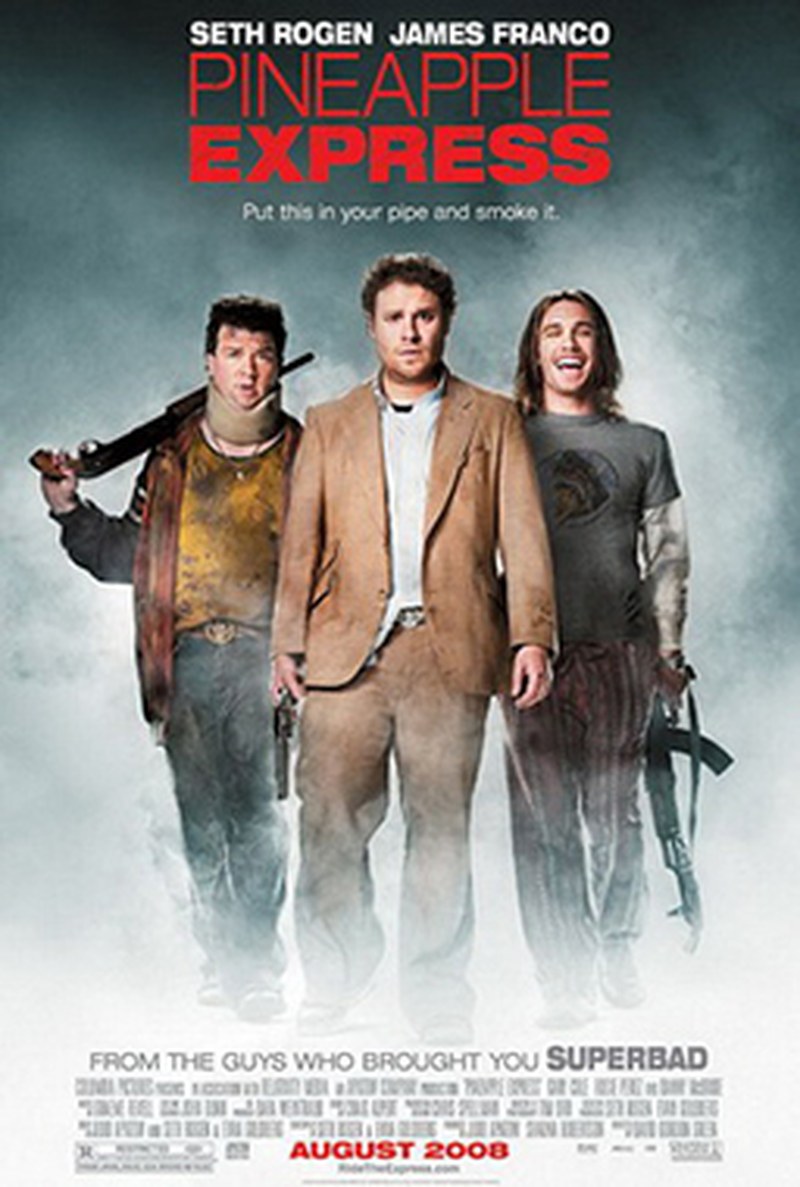
Pineapple Express is the 2008 David Gordon Green film, written by Seth Rogen and Evan Goldberg and starring Rogen and James Franco, that successfully merged the stoner-comedy and the action-thriller genres for the first time in mainstream American studio cinema. Rogen plays Dale Denton, a process server who witnesses a murder while delivering a subpoena and accidentally drops his Pineapple Express marijuana joint at the scene, leaving forensic evidence that links him to his weed dealer Saul Silver, played by Franco. The plot escalates from comedy to genuine action-thriller across the back half of the film, with the cannabis content remaining the structural through-line. Rotten Tomatoes audiences score the film at 71 percent.
It is the action-comedy hybrid the genre had been waiting for.
“We wanted to make a stoner movie that was also genuinely a thriller,” Rogen told GQ in an oral history of the film. “Most stoner movies bail on the plot in the second act. We wanted to lean into it.” That structural commitment is what separates Pineapple Express from the prior decade of cannabis-comedy releases. The film treats the action sequences with genuine craft, the chase scenes are choreographed with real intent, and the third-act shootout in the Asian-cartel growhouse is the most-realized action sequence in any film on this list. Director David Gordon Green, then primarily known for indie dramas like George Washington and All the Real Girls, brought a serious-cinema directorial sensibility to material that easily could have read as pure pastiche.
Franco’s Saul Silver performance is the film’s structural high point. Franco played Saul as a fundamentally generous, fundamentally lonely cannabis dealer whose entire emotional architecture is built around his hope that his customers might also be his friends. The performance reads as warm rather than wacky, and the emotional weight Franco gave the character is what carries the film’s middle-act bromance subplot. The film grossed 102 million dollars worldwide on a 27 million dollar budget. The Pineapple Express strain itself was a minor cannabis-industry phenomenon for the next several years, with multiple legal-market cultivators releasing their own Pineapple Express phenotypes in the wake of the film.
Watch Pineapple Express for the Franco performance, the Rogen and Goldberg screenplay, the Green direction, and the structural proof that the stoner-action-comedy hybrid was both possible and commercially viable. The film deserves the second-place slot for executing a structural innovation that no prior cannabis comedy had managed.
#1The Big Lebowski. Still The Movie, Twenty-Eight Years On.
 |
|
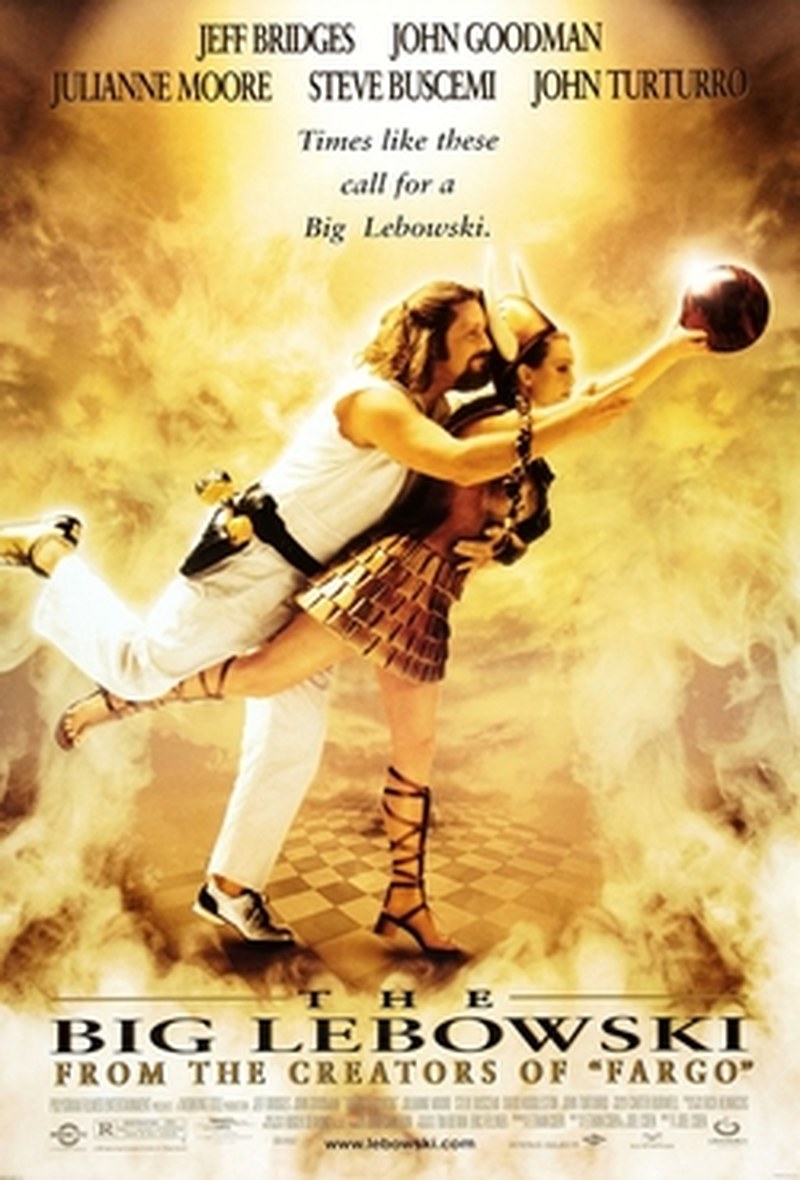
The Big Lebowski is the 1998 Joel and Ethan Coen film, starring Jeff Bridges as the Dude, that sits at the top of the stoner-movie canon and has stayed there for the better part of three decades. The film follows the Dude, an unemployed Los Angeles cannabis-and-bowling enthusiast whose home is invaded by mistaken-identity thugs in the opening act, through a Raymond Chandler-style mistaken-identity kidnapping plot that the Dude himself is structurally incapable of solving but emotionally invested in resolving. The film’s commitment to treating the cannabis-coded protagonist with full literary seriousness is the structural choice that elevated it above every other cannabis comedy ever made. Rotten Tomatoes audience scores sit at 94 percent.
Watch it sober. It still works.
Bridges’ performance as the Dude is one of the three or four most-influential cannabis-character performances in screen history, and the relaxed, drifting cadence Bridges brought to the role has been imitated, paid homage to, and outright copied by an entire generation of subsequent cannabis-comedy productions. John Goodman’s Walter Sobchak is the perfect counterweight, an angry Vietnam veteran whose intensity makes the Dude’s calm look more pronounced by contrast. Julianne Moore, Steve Buscemi, John Turturro, Philip Seymour Hoffman, and Sam Elliott round out a supporting cast in which every member contributed at least one independently iconic moment. The New Yorker’s 20th-anniversary essay on the film covers the slow critical reappraisal in detail.
The Coen brothers wrote the script in the mid-1990s, drawing on Raymond Chandler’s The Big Sleep for the kidnapping-plot scaffolding and on the actual Los Angeles cannabis-and-bowling subculture they had observed during their early time in the city. The Dude character was based loosely on a real Vietnam veteran and political activist named Jeff Dowd, whom the Coens had known during their years on the New York and Los Angeles independent-film circuit. The film’s commitment to treating cannabis use as the protagonist’s natural state, neither celebrated nor pathologized, is the structural choice that elevated it above every other cannabis comedy of the 1990s.
The Big Lebowski earns the top slot because no other cannabis comedy has matched its combination of ensemble depth, dialogue craftsmanship, plot ambition, and cultural staying power across the 28 years since its release. The film is the answer to the question of what the genre is capable of when written with full literary intention and produced with the kind of casting and craftsmanship that the Coen brothers brought to their late-90s peak. For the deepest possible dive into the film’s cannabis-pairing setup, see the dedicated companion piece on the Big Lebowski cannabis pairing.
How to host a stoner movie night that actually works
A stoner movie night runs on three things: the right film, the right strain, and the right snacks. Pick the film first. The hierarchy on this list is a starting point, not a prescription, and the right pick depends on the energy of the room. The Big Lebowski rewards focused attention, and a sleepy room is going to miss the dialogue. Friday works for a hangout crowd that wants to talk during the film. Pineapple Express handles a mixed group with members who want action and members who want comedy. Reefer Madness is for the ironic late-night second feature.
Match the strain to the runtime and the comedy density. A 90-minute heavy-comedy film like Don’t Be a Menace can take a punchy sativa, loud and citrus-forward, the kind that keeps the room awake. A two-hour cerebral-puzzle film like Inherent Vice rewards a balanced hybrid that does not pull attention away from the plot. Heavy indicas, gassy and sedative, pair best with films you have already seen multiple times because the recall load is lower. The strain pairings on the cards above are starting points, not prescriptions, and tolerance varies by viewer.
Snacks matter more than most movie-night hosts admit. The classic stoner-canon move is the homemade route: cannabis chocolate chip cookies for the film that runs longer than 100 minutes, and a tray of straight-edge munchies for the cross-faded section of the room. For a thematic build-out around a single film, the Pineapple Express movie night menu handles the food side of the lineup. The right snack lineup, drawn from your favorite cannabis cooking shows, turns a movie night into an event, and an event is what gets repeated.
For the broader cannabis-culture context that informs this list, see the companion pieces on the best stoner comedians and the best stoner sitcoms and TV shows. For the cultural geography that produced so many of the films on this list, see the Amsterdam coffee shops piece and the deep-dive on The Church of Cannabis.
Ted slid Half Baked across the dorm floor at 1 a.m. because he understood that the canon arrives one screening at a time, usually from a friend, usually after midnight. Twenty-five films later, the order on the list above is the version of that delivery I would hand back to him. Hand it forward to the next freshman.
Press play.