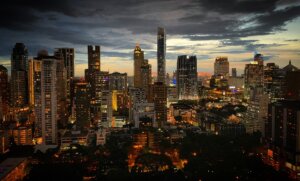
Bangkok spent three years as the most talked-about cannabis city in Asia, and that era has ended. Cannabis in Thailand is now restricted to medical use, and the UK Foreign Office tells travellers plainly that you must not buy, possess or use it without a Thai-issued medical prescription, which is capped at a 30-day supply, and that recreational use remains illegal. Green neon still glows along Sukhumvit and shops are still open, and the distance between what a visitor sees and what the law permits is where people get arrested, fined, or put on a watchlist. The rules have moved more than once in four years, and they are still moving.
Is cannabis legal in Bangkok right now?
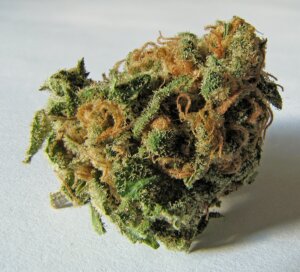
Bangkok follows national law, so the capital is not a special case. Cannabis flower is classified as a controlled herb under the Ministry of Public Health’s Notification on Controlled Herbs (Cannabis) 2025, and sales to the general public are permitted only to someone holding a prescription issued by a qualified practitioner such as a physician, pharmacist, dentist, Thai traditional medical practitioner or folk healer. That prescription may cover no more than 30 days.
The plant itself is not currently classified as a narcotic. Cannabis was delisted from Category 5 of Thailand’s narcotics schedule on 9 June 2022, and all parts of the plant came off that list with one carve-out: extracts containing more than 0.2% THC by weight remain classified as narcotics. So the accurate description of Bangkok in 2026 is narrow and specific. Cannabis is not a narcotic, it is not recreationally legal, and it is available to the public only through a medical prescription.
How Thailand went from open dispensaries to prescription-only
Thailand became the first country in Asia to decriminalise cannabis in 2022, in a move led by then-Health Minister Anutin Charnvirakul. The industry grew at extraordinary speed, thousands of dispensaries opened nationwide, and the change drew a wave of cannabis tourists, many from neighbouring countries with severe drug laws. Public backlash followed, focused on allegations that under-regulation had made the drug available to children and fuelled addiction.
The rollback came in stages. In June 2025 Health Minister Somsak Thepsutin signed an order, effective on publication in the Royal Gazette, that banned shops from selling cannabis to customers without a prescription and reclassified cannabis buds as a controlled herb. Sellers who breach it face a maximum one-year jail term and a 20,000-baht fine, and licensed shops must source only from certified pharmaceutical-grade farms and declare their supply sources to authorities every month.
Two further tightenings landed in 2026. A ministerial regulation published in the Royal Gazette on 26 March 2026 and effective from 26 April now limits licensed handling of cannabis and hemp extracts above 0.2% THC to four purposes only: medical use, research and analysis, industrial use, and official narcotics suppression. Then from 30 April 2026, sales of cannabis flower were restricted to three kinds of medical venue, being registered clinics and hospitals, certified herbal pharmacies, and practices run by recognised traditional practitioners. Of roughly 12,000 shops then operating, thousands face licence expiry, and by 2028 any venue selling cannabis flower must have a resident medical practitioner on site. If you want the country-level view behind the city, our breakdown of whether cannabis is legal in Thailand tracks the national picture.
The direction of travel is still tightening. In July 2026 the Department of Thai Traditional and Alternative Medicine unveiled a draft Cannabis Control Act that would confine cannabis to healthcare, traditional medicine, research and accredited wellness, impose three-year licensing across the supply chain, and ban advertising outright. That bill is a draft and not yet law. Separately, a network of doctors and academics is pressing the government to return the plant to the narcotics list altogether, citing a 6.5-fold increase in patients treated for cannabis dependence and psychosis. Anyone planning a trip should assume the position can shift again.
What the rules mean if you are a foreign visitor
The gate is a Thai-issued prescription, and that is a meaningful barrier for someone on a two-week holiday. The Office of the Narcotics Control Board has reminded retailers that buds may be sold to the public only against a prescription from an authorised medical, pharmaceutical or traditional-medicine practitioner, that the amount must be medically necessary, and that it may cover no more than 30 days of treatment. A visitor who arrives without one has no lawful route to buy cannabis flower over a counter.
Worth stating honestly rather than guessing at: the penalties Thai authorities publicise most clearly attach to sellers, processors and exporters, not to a tourist caught with a personal amount. That absence is not reassurance. Thailand has strict laws against drug use, possession and trafficking generally, possessing small quantities of illegal substances can lead to heavy fines or imprisonment, Class A offences can carry the death penalty, and the Foreign Office notes that prison conditions are harsh and detainees have died in custody. Foreigners get no special leniency, and an encounter you cannot predict the outcome of is not one to invite.
What you will actually see on the street in Bangkok
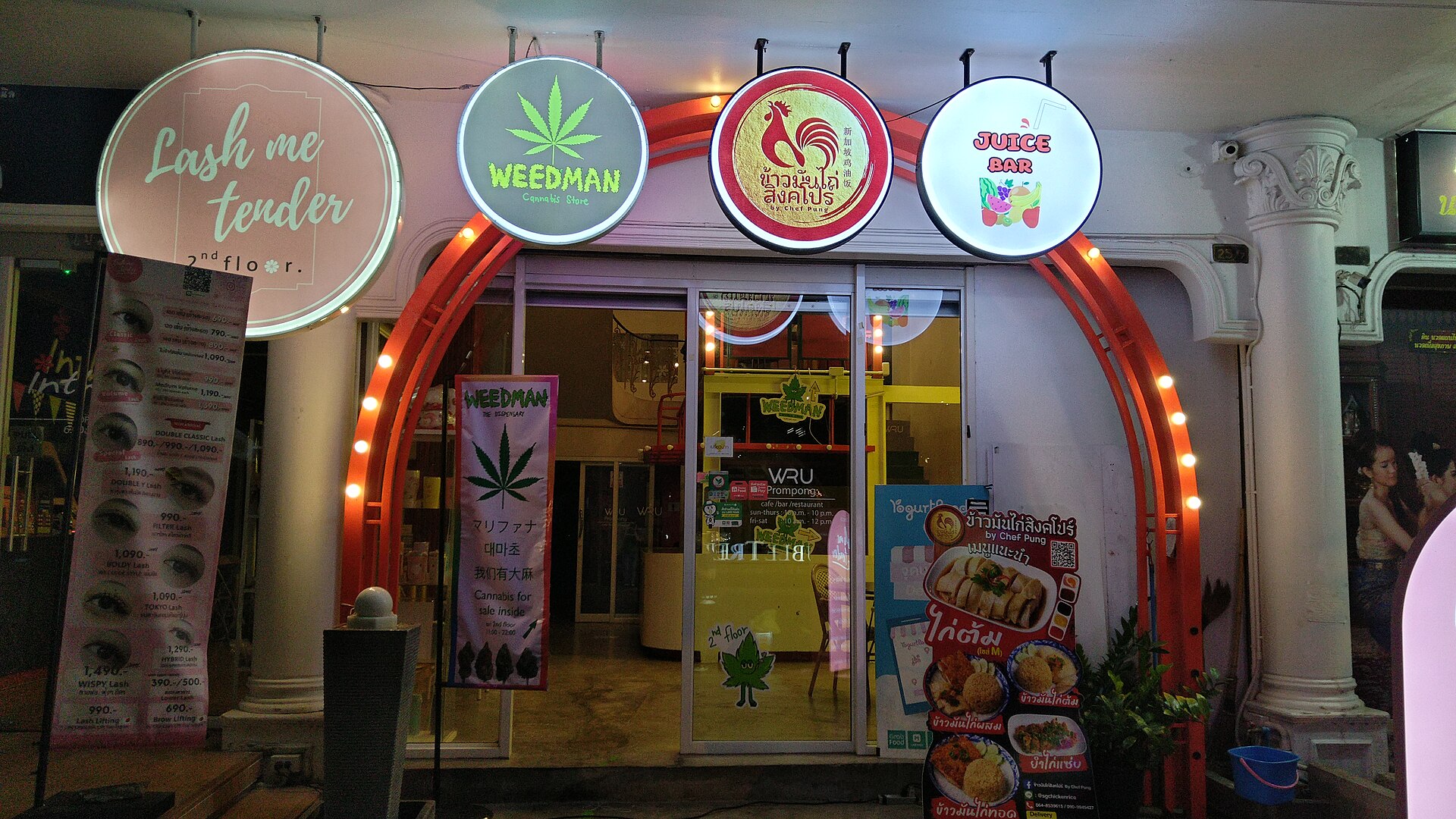
Shopfronts have not all vanished, and that is the trap. What changed is what those businesses may legally do. Selling cannabis flower for smoking on the premises is prohibited unless it forms part of treatment administered by a qualified practitioner, sales through vending machines, websites, social media and other electronic channels are banned, advertising through any commercial channel is banned, and commercial sales are forbidden at temples, dormitories, public parks, zoos and amusement parks.
Enforcement is not theoretical. In July 2026 a joint task force raided cannabis shops in Phuket over suspended licences, and the ONCB has continued issuing warnings to retailers who supply people without prescriptions. This is a different setup from the licensed coffeeshops we cover in Amsterdam, where the retail transaction itself is the thing being tolerated. In Bangkok the storefront being open tells you nothing about whether it can lawfully sell to you.
Where travellers get into trouble
Public consumption is the first one. It is illegal to smoke in public in Thailand, with a fine of up to 5,000 baht, so a joint on a street or a beach is an offence regardless of how the cannabis was obtained.
Vapes are the second, and they catch far more visitors than people expect. It is illegal to possess or use any vape, e-cigarette, pod, e-liquid or heat-not-burn device in Thailand at all. Offences can lead to confiscation, fines typically between 5,000 and 30,000 baht, detention and court proceedings, and you may be required to remain in Thailand until the case has been finalised. There are no exceptions for tourists or for personal use. A vape pen forgotten in a daypack has ended trips.
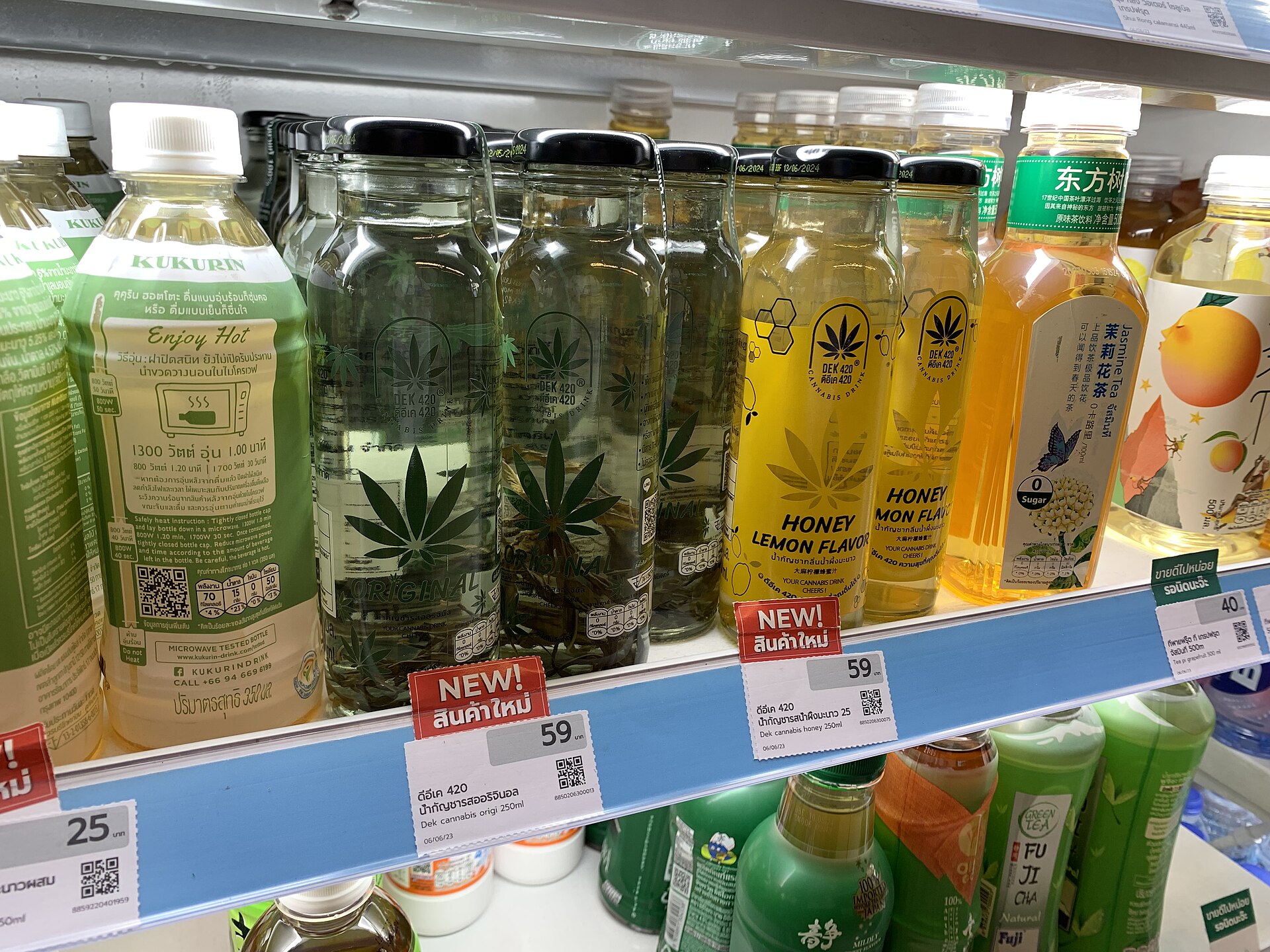
The third is buying from an unlicensed seller, an unrecorded transaction with someone who is themselves committing an offence, with no product testing and no recourse. Several of the mistakes that most often catch cannabis travellers out come down to assuming a tolerated local scene extends its tolerance to a foreign passport.
Taking cannabis out of Thailand is the one thing you must not do
Do not do this. It is the single most dangerous decision available to a visitor to Bangkok, and the one Thai authorities and foreign ministries warn about most loudly.
It is illegal to take cannabis out of Thailand without export permission from the authorities. Attempting it will result in penalties including fines starting at 30,000 baht per kilogram, and if you do not pay you will be detained or imprisoned. You will also be placed on an immigration watchlist affecting future travel to Thailand. Smuggling cannabis out without completing customs formalities, or attempting to evade inspection, is punishable under the Customs Act B.E. 2560 (2017) by up to 10 years’ imprisonment, a fine of four times the duty-inclusive value of the goods, or both.
Thai officials have been explicit that a partial easing of cannabis rules for medical purposes inside Thailand gives no one permission to carry the plant or its products abroad. The government has warned travellers not to accept packages or luggage from other people, to reject paid courier offers, and to check their own bags for anything concealed inside. Cases involving tourists have already surged: airport officials tightened inspections after smuggling attempts soared, most people found with cannabis in their luggage are foreigners, and two young British women were arrested in Georgia and Sri Lanka after flying out of Thailand. Transit does not protect you either. Many international airports scan the baggage of transiting passengers, and cannabis remains a serious criminal matter in many countries you might connect through.
CBD, extracts, and the 0.2% THC line
The dividing line in Thai law is potency, not product category. All parts of the cannabis plant sit outside the narcotics schedule, with the exception of extracts above 0.2% THC by weight, which remain Category 5 narcotics. Those controlled extracts can be produced, imported, exported, sold or possessed only under licence and only for four purposes, being medical use, research and analysis, industrial use, and official narcotics suppression, under the ministerial regulation that took effect on 26 April 2026.
For a visitor, the practical reading is that low-THC CBD products are not narcotics under Thai law. That is a statement about how a category is classified, not a guarantee about any particular bottle on any particular shelf, and it changes nothing about the border. A CBD product bought legally in Bangkok can still be illegal in the country you fly home to.
If you are going anyway
The honest harm-reduction position for Bangkok in 2026 is conservative, because the legal margin that existed in 2023 has been closed deliberately.
- Do not buy cannabis flower without a Thai prescription from an authorised practitioner. There is no lawful counter transaction without one.
- Do not smoke in public anywhere, including beaches and streets.
- Leave vapes and e-cigarettes at home entirely. Possession alone is an offence with no tourist exemption.
- Never put cannabis or anything containing it in a bag that is going to an airport, and check your luggage before you travel.
- Do not carry parcels, packages or bags for anyone else, and turn down paid courier offers.
- Treat an open shopfront as no evidence at all that a sale to you would be legal.
- Check your own government’s current travel advice shortly before you fly. This framework has been rewritten repeatedly since 2022 and a further control act is already drafted.
For a very different legal setup, compare how cannabis works for visitors in Cartagena, where possession is decriminalised but no legal retail exists at all.
Cannabis in Bangkok: FAQ
Is weed legal in Bangkok?
Not for recreational use. Cannabis in Thailand is restricted to medical purposes, and the UK Foreign Office advises that you must not buy, possess or use it without a Thai-issued medical prescription limited to a 30-day supply. The plant is not currently classified as a narcotic, but recreational use remains illegal.
Can tourists buy cannabis in Thailand?
Not without a prescription. Cannabis flower is a controlled herb, and sales to the general public are permitted only to people holding a prescription from a qualified practitioner such as a physician, pharmacist, dentist or Thai traditional medicine practitioner, covering no more than 30 days. Since 30 April 2026 those sales are also limited to registered clinics, certified herbal pharmacies and recognised traditional practitioners.
Can I take cannabis out of Thailand?
No. It is illegal to take cannabis out of Thailand without official export permission. Penalties include fines starting at 30,000 baht per kilogram, detention or imprisonment if you do not pay, and placement on an immigration watchlist. Smuggling it out can carry up to 10 years in prison under the Customs Act. Carrying it into or through another country risks arrest and long prison sentences there as well.
Is CBD legal in Thailand?
Cannabis and hemp extracts containing more than 0.2% THC by weight are classified as narcotics and require a licence. Extracts below that threshold sit outside narcotics control, so low-THC CBD products are not treated as narcotics under Thai law. That does not make them legal to carry across a border.
Can you smoke cannabis in public in Bangkok?
No. It is illegal to smoke in public in Thailand and the fine can reach 5,000 baht. Cannabis businesses are also barred from letting customers smoke flower on their premises unless it is administered as part of treatment by a qualified practitioner.