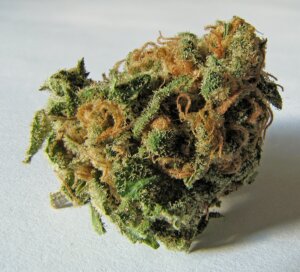
Bubba Kush is an indica-dominant strain in the OG Kush family, known for a heavy, tranquilizing body effect and a coffee-and-earth flavor profile. THC generally runs from the high teens to the low 20s depending on the grower, CBD is negligible, and the dominant terpenes are caryophyllene, myrcene, and limonene. It is one of the more consistently documented classic strains, so the facts below are pulled directly from named strain databases rather than guessed at.
What follows covers where Bubba Kush comes from, what it is reported to do, how it looks, tastes, and smells, what growing it looks like, and who tends to reach for it.
Bubba Kush Quick Facts
Leafly classifies Bubba Kush as a straight indica and lists average THC around 17%. AllBud calls it an 80/20 indica-dominant hybrid with THC ranging from 14% up to 25% depending on the batch, and grower resource ILGM lists a closer 90/10 indica-to-sativa split with THC in the 14 to 22% range. CBD is negligible across every source: Leafly lists it at 0%, ILGM at roughly 0.06 to 0.1%. The spread in both the indica percentage and the THC ceiling is normal for an older, non-patented strain that has been grown from cutting to cutting for decades without a single controlling breeder.
| Attribute | Detail |
|---|---|
| Classification | Indica-dominant hybrid, roughly 80 to 90% indica |
| THC range | Approximately 14 to 25%, depending on source and batch |
| CBD range | Negligible, under 1% |
| Dominant terpenes | Caryophyllene, myrcene, limonene |
| Common flavors | Coffee, earthy, chocolate, hash, sweet |
| Genetic lineage | OG Kush crossed with an unknown indica, rumored Northern Lights or Afghani descent |
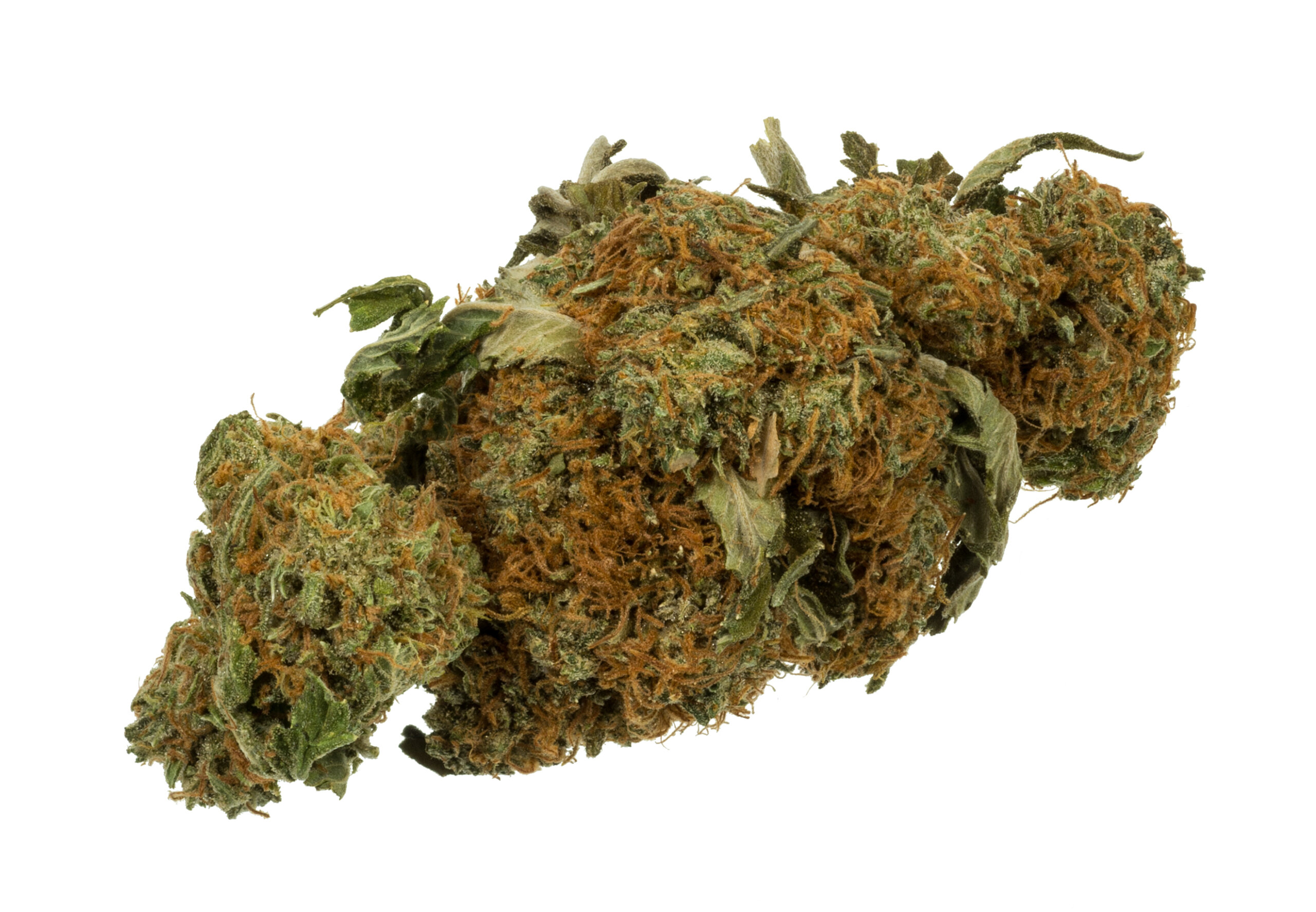 A gram of dense cannabis flower. This is a generic macro shot used for illustration, not a verified photo of Bubba Kush specifically. Photo by Evan-Amos, public domain, via Wikimedia Commons.
Genetics and Lineage
According to the breeder-sourced account on Leafly, Bubba Kush emerged just after 1996, when an OG Kush plant pollinated an unknown indica strain obtained in New Orleans. The mother plant was reportedly Northern Lights, though the strain’s exact genetics were never confirmed and the indica parent was simply known as “Bubba.” Grower resource ILGM gives a similar account, naming OG Kush crossed with a rumored Northern Lights or Afghani indica as the likely parentage. AllBud lists the parentage more simply as “unknown,” while noting it is thought to be an Afghani by OG Kush cross.
The two sources disagree on exactly where Bubba Kush took off. Leafly’s account ties its early rise to Florida, while ILGM describes it as a famed native of California. Both agree it became a foundational classic that fed into later strains, including Kush Mints and Wedding Cake, which is part of why Bubba Kush still shows up in genetics discussions for far newer hybrids.
Because no lab ever confirmed the cross, Bubba Kush is best understood as a strain with a documented origin story rather than a verified pedigree. That is common among cannabis classics from the 1990s, when seed-to-seed record keeping was informal at best. The rumored Afghani ancestor connects Bubba Kush back to the original landrace strains that gave rise to most modern indica genetics, even though Bubba Kush itself is a hybridized descendant rather than a landrace.
Effects and What Users Report
Self-reported data on Leafly, drawn from thousands of user ratings, lists the top reported effects as sleepy, relaxed, and hungry, with the most common negative effects being dry mouth, dry eyes, and dizziness. Of Leafly’s respondents, 36% say it helps with stress, 33% with pain, and 29% with insomnia. AllBud lists a similar effects profile: calming, euphoric, happy, relaxing, and uplifting, with its reviewers most often citing it for chronic pain, cramps, depression, muscle spasms, and stress.
This is self-reported, crowd-sourced information rather than clinical data, and it should be read as a general wellness signal rather than a medical claim. Both sources point in the same direction: a heavy, calming body effect paired with a happy, unfocused mental state. Because the reported experience leans sedating, most users describe it as a poor fit for tasks that need focus, and a better fit for the point in the day when nothing else is on the schedule. New or low-tolerance users should start with a small amount given the strain’s reputation for a heavy, fast-hitting body effect, and space out doses rather than redosing quickly.
Flavor, Aroma, and Terpene Profile
Leafly lists Bubba Kush’s dominant terpenes as caryophyllene, limonene, and myrcene, with top reported flavors of coffee, earthy, and pungent. ILGM‘s fuller terpene profile agrees on caryophyllene and myrcene, and adds limonene, linalool, and phellandrene, which explains the floral and slightly minty notes some growers report alongside the coffee and hash character. AllBud describes the flavor as chocolate, coffee, hash, spicy, and sweet, with an aroma profile of chocolate, coffee, earthy, hash, herbal, and spicy.
Caryophyllene is the same terpene found in black pepper, which is part of why Bubba Kush carries a faint spice note under the coffee and earth. Myrcene, the most common terpene in cannabis generally, contributes to the strain’s heavier, more sedating character, and limonene rounds out the profile with a lighter, slightly citrus edge that keeps the smell from tipping fully into pure earthiness.
Appearance and Bud Structure
AllBud describes Bubba Kush’s buds as oversized, airy, and heart-shaped, in dark olive green with long, thin, bright orange hairs and a heavy coating of white crystal trichomes. Leafly similarly notes a bulky bud structure with hues ranging from forest green to pale purple, and points to the strain’s stocky plant stature and dense bud formation as evidence of its likely Afghani ancestry.
That heavy trichome coating is consistent with the strain’s reputation as resin-rich, which is a common trait among older Kush-family indicas bred for potency rather than yield.
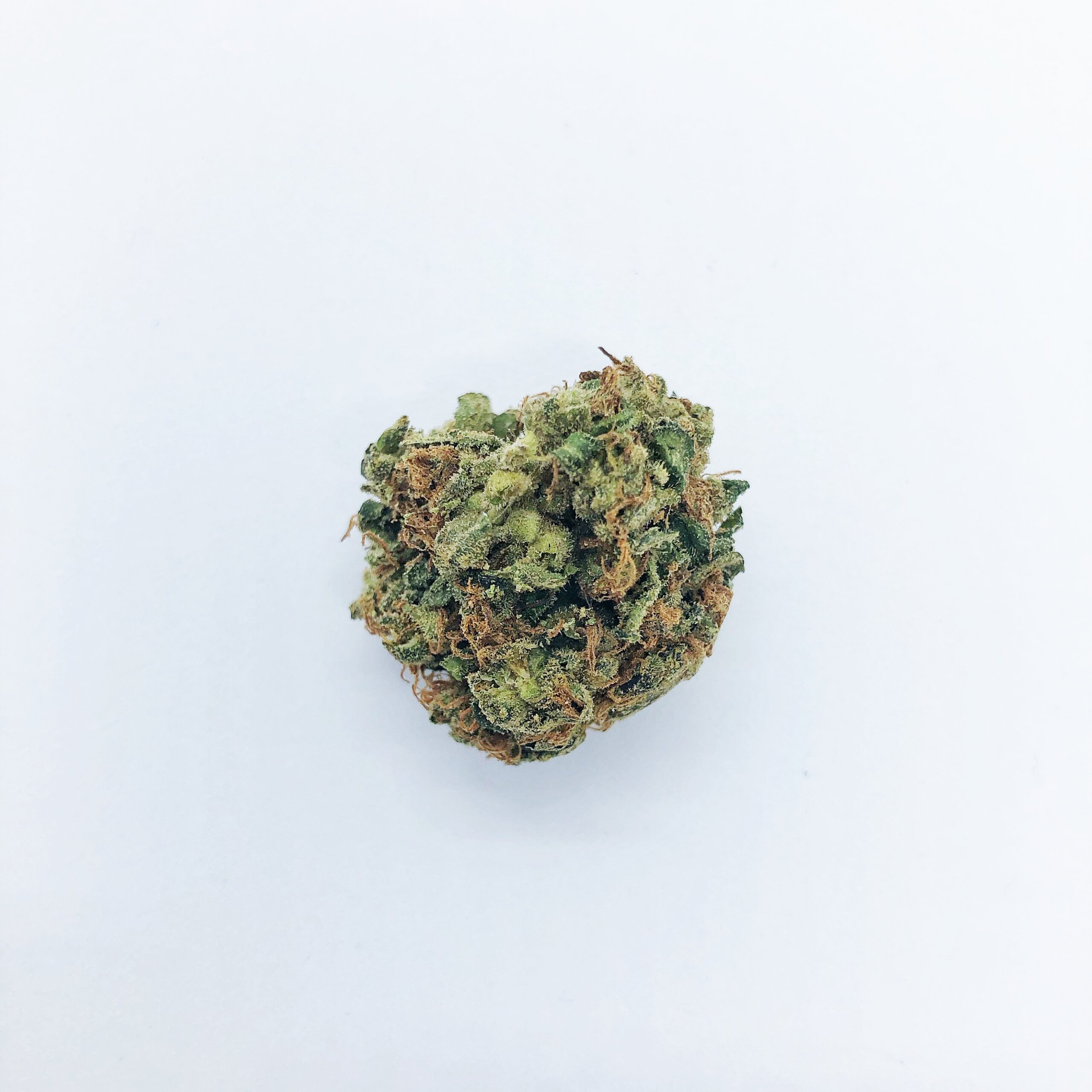 A resin-coated cannabis nug. This is a generic close-up used for illustration, not a verified photo of Bubba Kush specifically. Photo by PhillipGallantMedia, CC BY-SA 4.0, via Wikimedia Commons.
Growing Bubba Kush
Grower resource ILGM lists an indoor flowering time of 8 to 9 weeks, with outdoor plants typically finishing by the end of October. Indoor yield is listed around 15 ounces per square meter, and outdoor yield around 20 ounces per plant. Plants tend to stay short, which suits indoor grow spaces with limited vertical room, and ILGM rates the strain’s disease resistance as high. It prefers a warm climate, consistent with its OG Kush and Afghani-leaning heritage.
A short, high-resistance plant with a sub-nine-week indoor flowering window is generally considered approachable for home growers who do not have a lot of vertical space or a long growing season to work with, though these figures come from a single grower-focused source rather than a controlled study. Treat them as a general planning range rather than a guarantee, since actual yield and timing vary with lighting, training method, and growing conditions.
Who Bubba Kush Is Good For
Given its reported sleepy and relaxed top effects, Bubba Kush tends to fit an evening or nighttime slot rather than a wake-and-bake session. People weighing how to choose the right strain for their needs for winding down, easing a busy mind, or supporting general relaxation before bed are the ones most likely to reach for it, based on how Leafly and AllBud users describe the experience. It is not the strain to choose for daytime focus, energy, or productivity; sativa-leaning options are a better fit there.
As with any strain, individual response varies with tolerance, dose, and body chemistry, and none of this is medical advice. Anyone managing a diagnosed condition should talk to a healthcare provider rather than treating self-reported strain data as a substitute for medical guidance.
Similar Strains to Explore
Bubba Kush’s caryophyllene and myrcene profile puts it in the same neighborhood as other pine and pepper-leaning strains. If you want to understand why certain strains, Bubba Kush included, carry that sharp forest note, the guide on what pinene does in cannabis breaks down that specific terpene and the strains that express it. For a broader look at matching a strain’s effect profile to what you actually want out of a session, the guide on choosing the right cannabis strain is a useful next stop. And for the older genetics that strains like Bubba Kush trace back to, the piece on landrace strains covers the original varieties behind today’s hybrids.
Frequently Asked Questions
Is Bubba Kush indica or sativa?
Bubba Kush is indica-dominant. Leafly classifies it as a straight indica, while AllBud and ILGM list it as 80 to 90% indica with a small sativa component.
What are the effects of Bubba Kush?
Users most commonly report feeling sleepy, relaxed, calm, and happy, with a heavy body effect. Dry mouth and dry eyes are the most commonly reported side effects, per Leafly and AllBud user data.
What is Bubba Kush’s THC content?
It varies by source and batch. Leafly lists an average around 17%, while AllBud and ILGM both cite a broader range from roughly 14% up to the low-to-mid 20s.
What is Bubba Kush good for?
Based on self-reported user data, people most often associate it with evening relaxation, easing stress, and winding down before sleep. This reflects crowd-sourced wellness reporting, not a medical claim.
What terpenes does Bubba Kush have?
Caryophyllene, myrcene, and limonene are the most commonly cited dominant terpenes, with ILGM’s fuller profile also noting linalool and phellandrene.
Where did Bubba Kush come from?
It traces back to an OG Kush plant crossed with an unknown indica obtained in New Orleans around 1996, with Northern Lights or Afghani genetics rumored but never confirmed.
Bottom Line
Bubba Kush is a well-documented indica classic with THC generally in the high teens to low 20s, negligible CBD, and a caryophyllene, myrcene, and limonene terpene base that shows up as coffee, earth, and hash notes. Its exact genetics were never fully confirmed, but the OG Kush and rumored Northern Lights or Afghani lineage is consistent across every major strain database. It is best suited to an evening slot for anyone looking to unwind rather than get things done.