Green Dragon is a heavy indica cross bred by Master Thai from Afghani and Turkish Gummy, known for THC in the high teens, a mint-and-tar flavor, and a giggly high that settles into deep body relaxation. This page covers that plant. It is worth saying up front because the name is overloaded: “green dragon” is also a generic, informal name some home extractors use for a cannabis alcohol tincture, a technique The Cannigma describes as pulling cannabinoids out of the plant with alcohol, and it has nothing to do with this strain’s genetics. If you landed here looking for that extraction method instead of a bud, this is the wrong page. Colorado shoppers may also know Green Dragon as a Denver-area dispensary chain along the Capitol Hill, East Colfax, and I-70 corridors, which is a retailer name and not a strain either.
What follows is the strain itself: where it comes from, what it tastes like, what people report feeling, and who it tends to fit, drawn from three independent strain databases, Leafly, AllBud, and Sativa University, cited throughout below.
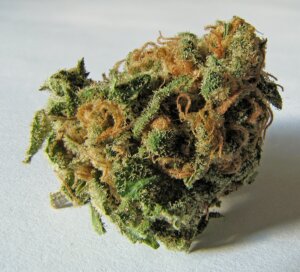
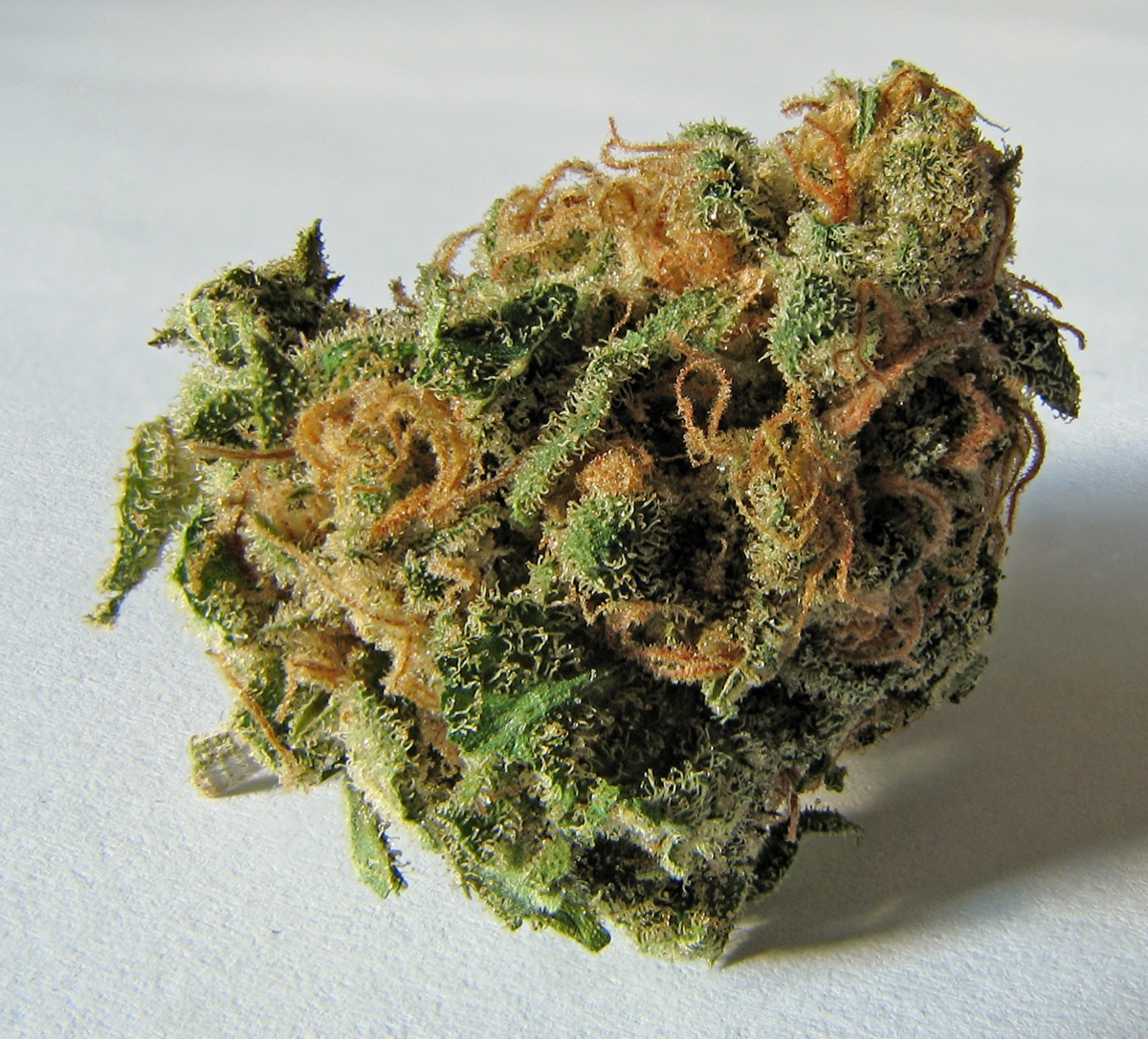 A dense, trichome-covered indica bud with orange pistils, the frosty look Leafly and AllBud describe on Green Dragon. Photo by yogi Bushby via Wikimedia Commons, CC BY 2.5. Representative indica flower, not a verified Green Dragon sample.
Green Dragon at a Glance
The numbers below are compiled from the three strain databases linked above, each of which runs its own community-reported data set.
| Strain type | Indica |
|---|---|
| Also known as | Master Thai’s Green Dragon, MTGD-BX7, MTGD |
| Genetics | Afghani × Turkish Gummy |
| Breeder | Master Thai |
| THC | 17% to 19% |
| CBD | Roughly 1% to 2% |
| Dominant terpenes | Caryophyllene, myrcene, terpinolene |
| Common flavors | Mint, sage, tar, candy, pine |
| Flowering time | About 50 days |
Genetics and Lineage
Leafly lists Green Dragon as a cross of two indicas, Afghani and Turkish Gummy, bred by a breeder known as Master Thai. The same lineage shows up under the aliases Master Thai’s Green Dragon, MTGD-BX7, and MTGD, which is how you’ll sometimes see it listed on menus or in older grower forums. AllBud classifies it as a 100% indica, and Sativa University’s listing agrees with the same Afghani x Turkish Gummy parentage. Beyond that cross, none of the three sources verify a deeper breeding history, so this profile stops there rather than guessing at an origin story.
Afghani genetics are a common building block in indica breeding generally, prized for heavy resin production and a short, dense structure, and that heritage lines up with the quick flowering window and heavy yield Leafly reports for Green Dragon (more on that in the growing notes below). Turkish Gummy is the less-documented half of the cross; none of the three databases publish a separate origin note for it, so this profile does not speculate beyond what Green Dragon itself tests and reviews as.
Effects and What Users Report
Across community reviews, the effect arc reads the same way on all three databases. AllBud’s logged effects are euphoria, focus, happy, relaxing, and sleepy, and Sativa University describes the same shape: an easy, giggly, uplifting lift that gradually builds into full physical relaxation. Leafly’s listing notes the strain is commonly depended on for pain management, with reviewers describing the high as colorful and consistent from one session to the next.
As the body effects deepen, several reviewers on both Leafly and AllBud describe a heavier, couch-locked stretch later in the high, with sleepy, narcotic-leaning sedation setting in at higher doses. Sativa University’s listing flags the same pattern as an adverse-effect note: dry mouth and dry eyes are common, and excessive drowsiness can show up if you take more than your tolerance handles. New users should start low.
The review volume backs up how consistent that arc is. Leafly’s listing carries a 4.1-out-of-5 aggregate score across 91 ratings and 73 written reviews, and AllBud’s separate community shows an even higher 4.9 out of 5 across 23 votes and 16 reviews. Two independent user bases landing on the same giggly-then-relaxed description is a stronger signal than either score alone.
Flavor, Aroma, and Terpene Profile
Sativa University’s terpene breakdown puts caryophyllene, myrcene, and terpinolene as the dominant three, and ties each to a specific note: caryophyllene brings the spicy, peppery warmth (the same terpene found in black pepper and cloves), myrcene contributes the earthy, musky base most indicas share, and terpinolene adds a piney, slightly citrus lift. Together they land as the mint, sage, and tar flavor the same listing describes.
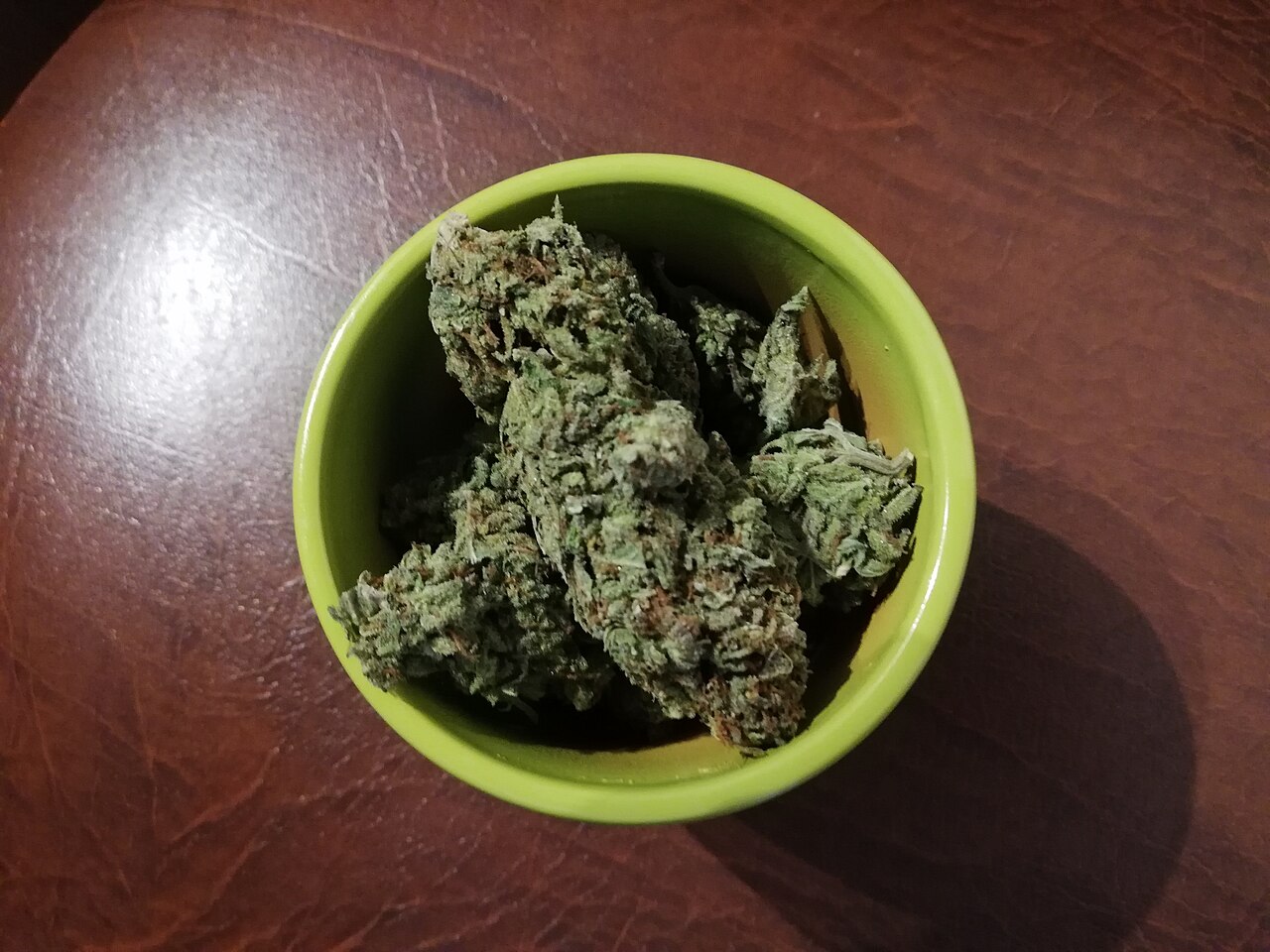 Cured indica buds. Green Dragon’s flavor is most often logged as mint and sage with a tar finish, or a sweet candy note with a pungent earthy edge. Photo via Wikimedia Commons (File:Marijuana_Buds.jpg), CC BY-SA 4.0. Representative flower, not a verified Green Dragon sample.
AllBud’s community reviews describe a slightly different angle on the same bud: a sweet, peppermint-candy taste up front with a pungent, earthy aftertaste, plus pine, skunky, and woody notes reviewers log alongside it. Read together, the two sources agree on the backbone (mint and earth) and differ mainly on how sweet or sharp a given phenotype runs, which is normal for a strain grown across different farms.
Growing Notes
Leafly’s grower notes describe Green Dragon as suitable for any growing environment, with a heavy yield expected at around 50 days of flowering. Neither AllBud nor Sativa University publish additional verified grow specifics (plant height, preferred climate, or a named breeder’s official grow sheet), so those details are left out here rather than guessed at.
A roughly 50-day flower and a heavy yield are a useful combination for anyone working with limited space or a tighter grow schedule, since the plant is in and out of the flowering room faster than many indica-leaning crosses while still filling the tray. That is the extent of what Leafly verifies on the growing side, and it is worth noting again that AllBud and Sativa University do not publish their own separate cultivation data to confirm or add to it.
 A flowering crop nearing harvest. Leafly notes Green Dragon suits any growing environment and produces a heavy yield at around 50 days of flowering. Representative grow, not a verified Green Dragon crop.
Who Green Dragon Is Good For
Based on how reviewers describe it across all three sources, Green Dragon reads as an evening strain first. The giggly, social opening makes it workable earlier in the night, but the settling body relaxation and, at higher doses, the couch-lock effect both point toward winding down rather than getting through a task list. Reviewers most often mention reaching for it to manage stress, physical tension, and an overactive mind at the end of the day. None of this is medical advice, and individual response varies with dose, tolerance, and how the flower was grown.
AllBud’s community also logs Green Dragon under a long list of self-reported wellness uses, including easing tension, low mood, and disrupted sleep. That is community-reported experience, not a clinical claim, and it should be read the same way you would read any user-review pattern: informative about what people say they feel, not a substitute for medical guidance from a doctor who knows your history.
Similar Strains Worth Knowing
Green Dragon is a deliberately bred modern cross, not a landrace. If you want the other end of that spectrum, our guide to landrace strains covers the older, region-specific genetics that crosses like Afghani (one of Green Dragon’s own parents) ultimately trace back to.
And if a heavy indica like this isn’t actually what you’re after, our breakdown on how to choose the right strain for your needs walks through matching indica, sativa, and hybrid effects to what you’re actually trying to get out of a session.
Frequently Asked Questions
Is Green Dragon an indica or a sativa?
Green Dragon is classified as an indica. Leafly and AllBud both list it as a cross of two indicas, Afghani and Turkish Gummy, bred by Master Thai, and AllBud describes it as a 100% indica strain.
What are the effects of Green Dragon?
Users commonly report a lighthearted, giggly euphoria that gives way to deep physical relaxation. AllBud logs the top reported effects as euphoria, focus, happy, relaxing, and sleepy, and Sativa University describes the same arc: an easy, uplifting onset that settles into full-body relaxation.
What is Green Dragon good for?
Community reviewers on Leafly and AllBud most often reach for Green Dragon in the evening, describing it as a wind-down strain for stress and physical tension. Individual results vary with dose and tolerance, and none of this is medical advice.
Is the Green Dragon strain the same thing as a Green Dragon tincture?
No. Green Dragon the strain is a specific indica cross. “Green dragon” is also a generic, informal name some home extractors use for a cannabis alcohol tincture, unrelated to this plant’s genetics. The Cannigma describes that separate use of the term as a general name for cannabinoids extracted from cannabis with alcohol, not a strain.
What does Green Dragon taste and smell like?
Sativa University lists mint, sage, and tar as the dominant flavor notes, driven by a terpene profile of caryophyllene, myrcene, and terpinolene. AllBud’s community reviews add candy, pine, skunky, sweet, and woody notes, with an earthy, pungent aroma underneath.
How much THC does Green Dragon have?
AllBud and Sativa University both put Green Dragon in the 17% to 19% THC range, with AllBud listing a CBD content of roughly 1% to 2%.
The Bottom Line
Green Dragon is a well-documented indica, not a mystery strain: Afghani and Turkish Gummy genetics, THC in the high teens, a mint-and-tar flavor with a sweet candy edge on some phenotypes, and an effect profile that opens giggly and closes heavy. It is an evening strain built for winding down, not a wake-and-bake pick. And if the words “green dragon” brought you here looking for a tincture recipe instead of a bud, that is a completely different use of the same name.