Here is the honest version before you pack. You can carry a small amount of cannabis in Cancun without it being a crime, but you cannot legally buy it, there are no dispensaries, and smoking it in public is a fast way to attract exactly the attention a tourist does not want. Mexico decriminalized personal possession years ago and its top court has thrown out the blanket ban on recreational use, yet the country never built a legal retail market. That gap between what is decriminalized and what is actually for sale is the whole story for a visitor, and getting it wrong can turn a beach vacation into a police problem.
This guide covers what the law really says for someone passing through, why there is no legal place to buy, where travelers get into trouble, the difference between the CBD you can find in any pharmacy and the THC you cannot, and the etiquette that keeps a low profile in Quintana Roo. None of it invents dispensaries that do not exist or pretends the grey market is safe.
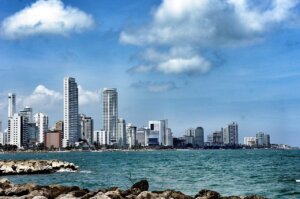
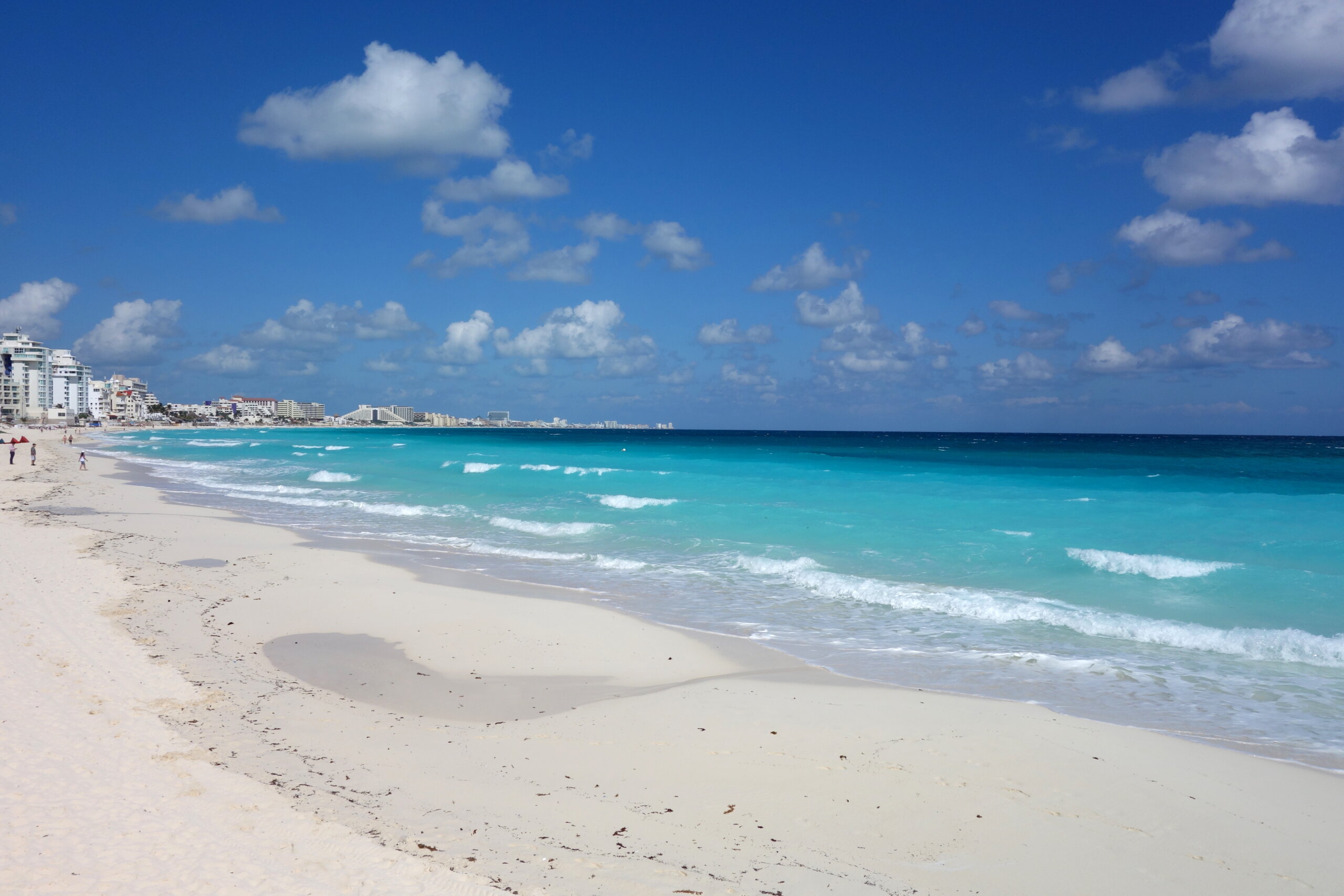 The Cancun hotel zone draws millions of visitors a year, and its beaches are among the most patrolled in Mexico. Photo by Luka Peternel, CC BY-SA 4.0, via Wikimedia Commons.
Is Weed Legal in Cancun? The Honest Answer
Cannabis in Cancun sits in a grey zone that is easy to misread. Possession of a small quantity for personal use has been decriminalized since a 2009 reform to Mexico’s General Health Law, which set a personal-use threshold of five grams of cannabis. Carrying up to that amount is not treated as a criminal drug offense. That reform was designed to separate small-scale users from traffickers, and it was widely reported at the time as a shift away from jailing people for tiny amounts.
The bigger change came in 2021, when Mexico’s Supreme Court declared the blanket prohibition on personal recreational use unconstitutional. In principle, adults can use cannabis privately. In practice, the ruling landed without the law to match it: Mexico’s Congress repeatedly missed its deadlines to pass a regulatory framework, so there is no licensing system, no legal supply chain, and no retail. Decriminalized to carry a little, but with nowhere legal to buy it: that contradiction is the reality on the ground in Cancun.
For a legal-status deep dive by country, that is a separate topic. What matters for your trip is the practical read: a small personal amount in your pocket is unlikely to be a criminal matter, while buying, selling, or lighting up in public is where the risk lives.
No Dispensaries: What the Grey Market Actually Looks Like
The single most important thing to understand is that Cancun has no dispensaries. There is no licensed storefront, no cannabis cafe, and nothing resembling a coffeeshop, because the regulated retail market that the 2021 ruling pointed toward was never actually built. This is the opposite of what you find in a place with a legal supply chain. Unlike the regulated coffeeshops of Amsterdam or the licensed storefronts you can walk into across much of Canada, there is no legal counter in Cancun to hand you a labeled, tested product.
So where does the cannabis that circulates in the tourist zone come from? The illegal market. Practically, that means a beach vendor who also sells sunglasses and cigarettes, a taxi or rideshare driver who offers to source it, a club promoter, or a stranger who approaches you on the sand. The product is unregulated and unlabeled, the price is whatever a tourist will pay, and the potency and purity are unknown. There is no recourse if what you get is misrepresented, and buying it is the moment a visitor is most exposed to being robbed, overcharged, or set up for a shakedown.
Treat anyone who approaches you offering weed as a stranger running a street transaction, because that is what it is. The grey market is not a friendly workaround for the missing dispensary. It is the reason most of the trouble in this guide happens.
Where Tourists Get Into Trouble: Police, the Hotel Zone, and the Beach
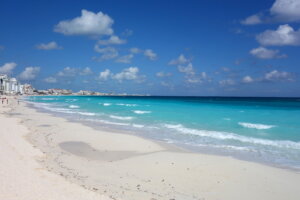
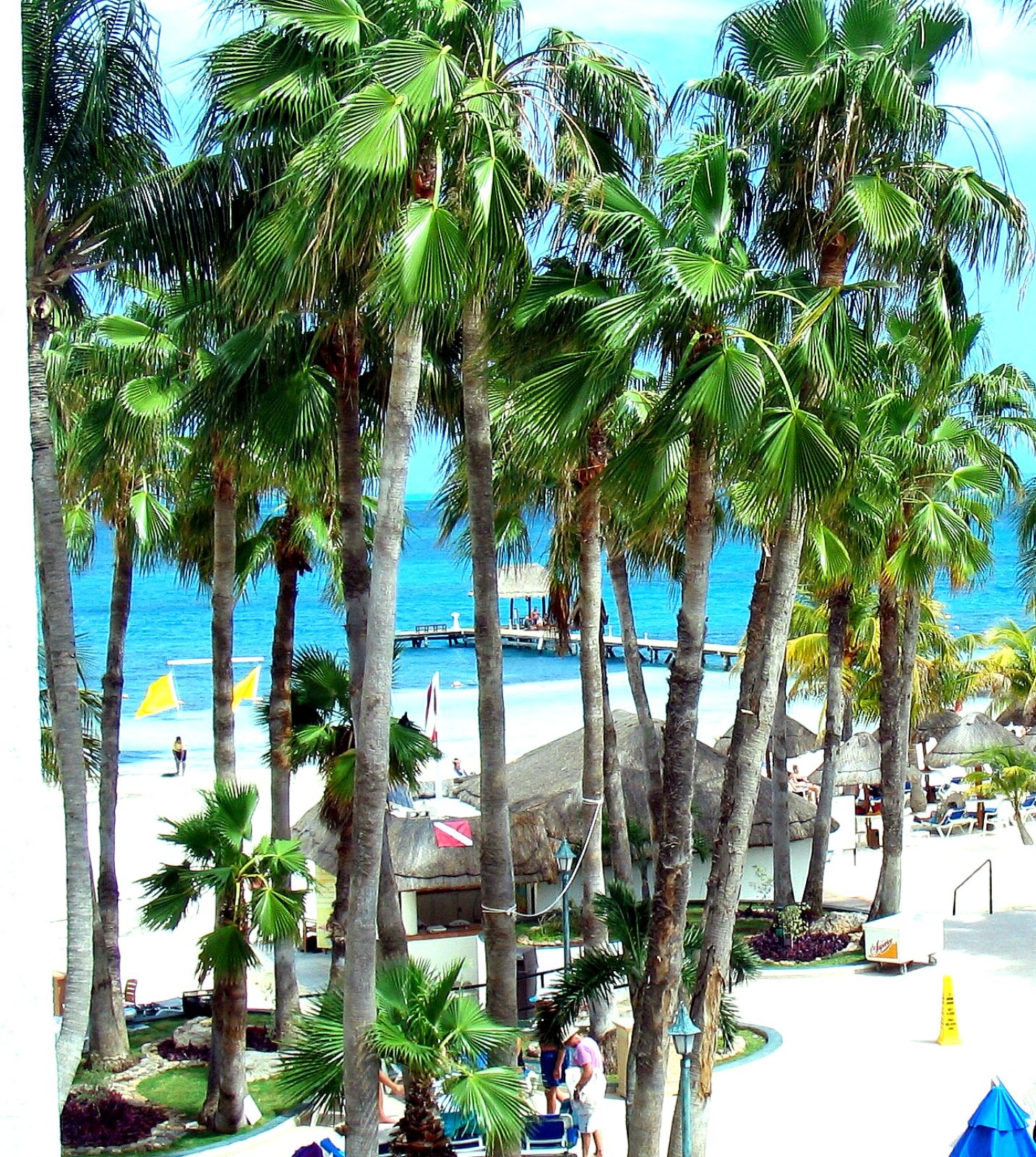 The hotel zone is a tightly patrolled corridor. Public consumption here is far more visible than tourists expect. Photo by Alfonzo Buscemi, CC BY 3.0, via Wikimedia Commons.
The Cancun hotel zone is one of the most heavily policed strips in Mexico, precisely because it is the country’s biggest tourist earner. Uniformed and tourist police work the beaches, the main boulevard, and the club district nightly. A visitor smoking openly stands out immediately, and that visibility is the problem. Decriminalized possession of a small amount does not translate into a right to consume in public, and the encounter that follows is rarely a clean citation.
Public smoking got legally harder in 2023, when Mexico enacted one of the world’s strictest anti-smoking laws, banning smoking in most public spaces including beaches, parks, hotels, and restaurants. That law targets tobacco, but it removes any grey-area cover for lighting up in public at all, and it hands police another clear reason to stop you. Add cannabis to a public-smoking stop and a routine interaction can escalate into a demand for money to make the problem disappear.
The formal risk is real too. The U.S. State Department warns travelers that penalties for drug offenses in Mexico are severe, and that possessing or buying illegal drugs can lead to arrest, long legal proceedings far from home, and pretrial detention. A foreigner caught buying from a dealer, or holding more than the personal-use amount, is in a materially worse position than a local, without the language, the contacts, or the leverage to manage it. Avoiding the whole category is the reason to review the common cannabis travel mistakes before you go, because most of them apply directly here.
CBD vs THC: What You Can Actually Buy Legally
There is one legal cannabis-adjacent product you can buy openly in Cancun, and it is not what most visitors are asking for. Mexico’s health regulator, COFEPRIS, has issued rules on the sanitary control of cannabis and its derivatives that allow hemp-derived products containing no more than one percent THC. In plain terms, CBD is broadly available and legal, while high-THC cannabis is not.
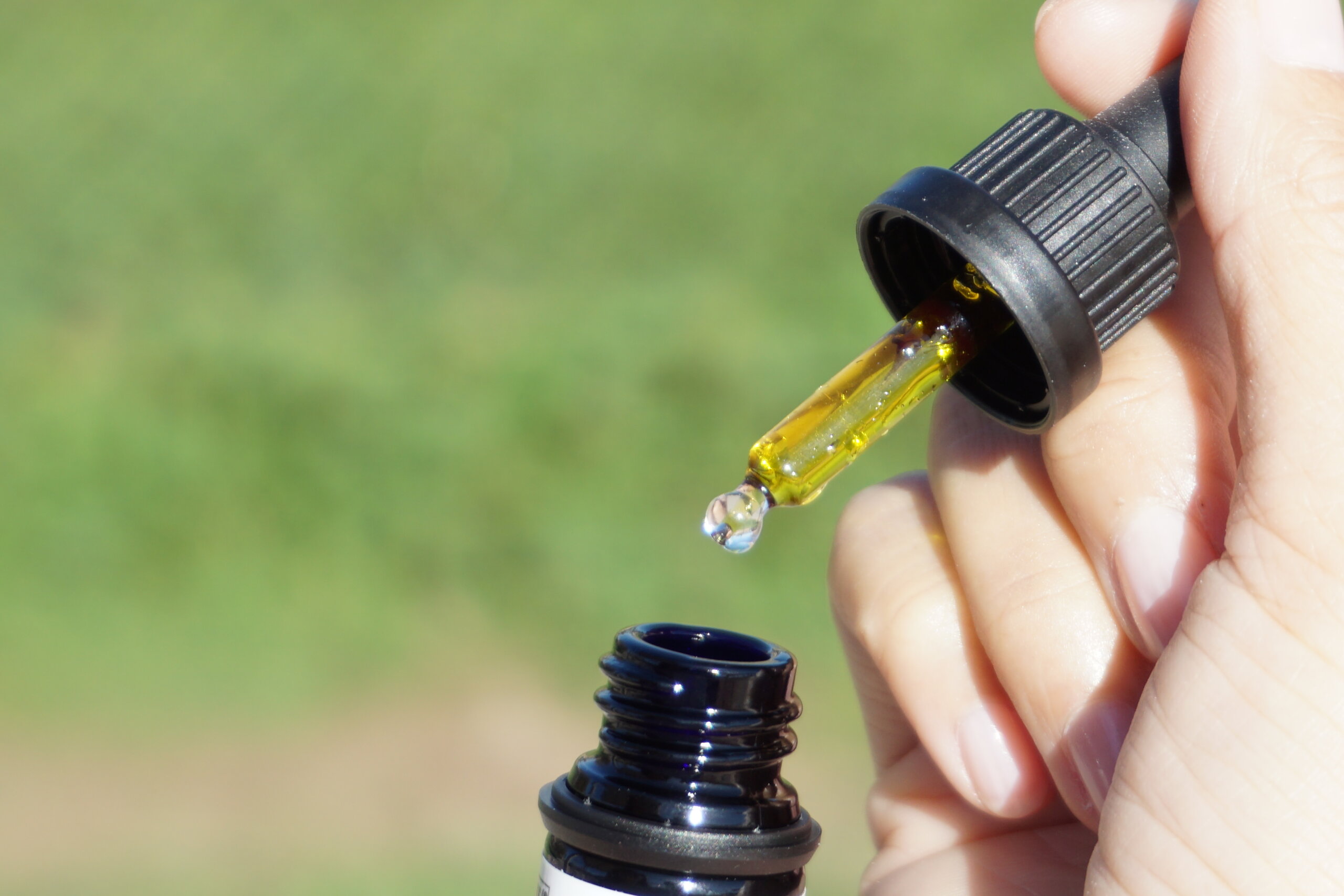 Low-THC CBD oils, creams, and capsules are sold openly in Mexican pharmacies and wellness shops. High-THC products are not. Photo by Elsa Olofsson, CC BY 2.0, via Wikimedia Commons.
That means you can walk into a pharmacy, a health-food store, or a wellness shop in Cancun and legally buy CBD oil, capsules, balms, and drinks. These are marketed for sleep, soreness, and stress, and they will not get you high, because at or below one percent THC there is not enough psychoactive compound to do so. If your interest in cannabis is genuinely for wellness rather than a high, this is the lane that is legal, above-board, and low-risk.
What you will not find on any legal shelf is recreational THC flower, high-dose edibles, or vape cartridges. Those remain outside the legal channel, which loops back to the grey market and its risks. Do not assume a shop selling CBD can also quietly sell you THC. The legal product and the illegal one live in completely different places, and conflating them is how tourists talk themselves into a bad buy.
Etiquette and Keeping a Low Profile in Quintana Roo
If you are going to consume the small personal amount that is decriminalized, the entire game is discretion. Keep it private and out of sight. A hotel room, a private balcony, or a rented villa is a different world from a public beach or a club line. Smell carries, and many resorts have strict no-smoking policies that will get you fined or removed regardless of the substance, so check your property’s rules before you assume anything.
Do not carry cannabis between towns or anywhere near an airport, a highway checkpoint, or a ferry terminal to Isla Mujeres or Cozumel. Military and police checkpoints operate throughout Quintana Roo, and crossing one with anything on you removes the low-profile advantage entirely. Flying with it, domestically or internationally, is a serious offense and simply not worth it. Whatever you have, leave it behind when you move.
Read the social cues too. Cannabis is far more culturally visible in Mexico than it was a decade ago, but Cancun is a family-heavy resort destination, not a permissive free-for-all. Locals working in tourism have seen every version of the loud foreign visitor, and blending in earns goodwill that standing out never will. The quiet approach is both the safest and the most respectful one.
What to Know Before You Go
The short, practical checklist for cannabis in Cancun:
- No legal buying. There are no dispensaries. Any recreational cannabis comes from the illegal market, with all the risk that carries.
- Small personal possession is decriminalized, not legalized. Up to five grams is not a criminal offense, but that is not permission to buy or smoke in public.
- Public smoking is banned. The 2023 law prohibits smoking in beaches, parks, hotels, and restaurants. Assume you are visible.
- CBD is legal and easy to find. Low-THC products are sold in pharmacies and wellness shops. THC products are not.
- Penalties are serious for foreigners. Buying from a dealer or exceeding the personal amount can mean arrest and detention far from home.
- Never travel with it. No airports, no checkpoints, no ferries. Leave it where you used it.
- Discretion is everything. Private and out of sight, or not at all.
Frequently Asked Questions
Is weed legal in Cancun?
Not in the way tourists usually mean. Recreational cannabis is not sold legally anywhere in Cancun, because Mexico has no regulated adult-use retail market. What exists instead is decriminalization: since a 2009 health-law reform, carrying up to five grams for personal use is not treated as a criminal offense, and in 2021 the Supreme Court struck down the blanket ban on personal recreational use. Buying, selling, and public consumption still sit in a legal grey zone with real risk for a visitor.
Can you buy weed in Cancun?
There is no legal storefront to buy it from. No licensed dispensaries exist because the retail market was never regulated by Congress. Any cannabis a tourist is offered in Cancun comes from the illegal market, usually through a beach vendor, a taxi driver, or a club tout. That transaction is a purchase from an unregulated seller of unknown product, and it is exactly where visitors get robbed, overcharged, or shaken down.
Are there dispensaries in Cancun?
No. Cancun has no cannabis dispensaries, cannabis cafes, or coffeeshops. Wellness shops and pharmacies do sell low-THC CBD products, but there is no legal equivalent of a recreational dispensary anywhere in Quintana Roo or the rest of Mexico.
Can you smoke weed on the beach in Cancun?
It is a bad idea. Beaches in the hotel zone are patrolled, and a 2023 federal law banned smoking in most public spaces, including beaches, parks, and hotels. Even setting the cannabis question aside, lighting up in public is now prohibited, and the hotel zone is one of the most heavily policed strips in the country. Discreet personal use in private is a different situation from smoking openly on the sand.
Is CBD legal in Mexico?
Broadly, yes, for low-THC products. Mexican health regulator COFEPRIS has issued rules allowing the sale of hemp-derived products that contain no more than one percent THC, so CBD oils, creams, and capsules are sold openly in pharmacies and wellness shops. High-THC cannabis products remain outside that legal channel.
The Bottom Line
Cannabis in Cancun is decriminalized for a small personal amount and impossible to buy legally at the same time, and that contradiction is the whole thing to remember. There are no dispensaries, the only above-board product is low-THC CBD from a pharmacy, public smoking is banned, and the grey market that fills the gap is where the real danger sits for a visitor. The Supreme Court may have opened the door to personal use, but the legal retail room behind it was never built.
The safe play is simple. If you want the wellness side, buy CBD openly and enjoy it. If you want more than that, understand that you are stepping outside the legal channel in a heavily policed tourist zone far from home, and weigh that honestly. Keep any personal use private, never carry it anywhere, and treat every beach offer as the street transaction it is. Do that, and cannabis stays a footnote to your trip instead of the reason it went sideways.