You can smoke paper in the literal sense that you can light it and inhale the smoke. Nothing about that does anything for you. Plain paper contains no nicotine, no cannabinoid, and no compound that produces an effect, so burning it delivers only harsh smoke made of tar, fine particulate, carbon monoxide, and fumes from whatever the sheet was bleached, coated, and printed with. The honest answer to “can you smoke paper” is that you can, it does nothing, and it is worse for you than it is worth.
That is the whole answer. The detail that matters is exactly what comes off a burning sheet, what it does once it reaches your lungs, and why the curiosity behind the question is better answered a different way. If your real question is about rolling cannabis in a sheet rather than smoking the paper on its own, that is a separate topic, covered in the guide on rolling weed in regular paper.
 Plain white office paper is bleached, coated, and chemically sized. Burned and inhaled it produces only treated-paper smoke and no effect.
The Short Answer: It Burns, It Does Nothing, and It Costs Something
Paper is mostly cellulose, the same plant fiber found in wood and cotton. Set a flame to it and it combusts into smoke, ash, and gas. There is no active ingredient riding along in that smoke, because there is no active ingredient in the sheet to begin with. Tobacco smoke carries nicotine and cannabis smoke carries cannabinoids. Paper smoke carries neither, so the trade is all cost and no return.
The cost is the same set of combustion products that make any smoke harmful. Burning organic material produces tar and fine particulate, and the U.S. Surgeon General reports document that inhaling that mix irritates and inflames airway tissue. White and printed paper stack additional hazards on top, from bleaching residue to ink. The table below shows what actually leaves a burning sheet and enters your airway.
| What you inhale | Where it comes from | Why it matters |
|---|---|---|
| Tar and fine particulate | Burning cellulose fiber | Coats and inflames airway tissue, the core harm in any smoke |
| Carbon monoxide | Incomplete combustion of the sheet | Binds hemoglobin and lowers oxygen delivery, the source of any lightheaded feeling |
| Chlorinated byproducts | Bleaching residue in white paper | Can form trace dioxins when chlorine-treated fiber burns |
| Ink and dye solvents | Printed text, ruling lines, logos | Pigments and carriers never meant to be inhaled |
| Coating fumes | Sizing, brighteners, gloss, silicone | Release volatile compounds and formaldehyde when heated |
None of those items rewards you with anything. They are the entire output of smoking plain paper.
What Is Actually in a Sheet of Paper
A blank white sheet looks inert, which is part of why the question gets asked. It is not. Modern paper is an engineered product, and the steps that make it bright, smooth, and printable are the same steps that make it a bad thing to burn next to your face.
Bleached pulp. The bright white of office and notebook paper comes from a whitening process that historically used elemental chlorine and now usually uses chlorine dioxide or peroxide. Residual organochlorine compounds can survive in the finished sheet, and burning chlorine-treated fiber is exactly the kind of incomplete combustion that can form dioxins. The World Health Organization classifies dioxins as highly toxic and persistent in the body.
Sizing and coatings. Mills add sizing agents, wet-strength resins, optical brighteners, and surface coatings so ink sits cleanly and the sheet holds together. Some of those resins release formaldehyde when heated, and the American Cancer Society documents formaldehyde as a known human carcinogen at sufficient exposure.
Inks and dyes. Printed text, ruling lines, logos, and colored stock all add pigment and the solvents that carry it. Those are formulated to bond to a page, not to be vaporized and pulled into your lungs. Glossy, thermal receipt, and colored papers are worse still, layering coatings and additives that have no business in smoke.
What Happens in Your Lungs When You Burn and Inhale Paper
The first thing you notice is that it is harsh. Paper fiber is short and loosely pressed compared to a purpose-made smoking material, so it flares fast, burns hot, and throws a lot of particulate at once. The cough is immediate, and it is your airway reacting to an irritant load it was never meant to take.
Underneath the cough, the real exposure is fine particulate matter. The U.S. EPA links fine particulate matter in the PM2.5 range to airway inflammation and cardiovascular harm, and burning treated paper produces more of it than clean plant fiber. The American Lung Association notes that fine particles drive airway inflammation with repeated exposure, which is the same mechanism behind smoke-related airway disease generally.
Carbon monoxide is the other constant. Any incomplete combustion produces it, and the CDC explains that carbon monoxide binds hemoglobin and reduces the oxygen your blood can carry. That is the source of the brief lightheaded feeling some people mistake for an effect. It is not a high. It is mild oxygen displacement combined with irritation, and it is a warning sign, not a payoff.
Why Smoking Paper Does Nothing Recreationally
A drug effect needs a drug. Nicotine acts on receptors in the brain, THC acts on the endocannabinoid system, and both arrive in smoke because the burning material carries them. Cellulose carries no such compound, so there is no receptor for paper smoke to act on and no mechanism for it to produce a high, a buzz, or a calm.
The sensations people sometimes report come from the body reacting to harm, not from any active ingredient. A head rush is reduced oxygen from carbon monoxide. A floaty feeling can be the start of hyperventilation from coughing and breath-holding. Throat tightness is irritation. None of those is pleasurable, and all of them fade into plain discomfort the moment the novelty wears off. Smoking paper to get an effect is chasing something that is not in the sheet.
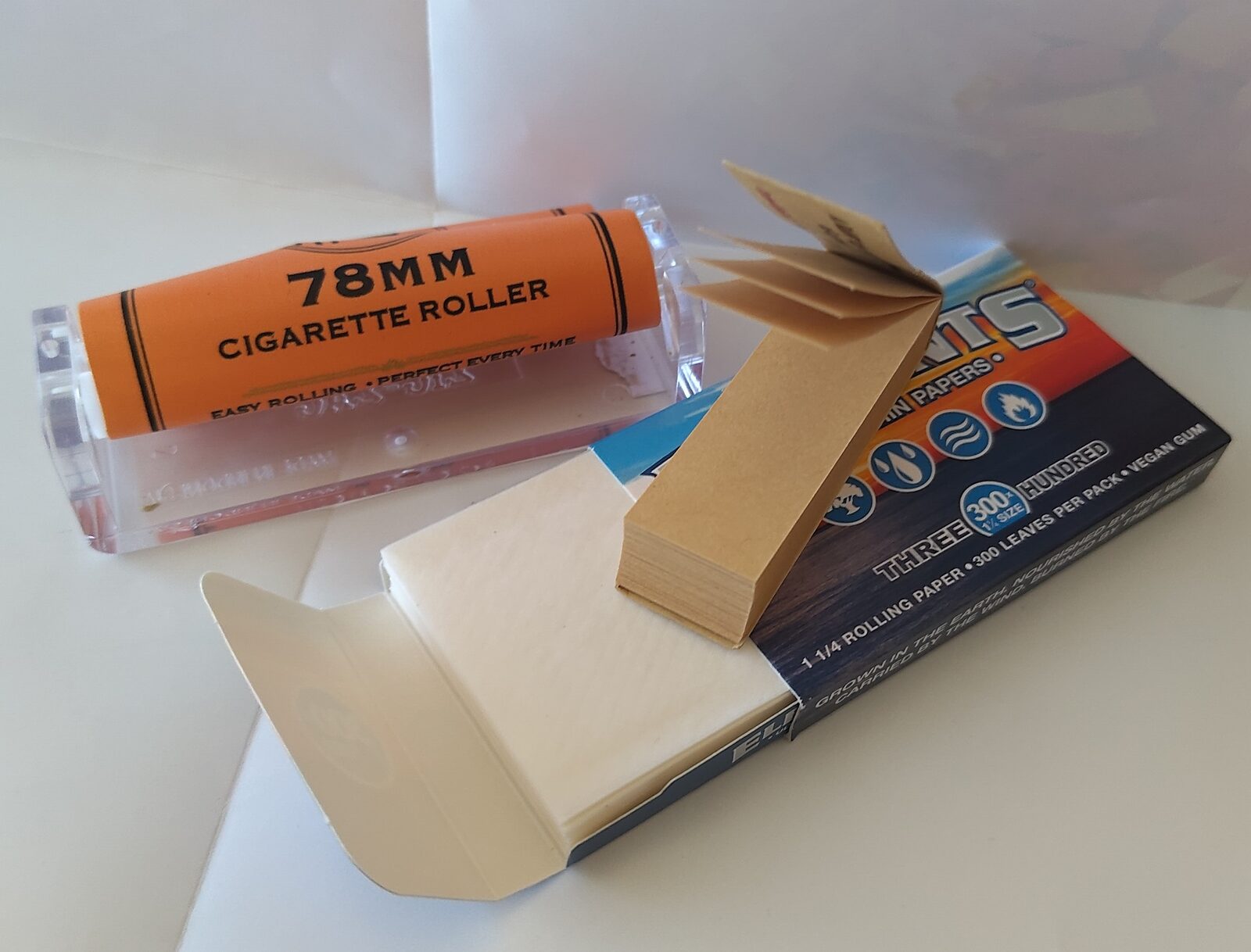 Purpose-made smoking papers are unbleached, additive-free plant fiber. They exist because plain household paper was never built to be inhaled.
If the Reason Is to Hurt Yourself, Help Is Available
Some people search this because they are smoking paper as a form of self-harm rather than out of curiosity. If that is the case for you, you are not alone and support is available right now. In the United States you can call or text the 988 Suicide and Crisis Lifeline any time, day or night, to talk with someone confidentially. The rest of this page covers the practical question, but that line matters more than any of it.
What People Are Actually Trying to Do, and Better Options
Most searches for smoking paper trace back to one of three real situations, and each has an answer that is not burning a sheet of cellulose.
Curiosity about whether it works. It does not, for the reasons above. Burning paper is a chemistry question with a settled answer, and lighting a sheet to confirm it only buys you a lungful of irritant. The curiosity is satisfied without the smoke.
Out of rolling papers and improvising. If the real goal is to smoke cannabis and the paper is just a wrapper, that is a different question with its own safety ranking. The guide on rolling weed in notebook paper covers which household sheets are merely bad and which are genuinely dangerous, and the comparison of hemp wraps versus rolling papers covers what to actually buy. A pack of unbleached hemp papers costs under two dollars and removes the entire problem.
Looking for a nicotine or smoking substitute. Plain paper is not one, because it has no nicotine and the act delivers only harm. If the pull is the habit rather than a substance, the smoke is doing nothing for that either, since there is no reinforcing compound in it. There is no version of smoking paper that ends well, which is the plainest reason to set the lighter down.
Frequently Asked Questions
Can you smoke paper?
You can hold a flame to a sheet of paper and inhale the smoke, but there is no reason to. Plain paper holds nothing that does anything to you when burned. All you get is harsh smoke made of tar, fine particulate, carbon monoxide, and fumes from the bleach, sizing, and any ink the sheet was treated with.
What happens if you smoke paper?
The paper combusts into smoke, ash, and gas. You inhale fine particulate and carbon monoxide along with byproducts of whatever the paper was treated with, including bleaching residue and ink solvents. You feel coughing and throat irritation, you get nothing pleasant, and repeated use carries the same airway risks as any combustion smoke.
Can you get high from smoking paper?
No. Paper contains no nicotine, no cannabinoids, and no psychoactive compound of any kind. Burning cellulose pulp produces no drug effect. Any lightheadedness someone feels is from inhaling carbon monoxide and irritating particulate, which is a mild oxygen and irritation response, not a high.
Is smoking paper bad for you?
Yes. Inhaling burned paper means inhaling tar, fine particulate, and carbon monoxide, the same harmful combustion products found in any smoke. Bleached and printed paper adds chlorinated byproducts and ink solvents on top. There is no safe amount because there is no benefit on the other side of the risk.
Can you smoke notebook paper or printer paper?
You can burn them, but they are among the worst sheets to inhale. Printer and notebook paper are heavily bleached and printer paper often carries optical brighteners and toner residue, while notebook paper carries dyed ruling lines. Burning any of it gives you treated-paper smoke and no effect. If the question is about rolling cannabis, that is covered separately, not here.