California is the largest legal cannabis market in the United States, and it is also the most volatile. The state’s Department of Cannabis Control maintains a public license database that updates weekly, and the names on it shift constantly. MedMen filed for Chapter 7 bankruptcy and shuttered most of its California stores. The Bloom Room shut down its 471 Jessie Street shop after eleven years downtown. Mission Organic Center’s flagship on Mission Street is now permanently closed with an expired retail license. Any list older than a few months has dead names on it.
The 10 shops below are the ones still standing, and each one carries a specialty the others do not. The cannabis brands you will find on their shelves are surveyed in our companion piece on the top 10 cannabis brands in California, and our complete California state guide covers the wider operator landscape city by city. If you came looking for the best dispensaries in California across cities and use cases, this list answers that question and ends with a comparison block, an honorable-mentions tail, and a frequently asked questions section covering legal age, out-of-state ID rules, purchase limits, and the state tax stack.
The list covers operators with active California retail licenses, named house specialties, and clear walk-in policies. Cities included: San Francisco, Oakland, San Jose, Los Angeles, Long Beach, San Diego, and Sacramento. For a deeper LA-area shortlist, our top Beverly Hills dispensaries ranks the three best near the Beverly Hills line.
Quick pick by city:
- San Francisco: visit SPARC for deep flower selection, or The Apothecarium for concierge service.
- Oakland: visit Harborside for house-grown flower at the waterfront flagship.
- San Jose: visit Caliva for early hours and same-day delivery.
- Los Angeles: visit Cookies Melrose for Cookies-genetics drops, or Sweet Flower Westwood for boutique service.
- Long Beach: visit ShowGrow for value flower, or Catalyst Cannabis for the lowest prices in the South Bay.
- San Diego: visit March and Ash for the largest retail floor in the county.
- Sacramento: visit A Therapeutic Alternative for the city’s longest-running medical-style boutique.
SPARC, San Francisco
- Address: 1256 Mission St, San Francisco, CA 94103
- Phone: (415) 252-7727
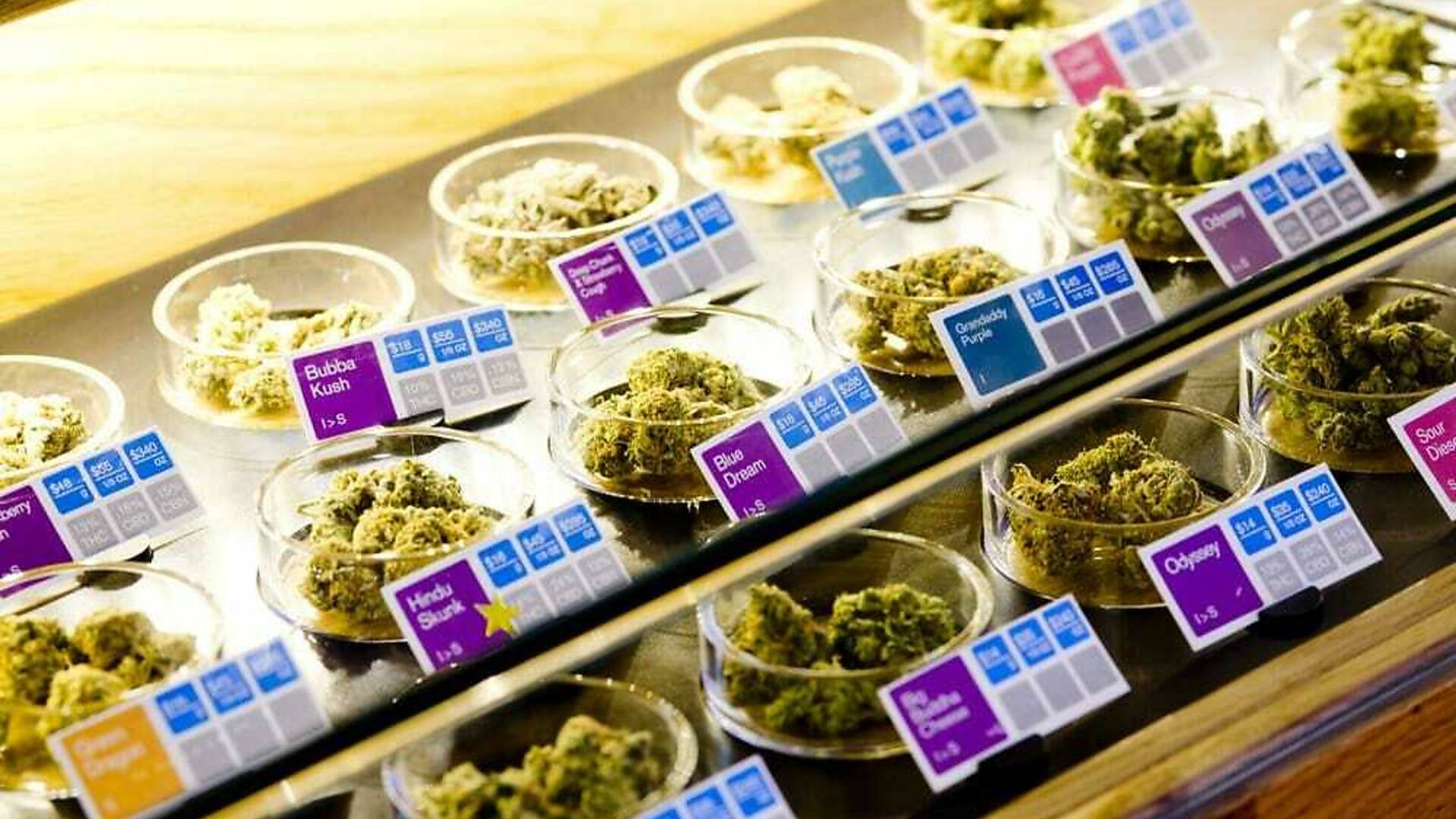
SPARC opened as a non-profit medical collective in 1998, which makes it the oldest continuously operating cannabis retailer on this list. The flagship at 1256 Mission Street anchors the South of Market corridor, three blocks from Civic Center BART, and the staff treat it like a destination store rather than a corner shop. The room is bright, glass cases run the length of two walls, and a long wood counter splits the floor into a flower side and an accessories side. Visitors come here for breadth: more cultivars from more growers than any other San Francisco retailer, with a noticeable share of small-batch Sonoma and Mendocino harvests rotating through every month.
The menu is the headline. SPARC partners directly with sungrown farms in Sonoma and Mendocino, and the flower wall consistently carries 50 to 70 active SKUs. Eighths run from $35 on the value tier up through $65 for limited drops, and ounces of mid-tier indoor often clear under $200 during weekly promotions. The pre-roll counter is one of the deeper ones in the city, with infused options from Jeeter, Lowell Smokes, and Jay’s First Pack alongside SPARC’s own house pre-rolls. Edibles cover the full dosage range from 2.5 mg microdose mints up to 100 mg adult-use bars, and the concentrate case rotates live rosin from Papa’s Herb, Eastside Sungrown, and rotating Tier-A solventless drops. A useful SKU to flag for first-time visitors is the SPARC house pre-roll three-pack, which prices the in-house cultivation against name brands at a fraction of the cost.
The operator, registered as Madrm, LLC under California license C10-0000934-LIC, runs four locations: SoMa, Lower Haight, Polk Street, and Mission Dolores. Founder Erich Pearson incorporated the original collective in 1998 and built the parent operator into one of the few vertically integrated cannabis brands still independently held in the Bay Area. SPARC owns its cultivation, processes its own concentrates, and prints its own packaging, which is rare among multi-location retailers and shows up in the consistency of the in-house flower line.
The retail experience runs efficient. Hours are 9 AM to 9 PM, walk-ins are the default, and an online express-order option pulls product to the counter before you arrive. Street parking on Mission is paid meters, with a Civic Center garage two blocks east. The intake table runs ID checks fast, the budtenders are trained to ask what you actually want rather than push the daily promo, and dwell time on a busy Saturday afternoon ran about twelve minutes from door to bag on a recent visit. The lighting is daylight white, the floors are concrete, and the music sits below conversation level. The room reads like a small craft grocery rather than a dispensary, which lowers the friction for first-timers traveling with a partner who is not buying.
SPARC has been named to multiple Leafly List rankings for Northern California and was an early High Times Cannabis Cup competitor. The collective also helped draft the original San Francisco medical retail framework that became state policy.
Verdict from Miles. SPARC is the right first stop for a visitor who wants to see what a deep, well-curated California flower wall looks like under one roof. Skip it if you walked in with a single specific brand in mind and the menu does not show it tonight. The strength of the room is the breadth, and the right way to use it is to browse.
For the full walkthrough of the Upper Haight room, the sun-grown eighth shelf, and the in-store experience, read our SPARC Upper Haight review.
The Apothecarium, San Francisco
- Address: 2029 Market St, San Francisco, CA 94114
- Phone: (415) 500-2620
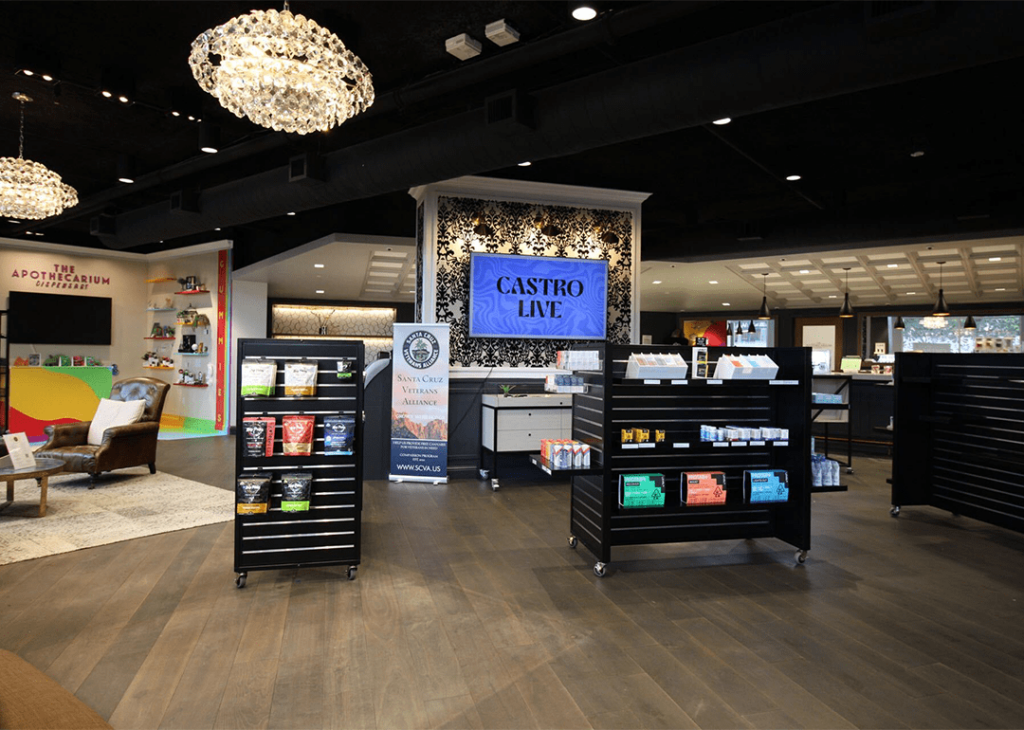
The Apothecarium runs two San Francisco locations, the Castro flagship at 2029 Market Street and a Marina shop at 2414 Lombard, and the brand built its reputation on consultation rather than throughput. The Castro store sits on the corner of Market and 14th, two blocks from the Castro MUNI station and inside walking distance of Dolores Park, which means a meaningful share of the foot traffic is tourists who flagged the shop on a map and decided to make it part of the day. The interior was redesigned in the Castro Live build, with warm wood casework, soft pendant lighting, and a long apothecary-style display that displays product behind glass rather than on open shelves. The room reads like a small pharmacy crossed with a wine shop, which is the point.
The menu skews toward top-shelf indoor flower with a smaller, deliberately curated edibles bar. Eighths land in the $45 to $70 range, with limited drops from Sherbinskis, Connected, and Cookies rotating through the wall. The vape case carries Stiiizy, Plus, and Heavy Hitters cartridges, and the edibles range covers Kanha gummies, Wyld pearls, and Kiva chocolates, with house-curated dosing flights for first-time customers. The concentrate selection is smaller and more selective than SPARC’s, with one or two solventless drops at any given time rather than a full live rosin shelf. A SKU worth flagging is the brand’s first-timer tasting flight, which packages a 2.5 mg edible, a 0.5 g pre-roll, and a low-dose tincture for under $50.
Both shops operate under California license C10-0000522. The brand was founded in 2011 by Ryan Hudson and Eliot Dobris as a medical patient collective. Both founders are still actively involved in operations, and the parent company remained San Francisco based through California’s recent retail consolidation cycle. The store has hosted clinical pharmacist office hours through partnerships with the local cannabis nurse community, which is unusual for a retail dispensary and signals the consultation-first orientation.
The retail experience is the differentiator. Budtenders sit one-on-one with first-time customers and walk through effects, dosage, and product format before any purchase, and the Castro shop carries a 4.7-star average across more than 350 Yelp reviews with first-timer experience cited as the dominant theme. Hours are 9 AM to 9:30 PM daily, walk-in welcome with no reservation needed, and the consultation flow runs about fifteen minutes for a fully new customer or under five for a regular who already knows the menu. Parking is the friction point: street meters on Market are scarce, and the closest paid garage is one block south on 14th. The intake desk runs the ID check up front, and the budtenders are paid hourly rather than on commission, which shows in how they answer questions.
The shop has earned multiple Leafly List nods for the Bay Area and is regularly cited as a model for first-time-customer experience in industry trade press.
Verdict from Miles. Bring time, not a checklist. The Apothecarium is the right stop for a tourist visiting California for the first time, a partner who has never been inside a dispensary, or a customer who wants to actually understand what they are buying. Skip it if you came in for a specific drop and want to be in and out in under five minutes; the room is built around the conversation, and the staff are paid to slow you down.
For a deeper look at the SoMa flagship, the concierge consult flow, and what the bud bar actually feels like in person, read our Apothecarium SoMa review.
Harborside, Oakland
- Address: 1840 Embarcadero, Oakland, CA 94606
- Phone: (510) 671-5377
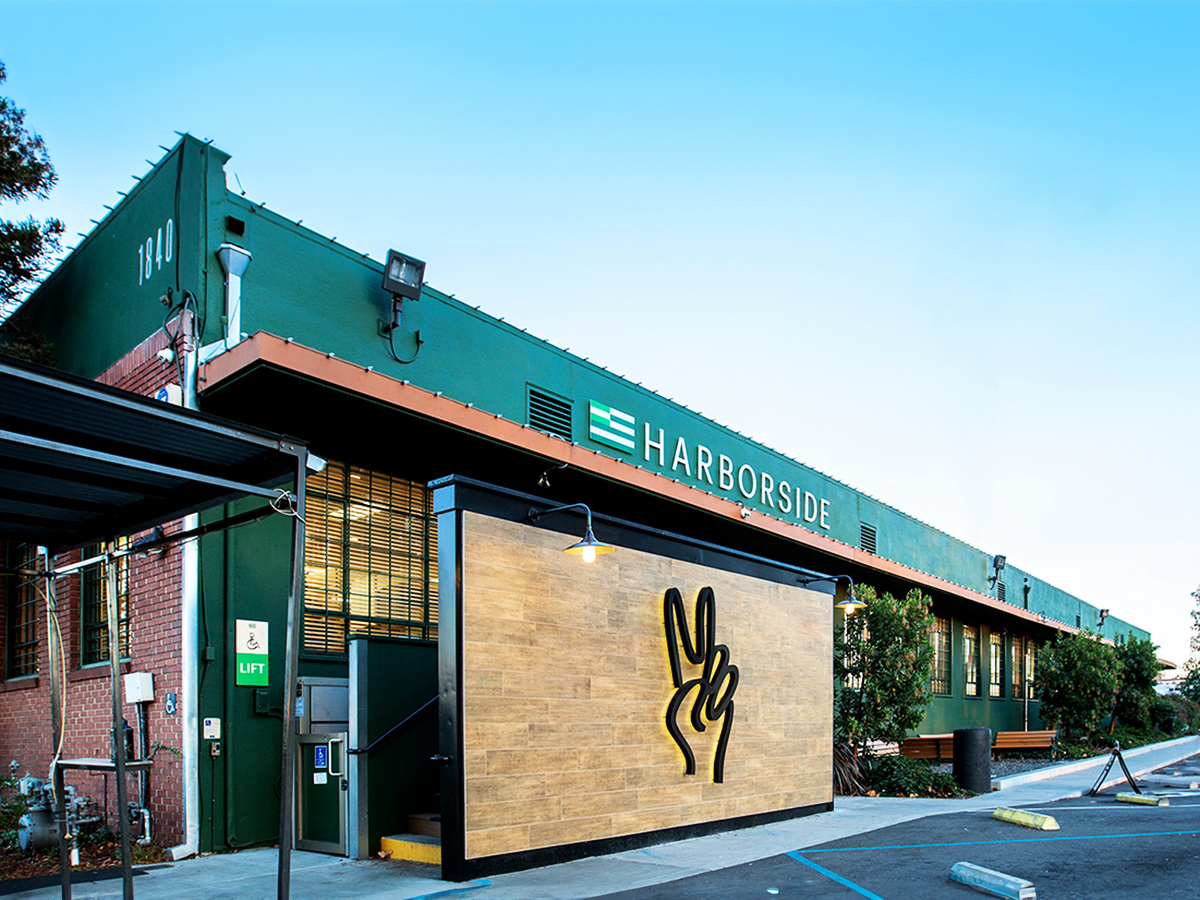
Harborside opened in 2006 as one of the first six licensed cannabis retailers in the country, and the Embarcadero flagship at 1840 Embarcadero is still the largest dispensary by floor space in the East Bay. The waterfront location pulls a different crowd than any San Francisco shop: longshoremen on lunch breaks, Lake Merritt locals, customers driving in from Berkeley and Alameda. The room is industrial in scale, with high ceilings, a long counter, and the brand’s peace-fingers logo painted across the entrance wall. The shop has a museum-of-cannabis quality to it; this is where the modern California retail framework was field-tested, and the staff still talk about that history when a customer asks.
The flower wall draws from house cultivation. Harborside Farms grows up the road in Salinas, and several strains are exclusive to the retail floor. Eighths run $30 to $55, with house-grown indoor at the lower end and outside-brand top-shelf at the upper end. The DOJO loyalty program stacks a 10 to 20 percent discount that meaningfully changes the bill on top-shelf eighths, and the program has no annual fee. Pre-rolls cover the major California labels including Lowell Smokes, Pacific Stone, and Stiiizy, and the edibles aisle carries Kiva, Wyld, and Smokiez at standard adult-use pricing. The concentrate counter is smaller than SPARC’s but consistent, with rotating live resin from Raw Garden and Jetty Extracts.
The shop’s parent company, StateHouse Holdings, is currently in court-ordered receivership, with a confirmation hearing held in early 2026, but the Oakland store has continued operating with sales above $8 million the prior year. Co-founder Steve DeAngelo built Harborside into a national reference point for legal cannabis retail, and brother Andrew DeAngelo led the operations side through the medical-to-adult-use transition. Both have moved on to advocacy work and consulting, but the Oakland store carries the institutional memory.
The retail experience runs heavier on volume than on consultation. Hours are 8 AM to 9 PM daily, the parking lot is a real lot rather than street parking which is a relief in Oakland, and the intake desk processes shoppers in roughly two minutes. The counter staff know the menu cold and will field questions, but the room is built for shoppers who walked in with a list. Dwell time on a weekday morning runs five to seven minutes; weekend afternoons can stretch to fifteen during the lunch-break rush from Jack London Square. The Embarcadero waterfront sits two blocks east of the store, and the loop around Lake Merritt is a mile north, which makes the shop a natural anchor for an Oakland day trip.
Harborside has been a Cannabis Cup competitor multiple times, has been profiled by national press, and was the subject of a long federal asset-forfeiture fight that ended in the dispensary’s favor and reshaped how the IRS treats cannabis retailers under Section 280E.
Verdict from Miles. Harborside is for shoppers who care about house-grown flower and the lineage of California legalization. Skip it if you want a quiet, slow consultation; the Embarcadero shop runs at warehouse pace. The DOJO program is the move if you live within an hour and plan to come back.
Caliva, San Jose
- Address: 1695 S 7th St, San Jose, CA 95112
- Phone: (408) 297-2615
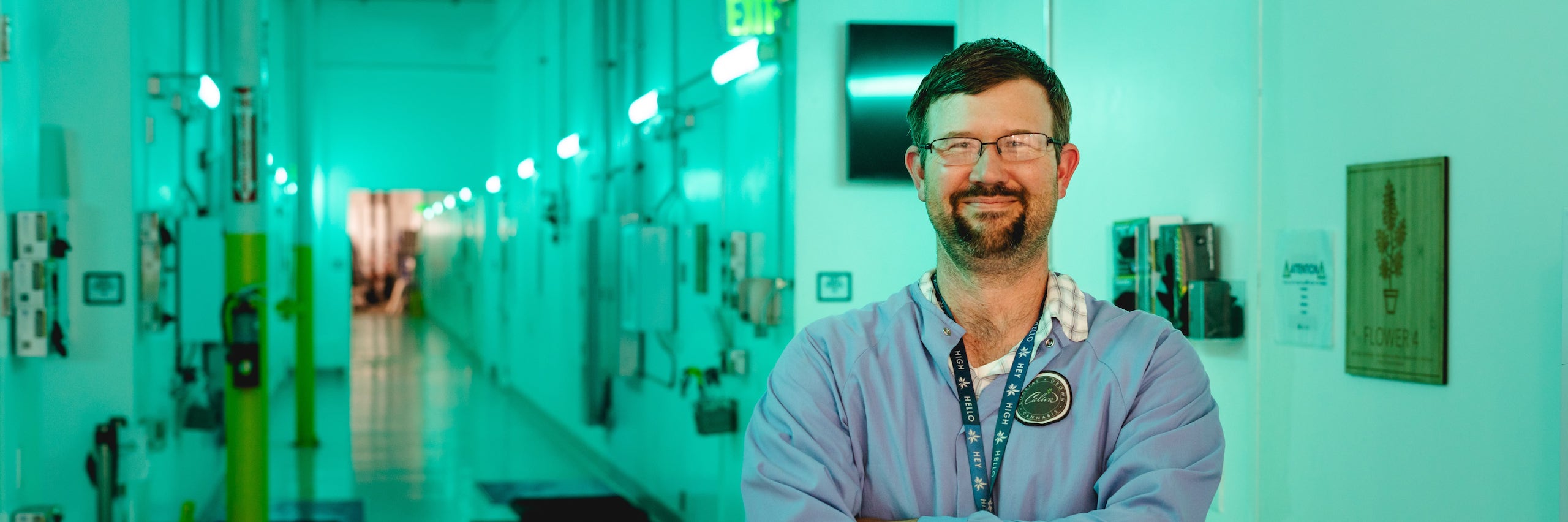
Caliva at 1695 South 7th Street is built for South Bay tech commuters. The 6 AM opening makes it one of the earliest legal cannabis retailers in California, and the parking lot fills with shuttle riders and morning-shift hospital workers before most other shops in the state have unlocked the door. The building is large, sits on an industrial block south of downtown San Jose, and the room inside is high-ceilinged and bright. There is no boutique pretense to the interior. The displays are functional, the counter line is wide, and the staff move like a Trader Joe’s at peak hour. That utilitarian energy is the brand promise: Caliva treats cannabis retail as a daily-use store rather than a destination.
The menu is dominated by the parent operator. Caliva is now part of STIIIZY’s retail group, and that ownership is visible at the front of the store. STIIIZY pods occupy a full wall, and Caliva-branded flower covers another. The in-house pre-roll selection is one of the deepest in California, with FSE infused options, dogwalkers, and the brand’s signature compressed pre-rolls all priced under $20. Outside-brand flower covers the major California labels: Jeeter, Lowell Smokes, and Pacific Stone all appear in rotation. Eighths run $30 on the value tier up to $65 for limited drops, and ounces of mid-tier indoor frequently hit $99 during weekday promotions. A SKU worth flagging is the Caliva Sleep gummy line, which packages CBN with low-dose THC and prices under most competitor sleep products.
Caliva was founded in 2015 and grew into one of the largest single-site cannabis retailers in California by volume before STIIIZY’s parent company, Shryne Group, acquired the operation. The original Caliva ownership group included rapper Jay-Z as chief brand strategist for a stretch of the build-out, which generated press attention but did not change the store’s day-to-day shape. The San Jose flagship operates under an active California retail license verifiable through the state’s public lookup.
The retail experience is fast. Hours run 6 AM to 9:45 PM, the parking lot is large and free, and the intake desk processes IDs in under thirty seconds. Walk-ins handle most of the foot traffic, but the online order pickup window is the fastest way through on a weekend, with pickup orders typically ready in under fifteen minutes. The budtenders are competent rather than consultative; the room is not built for slow first-time customers. Caliva’s same-day delivery covers most of Santa Clara County and is one of the most reliable delivery services in Northern California, with order minimums starting at $50 and most addresses receiving product within two hours. Dwell time inside the shop on a typical morning runs four to six minutes.
Caliva has been featured in MJBizDaily coverage as a model for high-volume single-site retail, and the operation has appeared on Leafly List rankings for Bay Area retail multiple times.
Verdict from Miles. Caliva is the right pick for a Bay Area regular who wants speed, deep STIIIZY availability, and the most reliable delivery in the South Bay. Skip it if you want a curated boutique experience; the room is built like a hardware store, not a wine bar, and that is by design.
Cookies Melrose, Los Angeles
- Address: 7569 Melrose Ave, Los Angeles, CA 90046
- Phone: (323) 424-3945
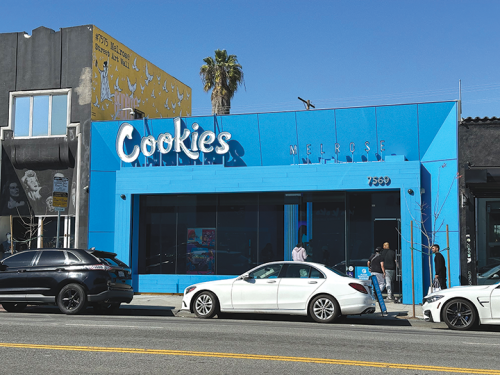
Cookies Melrose at 7569 Melrose Avenue is the West Hollywood-adjacent flagship for the Cookies brand, and the building is hard to miss: an electric-blue storefront, a Cookies cursive logo on the side wall, and a near-permanent line of customers and tourists outside on weekend afternoons. The store anchors a stretch of Melrose that has become a genuine cannabis retail corridor, with several dispensaries within walking distance. Inside, the room is small relative to the foot traffic. The flower counter dominates one wall, the merch wall holds streetwear behind glass, and the sneaker drops sit at the front. This is the Cookies brand expressed as a retail environment, which is the entire point of the visit.
The menu is the reason to drive to Melrose. Cookies built its identity on Gelato, Cherry Pie, and the Sherbinskis genetic line, and the Melrose store carries the deepest cut of those drops in Los Angeles, including limited releases that sell out the day they land. Eighths start around $50 and climb past $80 for limited drops; the brand does not compete on price. The flower is the headline, but the vape pens, infused pre-rolls, and Lemonnade sub-line all show up in their full variety here. Leafly’s Cookies brand page documents the cultivar lineup, and the Melrose store is the closest thing California has to a Cookies brand archive in retail form. Cookies-branded streetwear sits behind the same counter, which is unusual for a cannabis shop and tells you who the store is for. SKU to flag: any Sherbinskis-genetic limited drop the day it lands, because it does not stay in stock.
Cookies was founded in 2010 by rapper Berner and master grower Jai. The brand started as a single seed line and grew into a national lifestyle business with retail, apparel, and music arms. Berner remains the public face of the brand and is regularly involved in store events and merch drops. The Melrose store operates under the Cookies retail license, with the parent operator listed in the California public license database. The brand has fought a public legal battle with several former co-founders over equity and control, but the retail operation has continued without interruption.
The retail experience is loud, fast, and built for foot traffic. Hours run 10 AM to 9 PM daily, the line at the front door on a Saturday afternoon can run twenty deep, and the intake flow runs about ten minutes from sidewalk to register including the wait. Parking is metered street parking on Melrose, and weekend afternoon visitors should plan to walk three or four blocks. The budtenders are friendly but quick; they are not paid to slow a customer down. The vibe is closer to a streetwear drop than a pharmacy. Walk-in is the standard flow. Pricing is high; this is not a value stop.
Cookies has been featured in countless industry retrospectives and was named on multiple High Times Top 100 Cannabis Brands lists. The brand’s Gelato genetic line has won Cannabis Cup awards repeatedly.
Verdict from Miles. Come for the Cookies catalog, the genetics drops, and the brand experience. Skip it if you want value or a quiet consultation; the Melrose store is the loudest, fastest dispensary on this list, and the deal-hunters should look elsewhere.
Sweet Flower Westwood, Los Angeles
- Address: 1413 Westwood Blvd, Los Angeles, CA 90024
- Phone: (424) 499-0420
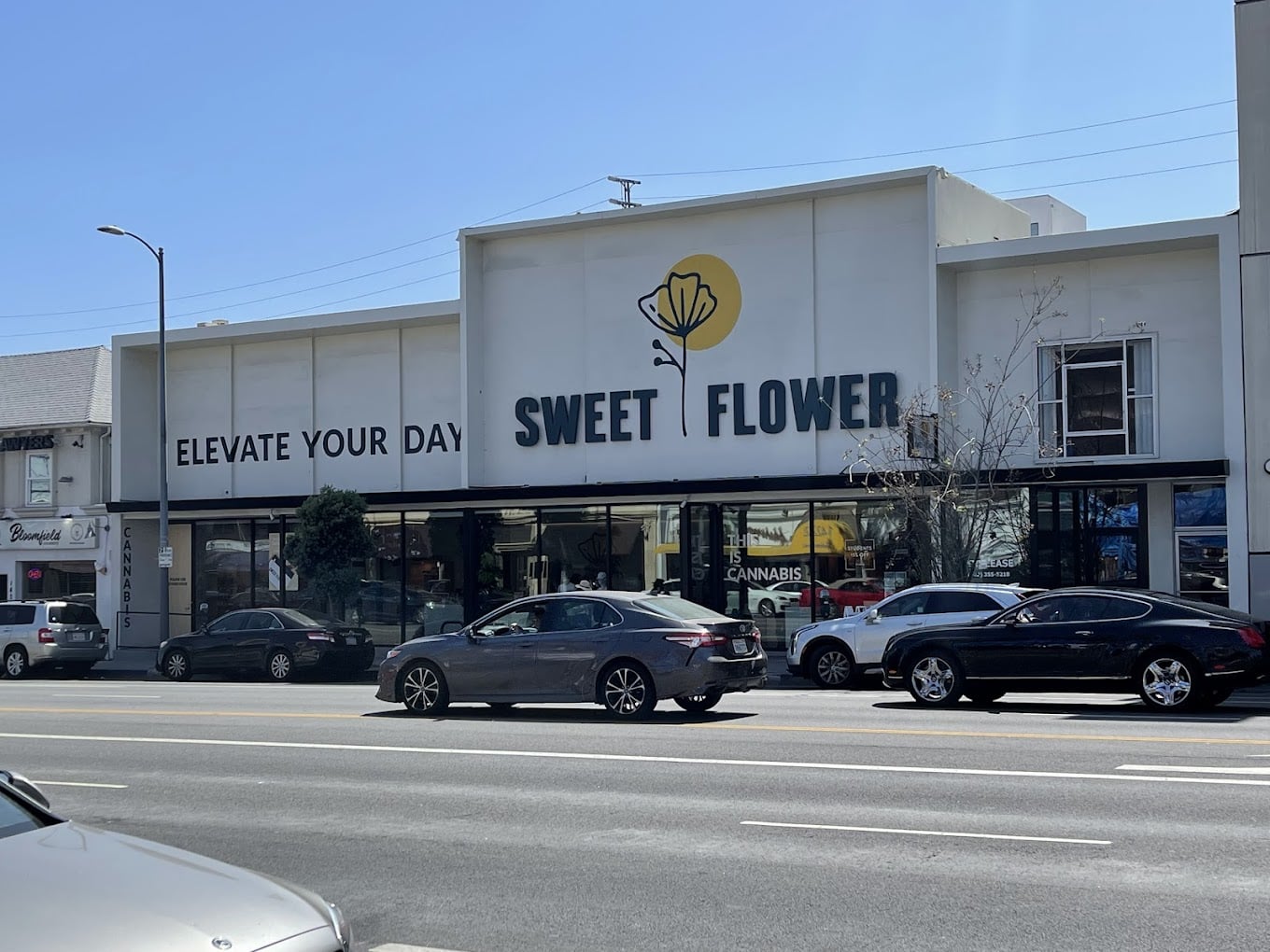
Sweet Flower runs six dispensaries across Los Angeles, including the Westwood location at 1413 Westwood Boulevard. The brand markets itself as a boutique, and the shop earns the description: low light, slow pace, a curated menu that prioritizes named cultivators over commodity bulk, and a poppy-flower logo treatment that runs through every retail touchpoint. The Westwood store sits two blocks south of the UCLA campus, and the foot traffic is a mix of grad students, faculty, and Westside locals who do not want to drive into Hollywood for product. The room inside is small and intentionally calm; the music is low, the lighting is warm, and the flower counter feels closer to a small-batch coffee bar than a pharmacy.
The flower selection rotates weekly and almost always includes at least one small-batch harvest you cannot find at the larger chains. Sweet Flower works with named cultivators including Connected, Alien Labs, and Sense, and the buyer team rotates regional Northern California growers through the wall. Edibles cover Kanha, Wyld, and Camino at standard adult-use pricing, and the vape case carries Heavy Hitters, Stiiizy, and Plus pens. What makes Sweet Flower a strategic stop is the pricing structure. The shop runs daily promotions throughout the week, including Monday Happy Hour and Tuesday 15 percent off edibles. A weekday visit can pull a top-shelf eighth into the $35 to $40 range, which is unusually low for a curated Westside boutique. SKU to flag: the rotating Connected eighth, which Sweet Flower prices below the Connected flagship store on Compton Boulevard.
Sweet Flower was founded in 2018 by Tim Dodd and a small Los Angeles operator group. The brand has grown deliberately rather than aggressively, opening one or two stores per year rather than chasing a chain expansion. Dodd’s background is in retail merchandising rather than cannabis, which shows in the curatorial discipline: the Sweet Flower menu is shorter than competitors and changes more slowly, and the buyer team turns down volume brands that do not fit the shop’s positioning. The Westwood store operates under California license verifiable through the state’s public retail lookup.
The retail experience is the gentlest in the Los Angeles section. Hours are 9 AM to 10 PM daily, the parking is street meters and a small validated lot two blocks east, and the intake desk runs the ID check at the door. Walk-in welcome. The Westwood location specifically caters to the UCLA campus crowd, so afternoon weekdays see lighter traffic and a more attentive staff response, while weekday evenings and weekend afternoons run busier. The budtenders are paid hourly and ask product-format questions before they ask brand questions, which signals the consultation orientation. Dwell time on a quiet weekday afternoon ran about eight minutes from door to bag on a recent visit.
Sweet Flower has appeared on Leafly List rankings for Los Angeles boutique retail and was profiled by Forbes for its retail design discipline.
Verdict from Miles. Sweet Flower Westwood is the right pick for a Los Angeles visitor who wants a boutique experience without the Cookies Melrose volume. Time the visit for a weekday afternoon if you can. Skip it if you came for value-tier ounces; the menu does not stack deep on the budget end of the wall.
ShowGrow, Long Beach
- Address: 3411 E Anaheim St, Long Beach, CA 90804
- Phone: (562) 825-7635
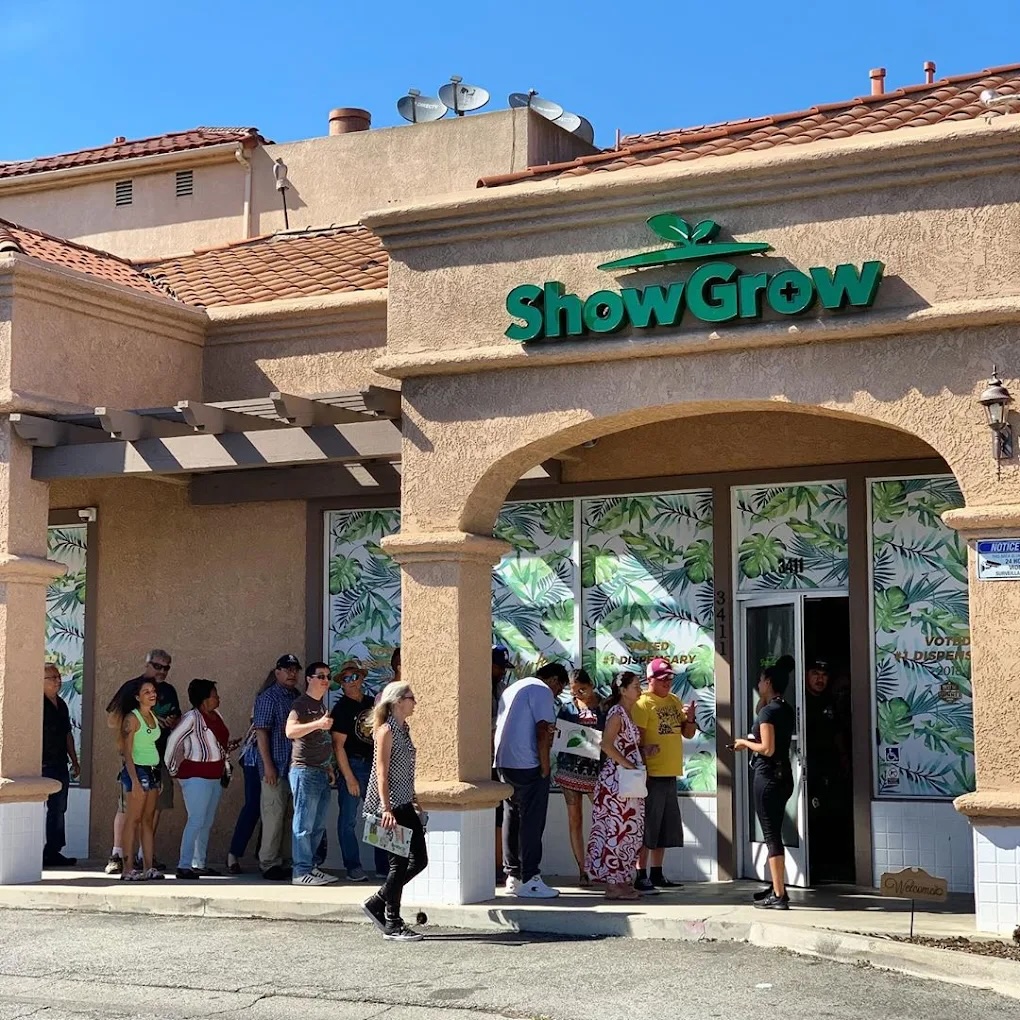
ShowGrow Long Beach at 3411 East Anaheim Street is one of the longest-running adult-use shops in the city. The exterior is a low gray storefront on a busy commercial stretch, with a parking lot wrapping around the side, and the room inside is sized for volume rather than browsing. The flower counter runs the length of the back wall, and the side displays carry pre-rolls, edibles, and vape carts in tight, deep stacks. ShowGrow’s positioning is value first, atmosphere second; the shop does not pretend to be a boutique, and that honesty is what makes it work for the South Bay regulars who shop here weekly.
ShowGrow built its name on bulk flower deals, and the Anaheim Street store still leans into that model. Ounces of mid-tier indoor regularly land below $100 during weekly promotions, and the rotating top-shelf wall features cultivars from licensed growers across Humboldt and Mendocino. The pre-roll counter carries Lowell Smokes, Pacific Stone, Stiiizy, and the in-house ShowGrow brand, with infused pre-rolls running $10 to $20 depending on tier. Edibles cover Wyld, Kanha, and Smokiez, and the concentrate selection runs lighter than the flower-heavy positioning of the rest of the store. Pricing is the headline. Eighths start around $20 on the value tier and rarely top $50, and the daily promotions stack on top of the loyalty program for South Bay shoppers willing to plan around the calendar. SKU to flag: the rotating $99 ounce of mid-tier indoor, which is one of the lowest verified ounce prices in Los Angeles County.
The shop operates under California license C10-0000345, listed in the state’s public retail database. ShowGrow’s parent group has operated cannabis retail in Southern California since the medical era, and the Long Beach store predates Long Beach’s adult-use Measure MM rollout. A second Long Beach location is planned, with construction expected to wrap later in the year. The operator has been quiet on the trade-press circuit, which fits the no-frills positioning.
The retail experience is direct. Hours run 9 AM to 9 PM daily, the parking lot is free and large enough to handle weekend volume, and the intake desk runs the ID check at the door. Walk-in is standard. The budtenders are quick rather than consultative; the shop is built for shoppers who walked in with a list. Dwell time runs four to six minutes on a weekday morning and ten to twelve on a Saturday afternoon. The room is fluorescent-bright and the music sits at conversational volume. There is no pretense to the experience, and that is precisely the value proposition. Customers who want a budtender to walk them through terpene profiles should book elsewhere; customers who want a half-ounce of mid-tier indoor under $50 should put ShowGrow on the route.
ShowGrow has not won major Cannabis Cup or Leafly List awards as of writing; the experience speaks for itself, and the volume of repeat customers is the indicator that matters.
Verdict from Miles. ShowGrow Long Beach is the right stop for a value shopper who wants the most flower per dollar with no ceremony. Skip it if you came for top-shelf solventless or a curated boutique experience; the room is built around the bulk wall, and that is by design.
Catalyst Cannabis, Long Beach
- Address: 433 Pine Ave, Long Beach, CA 90802
- Phone: (562) 336-1373
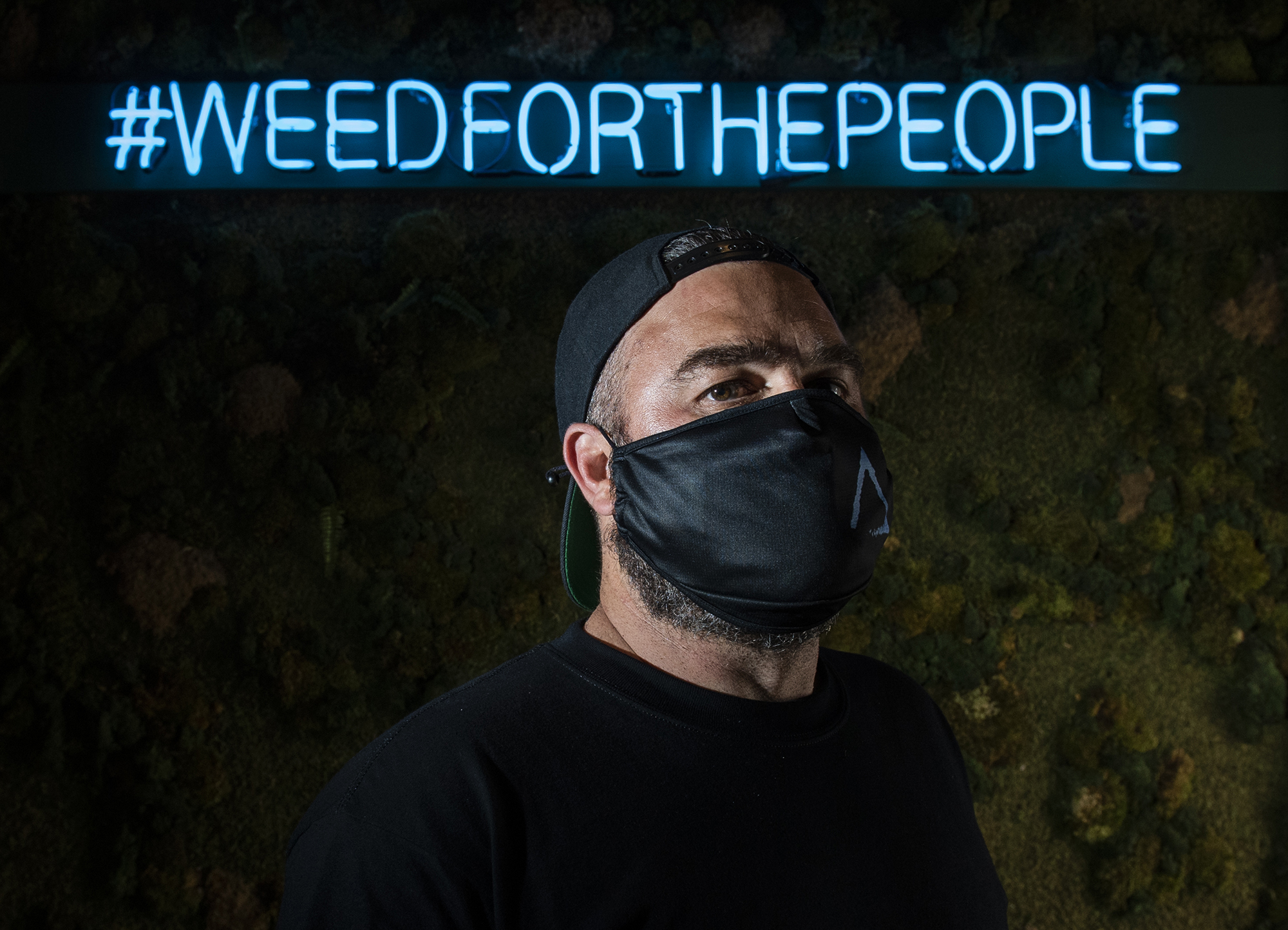
Catalyst Cannabis runs four Long Beach dispensaries: Downtown, Cherry Avenue, Belmont Shore, and Retro Row. The Downtown store at 433 Pine Avenue sits in the middle of Long Beach’s downtown commercial corridor, two blocks from the convention center, and the Weed For The People neon behind the front counter has become a brand signature. The room is bigger than ShowGrow’s and reads more retail than warehouse, with concrete floors, exposed ductwork, and a long L-shaped flower counter running across two walls. Catalyst built its identity around aggressive value pricing and a public legalization-advocacy line, and both elements show up the moment a customer walks through the door.
The pricing ideology shows up at the counter. Top-shelf eighths regularly drop below $30 during weekday promotions, and the value-tier flower at $80 ounces is the lowest verified retail price in the South Bay. The flower wall draws from Jeeter, Pacific Stone, Lowell Smokes, and a rotating cast of licensed Northern California growers, and the in-house Catalyst label sits at the front. The vape case carries Stiiizy, Heavy Hitters, and Plus, and the edibles aisle covers Kanha, Wyld, and Camino at standard adult-use pricing. Catalyst’s house pre-rolls, sold in five-packs, are one of the most aggressively priced legal pre-roll products in California. SKU to flag: the rotating $80 ounce of legal indoor flower, which is essentially a price floor for Long Beach retail.
Founder Elliot Lewis built the brand around value pricing and a public legalization-advocacy line, including a vocal push to roll back California’s cultivation excise tax that ended in AB 195’s elimination of the cultivation tax in 2022. Lewis is regularly quoted in MJBizDaily coverage on California excise tax policy and is one of the most outspoken legal-retail operators on the unlicensed-market enforcement question. Catalyst’s stores operate under California retail licenses verifiable through the state public lookup.
The retail experience is fast, busy, and price-driven. Hours run 9 AM to 9:30 PM at most locations, with the Retro Row shop opening at noon. The Downtown store has a small parking lot off the alley and metered street parking out front. Walk-ins are the default, and the order-ahead online flow runs reliable pickup in fifteen minutes. The budtenders are friendly and quick rather than consultative; the room is not built around hand-holding. Dwell time on a weekday afternoon runs five to seven minutes. The clientele skews local: South Bay residents, downtown Long Beach workers on lunch breaks, and price-conscious shoppers from Lakewood and Signal Hill who drive in for the daily promos. A shopper comparing prices across one city can hit ShowGrow first and Catalyst second; the menus rarely overlap and the customer base is different.
Catalyst has appeared on multiple Leafly List rankings for Southern California value retail, and Lewis has been a featured speaker at MJBizCon panels on California cannabis tax policy.
Verdict from Miles. Catalyst is the cheapest licensed cannabis in the South Bay and one of the cheapest in California. Skip it if you want a slow consultation or a destination retail vibe; the room is loud, fast, and built for the price tag.
March and Ash, San Diego
- Address: 2835 Camino Del Rio S, San Diego, CA 92108
- Phone: (619) 314-7336
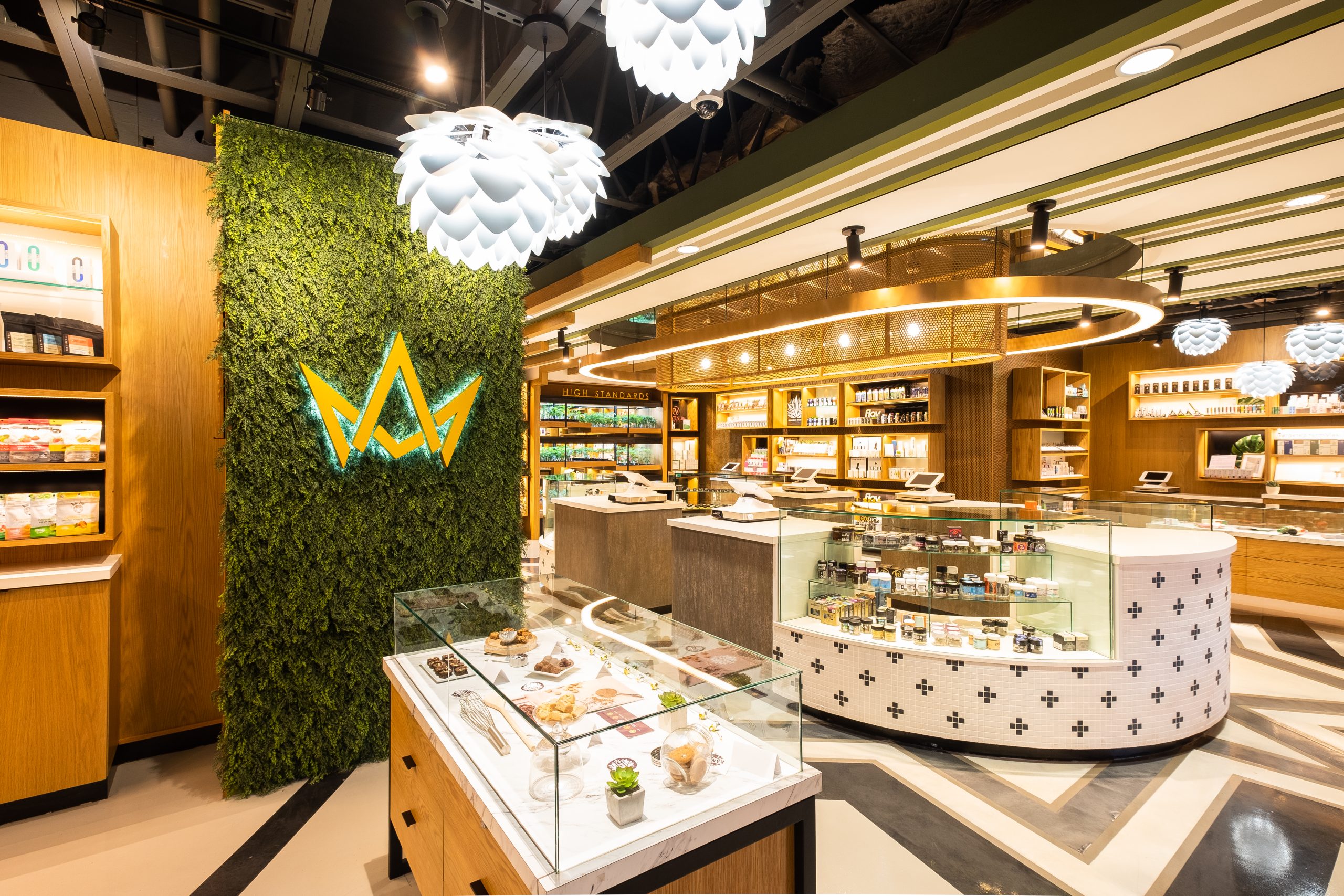
March and Ash operates the largest cannabis retail floor in San Diego County, with the Mission Valley flagship at 2835 Camino Del Rio South spanning roughly 18,000 square feet. The building sits at the south edge of the Mission Valley commercial corridor, two miles east of Old Town and a short drive from downtown, and the parking lot is sized for the showroom inside. The room itself is genuinely larger than any other dispensary on this list. Long aisles, multiple counter stations, a separate edibles bar, a separate concentrates wall, and a dedicated accessories and apparel section. The crown logo runs through every retail touchpoint and the staff wear matching greens. The shop has the feel of a small Whole Foods crossed with a cannabis retailer, and that scale is the differentiator.
The flower wall holds more than 80 cultivars at any given moment, the edibles aisle covers every dosage tier from microdose to 100 mg, and the concentrate counter carries everything from $20 distillate carts to top-tier solventless rosin from Papa’s Herb and 710 Labs. Eighth pricing runs $30 to $65 with most top-shelf landing in the $45 to $55 range, and ounces of mid-tier indoor regularly hit $99 during the rotating weekly promotions. March and Ash carries the major California labels in their full breadth: Stiiizy, Jeeter, Cookies, Connected, Alien Labs, Lowell Smokes, Wyld, Kanha, Camino. SKU to flag: the rotating live rosin drops, which the buyer team prices below most San Diego competitors. The staff are paid to talk customers through the menu rather than upsell to top shelf by reflex.
March and Ash was founded in 2018 by Blake Marchand and Brent Ash, who built the Mission Valley flagship as the brand’s first store and expanded across San Diego County and into Imperial County and Palm Desert. The brand also runs locations in Sabre Springs, City Heights, Vista, Chula Vista, Imperial Valley, and Palm Desert. The operator’s California retail licenses are verifiable through the state’s public lookup. Both founders remain involved in operations, and the brand has stayed independently held through the recent California retail consolidation cycle, which is unusual at this footprint.
The retail experience runs long. Mission Valley hours run 7 AM to 9:55 PM daily, the longest operating window of any shop on this list, which makes the store a genuine option for early-morning travelers driving down from Los Angeles or coming off a red-eye into San Diego International. Walk-ins are welcome at all stores, and a drive-through window at the Sabre Springs shop is the only one in the county. The intake desk handles ID checks fast, the budtenders are paid hourly with consultation training, and dwell time on a typical weekday afternoon runs eight to twelve minutes. Parking is large and free. The Mission Valley flagship is the right anchor for a San Diego visitor with a single stop on the itinerary. A traveler with extra time should add the Chula Vista shop on the drive south to the Tijuana border; the menu skews slightly different at each location.
March and Ash has appeared on Leafly List rankings for San Diego County retail and was profiled by MJBizDaily for its multi-store expansion model.
Verdict from Miles. A San Diego visitor with one stop on the itinerary should pick the Mission Valley flagship. The breadth of the menu and the operating window make it the most flexible single-shop pick on the entire list. Skip it if you want a small, slow boutique; the showroom is genuinely large, and the right way to use it is to browse for thirty minutes.
For the Mission Valley showroom walkthrough, the menu breadth, and verified hours, read our March and Ash Mission Valley review.
A Therapeutic Alternative, Sacramento
- Address: 3015 H St, Sacramento, CA 95816
- Phone: (916) 822-4717
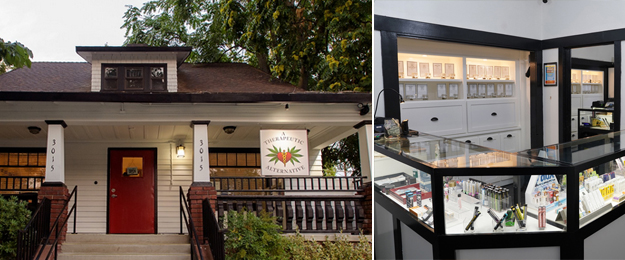
A Therapeutic Alternative at 3015 H Street has been serving Sacramento since 2009, which makes it the city’s oldest continuously licensed dispensary and one of the longest-running medical-style boutiques in California. The shop sits in the East Sacramento neighborhood on a quiet stretch of H Street near McKinley Park, and the room inside is intentionally low-key: warm wood casework, a single counter line, and a small seating area for patients waiting on prescriptions or consults. The shop earns its place on this list by treating cannabis like medicine first and lifestyle product second, which is the original collective ethos of California’s medical era preserved into the adult-use period.
The tincture and topical sections are the deepest in the region. Sublingual tinctures cover full-spectrum, isolate, and CBD-dominant formulations across multiple ratios, and the topical wall carries Papa and Barkley balms, Mary’s Medicinals patches, and Care By Design ratio salves. The flower selection is smaller than any other shop on this list and is curated more carefully, with a noticeable preference for sungrown and indoor cultivators with documented lab data. Eighths run $35 to $50 across most of the wall, with limited drops occasionally pushing higher, and the shop runs few promotions, which fits the steady-pricing positioning. Edibles cover Kiva, Wyld, Camino, and a deep selection of low-dose options for older or first-time patients. SKU to flag: the rotating low-dose 2.5 mg edible flights, which the buyer team curates specifically for first-time-customer microdose protocols.
The shop was founded in 2009 by Kimberly Cargile, who built the operation as a medical patient collective and grew it into one of the most respected medical-style retailers in California. Cargile remains involved in operations and has been a featured speaker at the Marijuana Business Conference on patient-focused retail and was profiled by the Sacramento Bee for the shop’s role in the local medical community. The store operates under a California retail license verifiable through the state public lookup.
The retail experience is the slowest and most attentive on this list. Hours run 8 AM to 9 PM daily. The parking is street meters out front and a small free lot one block north. Curbside pickup is built into the online order flow, so a patient with mobility limits never has to leave the car, and the staff are trained to walk patients through dosing for sleep, pain, or anxiety without defaulting to a flower upsell. The intake desk runs ID checks calmly. Dwell time on a typical visit runs ten to fifteen minutes, with the consultation flow stretching longer for first-time patients. The room is quiet enough to have a real conversation, and the staff are paid to ask diagnostic questions before they ask product questions.
A Therapeutic Alternative has been recognized by Leafly as a top medical-focused retailer in Northern California, and Cargile’s advocacy work has been featured in MJBizDaily coverage of California’s medical patient policy.
Verdict from Miles. A traveler passing through Sacramento who wants a quiet, knowledgeable, slow-paced shop should put this one on the route. Skip it if you came in for a streetwear drop or a value-tier ounce; the room is built for patients and considered consumers, and the menu reflects that.
Honorable Mentions: Three More Worth a Stop
Three California dispensaries did not make the top 10 but earn a stop on a longer trip. Each operates under an active California retail license verifiable through search.cannabis.ca.gov, and each carries a specialty the top 10 does not.
Cookies SF (San Francisco). The Cookies brand’s San Francisco flagship is the genetic-line counterpart to Cookies Melrose, and the menu skews toward the West Coast version of the same drops, often arriving slightly earlier in the rotation than the Los Angeles store. The shop sits in the Mission District and runs a smaller floor than the Melrose flagship, with a similar streetwear-meets-cannabis retail blend. Cookies SF on Leafly documents the menu and current promotions. Pricing runs in line with Melrose, with eighths starting around $50 and limited drops above $80. The store is a useful add for a San Francisco visitor who is choosing between the Cookies catalog and the breadth at SPARC, and it pairs well with The Apothecarium for a single-day Castro-to-Mission cannabis tour.
The Pottery (Los Angeles). The Pottery sits on Pico Boulevard in West Los Angeles and earned a reputation early on for live-rosin and solventless concentrate selection that runs deeper than most LA boutiques. The shop carries small-batch hash from 710 Labs, Papa’s Herb, and rotating Tier-A solventless extractors, and the flower wall leans into named cultivators rather than commodity bulk. The room is small and the staff are consultation-trained, which makes it a useful stop for a connoisseur shopper who wants the LA equivalent of what Sweet Flower offers in Westwood but with a heavier concentrate emphasis. The Pottery on Weedmaps documents current pricing and the live solventless rotation.
Mammoth Holistics (Mammoth Lakes). Mammoth Holistics is the only licensed cannabis retailer in Mammoth Lakes and the highest-elevation dispensary in California, sitting near 8,000 feet in the eastern Sierra. The shop is a different animal than the urban retailers above: smaller floor, a curated flower wall sized for the local resort and weekend ski traffic, and a staff that can talk through altitude considerations for visitors who fly in from sea level. The full HGH review of the shop covers menu, pricing, and the visitor experience in detail at Mammoth Holistics, Mammoth Lakes. For a winter or summer trip to Mammoth Lakes, June Lake, or the Eastern Sierra Yosemite gateway, this shop is the only legal option and earns the stop.
California Dispensary Comparison: Which One When
California’s dispensary map is wide enough that the right pick depends on city, use case, and what kind of experience the shopper is after. The grid below maps the 10 picks above and the three honorable mentions to specific use cases. Use it as a starting point rather than a rule.
| Use case | Recommended dispensary | Why |
|---|---|---|
| Best for tourists in San Francisco | The Apothecarium, Castro | Consultation model, first-timer training, central Market Street location near Castro MUNI. |
| Best for tourists in Los Angeles | Cookies Melrose | Iconic brand experience, Sherbinskis genetics, walking distance to West Hollywood and Beverly Hills. |
| Best for tourists in San Diego | March and Ash, Mission Valley | Largest retail floor in the county, longest operating hours, broadest menu under one roof. |
| Best for connoisseurs | SPARC, San Francisco | Deepest flower wall in California, small-batch sungrown rotation, vertically integrated cultivation. |
| Best for budget shoppers | Catalyst Cannabis, Long Beach | Lowest verified ounce prices in the South Bay, $80 ounces during weekly promotions. |
| Best for solventless and live rosin | The Pottery, Los Angeles | Deeper Tier-A solventless rotation than most LA boutiques, named-cultivator flower wall. |
| Best for first-timers | The Apothecarium or A Therapeutic Alternative | Both shops train staff on consultation flow and dosing, both run slower than the average California retail floor. |
| Best for delivery | Caliva, San Jose | Most reliable Bay Area same-day delivery network, two-hour windows, $50 order minimums. |
| Best for late-night | March and Ash, San Diego | Open until 9:55 PM daily, longest operating window on this list. |
| Best for early mornings | Caliva, San Jose or March and Ash, San Diego | Caliva opens at 6 AM, March and Ash at 7 AM, both built for commuter and traveler schedules. |
| Best for house-grown flower | Harborside, Oakland | Harborside Farms cultivation in Salinas feeds the retail wall, several strains exclusive to the store. |
| Best for Eastern Sierra and ski trips | Mammoth Holistics, Mammoth Lakes | Only licensed retailer in Mammoth Lakes, staff trained on altitude considerations. |
How to choose a California dispensary
Three checks separate a working California shop from a liability, and they take roughly five minutes combined. The state cannabis market shifts every quarter, and even a license-active shop can change owners, raise prices, or thin out a menu between visits. The 10 stores above clear all three filters, but the verification routine is what carries from trip to trip.
License status carries the most weight. The California Department of Cannabis Control runs a free public lookup at search.cannabis.ca.gov, and an expired or revoked record means the store is operating illegally and the products have not been state-tested. Mission Organic Center and The Bloom Room both lost their licenses before they closed, and customers kept buying untested product through the gap. Type the shop’s name or premises ID into the lookup before the visit. A licensed adult-use retailer in California will show a status of “Active” with a Type 10 retail or Type 9 non-storefront retail premises code. Anything else, including “Surrendered,” “Inactive,” or “Revoked,” means walk away.
Lab test transparency is the second filter. Every legal California product carries a Certificate of Analysis from a licensed testing lab covering potency, pesticides, microbial contamination, and heavy metals. Strong shops post the COA next to the product on the menu, and Weedmaps and Leafly menus flag whether a SKU has lab data attached. A shop that will not show you the test does not deserve the sale. The 10 picks above all post lab data on request, and most publish it inline on the menu.
Menu transparency closes out the picture. The strongest shops in the state, including the 10 above, publish full live inventory with prices, photos, strain lineage, and harvest dates. A shop that hides the menu is hiding the margin. A 90-second scan of the website tells you whether the visit is worth the drive.
Beyond those three filters, a few practical considerations shape the visit. Bring a government-issued ID. California adult-use retailers accept any state’s driver license or a passport, but every customer over the age of consent is required to show identification at the door, and the shop will scan it. Bring cash as a backup. Most California dispensaries now accept debit through PIN-secured cashless ATM networks, and a few accept credit, but the federal banking restrictions still leave card processing fragile. The state and local tax stack adds roughly 25 to 35 percent to the shelf price; the breakdown is set by the California Department of Tax and Fee Administration and varies by city. A $50 eighth typically rings up around $63 to $68 after tax.
Delivery is legal statewide, but only licensed Type 9 non-storefront retailers can ship cannabis to a residence. Several of the picks above offer delivery: Caliva covers Santa Clara County, Harborside delivers across the East Bay, and March and Ash covers most of San Diego County. A Therapeutic Alternative also offers curbside pickup. Public consumption remains illegal in California; NORML’s California penalty guide covers the local enforcement landscape. The state’s cannabis equity programs, run through the Department of Cannabis Control, support equity-licensed retailers across major metros, and shoppers who want to direct dollars toward equity operators can filter for them through the public license lookup.
The shop names rotate. The verification routine carries.
Frequently Asked Questions
What is the legal age to enter a California dispensary?
The legal age for adult-use cannabis purchase in California is 21, and every adult-use retailer is required by the state Department of Cannabis Control to verify a government-issued ID at the door before allowing a customer onto the retail floor. Customers between the ages of 18 and 20 may enter a medical-only dispensary with a valid California physician’s recommendation and a state medical cannabis identification card. Most stores now operate under combined adult-use and medical licenses, but the 21+ rule applies to anyone shopping the adult-use side. NORML’s California summary covers the underlying statute.
Can tourists buy cannabis in California with an out-of-state ID?
Yes. Any government-issued photo ID showing the customer is 21 or older is accepted at California adult-use dispensaries, including driver licenses from any U.S. state, U.S. passports, and most foreign passports. The customer does not need California residency to make an adult-use purchase, and the same purchase limits apply to residents and visitors. Bringing the cannabis back across state lines remains a federal offense even when both states have legal markets, and the same applies to flying domestically with cannabis in carry-on or checked luggage.
What is the difference between adult-use and medical purchases in California?
Adult-use customers pay the full state and local cannabis tax stack and are subject to standard adult-use purchase limits. Medical patients with a valid Medical Marijuana Identification Card issued by the California Department of Public Health receive an exemption from the state sales tax on cannabis, are eligible to purchase higher daily quantities, and may purchase from medical-only retailers. The MMIC is voluntary, and most patients who hold a physician’s recommendation but not the state ID card pay adult-use prices at the counter. The state’s cannabis portal documents the MMIC application and benefits.
How much cannabis can I buy in one visit in California?
California’s adult-use limits per transaction are 28.5 grams of non-concentrated cannabis flower, 8 grams of concentrated cannabis including edibles measured by THC content, and up to six immature cannabis plants for home cultivation. Medical patients with an MMIC may purchase up to 8 ounces of flower per day. The retailer’s point-of-sale system tracks the daily limit per customer, and the limit resets daily. Leafly’s California limits guide walks through the details by product type.
What is the typical California dispensary tax stack?
Adult-use cannabis purchases in California are subject to a state cannabis excise tax of 15 percent on the gross receipts, plus state and local sales tax that varies by city, plus any local cannabis business tax that the city or county has passed on top. Combined, the rate generally lands between 25 and 35 percent of the shelf price, with cities like Los Angeles and Oakland on the higher end. The California Department of Tax and Fee Administration publishes the current statewide cannabis excise rate and the city-by-city local tax breakdown. A $50 eighth typically rings up around $63 to $68 after tax in Los Angeles or Oakland.
Are dispensaries open 24 hours in California?
No. California state law sets the maximum allowable retail hours for licensed cannabis stores at 6 AM to 10 PM, and individual cities frequently impose tighter hours on top of the state cap. Most California dispensaries close between 9 PM and 10 PM, and many open between 8 AM and 10 AM. The longest operating windows on this list are March and Ash, San Diego, at 7 AM to 9:55 PM, and Caliva, San Jose, at 6 AM to 9:45 PM. No licensed California dispensary operates 24 hours.
Can I get cannabis delivered legally in California?
Yes. Licensed Type 9 non-storefront retailers and storefront retailers with delivery endorsements can ship cannabis to a residence anywhere in California where the local jurisdiction has not banned delivery, including jurisdictions that have banned storefront retail. Delivery drivers verify the customer’s ID and age at the door, and orders typically arrive within two to four hours of placement. Same-day delivery is the standard. Weedmaps and Leafly both let shoppers filter retailers by delivery availability.
What is the difference between a licensed and an unlicensed dispensary?
A licensed California dispensary holds a Type 10 retail or Type 9 non-storefront retail license issued by the Department of Cannabis Control, sells only state-tested products with a Certificate of Analysis on file, collects state and local cannabis taxes, and shows up in the public license database at search.cannabis.ca.gov. An unlicensed shop, often described as a traditional-market or gray-market store, does not appear in the database, sells products that have not passed state lab testing, does not collect or remit cannabis taxes, and exposes the customer to product safety risk and the operator to criminal enforcement. The verification check at search.cannabis.ca.gov takes under a minute and is the difference between buying tested cannabis and buying an unknown product.