Twenty-Two K is the rare California oil brand that still smokes like it came out of a scene instead of a marketing deck. The 22K x Passiflora Farms Private Reserve cartridge tested around 82.79 percent THC with a skunk, diesel, and pine nose, and after a week of half-gram evening sessions it stayed sharp instead of going soapy the way most distillate carts do by day three. I rate Twenty-Two K a 4.5 out of 5, and the reason is narrow and specific: the Passiflora live resin line and the GMO Cookies concentrate side give a Valley brand real product depth that the price actually buys.
The brand was founded by two brothers out of the San Fernando Valley, and that local DNA still shows up across the line. When I think about brands that earn a spot on a menu at a shop like DC Collective in Canoga Park, Twenty-Two K is one of the first names I look for. It does not feel imported, over-polished, or reverse-engineered from a focus group. It feels like it belongs in the Valley because it came from there.
Quick Verdict
- Overall rating: 4.5 out of 5
- Price seen: $25 to $40 depending on cart versus concentrate, early 2026
- Best reason to buy 22K: it still smokes like a small, Valley-rooted oil brand with a real point of view
- Best product lane: the Passiflora Farms live resin carts and the GMO Cookies concentrate side
- Best fit: flavor-first buyers who care about extract style and a local brand identity
- Skip if: you shop only by price-per-milligram and do not care about terpene character
Why Twenty-Two K works for me.
What I like about Twenty-Two K is that it still smokes small-batch. On Weedmaps, the brand catalog reads like a company built by people who came up in cannabis, not a team reverse-engineering what premium is supposed to sound like, and the products back that up. The lineup is cultivar-driven, extract-driven, and strain-aware in a way the packaging-first brands are not.
That is the actual reason I rate the brand high. Plenty of companies say premium and mean expensive packaging plus a big THC number. Twenty-Two K is more specific than that. The flavor notes are real, the strain choices are deliberate, and the San Fernando Valley roots give the whole thing weight. Strain labels blur together in real use, which is why what is inside the cart matters more than the indica or sativa tag on the box. If you want a refresher on why those category labels are unreliable, our explainer on what hybrid cannabis actually means covers it.
The Passiflora Farms collaboration is the real story.
The strongest way to understand this lineup is through the 22K x Passiflora Farms collaboration, because that is where the brand is most serious. Passiflora Farms is a Santa Barbara County licensed cultivator, and a single-source collab means the flower in the oil is traceable to one farm rather than blended from whatever input was cheapest that week. That is the difference between a live resin cart that tastes like the plant and a distillate cart with terpenes sprayed back in.
On Weedmaps, the Passiflora line shows up as a single-source live resin collaboration with multiple carts, including Private Reserve, Black Mamba, True OG, and Skywalker. That tells you more than a one-off SKU with a cool name. It is a real collab built around OG-heavy flower and strain-specific oil, with enough range to cover different evenings rather than one note repeated across labels.
Private Reserve is the one that grabs me first.
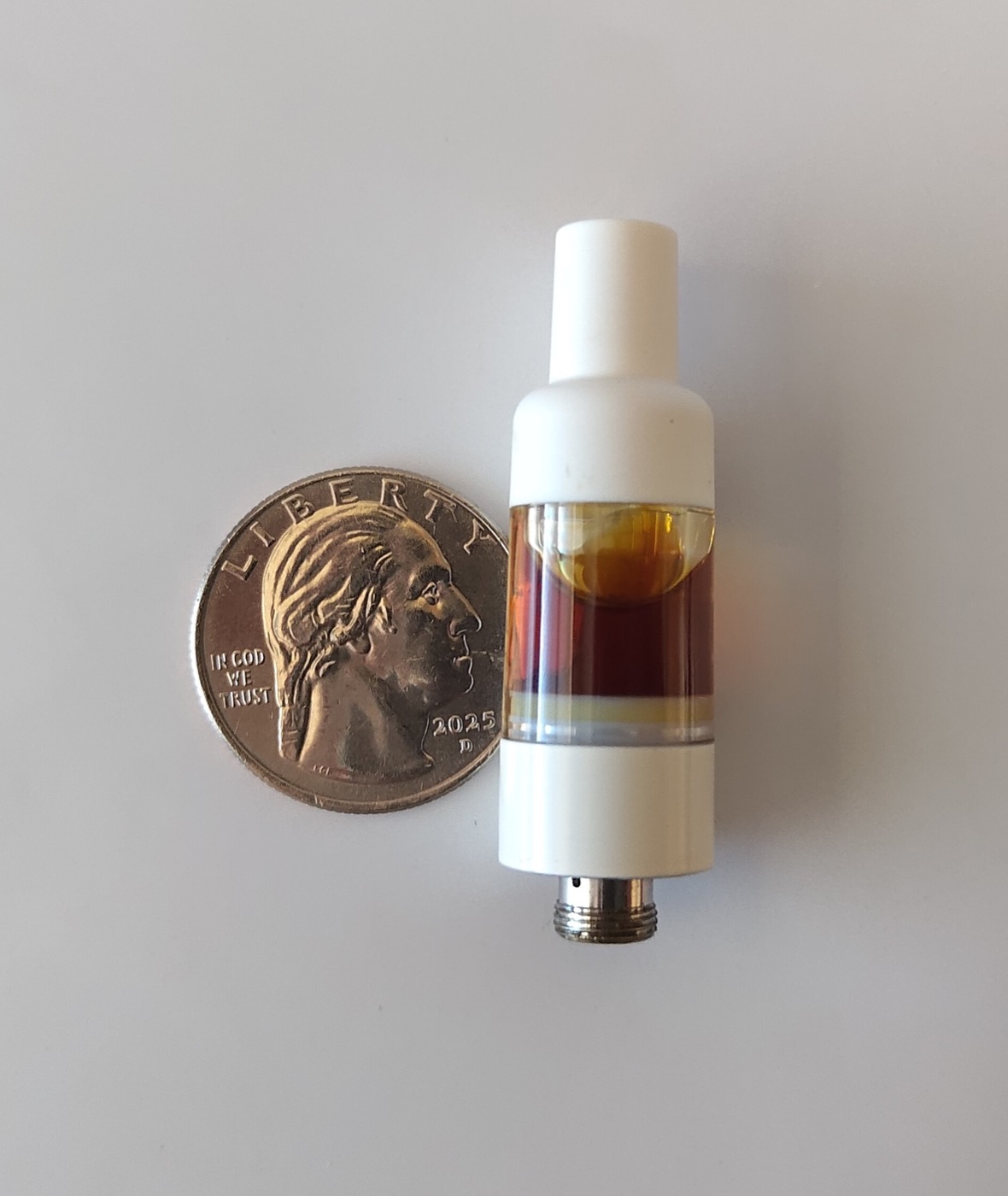
The Passiflora cart I would point to first is the 22K x Passiflora Private Reserve 1.0ml cartridge. On Weedmaps it lists around 82.79 percent THC with roughly 2 percent CBD, and the flavor lands in skunk, diesel, and pine. The reported effects lean relaxed, sleepy, and focused, which is the combination I want when I need something heavy but still mentally clean enough to actually enjoy.
That profile tracks because Private Reserve / OG #18 has always lived in the lane where the flavor is sharp and sour in the right way, with enough gas and pine to keep it from going soft. Over a week of half-gram pulls the taste held its edge instead of flattening into the burnt-sugar note cheap carts drift toward. That is exactly what I want from a Valley-rooted brand. I do not want fake fruit that disappears from memory in an hour. I want backbone. Aroma language sets expectations before the first pull, and our breakdown of what limonene does is useful context for why those terpene notes matter as much as the THC number.
What makes this one beat a generic premium cart is that the flavor notes are not trying too hard. Skunk, diesel, pine, OG structure, and a heavier effect profile are enough. That already tells you where the cart lives and who it is for, which is more than most carts in this price band manage.
Black Mamba and True OG make the line feel legit.
The reason the Passiflora line earns trust is that it is not one SKU carrying the whole collab. On Weedmaps, Black Mamba lists with sweet, earthy, and flowery notes and a relaxed, happy, sleepy effect set. True OG goes another direction with earthy, mango, and pine notes and a relaxed, creative, sleepy profile. That spread is what I want to see from a live resin line, because it gives the lineup shape and makes the collaboration read as real product work instead of label rotation.
Instead of one vague indica cart, you get multiple carts that sound connected but not identical. That is a meaningful difference. It says the brand is thinking in terms of actual strain identity rather than pushing one oil through three labels and hoping nobody pulls twice in a week. I did pull across two of them on back-to-back nights, and the flavor and the comedown were genuinely different, which is the only proof that matters.
Why I would recommend 22K at a shop like DC Collective.
When I think about where Twenty-Two K makes the most sense, I keep landing on DC Collective and the Canoga Park and west Valley shopping rhythm. Some brands fit that part of Los Angeles better than others, and 22K is one of them. You notice it on the menu because you already know what you like and you want something connected to local cannabis instead of a nationally flattened label between louder brand names.
The San Fernando Valley part is not a marketing detail, it is the reason the recommendation holds. It gives the brand weight. Twenty-Two K does not need to pretend to be a giant lifestyle company. It works better as a Valley brand with a real shelf identity, and that is the version of it I would actually point a friend toward.
GMO Cookies deserves the hype too.
The other reason I rate the brand high is that the lineup does not stop at carts. The GMO Cookies side gives Twenty-Two K a heavier, concentrate-first edge. On Weedmaps, the 22K GMO Cookies Diamond Badder sits in the high-70 percent THC range, which is exactly where a properly run badder should land. It is loud, dense, and unapologetically concentrate-first, a very different mood than a Passiflora cart, and the contrast is the point. The brand is not trapped in one format.
There is also a GMO Cookies cartridge and a pod version, which means the strain is a real lane for the brand, not a one-time concentrate drop. That consistency matters. When a brand keeps returning to the same cultivar across cart, pod, and badder, it usually means they actually believe in it rather than chasing whatever is trending. Buyers comparing premium products across formats should also look at our Dialed In gummies review, which hits the same point that product identity beats empty strength talk, and the everyday line gets its own breakdown in our Dialed In Rosin Drops review, and the full product reviews hub if you want to line 22K up against other California oil brands before buying.
How 22K is priced and where the value lands.
On the menus I checked in early 2026, 22K carts ran roughly $25 to $40 depending on size and whether it was the Passiflora collab or the standard line, with the GMO Cookies concentrate at the upper end of that band. That is premium for California oil but not luxury-tier, and it is consistent with what other single-source live resin carts charge. The value question is simple: you are paying for traceable single-farm input and a real terpene profile, not for a tin and a logo. If those things matter to you, the price is fair. If you reduce a cart to a price-per-milligram spreadsheet, it will look expensive, and that is the honest tradeoff.
Pros and Cons
Pros
- Local San Fernando Valley brand with a real point of view, not packaging-first branding
- 22K x Passiflora Farms is a genuine single-source live resin collab, not a one-off SKU
- Private Reserve held a skunk, diesel, pine profile around 82 percent THC across a week of sessions
- Multi-strain spread (Black Mamba, True OG, Skywalker) keeps the line varied and distinct
- GMO Cookies side gives the brand real concentrate-first weight across cart, pod, and badder
Cons
- Premium pricing means price-per-milligram shoppers may not see the value
- The lineup rewards buyers who already know they like terpene-forward oil
- GMO Cookies products can be too heavy for casual or low-tolerance users
- Distribution is California-focused, so out-of-state readers will not find it locally
Who I would recommend Twenty-Two K to.
I would recommend Twenty-Two K most strongly to buyers who still want their cannabis brands local, specific, and grounded in a real place. If you smoke in the Valley, shop around Canoga Park or Woodland Hills, and care where a brand actually comes from, 22K makes sense on the menu. I would also recommend it to anyone who values extract quality over potency-number marketing. If flavor matters, if single-source live resin matters, and if you want carts that genuinely taste different from each other, this brand is worth your time. The buyers who reduce everything to one figure should remember the THC percentage is only one part of why a cart earns a second purchase.
For the easiest entry point, start with the Passiflora Farms carts, Private Reserve first. If you want something heavier and more forceful, go to the GMO Cookies side.
Final Verdict
Twenty-Two K earns a 4.5 out of 5. Not because it is the loudest brand on the shelf, but because it still smokes like a real San Fernando Valley cannabis brand with actual identity. The Passiflora Farms line gives it flavor, source credibility, and product depth. The GMO Cookies lineup gives it muscle. The whole thing belongs in local shops like DC Collective, where menu decisions matter and local trust still means something.
If I were telling someone in the Valley where to spend their attention on a menu, Twenty-Two K would be one of the brands I name. Start with the Passiflora Farms line for the safest entry, then move into GMO Cookies if you want something heavier. Skip it only if price-per-milligram is the only number you shop by, because that is the one buyer this brand is not built for.